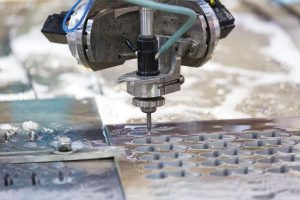
Open post

Top 5 Industries Utilizing Laser and Waterjet Cutting Technologies

Laser and waterjet cutting technologies have revolutionized manufacturing processes across numerous industries due to their precision, versatility, and efficiency. By utilizing Laser & Waterjet Cutting Services in Detroit, manufacturers can achieve unprecedented levels of detail and structural integrity. Here are the top 5 industries that extensively utilize these cutting methods:

Automotive Industry: Precision Cutting for Vehicle Manufacturing

The automotive industry has embraced laser and waterjet cutting services in Detroit as essential tools for manufacturing a wide range of vehicle components with high precision. These advanced cutting methods offer several key advantages for automotive production:

Versatile Material Processing

Laser & waterjet cutting services in Detroit can work with diverse materials commonly used in automotive manufacturing:

  • Metals: Steel, aluminum, titanium alloys
  • Plastics: Interior trim components, dashboards
  • Composites: Carbon fiber reinforced polymers for lightweight parts
  • Glass: Windshields and windows

This versatility allows manufacturers to use a single cutting system for multiple applications across vehicle production.

High-Precision Component Fabrication

These technologies specialized tube laser cutting services in Detorit, enabling the production of intricate parts with tight tolerances:

  • Body panels: Precise cutting of sheet metal for doors, hoods, and fenders
  • Engine components: Complex shapes for gaskets, brackets, and mounts
  • Interior trim: Detailed cutting of dashboard panels and upholstery

The high accuracy helps ensure proper fit and function of components during assembly.

Advantages for Safety-Critical Parts

Waterjet cutting offers unique benefits for components where material integrity is crucial:

  • No heat-affected zone: Preserves material properties near cut edges
  • Stress-free cutting: Minimizes distortion in parts
  • Clean cuts: Reduces the need for secondary finishing operations

These factors make waterjet cutting ideal for safety-critical components like brake rotors and suspension parts.

Efficiency in Production

Laser and waterjet cutting contribute to streamlined manufacturing processes:

  • Rapid prototyping: Quick production of prototype parts for testing
  • Flexibility: Easy switching between different part designs
  • Reduced material waste: Precise cutting minimizes scrap
  • Automation potential: Integration with robotic systems for high-volume production

By leveraging these cutting technologies, automotive manufacturers can improve production efficiency while maintaining high-quality standards for vehicle components.

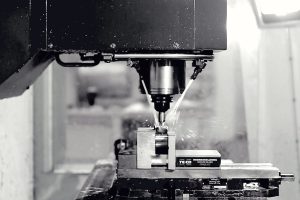
Custom metal components manufactured using our professional CNC machining services

Aerospace and Defense: Cutting-Edge Technologies for Critical Components

In the aerospace and defense industries, precision and material integrity are paramount. Laser and waterjet cutting services in Detroit play crucial roles in manufacturing components for aircraft, spacecraft, and military equipment. These advanced technologies have revolutionized the production of critical parts, ensuring the highest standards of quality and safety.

Cutting Advanced Materials

Metal laser cutting services and CNC waterjet cutting services in Detorit are used to cut materials essential to aerospace:

  • Titanium: Widely used for its high strength-to-weight ratio and corrosion resistance
  • Aluminum: Valued for its lightweight properties and versatility
  • Carbon fiber composites: Crucial for creating strong yet lightweight structures

These cutting methods excel at working with these materials, maintaining their integrity while achieving precise shapes and dimensions.

Manufacturing Critical Components

The aerospace and defense sectors rely on accurate waterjet cutting services in Detorit for producing various vital components:

  • Jet engine parts: Including turbine blades and combustion chambers
  • Structural components: For aircraft fuselages, wings, and spacecraft bodies
  • Military equipment: Ranging from vehicle armor to weapon systems

The ability to cut complex shapes with tight tolerances makes these methods ideal for producing parts that must meet stringent quality and safety standards.

Advantages for Aerospace and Defense Applications

Laser and waterjet cutting offer several key benefits that make them indispensable in these industries:

  • Precision: Ability to achieve extremely tight tolerances, crucial for aerospace components
  • Versatility: Can work with a wide range of materials, from metals to composites
  • No heat-affected zone: Especially important for maintaining material properties in critical parts
  • Complex geometries: Capable of cutting intricate shapes required in modern aerospace design

These technologies enable manufacturers to meet the exacting requirements of the aerospace and defense sectors, contributing to the advancement of aircraft, spacecraft, and military systems.

Electronics Manufacturing: Precision Cutting for Miniaturized Components

The electronics industry heavily relies on metal laser cutting services in Detroit due to its unparalleled precision and ability to work with delicate materials. As electronic devices become increasingly compact and complex, laser cutting has become an indispensable tool in the manufacturing process.

Circuit Board Fabrication

Laser & Waterjet Cutting Services in Detroit play a crucial role in the production of printed circuit boards (PCBs):

  • Precision Cutting: Laser cutters can create intricate pathways and holes in PCBs with extreme accuracy, ensuring proper connectivity and component placement.
  • Micro-drilling: The technology enables the creation of tiny vias and through-holes essential for multilayer PCBs.
  • Clean Cuts: Laser cutting produces clean, debris-free cuts, which are critical for the proper functioning of sensitive electronic components.

Smart dashboard for a CNC machining center tracking energy consumption and material waste to meet 2026 sustainability standards

Display Manufacturing

In the production of displays for smartphones, tablets, and other devices, laser cutting is essential:

  • Thin Film Cutting: Lasers can precisely cut thin films used in LCD and OLED displays without damaging the delicate materials.
  • Edge Sealing: Laser cutting is used to create precise edges for display panels, ensuring proper sealing and protection.

Miniaturized Component Production

As electronic devices shrink in size, laser cutting becomes even more critical:

  • Micro-cutting: The technology’s capacity for micro-cutting allows for the production of extremely small components used in smartphones and other compact devices.
  • Intricate Designs: Laser cutting can create complex shapes and patterns in small-scale components with high precision.

Marking and Engraving

Laser technology is also used for marking and engraving electronic components:

  • Traceability: Laser marking ensures components can be easily identified and traced throughout the manufacturing and supply chain.
  • Branding: Precise laser engraving allows for clear and durable branding on electronic devices.

By leveraging laser cutting technology, the electronics industry can achieve the high levels of precision and miniaturization required for modern electronic devices. This technology continues to evolve, enabling the production of increasingly sophisticated and compact electronic components.

Medical and Healthcare: Precision Cutting for Life-Saving Devices

Laser & Waterjet Cutting Services in Detroit have revolutionized the medical industry, enabling the production of highly precise and specialized devices that save lives and improve patient outcomes.

Surgical Instruments Manufacturing

Laser cutting plays a crucial role in fabricating surgical instruments:

  • Precision Cutting: Laser technology allows for the creation of intricate surgical tools with extremely tight tolerances, ensuring accuracy during delicate procedures.
  • Sterile Production: The non-contact nature of laser cutting helps maintain sterility, which is critical for surgical instruments.
  • Complex Geometries: Lasers can create complex shapes and patterns in surgical tools, enhancing their functionality and ergonomics.

Implants and Prosthetics

Both laser and waterjet cutting are utilized in the production of medical implants and prosthetics:

  • Biocompatible Materials: Laser cutting excels at working with biocompatible materials like titanium and cobalt-chromium alloys, essential for implants that integrate with the human body.
  • Customization: These technologies enable the creation of patient-specific implants and prosthetics, improving fit and functionality.
  • Surface Texturing: Laser micromachining can create precise surface structures on implants, promoting better tissue integration.

Specialized Medical Devices

Laser and waterjet cutting contribute to the manufacturing of various specialized medical devices:

  • Stents and Catheters: Laser cutting is ideal for producing intricate stents and catheters with high precision and clean edges.
  • Microfluidic Devices: Waterjet cutting is often preferred for creating channels and features in heat-sensitive materials used in microfluidic diagnostic devices.
  • Dental Instruments: Both technologies are employed in manufacturing dental tools and implants, where precision is paramount.
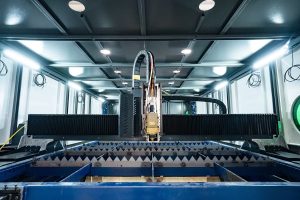
Industrial welder performing MIG welding on custom steel frames in a Michigan fabrication facility

Advantages in Medical Applications

The use of laser and waterjet cutting in medical device manufacturing offers several key benefits:

  1. High Precision: These technologies provide unparalleled accuracy, crucial for medical devices where even small deviations can have significant consequences.
  2. Material Versatility: They can work with a wide range of materials, from metals to polymers, accommodating the diverse needs of medical applications.
  3. Sterile Processing: The non-contact nature of these cutting methods helps maintain sterility throughout the manufacturing process.
  4. Rapid Prototyping: Laser and waterjet cutting enable quick iteration and prototyping of new medical devices, accelerating innovation in the field.

By leveraging laser and waterjet cutting technologies, the medical industry continues to advance, producing increasingly sophisticated and effective devices that improve patient care and outcomes.

5. Architecture and Construction: Precision Cutting for Form and Function

The construction and architecture sectors have embraced laser and waterjet cutting services in Detroit to revolutionize both the functional and aesthetic aspects of building design and fabrication. These advanced cutting methods offer unprecedented precision and versatility, enabling architects and builders to push the boundaries of creativity and structural innovation.

Structural Components

Laser and waterjet cutting play crucial roles in fabricating structural elements:

  • Metal Framing: Laser cutting excels in creating precise metal components for building frames and trusses. Meanwhile, accurate waterjet cutting services in Detroit are particularly adept at crafting intricate patterns in stone and composite materials for decorative facade panels.
  • Custom Connectors: Both technologies are used to produce custom metal connectors and joints, allowing for innovative structural designs that were previously difficult to achieve.

Facades and Exterior Elements

The precision of these cutting technologies has transformed the creation of building facades:

  • Intricate Panels: Waterjet cutting is particularly adept at crafting intricate patterns in stone, metal, and composite materials for decorative facade panels.
  • Perforated Screens: Laser cutting enables the production of precisely perforated metal screens, which can serve both aesthetic and functional purposes, such as solar shading or ventilation.

Decorative Elements

The artistic possibilities offered by laser and waterjet cutting are vast:

  • Stone and Tile Work: Waterjet cutting shines in creating intricate designs in stone and tile for floors, walls, and decorative inlays. Its ability to cut without heat makes it ideal for delicate materials like marble and glass.
  • Signage and Lettering: Laser cutting is often used to create precise metal lettering and signage for buildings, both interior and exterior.

Interior Design Applications

Inside buildings, these technologies contribute to unique design elements:

  • Custom Fixtures: Both laser and waterjet cutting are used to create custom lighting fixtures, furniture components, and decorative accents.
  • Partitions and Screens: Intricate room dividers and decorative screens can be crafted using either technology, depending on the material and design complexity.
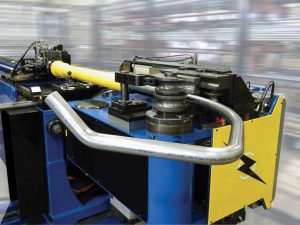
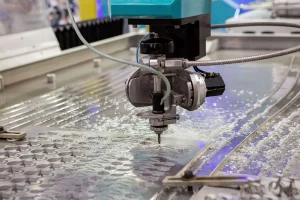
Industrial waterjet cutting thick aluminum; one of the key benefits of CNC laser and waterjet technology

Advantages in Architectural Applications

The use of laser and waterjet cutting in architecture and construction offers several key benefits. By leveraging the benefits of CNC laser and waterjet technologies, professionals in the building industry can achieve results previously unattainable with traditional fabrication.

  1. Design Freedom: Architects can realize complex designs that were previously impractical or impossible to manufacture.
  2. Material Versatility: These technologies can work with a wide range of materials, from metals and stone to glass and composites.
  3. Precision and Consistency: The high accuracy of these cutting methods ensures that components fit together perfectly, reducing on-site adjustments and improving overall build quality.
  4. Efficiency: CNC-controlled cutting processes can significantly reduce production time and material waste compared to traditional methods.

Sustainable Building Practices

Laser and waterjet cutting contribute to sustainable architecture:

  • Material Optimization: The precision of these technologies minimizes material waste, contributing to more sustainable building practices.
  • Energy-Efficient Designs: The ability to create complex shading structures and ventilation systems can improve building energy efficiency.

By leveraging laser and waterjet cutting technologies, the architecture and construction industries are able to create buildings that are not only structurally sound but also visually striking and environmentally conscious. As these technologies continue to advance, we can expect even more innovative applications in the built environment, further blurring the lines between engineering and art in architectural design.

Motor City Fab: Precision Cutting for Industry Leaders

At Motor City Metal Fab, we provide top-tier laser and waterjet cutting services for a wide range of industries. Our family-owned business is committed to delivering exceptional quality and customer service.

Our Cutting-Edge Technologies

  • Laser Cutting: 3-axis 4000-watt fiber laser for precise cuts in various metals
  • Waterjet Cutting: In-house waterjet with Diamond-integrated 5i nozzle for versatile material cutting

Comprehensive Services

Beyond cutting, we offer:

Why Choose Us?

  • Expertise in handling complex projects
  • Commitment to quality and precision
  • Efficient processes for quick turnaround
  • Versatility in materials and applications

At Motor City Metal Fab, we’re not just service providers – we’re partners in bringing your ideas to life. Let us show you why we’re the preferred choice for industry leaders in metal fabrication and cutting.

Conclusion

In conclusion, laser and waterjet cutting services in Detroit have become indispensable tools across various industries, revolutionizing manufacturing processes and enabling unprecedented levels of precision and efficiency. 

From automotive and aerospace to electronics, medical devices, and architecture, these cutting-edge technologies continue to push the boundaries of what’s possible in design and fabrication. 

As companies like Motor City Fab demonstrate, the fusion of advanced technology with expert craftsmanship is driving innovation and quality across diverse sectors, promising exciting developments in the future of manufacturing.

FAQs

What are the main advantages of laser and waterjet cutting over traditional cutting methods?
Laser and waterjet cutting offer higher precision, the ability to work with a wide range of materials, reduced material waste, and the capacity to create complex geometries. Our metal laser cutting services and CNC waterjet cutting services in Detroit provide capabilities that would be difficult or impossible to achieve with traditional methods.

Which industries benefit most from laser and waterjet cutting technologies?
The automotive, aerospace and defense, electronics, medical and healthcare, and architecture and construction industries are among the top beneficiaries of these technologies. They often utilize specialized tube laser cutting services in Detroit for structural components and accurate waterjet cutting services for heavy-duty plate work.

Can laser and waterjet cutting be used on all types of materials?
While these technologies are versatile, metal laser cutting services in Detroit are best suited for metals, plastics, and some composites. In contrast, CNC waterjet cutting services can handle an even wider range of materials, including stone, glass, and heat-sensitive materials that cannot be cut with a laser.

How do laser and waterjet cutting contribute to sustainability in manufacturing?
These technologies contribute to sustainability by minimizing material waste, enabling the creation of energy-efficient designs, and allowing for the use of more sustainable materials in various applications.

Are laser and waterjet cutting suitable for small-scale or prototype production?
Yes, Laser & Waterjet Cutting Services are excellent for both small-scale production and prototyping due to their flexibility, precision, and ability to quickly produce complex parts without the need for tooling.

Open post Precision-cut aluminum components showcasing the accuracy of our Laser & Waterjet Cutting Services

Top 5 Challenges in Laser and Waterjet Cutting

Laser and waterjet cutting are advanced manufacturing processes that offer precision and versatility. However, they come with their own set of challenges. As a leader in providing professional Laser & Waterjet Cutting Services in Detroit, we understand that navigating these obstacles is key to delivering high-quality results. Here are the top 5 challenges faced in laser and waterjet cutting:

Material Thickness Limitations

Material thickness is a crucial factor in determining the effectiveness of laser and waterjet cutting processes. Both technologies have distinct capabilities and limitations when it comes to handling materials of varying thicknesses.

Laser Cutting Constraints

Laser & Waterjet Cutting Services in Detroit excels at processing thin sheets with high precision. However, it faces significant challenges when dealing with materials thicker than 1 inch. The laser beam’s power diminishes as it penetrates deeper into the material, resulting in reduced cutting efficiency and quality for thicker substrates. This is also a factor in tube laser cutting services, where wall thickness must be carefully managed to ensure clean results.

Waterjet Cutting Capabilities

Waterjet cutting offers a broader range of thickness capabilities. It can effectively cut through thick materials that laser cutting struggles with, handling thicknesses up to 12 inches for most materials like stainless steel and carbon steel. Utilizing accurate waterjet cutting services in Detroit allows for the processing of heavy-duty substrates that other methods cannot touch.

Choosing the Right Process

To address the material thickness challenge, manufacturers must carefully select between laser and waterjet cutting based on their specific requirements:

  • Metal laser cutting services in Detroit is ideal for thin sheets requiring high precision, typically materials less than 0.4 inches thick.
  • Waterjet cutting is generally preferred for thicker materials, especially those exceeding 1 inch in thickness.
  • For materials between 0.4 and 1 inch, the choice may depend on other factors such as material type, required precision, and production speed.

By strategically selecting the appropriate cutting method based on material thickness, manufacturers can ensure optimal results, efficiency, and cost-effectiveness in their cutting processes.

Heat-Affected Zone (HAZ)

The heat-affected zone is a significant challenge in laser cutting processes, impacting material properties and potentially compromising the quality of the final product. Understanding and managing HAZ is crucial for achieving optimal results in laser cutting operations.

Thermal Impact on Materials

Laser cutting generates intense heat, creating a heat-affected zone around the cut area. This thermal effect can alter the material’s properties, leading to several issues:

  • Warping or distortion, especially in heat-sensitive materials
  • Changes in hardness or brittleness of the material near the cut
  • Potential microstructural changes affecting the material’s strength
  • Formation of oxides or other unwanted compounds on the cut edge

For example, in steel cutting, the HAZ can lead to hardening of the material near the cut, potentially causing brittleness or cracking.

Advantages of Cold Cutting

By contrast, accurate waterjet cutting services use a cold process avoids the HAZ issue entirely. This makes it an excellent choice for:

  • Materials that are particularly sensitive to heat
  • Applications where maintaining the original material properties is crucial
  • Cutting composites or layered materials where thermal effects could cause delamination

The absence of thermal effects in waterjet cutting also reduces the risk of warping or distortion in the cut parts, making it ideal for precision components.

Mitigating HAZ in Laser Cutting

To address HAZ issues in laser cutting, operators can employ several strategies:

Adjusting cutting parameters:

  • Reducing laser power to minimize heat input
  • Increasing cutting speed to reduce heat accumulation
  • Optimizing assist gas flow to aid in heat dissipation

Using water-assisted laser cutters:

  • These systems can significantly reduce heat-related problems by providing cooling during the cutting process
  • Water-assisted lasers are particularly effective for cutting thick materials or heat-sensitive alloys

Implementing proper cooling techniques:

  • Using cooling fixtures or heat sinks to dissipate heat more effectively
  • Allowing sufficient cool-down time between cuts on sensitive materials

By carefully managing these factors, manufacturers can leverage the precision of laser cutting while minimizing the negative impacts of the heat-affected zone, ensuring high-quality results across a wide range of materials and applications.

Precision and Edge Quality

Maintaining consistent edge quality while achieving high precision is a significant challenge Metal laser cutting services in Detroit offer high precision for intricate designs but may produce rough edges on thicker materials. Meanwhile, CNC waterjet cutting services maintain good edge quality across varying thicknesses but require careful pressure adjustment to minimize tapering. Whether performing flat sheet work or tube laser cutting services in Detroit, regular calibration of cut

Laser Cutting Edge Quality

Laser cutting offers high precision, especially for intricate designs, but it may produce rough edges on thicker materials due to heat effects. This is particularly noticeable when cutting materials that are more susceptible to thermal distortion. 

To mitigate these issues and improve edge quality in laser cutting, operators can employ several techniques:

  • Adjusting the focus of the laser beam to ensure optimal penetration and minimize the heat-affected zone.
  • Optimizing laser power settings according to material thickness to achieve smoother cuts and reduce rough edges.
  • Varying cutting speed to find a balance between speed and quality, as slower speeds often yield better edge quality.
  • Testing with different assist gases to enhance cutting effectiveness and improve edge smoothness.

Waterjet Cutting Edge Quality

Waterjet cutting generally maintains good edge quality but can lead to slightly tapered edges depending on the material and settings used. While this method excels at cutting thicker materials where edge quality is critical, it requires careful parameter adjustment to achieve optimal results. 

Key practices for enhancing precision and edge quality in waterjet cutting include:

  • Adjusting water pressure to find the optimal flow rate for the material being cut, enhancing precision.
  • Optimizing abrasive flow rate for improved cutting efficiency and better edge quality.
  • Ensuring that the cutting speed is suitable for the thickness and type of material to minimize tapering.
  • Regularly calibrating and maintaining the cutting head to ensure consistent performance.

Importance of Calibration

For both laser and waterjet cutting services in Detroit, proper calibration of cutting parameters is crucial to achieve optimal edge quality. The thickness of the material plays a crucial role in determining the edge quality from both processes. Regular inspection and maintenance of equipment are essential for consistent performance and quality in both methods.

By understanding the strengths and limitations of each cutting method and implementing best practices for parameter optimization, manufacturers can significantly improve precision and edge quality in their cutting processes.

Material Wastage and Efficiency

In the realm of laser and waterjet cutting, optimizing material usage and maximizing cutting efficiency are crucial challenges that directly impact production costs and sustainability. This is especially critical when working with high-value materials where waste can significantly affect profitability.

Nesting Software Optimization

Advanced nesting software plays a pivotal role in reducing material wastage and improving cutting efficiency. These sophisticated tools offer several benefits:

  • Efficient part arrangement: The software automatically calculates the most space-efficient layout for parts to be cut, minimizing unused material.
  • Material utilization analysis: It provides insights into material usage, helping operators identify areas for improvement.
  • Multi-sheet nesting: Some software can optimize part placement across multiple sheets, further reducing waste.

Cutting Method Selection

Choosing the appropriate cutting method based on material properties and thickness is crucial for efficiency:

  • Laser cutting: Ideal for thin sheets and intricate designs, offering fast processing times for certain materials.
  • Waterjet cutting: Better suited for thicker materials and when heat-affected zones must be avoided.

Selecting the right provider for Laser & Waterjet Cutting Services in Detroit can significantly reduce processing time and material waste, especially when dealing with challenging or expensive materials.

Process Optimization Techniques

To further enhance efficiency and reduce waste, manufacturers can implement various strategies:

  • Regular machine maintenance to ensure consistent performance and reduce errors.
  • Operator training to improve decision-making in material and process selection.
  • Implementing lean manufacturing principles to streamline the entire cutting process.
  • Utilizing scrap material for smaller parts or other applications when possible.

By focusing on these areas, manufacturers can significantly improve material utilization, reduce waste, and enhance overall cutting efficiency in both laser and waterjet cutting processes.

Maintenance and Operating Costs

Maintaining laser and waterjet cutting machines is crucial for optimal performance, longevity, and cost-effectiveness. Both technologies require regular upkeep, but the specific maintenance needs differ.

Laser Cutter Maintenance

Laser cutting machines require particular attention to:

  • Optics and mirrors: Regular cleaning and alignment checks are essential to maintain beam quality and cutting precision.
  • Cooling systems: Proper maintenance ensures the laser source operates at optimal temperature, preventing overheating and performance issues.
  • Exhaust systems: Regular cleaning prevents buildup of debris that could affect air flow and cutting quality.

Specialized technicians may be needed for certain laser cutter maintenance tasks, particularly those involving the laser source or complex optical alignments used in tube laser cutting services in Detroit.

Waterjet Cutter Maintenance

CNC waterjet cutting services in Detroit have different maintenance requirements:

  • High-pressure pumps: Regular inspection and servicing of seals, plungers, and valves is crucial.
  • Cutting heads: Checking for wear and proper alignment of the nozzle and mixing tube is essential.
  • Water quality: Monitoring and maintaining water quality is vital to prevent clogging and damage to components.

Operators can often perform many routine maintenance tasks on waterjet cutters after proper training.

Implementing a Maintenance Schedule

To address maintenance challenges effectively:

  • Develop a comprehensive maintenance schedule based on manufacturer recommendations.
  • Train operators to perform routine checks and basic maintenance tasks.
  • Keep detailed maintenance logs to track issues and predict potential problems.
  • Schedule regular professional inspections and servicing, especially for complex components.

Cost Considerations

While maintenance costs are significant for both technologies, they can be managed through:

  • Preventive maintenance to avoid costly breakdowns and extend machine life.
  • Proper operator training to reduce wear and tear from misuse.
  • Investing in high-quality machines that may have lower long-term maintenance costs.
  • Considering service contracts for specialized maintenance tasks, particularly for laser cutters.

By implementing a robust maintenance strategy, companies can optimize the performance of their cutting machines, reduce downtime, and control long-term operating costs.

Motor City Fab: Precision Cutting for Industry Leaders

At Motor City Metal Fab, we provide top-tier laser and waterjet cutting services in Detroit for a wide range of industries. Our family-owned business is committed to delivering exceptional quality and customer service.

Our Cutting-Edge Technologies

  • Laser Cutting: 3-axis 4000-watt fiber laser for precise cuts in various metals
  • Waterjet Cutting: In-house waterjet with Diamond-integrated 5i nozzle for versatile material cutting

Comprehensive Services

Beyond cutting, we offer:

Why Choose Us?

  • Expertise in handling complex projects
  • Commitment to quality and precision
  • Efficient processes for quick turnaround
  • Versatility in materials and applications

At Contact Us, we’re not just service providers – we’re partners in bringing your ideas to life. Let us show you why we’re the preferred choice for industry leaders in metal fabrication and cutting.

Conclusion

In conclusion, laser and waterjet cutting technologies offer powerful solutions for modern manufacturing, but they come with their own set of challenges. 

From material thickness limitations to heat-affected zones, precision concerns, efficiency issues, and maintenance requirements, manufacturers must navigate these hurdles to maximize the benefits of these cutting processes. 

By choosing the right Laser & Waterjet Cutting Services in Detroit, companies can optimize their operations and improve product quality. As the industry continues to evolve, addressing these challenges will be crucial for staying competitive and meeting the ever-increasing demands of precision manufacturing.

FAQs

Which cutting method is better for thick materials?
CNC waterjet cutting services in Detroit are generally preferred for thicker materials, as they can handle materials up to 12 inches thick, while laser cutting struggles with materials thicker than 1 inch.

How can I reduce the heat-affected zone in laser cutting?
To mitigate HAZ issues in metal laser cutting services in Detroit, you can adjust cutting parameters such as power and speed, use water-assisted systems, and implement proper cooling techniques.

What software can help optimize material usage in cutting processes?
Advanced nesting software can significantly improve material utilization by efficiently arranging parts to be cut, providing usage analysis, and offering multi-sheet nesting capabilities.

How often should I maintain my laser or waterjet cutting machine?
Regular maintenance is crucial for both technologies. Develop a comprehensive maintenance schedule based on manufacturer recommendations, which typically includes daily, weekly, and monthly tasks.

Can waterjet cutting handle precision cuts on thin materials?
While accurate waterjet cutting services excel at thick materials, laser cutting is often preferred for high-precision cuts on very thin sheets.

Open post Robotic arm integrated with Advanced Cutting Technologies for automated 3-axis part fabrication

The Cutting Edge: Revolutionizing Manufacturing with Advanced Laser and Waterjet Technologies

In the ever-evolving landscape of manufacturing, laser and waterjet cutting in Detroit technologies stand at the forefront of innovation, poised to reshape industries and redefine production capabilities. As we look towards the future, these cutting-edge technologies promise to deliver unprecedented levels of precision, efficiency, and versatility. 

From intricate microelectronics to robust aerospace components, the applications of advanced laser and waterjet systems are expanding rapidly, driven by relentless technological advancements and the growing demands of modern industry. 

This exploration into the future of cutting technologies reveals a world where smart, sustainable, and highly automated systems work in harmony to push the boundaries of what’s possible in manufacturing.

Revolutionizing Precision Engineering with Cutting-Edge Technology

The future of laser and waterjet cutting in Detroit technology is set to revolutionize precision engineering. Manufacturers are developing systems with higher power outputs, enabling faster metal laser cutting services in Detroit and the ability to handle thicker substrates with ease. These advancements will result in smoother cuts with fewer defects, reducing the need for secondary finishing operations. For instance, new laser systems are expected to achieve micron-level precision, while waterjet technology is evolving to create even finer abrasive streams for intricate cutting tasks.

Higher Power and Enhanced Beam Control

Advancements in beam control are enabling more efficient tube laser cutting services in Detroit, allowing for complex geometries in structural tubing that were previously difficult to achieve. These systems handle thicker materials while maintaining the high speeds required for modern production.

Smoother Cuts and Reduced Post-Processing

These advancements will result in smoother cuts with fewer defects, reducing the need for secondary finishing operations. This improvement in quality will significantly streamline manufacturing processes across both laser and CNC waterjet cutting services in Detroit.

Micron-Level Precision and Intricate Cutting Capabilities

For instance, new laser systems are expected to achieve micron-level precision, while waterjet technology is evolving to create even finer abrasive streams for intricate cutting tasks. These Advanced Cutting Technologies in Detroit will open up new possibilities for manufacturing complex and highly detailed components across various industries, ensuring the highest standards of accuracy and efficiency.

Smart Manufacturing Integration for Advanced Cutting Systems

The integration of laser and waterjet cutting systems into smart manufacturing ecosystems represents a significant leap forward in precision manufacturing. This integration leverages cutting-edge technologies to optimize performance, enhance efficiency, and improve overall productivity.

AI and Machine Learning Optimization

AI algorithms are being incorporated into metal laser cutting services in Detroit to:

  • Optimize cutting parameters in real-time based on material properties and job requirements
  • Predict maintenance needs to reduce unplanned downtime
  • Improve overall system performance through continuous learning and adaptation

These AI-powered systems can analyze vast amounts of operational data to make intelligent decisions that enhance cutting precision, speed, and efficiency.

Digital Twin Technology

Digital twin technology is gaining traction in the cutting industry, allowing for:

  • Offline programming and simulation of cutting processes
  • Virtual testing and optimization of cutting paths and parameters
  • Real-time monitoring and comparison of actual performance against the digital model

This enables manufacturers to optimize Detroit CNC waterjet cutting services by virtually testing cutting paths and parameters before actual production begins, significantly reducing setup times and material waste.

Enhanced Productivity and Efficiency

The integration of these smart technologies into cutting systems offers several key benefits:

  • Reduced setup times through automated programming and optimization
  • Minimized material waste due to more precise cutting and improved nesting algorithms
  • Enhanced overall productivity through continuous process improvement and predictive maintenance

By seamlessly connecting cutting systems with broader manufacturing ecosystems, companies can achieve greater agility, responsiveness, and efficiency in their production processes.

The adoption of smart manufacturing integration for laser and waterjet cutting systems is paving the way for a new era of precision manufacturing, characterized by unprecedented levels of automation, optimization, and efficiency.

Robotic arm integrated with Advanced Cutting Technologies for automated 3-axis part fabrication

Expanding Material Capabilities in Cutting Technologies

As industries continue to innovate and develop new materials, laser and waterjet cutting technologies are evolving to meet the challenges of processing these advanced substrates. This expansion of material capabilities is opening up new possibilities across various sectors, from aerospace to healthcare.

Cutting Advanced Composite Materials

Specialized techniques are making difficult materials more manageable. While metal laser cutting services in Detroit are evolving for plastics and reflective metals, Detroit accurate waterjet cutting services can effectively cut carbon fiber composites with high precision (+/- 0.01 mm) and zero heat-affected zones.

  • Laser cutting of carbon fiber reinforced plastics (CFRP) has shown improvements in cut quality and reduced tensile strength compared to pure waterjet cutting.
  • Abrasive waterjet technology can effectively cut carbon fiber composites with high precision (+/- 0.01 mm) and minimal kerf (0.2-0.5 mm).

Micro-Cutting Applications

Developments in beam focusing for lasers and water pressure control for waterjets are enabling extremely precise micro-cutting applications:

  • Laser micromachining can create features between 1 and 999 micrometers, which is highly difficult with mechanical cutting tools.
  • Micro abrasive waterjet cutting can achieve intricate cuts as thin as 1 mm with high precision (+/- 0.01 mm).

These advancements are particularly valuable in industries requiring high precision:

  • Electronics: Profiling of PCBs and fabrication of microelectronic components.
  • Medical Devices: Production of intricate parts for implantable devices and surgical instruments.

New Material Processing Capabilities

The expansion of Laser cutting services in Detroit technologies is enabling the processing of a wider range of materials:

  • Lasers can now effectively cut reflective materials like copper and brass, as well as heat-sensitive materials like nitinol.
  • Waterjet technology can cut virtually any material between 0.02-30 mm in thickness, including metals, composites, and ceramics.

This versatility is driving innovation in various industries:

  • Aerospace: Cutting lightweight composites for aircraft components.
  • Healthcare: Processing of biocompatible materials for medical implants.

By adapting to new materials and enabling micro-scale precision, laser and waterjet cutting technologies are paving the way for advancements in product design and manufacturing across multiple sectors.

Sustainability and Efficiency in Cutting Technologies

The future of cutting technologies is increasingly focused on sustainability and efficiency, as manufacturers seek to reduce their environmental impact while maintaining high productivity. Both laser and waterjet cutting systems are evolving to meet these goals through various innovations.

Energy Efficiency Improvements

New designs for metal laser cutting services in Detroit and more efficient pumps for CNC waterjet cutting services in Detroit are significantly improving energy efficiency:

  • Advanced fiber lasers can achieve wall-plug efficiencies exceeding 40%, compared to 10-15% for traditional CO2 lasers.
  • Modern fiber laser systems consume 50-70% less energy than CO2 lasers and up to 80% less than plasma cutting for materials under 10 mm thickness.
  • High-pressure waterjet pumps are being optimized for energy efficiency, reducing power consumption while maintaining cutting performance.

These improvements not only reduce operational costs but also lower the carbon footprint of manufacturing processes.

Eco-Friendly Practices

Waterjet cutting aligns particularly well with eco-friendly manufacturing practices:

  • It uses water and natural abrasives as the primary cutting medium, eliminating the need for toxic chemicals or gases.
  • The abrasive particles used in CNC waterjet cutting services in Detroit can be collected, separated, and recycled, further reducing waste.
  • Water used in the cutting process can be treated and recycled in closed-loop systems, minimizing water consumption.

Minimizing Environmental Impact

For laser cutting, ongoing research is focused on developing technologies to minimize environmental effects:

  • New cutting gases are being explored to reduce emissions and improve cutting efficiency.
  • Advanced fume extraction systems are being developed to capture and filter harmful particles and gases produced during the cutting process.
  • Adoption of eco-friendly cutting assist gases, such as nitrogen instead of oxygen for certain applications, can reduce oxidation and improve cut quality while lowering environmental impact.

Meeting Environmental Regulations

These advancements are helping manufacturers meet increasingly stringent environmental regulations:

  • By optimizing resource usage through professional Laser & Waterjet Cutting Services in Detroit, companies can balance environmental responsibility with high productivity.
  • The integration of digital technologies and smart manufacturing principles allows for optimized resource usage and reduced material waste.

As cutting technologies continue to evolve, the focus on sustainability and efficiency will likely intensify, driving further innovations that balance environmental responsibility with high productivity in manufacturing processes.

Automation and Robotics

The integration of laser and waterjet cutting systems with robotic technologies is indeed poised to revolutionize manufacturing processes. This automation trend offers several key benefits:

Enhanced Flexibility and Complex 3D Cutting

Automated solutions combining robotics with tube laser cutting services in Detroit enable more flexible processes that can quickly adapt to different part geometries:

  • More flexible production processes that can quickly adapt to different part geometries and materials
  • Efficient handling of complex 3D cutting operations that would be challenging for human operators
  • Increased throughput and productivity due to faster cycle times and continuous operation

Advanced Sensing and Control

The integration of computer vision allows for real-time monitoring and adjustment of parameters during Detroit metal laser cutting services:

  • Real-time monitoring and adjustment of cutting parameters
  • Precise part positioning and tracking during the cutting process
  • Automated quality control and inspection of cut parts

Improved Safety

Robotic automation of cutting processes enhances workplace safety by:

  • Reducing human exposure to hazardous cutting environments
  • Minimizing risks associated with manual handling of sharp materials and parts
  • Improving consistency and reducing errors that could lead to safety issues

Precision automotive components being manufactured via professional cnc machining services

Complex 3D Cutting Capabilities

Robotic arms equipped with waterjet cutting services in Detroit  can perform intricate 3D cutting operations:

  • Enabling the production of complex geometries and contours
  • Allowing for multi-axis cutting that can access hard-to-reach areas
  • Facilitating the processing of parts with varying thicknesses or compound curves

Minimal Human Intervention

The high level of automation achievable with robotic cutting systems results in:

  • Reduced reliance on skilled human operators for routine cutting tasks
  • More consistent and repeatable cutting quality across production runs
  • The ability to operate for extended periods with minimal supervision

As this technology continues to advance, we can expect to see even greater integration of robotics, artificial intelligence, and advanced sensing capabilities in cutting applications, further transforming manufacturing floors and enabling new levels of productivity and precision in part production.

Motor City Fab: Precision Cutting for Industry Leaders

At Motor City Fab, we provide top-tier laser and waterjet cutting services in Detroit for a wide range of industries. Our family-owned business is committed to delivering exceptional quality and customer service.

Our Cutting-Edge Technologies

  • Laser Cutting: 3-axis 4000-watt fiber laser for precise cuts in various metals
  • Waterjet Cutting: In-house waterjet with Diamond-integrated 5i nozzle for versatile material cutting

Comprehensive Services

Beyond cutting, we offer:

  • CNC Machining
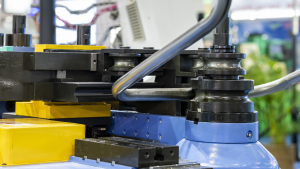
  • Metal Forming and Tube Bending
  • Welding and Fabrication
  • CAD Designing and CAM Manufacturing
  • Powder Coating
  • Assembly and Shipping

Why Choose Us?

  • Expertise in handling complex projects
  • Commitment to quality and precision
  • Efficient processes for quick turnaround
  • Versatility in materials and applications

At Motor City Fab, we’re not just service providers – we’re partners in bringing your ideas to life. Let us show you why we’re the preferred choice for industry leaders in metal fabrication and cutting.

Conclusion

As we look to the future of laser and waterjet cutting in Detroit technologies, it’s clear that these advanced systems will continue to push the boundaries of manufacturing capabilities. From revolutionary precision engineering to smart manufacturing integration, expanding material capabilities, improved sustainability, and increased automation, the cutting edge is constantly advancing. These innovations promise to deliver unprecedented levels of accuracy, efficiency, and versatility across industries. As manufacturers embrace these technologies, we can expect to see more complex designs, faster production times, and more sustainable practices becoming the norm. The future of cutting technologies is not just about making cleaner cuts – it’s about reshaping the entire landscape of manufacturing.

FAQs

What are the main advantages of laser and waterjet cutting over traditional methods?

Professional Laser & Waterjet Cutting Services in Detroit offer superior precision, minimal material waste, and the capability to work with a wide range of materials that are difficult to process with traditional tools.

How do laser and waterjet cutting contribute to sustainability in manufacturing?

These technologies contribute to sustainability through improved energy efficiency, reduced waste, and the ability to recycle materials. Waterjet cutting, in particular, uses eco-friendly abrasives and water, while laser cutting systems are being developed with improved fume extraction and eco-friendly cutting gases.

Can laser and waterjet cutting be used for small-scale or custom projects?

Absolutely. These technologies are highly versatile and can be scaled for both large production runs and small, custom projects. Their precision and flexibility make them ideal for prototyping and one-off custom designs.

How is automation changing the landscape of cutting technologies?

Automation is revolutionizing the industry by integrating robotic systems and AI. This allows for complex tube laser cutting services and 3D operations to be performed with increased safety and minimal human intervention.

Open post In-house CNC machining services Detroit - precision milled metal components at Motor City Metal Fab

How Does Water Jet Cutting Work? A Complete Guide

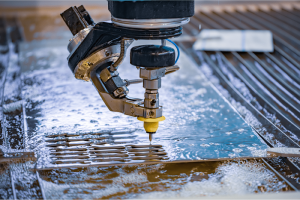
Water jet cutting in Detroit is a pioneering technology that enables precise and accurate cutting of materials using an ultra-high-pressure stream of water. This method operates without generating heat, making it ideal for delicate items and materials that are prone to warping. By utilizing a powerful jet, often combined with abrasives, it can effectively cut through a wide range of materials, from soft rubber to hardened steel.

Key components of water jet cutting include a high-pressure pump that pressurizes the water, a cutting head that directs the stream, and a nozzle that focuses the jet for precision. The process offers numerous benefits, including the elimination of heat-affected zones, which prevents warping and maintains the integrity of the material. Its versatility allows for intricate designs and complex shapes to be cut efficiently, making it suitable for various applications across multiple industries.

Water Jet Cutting Basics

Water jet cutting is a versatile process capable of cutting through a wide range of materials. While metal laser cutting services in Detroit are often preferred for speed on thin gauges, creating an extremely powerful jet that can cut even the most resistant materials. One of the major advantages of this method is that it’s considered a cold-cutting process, meaning it doesn’t generate heat-affected zones during cutting.

This cold-cutting property provided by accurate waterjet cutting services in Detroit is particularly beneficial for heat-sensitive materials such as plastics, rubber, and composites. As it prevents thermal distortion or warping. Furthermore, since no heat is used in the process, it doesn’t alter the material’s integrity or properties. This ensures that the final product meets required specifications without compromising quality.

The flexibility of CNC waterjet cutting services in Detroit makes them an excellent choice for various applications where preserving material properties is vital. It can handle delicate materials as easily as it can cut through tough metals, all while maintaining precision and avoiding heat-related issues. This versatility, combined with its ability to preserve material properties, makes water jet cutting a valuable technology in modern manufacturing and fabrication processes.

Types of Water Jet Cutting

Pure Water Jet:

Only water is used in this method and it typically deals with softer materials such as rubber, foam, or plastics.

Abrasive Water Jet Cutting:

This is used for cutting harder materials like metals, stone, and ceramics where abrasives are added to the water stream.

We employ both types at Motor City Metal Fab, often complementing our tube laser cutting services in Detroit with water jet capabilities to meet diverse project needs.

Step by Step Water Jet Cutting

So first of all, here we have the main factors and procedure for water jet cutting in detail:

1. Water Pressurization

It all starts with a high-pressure pump that takes WATER and cranks it up to extreme levels — usually 60,000-90,00 psi. That’s nearly 1,000 times more powerful than a regular car wash.

2. Water Delivery

Pressurized water is sent to high-pressure tubing and pipes that transport the pressurized water to a cutting head.

3. Nozzle and Orifice

A flow of water travels through the cutting head, passing out a jewel orifice (often made from sapphire; ruby, and diamond) This orifice, usually 0.010 to 0.015 inches in diameter, directs the water into a very thin stream at high velocities.

4. Adding abrasive (for Abrasive Water Jet Cutting)

For accurate waterjet cutting services in Detroit, garnet particles are fed into the cutting head to mix with water.

5. Mixing Tube

The water and abrasive are mixed in a mixing tube. A tube focuses the abrasive-laden water, which forms a coherent cutting stream.

6. Cutting Action

A high-velocity stream of water (sometimes, together with abrasives) leaves the cutting head at speeds that can approach 2500 miles per hour. This carves through the metal by quickly eroding it.

7. Catcher Tank

In water jet cutting, a high-pressure stream of water is used to cut through various materials, making it effective for both soft and hard substances. This cold-cutting process prevents heat-affected zones, which is ideal for heat-sensitive materials.

The cutting occurs in a tank filled with liquid, which helps dissipate energy, collect waste material, and reduce noise and debris. This setup is a staple of professional CNC waterjet cutting services in Detroit, allowing for precise cuts while maintaining a clean environment.

AI dashboard for real-time monitoring of Laser & Waterjet Cutting Services

Water Jet Cutting Process Science

Water jet cutting relies on the principle of concentration to achieve its effectiveness. As high-pressure water is forced through a tiny orifice, it accelerates to hypersonic velocity, creating a powerful cutting stream. This concentrated jet of water is capable of cutting through various materials with precision.

To enhance cutting power, especially for harder materials, abrasive particles are often added to the water stream. This process is known as Abrasive Water Jet.  (AWJ) cutting. In AWJ, the high-speed water stream propels abrasive particles, typically garnet sand, at extreme velocities. These rapidly moving particles do most of the actual cutting, significantly increasing the system’s ability to cut through tough materials.

This combination of high-pressure water and abrasive particles enables water jet cutting to tackle even the hardest materials, such as steel and stone, with remarkable efficiency. This versatility is a hallmark of modern Laser & Waterjet Cutting Services in Detroit.

What are the benefits of Water Jet Cutting?

After years of experience with water jet cutting, we have discovered that these are key elements to our success at MCMF and want to share them with you:

Water jets are versatile because they can cut almost any material – from soft rubber to hard steel.

No Heat-Affected Zone: Unlike thermal methods such as metal laser cutting services in Detroit, water jets will not heat the material, meaning no thermal distortion.

Security:

CNC waterjet cutting services in Detroit can reach very high tolerances down to approximately 0.005 inches

Less Waste:

Due to the narrow kerf, less material is wasted during your cut.

Green:

Water jet cutting uses only water and natural abrasives, with no toxic fumes released.

Capacity of Cutting Thick Material:

Water jets can cut material that is a few inches thick, based on instructions.

Industry Applications of Water Jet Cutting

We use water jet cutting for a variety of applications at Motor City Metal Fab including;

Automotive Components

With a focus on the automotive industry, we manufacture body panels, interior plates, and engine parts. Our CNC waterjet cutting services in Detroit are far more versatile than mechanical cutters, allowing us to work with anything from thin plastics to 12″ steel plating.

Aerospace Parts

To serve our aerospace customers, accurate waterjet cutting services in Detroit are used to manufacture parts demanding very tight tolerances and material properties. Such components include not only titanium and composite parts but firmware, as well.

Industrial Machinery Parts

Using specialization in handling thick materials and complex shapes, we produce a few parts for use on different industrial machinery.

Integration With Other MCMF Services

Water jet cutting is one aspect of our full-service manufacturing at MCMF. Water jet cutting is frequently combined with our other services to offer total solutions;

If you were to ask someone with no experience in manufacturing; what the difference between CAD design and CAM machining is, they wouldn’t be able to answer!

Secondary CNC Machining: Additional custom machining beyond water jet cutting in Detroit can be used to further machine the parts if increased precision is required or additional features are needed.

Welding & Fabrication:

Parts processed via accurate waterjet cutting services in Detroit are often pieces of larger assemblies which we weld and fabricate on-site.

Powder Coating:

We have powder coating services available for post-manufactured treatments for added durability and visual appeal.

Assembly & Shipping:

We can assemble, water jet complex products and ship the product with your instructions.

So, Select the cutting method properly.

As versatile as water jet cutting is, it’s NOT the best option for every job. Professional metal laser cutting services in Detroit are available as well at MCMF, which may be ideal for high-speed production on thinner gauges.

Our team of experts can assist you with all the necessary information required to determine the best cutting method for your particular project, material type, thickness desired finish, and production volume.

High-tolerance metal parts produced by our professional laser & waterjet cutting services

Future of Water Jet Cutting

With ongoing technological advances, we anticipate exciting innovations in water jet cutting at Motor City Metal Fab. One area to watch is the potential for increased cutting pressure, which could enable faster cutting and the ability to handle thicker materials. Additionally, improvements in nozzle design and motion control may enhance precision and accuracy, allowing for tighter tolerances and more intricate cuts. The integration of advanced automation and software could also streamline operations, making the cutting process more efficient and user-friendly. These developments will further solidify MCMF’s position as a leader in water jet cutting technology:

Higher Pressure Systems:

In the future, pumps may produce even higher pressures to cut faster and better.

Advanced Abrasives:

New abrasive materials have the potential to make cutting faster.

Better Software:

The better CAD/CAM software allows for more advanced cuts and also may be faster.

Integration with Robotics:

Combining accurate waterjet cutting services in Detorit with robotic systems will make production more flexible and semi-automatic.

Conclusion

Water jet cutting is a highly effective technology that plays a significant role in advanced machining, and it is one of the many services we offer at Motor City Metal Fab. Whether you need precise parts with tight tolerances for aerospace applications or custom components for industrial machinery and architectural projects, our accurate waterjet cutting services in Detroit can meet your needs.

As a family-owned business, we understand the importance of personalized service. We work closely with our customers to ensure their projects succeed, rather than just operating machines. Based in Detroit and Northwest Ohio, we serve Michigan, the Midwest, and beyond, maintaining high standards of quality and precision in our products.

If you’re considering water jet cutting for your upcoming project, we encourage you to reach out to us. Our team of experts is ready to help you determine if water jet cutting is the right choice for your needs and how it can complement our other services to provide a comprehensive manufacturing solution.

FAQs

What materials can be cut with a water jet?

Tube laser cutting services in Detroit can cut almost any material, including metals (steel, aluminum), marble, glass, plastics, rubber, foam, and composites. Exceptions include tempered glass (which shatters) and very hard materials like diamonds. Water jet cutting can handle materials up to several inches thick, with even greater thicknesses possible for softer materials like plastics or wood.

How thick can a water jet cut?

The cutting thickness depends on the material. For metals, water jet systems typically cut up to 6 inches, while softer materials can be cut even thicker. Very thick materials may require multiple passes.

Is water jet cutting more precise than laser cutting?

Water jet cutting in Detroit has a tolerance level of about ±0.005, making it suitable for thicker materials. Laser cutting can sometimes achieve tighter tolerances for thin materials.

Does water jet cutting affect the properties of the material?

CNC waterjet cutting services in Detroit are a cold process, so it doesn’t create heat-affected zones or alter material properties. This makes it excellent for cutting heat-sensitive materials.

Is water jet cutting environmentally friendly?

Yes, it’s environmentally friendly. It uses only water and natural abrasives, requires no hazardous chemicals, produces no toxic waste, and doesn’t emit fumes or gases.

Open post Cross-section of a waterjet cutting machine nozzle showing the jewel orifice and abrasive mixing chamber

What is a Water Jet Cutting Machine?

A  Water jet cutting machine in Detroit is a state-of-the-art power tool that uses extremely high-pressure water flow to cut various materials with remarkable precision and detail. This advanced technology typically mixes water with abrasive particles to enhance its cutting capabilities. Often integrated with a CNC machining center for automated precision, water jet cutting is versatile and able to work with a wide range of materials, including metals like aluminum and steel, as well as stones such as marble. The process offers exceptional accuracy and can create intricate designs without generating heat, making it ideal for materials sensitive to high temperatures. Its ability to cut through thick materials while maintaining precision makes the Waterjet Cutting Machine a valuable technology in many modern manufacturing and fabrication applications.

How Water Jet Cutting Works?

Let us go through the steps involved in its working.

Water Pressurization

An intensifier pump is used in our CNC waterjet cutting services in Detroit to generate extremely high water pressures, often exceeding 60,000 psi. This high pressure is essential for creating a powerful, focused stream of water that can cut through various materials with precision. The pump operates by using hydraulic intensification, where a larger hydraulic piston drives a smaller high-pressure piston, amplifying the pressure. This technology allows for efficient cutting in industries like aerospace, automotive, and manufacturing, making it ideal for applications that require precision without heat-affected zones.

Nozzle Focus

The water in a waterjet cutting system is pressurized to extremely high levels and then forced through a very small nozzle, typically about 0.1mm in diameter. This nozzle plays a crucial role in accurate waterjet cutting services in Detroit by focusing the water into a high-speed stream. The tiny opening concentrates the water’s energy, creating a powerful jet capable of cutting through various materials with precision. This focused stream allows for accurate cuts and intricate designs, making waterjet cutting a versatile tool in manufacturing and fabrication. The combination of high pressure and a small nozzle diameter results in a water stream that can reach velocities up to three times the speed of sound, enabling efficient and clean cutting across a wide range of materials.

Jet Formation

When water exits the nozzle in a waterjet cutting system, it forms a high-velocity jet stream that can reach speeds up to three times the speed of sound. This incredibly fast movement is the key to water’s ability to cut through tough materials. The extreme speed of the water jet creates intense localized pressure and erosion at the point of contact, allowing it to break down and cut through even the hardest substances. This high-speed stream can slice through materials like metal, stone, and composites with precision, making CNC waterjet cutting services in Detroit a versatile and powerful tool in various industries. The combination of high pressure and velocity enables the water to perform tasks that would be challenging or impossible with traditional cutting methods.

Cutting Action

The high speed of the water in a waterjet cutting system erodes the material to create a cut. When abrasives, such as garnet sand, are mixed with the water stream, they enhance the cutting power, making it much more effective than pure water alone. The abrasive particles are propelled at high speeds, impacting the material and causing erosion and micro-fracturing. This combination of high-velocity water and abrasive particles allows the waterjet to cut through hard materials like metals and stone with remarkable precision. The energy generated by the eroded material further contributes to the metal laser cutting services in Detroit, making abrasive waterjet cutting a powerful and efficient method for various applications.

Types of Water Jet Cutting

At Motor City Metal Fab, we utilize two main types of water jet cutting to meet our customers’ diverse needs. Pure water jet cutting uses high-pressure water to cut softer materials like rubber and textiles, while abrasive water jet cutting incorporates abrasive particles to effectively cut harder materials such as metals and stone. This versatility allows us to handle a wide range of projects, ensuring precision and efficiency for both delicate and heavy-duty applications:

Pure Water Jet Cutting

Pure water jet cutting uses only high-pressure water without abrasives, making it ideal for softer materials like rubber, foam, and some plastics. This method excels at cutting materials that are sensitive to heat, as it doesn’t generate high temperatures during the cutting process. This characteristic prevents warping or changes in material properties that might occur with heat-based cutting methods. The pure water jet is versatile and precise, capable of creating intricate cuts in a variety of soft materials. It’s particularly useful for applications where maintaining the material’s original properties is crucial, offering a clean and efficient cutting solution for many industries.

Laser and waterjet technology used for industrial cutting applications in automotive prototyping

Abrasive Water Jet Cutting

For heavier materials like metals, and ceramics, we utilize accurate waterjet cutting services in Detroit that combine abrasive grains with the water stream. This method combines abrasive grains with a high-pressure water stream, making it highly effective for penetrating tough substances. It provides precision and strength, allowing us to cut thick metals and dense materials with ease. The process is ideal for custom shapes and intricate designs while preventing heat-related damage to the materials. Whether you need precise cuts in steel or detailed work in stone, our abrasive water jet cutting can deliver exceptional results.

Water Jet Cutting Pros:

Our CNC waterjet cutting services in Detroit offer several key benefits.. It provides exceptional precision for intricate cuts and complex shapes while generating minimal heat, preventing warping of sensitive materials. This method is versatile, effectively handling a wide range of materials, including metals and ceramics. Additionally, while tube laser cutting services in Detroit are excellent for specific profiles, water jets can cut through metals up to 6 inches thick. Additionally, it is environmentally friendly, producing minimal waste. These advantages solidify abrasive water jet cutting as a vital part of our operations.

Pure Water Jet Cutting

Our water jet cutting capabilities allow us to cut a wide range of materials, from soft rubbers to hardened steels. This versatility is essential as different industries have varying material property requirements. For softer materials, pure water jet cutting provides clean and precise cuts without generating heat, making it ideal for applications like custom gaskets and seals. For harder materials, we utilize abrasive water jet cutting, which combines abrasive particles with high-pressure water to effectively penetrate thick metals and other tough substances. This adaptability ensures we can meet the specific needs of diverse industries while maintaining high standards of quality and precision.

Heat-Affected Zone

Water jet cutting is a cold-cutting process that doesn’t generate heat, which is a significant advantage for maintaining material integrity. This characteristic is particularly beneficial when working with components that require high precision. By avoiding heat generation, the method prevents warping or distortion. This makes accurate waterjet cutting services in Detroit ideal for industries where material strength is paramount, such as aerospace and medical device manufacturing. This is especially crucial for sensitive materials or parts with tight tolerances where even slight deformations could compromise functionality or appearance. The absence of heat also means there’s no heat-affected zone around the cut, preserving the material’s original strength and structure. This makes water jet cutting ideal for industries where precision and material integrity are paramount, such as aerospace, automotive, and medical device manufacturing.

Accuracy

Our water jet cutting services in Detroit boasts an exceptionally high level of precision, making it ideal for even the most intricate and detailed cuts. This near-errorless tolerance level sets it apart as a best-in-class solution for complex fabrication needs. The precision of our water jet machinery allows us to execute designs that would be challenging or impossible with other cutting methods. This capability enables us to tackle projects requiring extreme accuracy and fine detail, opening up new possibilities for custom fabrication and intricate part production. Whether it’s creating complex patterns, delicate components, or precise geometric shapes, our water jet cutting technology delivers unparalleled accuracy and quality, making it a versatile tool for a wide range of industries and applications.

Eco-friendly

It uses water and natural abrasives for cutting, which makes it a sustainable way to cut. With no harmful emissions or toxic by-products, it helps to create a cleaner manufacturer.

Cutting through Thick Materials

Water jets can cut metals up to 6 inches and most other materials up to 18 inches.

Applications of Water Jet Cutting

At Motor City Metal Fab, our water jet cutting services in Detroit are utilized across various industries and applications. This technology allows us to create intricate and precise cuts for automotive prototyping, transportation components, food service equipment, and parts for the gas and oil industry. We also support the alternative energy sector, including electric vehicles and hydrogen fuel systems, as well as automotive testing equipment and autonomous vehicle development. Our water jet cutting capabilities enable us to handle a wide range of materials and deliver high-quality results for custom fabrication projects.

Automotive Industry

Water jet cutting is widely used in the automotive industry to create precise vehicle body, interior, and engine parts. This method is ideal for producing lightweight components that are both strong and complex in shape, utilizing materials like aluminum and high-strength steel. Automotive manufacturers rely on our water jet cutting services in Detroit to deliver structurally sound parts that enhance performance while reducing weight.

Aerospace Manufacturing

Water jet cutting is highly beneficial for aerospace manufacturing, especially when working with advanced materials like titanium and composites. This method allows us to create intricate details needed in aircraft fuselages, engine components, and structural pieces, all while maintaining the integrity of the materials. The absence of heat during the cutting process is crucial, as it prevents any alteration of the material properties, ensuring that components meet the high safety and performance specifications required in the aerospace sector. Our water jet cutting technology is designed to handle the demands of this industry, providing precision and reliability for critical applications.

Architecture and Construction

Our Detroit CNC waterjet cutting services are also utilized in architectural applications within the building industry. We can engrave stone, glass, or metal to create ornamental elements and custom signage, as well as manufacture bespoke building components. This technology offers limitless aesthetic possibilities, allowing architects and designers to bring their creative visions to life with precision and detail. From decorative panels to intricate facades, our capabilities enable the creation of unique and visually striking architectural features.

Industrial waterjet cutting thick aluminum; one of the key benefits of CNC laser and waterjet technology

Industrial Manufacturing

Water jet cutting is extensively used in larger industrial spaces for custom machine part manufacturing and robust steel plate applications on heavy equipment. This technology’s versatility allows it to cut a wide range of materials, enabling manufacturers to adapt quickly to changing demands.

At Motor City Metal Fab, our Laser & Waterjet Cutting Services in Detroit seamlessly integrate with our other offerings, creating comprehensive manufacturing solutions. This adaptability ensures we can meet specific client needs, whether for intricate parts or large components. By combining water jet cutting with our full suite of services, we provide tailored solutions that enhance efficiency and precision in industrial manufacturing:

CAD Design and CAM Manufacturing

We design all of our parts in-house, using sophisticated CAD software to generate accurate digital models. These designs are put into paths for our CAM systems instructing the water jet to cut shapes as a duplicate even of complex moldings. This integration helps optimize manufacturing and minimize lead times.

CNC Machining

Our integrated manufacturing approach allows for seamless transitions between processes. After parts are cut using our water jet technology, they can be easily transferred to our CNC machining for additional operations such as drilling and milling. This smooth workflow enables us to offer comprehensive, end-to-end solutions to our customers. While metal laser cutting services in Detroit are excellent for high-speed plate work, combining water jet cutting with CNC machining allows us to produce complex parts that require both thick-material cutting and detailed finishing work under one roof. This capability ensures that we can meet diverse manufacturing needs efficiently, from initial cutting to final machining, all under one roof. Our ability to handle multiple stages of production streamlines the manufacturing process, reducing turnaround times and ensuring consistent quality throughout the entire fabrication process.

Welding & Fabrication

Water jet cut parts are often integrated into larger assemblies, requiring skilled welders and fabricators to transform these precision-cut pieces into welded structures or fabricated assemblies. This integration of services allows us to provide a complete manufacturing solution. By combining CNC waterjet cutting services in Detroit with expert welding and fabrication, we deliver highly finished products. Whether we are utilizing flat plate or specialized tube laser cutting services for frame components, our streamlined process ensures quality from initial cutting to final assembly.

Media Blasting / Powder Coating

The finished products can be further enhanced through processes such as powder coating or media blasting. Priming and powder coating provide a protective layer that improves the appearance and durability of the parts. Media blasting not only cleans the surface but also prepares it for better adhesion of coatings. These finishing processes enhance the brightness and aesthetic appeal of the components while ensuring resistance to wear, corrosion, and other environmental factors, ultimately increasing their longevity and performance.

The MCMF Advantage

As a family-owned and operated business, we take pride in offering reasonable rates and personalized Laser & Waterjet Cutting Services in Detroit. At the core of our commitment to quality, we utilize state-of-the-art water jet cutting technology to deliver superior products and services to customers nationwide, with a special focus on our Midwest location and the Greater Detroit region.

Our advanced water jet cutting capabilities, combined with our ability to manage the full spectrum of manufacturing—including metal laser cutting services and tube laser cutting services in Detroit—make us an ideal all-in-one fabrication shop. From initial design to final assembly and shipping, we handle every step of the process to bring your projects to fruition. Our comprehensive approach leverages advanced tools, technologies, and skilled talent to ensure high-quality results.

By offering end-to-end solutions, we streamline the manufacturing process, reducing turnaround times and maintaining consistent quality throughout. Whether you need precision cutting, welding, machining, or complete assembly, our integrated services allow us to meet diverse manufacturing needs efficiently and effectively. Our commitment to excellence and customer satisfaction drives us to continuously improve our capabilities, ensuring we remain at the forefront of manufacturing technology and service.

Conclusion

At Motor City Metal Fab, we’re proud to offer cutting-edge water jet cutting technology as part of our comprehensive manufacturing solutions. This advanced capability represents a major step forward in precision cutting and fabrication.

When you choose MCMF for your water jet cutting needs, you’re not just getting a product – you’re partnering with a family-owned company where every team member takes personal pride in delivering the highest quality results. Our investment in water jet technology demonstrates our commitment to helping customers push boundaries and bring innovative ideas to life.

We invite you to explore how our accurate waterjet cutting services in Detroit, combined with our full suite of fabrication tools, can bring your innovative ideas to life. Our precision capabilities allow us to tackle complex projects with exceptional accuracy and quality assurance. Whether you need intricate parts cut from metals, composites, or other materials, our water jet technology can deliver outstanding results.

Our team is eager to demonstrate how water jet cutting, combined with our full suite of manufacturing services, can help bring your projects to fruition. We provide end-to-end solutions, from initial design to final assembly, all executed with meticulous attention to detail. Let us show you how our advanced capabilities and dedication to quality can elevate your manufacturing projects to new heights.

FAQs

What materials can be cut with a water jet cutting machine?

Water jet machines in Detroit are highly versatile and can cut a wide range of materials, including metals like steel, aluminum, and titanium, as well as stone, ceramics, composites, and plastics. This capability allows for precise and intricate cuts without generating heat, making it suitable for various applications across multiple industries. The ability to work with such diverse materials enhances efficiency and opens up creative possibilities in manufacturing and fabrication.

How thick can a water jet cutter cut?

While metal laser cutting services in Detroit have specific thickness limits, water jet cutters can handle very thick metals and even thicker materials like stone.

Is water jet cutting more precise than laser cutting?

Both are high-precision. Accurate waterjet cutting services in Detroit have advantages for thicker materials and eliminate heat-affected zones, while metal laser cutting services or tube laser cutting services may be preferred for specific thin-gauge or tubular projects.

How does the cost of water jet cutting compare to other cutting methods?

While water jet cutting equipment can have a significant initial cost, it often pays for itself over time due to its versatility and low material waste. It can replace multiple machines, making it cost-effective for various applications.

Is water jet cutting environmentally friendly?

Yes, water jet cutting is considered environmentally friendly. It uses water and natural abrasives, producing no hazardous waste or harmful emissions. The process is also energy-efficient compared to some other cutting methods.

Can water jet cutting be used for 3D or contoured cuts?

Yes, advanced CNC waterjet cutting services can perform 3D and contoured cuts, which is particularly valuable in the aerospace and automotive industries.

Open post Precision metal fabrication and CNC machining services at Motor City Metal Fab

Who Does Metal Fabrication Near Me? Motor City Metal Fab

If you are in the Detroit metropolitan area, the Midwest, or anywhere across the nation and asking, “Who provides metal fabrication services in Detroit?” look no further than Motor City Metal Fab (MCMF). With years of experience, MCMF is a family-owned and operated business that combines traditional craftsmanship with modern technology in metal fabrication services in Detroit. They are committed to excellence in quality and customer service, making them a reliable partner across various fields.

MCMF offers a wide range of services, including industrial welding, CNC machining, laser cutting, and water jet cutting. Their state-of-the-art equipment allows them to handle projects industrial fabrication services in Detroit varying complexities, ensuring high-quality results. If you are currently finding a custom metal fabricator in Michigan, our facility is equipped to handle everything from intricate prototypes to high-volume production runs.

What makes Motor City Metal Fab stand out?

Motor City Metal Fab (MCMF) is a leader in the metal fabrication industry, known for its commitment to quality and consistency. The company adapts to diverse project needs, whether small custom pieces or large industrial fabrication services in Detroit. With years of experience, MCMF combines traditional craftsmanship with modern technology to deliver high-quality results. They ensure precision through strict quality control and utilize advanced equipment for tight tolerances and complex designs. Trusted by construction firms and contractors, MCMF simplifies the process by offering end-to-end metal fabrication services in Detroit design to installation, solidifying its reputation as a reliable partner.

Expertise and Experience

Motor City Metal Fab (MCMF) boasts a talented team of fabricators, welders, and engineers with extensive industry experience, enabling them to bring any design to life. Their expertise spans from creating small custom parts to large industrial fabrication services, including high-precision CNC machining services Detroit manufacturers rely on to manage and overcome any challenge. This broad range of skills and knowledge allows MCMF to deliver creative, tailored solutions for each client’s unique needs. Whether it’s a simple fabrication or a complex welding services in Detroit, MCMF’s team has the capability to handle it effectively, ensuring high-quality results that meet or exceed client expectations.

State-of-the-Art Equipment

Motor City Metal Fab (MCMF) stays ahead in technology by offering a range of services, including cutting and forming, machining, and precision laser cutting. This investment in advanced technology allows MCMF to efficiently and accurately tackle even the most complex metal fabrication services in Detorit. With state-of-the-art equipment, they produce high-quality components with tight tolerances and intricate designs, meeting the diverse needs of clients across various industries. By continually embracing new technologies, MCMF ensures innovative solutions and superior quality in welding and fabrication services in Detroit.

Comprehensive Services

If that sounds appealing to you, then Motor City Metal Fab (MCMF) is the right place for your metal fabrication work. MCMF handles everything from the initial design to final assembly and shipping. This comprehensive approach ensures quality control at every step and creates operational efficiencies that save you time and money. Their experienced team combines traditional craftsmanship with modern technology, allowing them to tackle metal fabrication services in Detroit any complexity while maintaining high standards of quality and service. With MCMF, you can trust that your project will be completed efficiently and to your specifications.

Industrial welder performing MIG welding on custom steel frames in a Michigan fabrication facility

Our Customer-Centric Welding and Fabrication Services

As a family-owned company, Motor City Metal Fab (MCMF) treats every client like one of its own. They prioritize listening to your needs and providing personalized advice to ensure a positive experience with each order of welding and fabrication services in Detroit. MCMF is committed to exceptional customer service, encouraging clients to ask questions or request updates on their projects at any time. This dedication to communication and support helps build lasting relationships and ensures that every project meets your expectations.

Welding and Fabrication Services We Offer

No matter what kind of help you need, we are your one-stop metal fabrication shop in Detroit. Here are some of our main features and what we do:

Laser and Waterjet Cutting

Motor City Metal Fab (MCMF) offers advanced laser and waterjet cutting capabilities, utilizing high-technology systems and the most advanced machines in the industry. These cutting-edge tools enable MCMF to produce precision-engineered cuts for a wide range of applications. If you are currently finding a custom metal fabricator in Michigan for your next project, our versatility allows us to handle diverse projects with accuracy and efficiency, meeting the precise specifications required for various industries and applications. Whether you need intricate parts cut from thin sheet metal or thick plate parted out with our industrial waterjet, MCMF can deliver.

Least Cutting

Laser cutting is ideal for achieving accurate cuts on thin to medium-thickness materials, making it perfect for intricate designs and detailed work. This technology eliminates the need for rapid prototyping, as it produces clean edges and precise finishes. For many businesses, finding a custom metal fabricator in Michigan with high-speed laser capabilities is the key to reducing lead times. The high level of accuracy ensures that even complex shapes can be cut with minimal waste, making laser cutting an efficient choice for a variety of applications. Whether for custom parts or artistic designs, laser cutting delivers exceptional quality and detail.

Waterjet Cutting

Waterjet cutting is highly effective for cutting thick materials, up to several inches, and is ideal for heat-sensitive materials since it generates no heat during the process. It produces smooth, burr-free edges and can cut through a variety of materials, including metals, sandstone, and glass. This versatility makes waterjet cutting suitable for diverse applications, from industrial components to artistic projects, ensuring high accuracy and clean finishes.

Sheet Metal Bending

We offer precise sheet metal bending capabilities, allowing us to bend materials at any angle to meet your specific metal fabrication services in Detorit requirements. This ensures that each piece is tailored to your project’s needs, delivering accuracy and consistency in every bend.

Roll Forming

Roll forming is a process used for bending long lengths of sheet metal into consistent cross sections, allowing for intricate angles and shapes. This method involves passing the metal through a series of rollers that gradually shape it, making it ideal for high-volume production of parts like channels and panels. Roll forming ensures tight tolerances and consistent quality, making it a preferred choice for industries that require precision in their metal components.

Industrial welder performing MIG welding on custom steel frames in a Michigan fabrication facility

Tube and Pipe Bending

We provide comprehensive CNC tube bending services, ensuring tight-tolerance and repeatable bends for a wide range of applications. Our expertise spans from automotive components to furniture manufacturing, delivering precise and consistent results. Our advanced CNC technology allows us to handle complex bending requirements with high accuracy, meeting the exacting standards of various industries. Whether you need custom exhaust systems for vehicles or intricate tubular structures for modern furniture designs, our CNC tube-bending capabilities ensure quality and reliability in every project.

CNC Machining

The Detroit CNC machining center at TGW enables the production of more accurate and intricate parts. Our CNC capabilities ensure consistency and quality, whether you need a one-off prototype or a large production run. This technology allows us to meet the demands of various projects while delivering precise results every time.

CNC Milling: Used to produce complex metal parts with unique, designed shapes and features.

CNC Turning: Best for high-accuracy cylindrical parts,

Multi-axis machining: CNC machining technology allows for the creation of complex designs and geometries that would be challenging or impossible to achieve using traditional machining methods. This advanced capability enables manufacturers to produce intricate parts with high precision and consistency, opening up new possibilities for product design and innovation across various industries. The ability to easily program and execute complex toolpaths means that even the most sophisticated components can be fabricated efficiently, reducing production time and costs while maintaining exceptional quality.

Welding and Fabrication

Our certified welders have a wide repertoire of welding expertise in:

MIG Welding: When you think of welding, the MIG (Metal Inert Gas) process is often the first that comes to mind. MIG welding is popular for its versatility and ease of use, making it suitable for various materials like steel, aluminum, and stainless steel. It involves feeding a continuous wire electrode through a welding gun, which melts and fuses the base materials while an inert gas protects the weld. This method is widely used in industries such as automotive and construction due to its efficiency and ability to produce strong, clean welds.

TIG Welding: Gives high-quality welds for materials that are thin and applications that need perfect structures.

Stick Welding: Best for outdoor and industrial uses.

Whether you need us to create tiny brackets or complex structural components, we get the job done right and meet strict quality requirements.

Introduction to CAD Designing and CAM Manufacturing

Our in-house designers use advanced CAD software to transform your vision into reality, working from your existing blueprints or helping you develop new ideas. This design process seamlessly integrates with our CAM capabilities, which convert these digital models into precise manufacturing instructions. These instructions are then used to guide our industrial-quality CNC machines, ensuring that the final product accurately reflects the original design. This comprehensive approach, from concept to production, allows us to deliver high-quality, custom-fabricated parts that meet your exact specifications.

3D Modeling: A detailed 3D model to get a glimpse of your project in reality before going into the production phase.

Prototyping: With virtually immediate prototyping services, you can soon be checking and testing a prototype.

Powder Coating

Our powder coating services provide metal parts with a long-lasting and attractive exterior. This process offers a more durable finish compared to traditional liquid paints, creating a harder outer shell that encapsulates the object. In addition to enhancing the aesthetic appeal, powder coating significantly improves resistance to corrosion and wear, ensuring that your parts maintain their quality and appearance over time. This combination of durability and visual appeal makes powder coating an excellent choice for a variety of applications.

Media Blasting

Media blasting is essential for cleaning and preparing metal surfaces for painting, powder coating, or other finishes. This process effectively removes rust, old paint, and contaminants, ensuring that these impurities do not interfere with further treatments. Skipping this step can compromise the quality of the final product, making media blasting a crucial part of achieving a durable and aesthetically pleasing finish. By thoroughly preparing the surface, you ensure better adhesion and a longer-lasting result.

Sawing and Material Processing Gantry Automation

Our automatic sewing machines are ideal for projects with high drape requirements, allowing fabric to flow gracefully from cut pieces. These machines quickly and accurately cut large batches of materials, making them perfect for the construction and industrial sectors. They excel in applications where precision and rapid deployment are crucial, such as mounting heavy machines to rigging units. This technology combines speed and accuracy, ensuring efficient production of high-quality fabric components for various industrial uses.

Assembly and Shipping

In addition to fabricating parts, we offer comprehensive assembly services. Our capabilities range from basic component assembly to putting together complex machinery. This end-to-end service ensures that your project is not only manufactured to specification but also properly assembled for immediate use. Once assembly is complete, we take care of packaging and shipping, delivering your project directly to you or your customers. This full-service approach guarantees that everything arrives intact and ready for deployment, streamlining the entire production and delivery process for your convenience.

Industrial welder performing MIG welding on custom steel frames in a Michigan fabrication facility

The MCMF Difference

The secret to our success lies in our unwavering dedication to quality, our embrace of technology, and a forward-thinking, consumer-focused perspective. By prioritizing these values, we ensure that we consistently deliver exceptional products and services that meet the evolving needs of our clients. This commitment not only enhances our operational efficiency but also fosters strong relationships with our customers, positioning us as a trusted partner in their projects.

Why Quality Matters in Welding and Fabrication Services

All productions undergo strict quality control to ensure that every part, from material selection to final inspection, meets or exceeds your specifications. Our quality assurance team conducts frequent audits and tests throughout the manufacturing process, maintaining high standards of workmanship for all welding services in Detroit. This commitment to quality ensures that you receive reliable, high-quality products that perform as expected, giving you confidence in our services.

Advanced Technology for Welding and Fabrication Services

As brand-new technologies and processes emerge in the market, we consistently invest in them to enhance our manufacturing capabilities. This investment strategy allows us to take on larger projects and deliver them more quickly and cost-effectively. In the rapidly evolving gaming industry, innovation is crucial for maintaining a competitive edge. By embracing cutting-edge metal fabrication services in Detorit, we can improve production efficiency, quality control, and product design capabilities. This forward-thinking approach ensures that we remain at the forefront of manufacturing in the gaming sector, meeting the industry’s dynamic demands and delivering high-quality products that meet or exceed customer expectations.

Customer Service for Welding and Fabrication Services

As a family-owned business, we understand that building strong relationships is essential. We are dedicated to working closely with our customers, offering guidance in design, material recommendations, and production expertise. This collaborative approach ensures the success of every metal fabrication services in Detorit, as we prioritize open communication and a deep understanding of our clients’ needs. By fostering these connections, we aim to deliver exceptional results that not only meet but exceed expectations.

Welding and Fabrication Services Flexibility

From a single prototype to high-volume production, we can accommodate your needs with a wide range of services tailored to your project demands. One of our key strengths is our ability to handle last-minute changes and rush requests efficiently. This flexibility allows us to adapt quickly and ensure that your welding and fabrication services in Detroit stays on track, no matter the circumstances. Our commitment to responsiveness and quality ensures that you receive the support you need when you need it.

Importance of “Near Me” for Welding and Fabrication Services

You need a trusted local metal fabrication partner, not just the nearest one you can find.

Fast Response Time: One of the key advantages of being local is our fast response time. If you need something on short notice or find yourself in a crisis, we can provide quick solutions. Our local presence allows for streamlined logistics and shorter lead times, ensuring that you receive what you need when you need it. This efficiency is crucial in maintaining your operations and minimizing downtime.

What Better Way to Communicate: When it comes to complex industrial fabrication services in Detroit, face-to-face meetings with your local fabricator make discussions and planning much easier. We prioritize communication and are always available for conversations, ensuring that we fully understand your needs and can address any concerns. This collaborative approach fosters a strong partnership and helps us deliver the best results for your project.

Higher Freight Costs: More distance means higher freight rates for both raw materials and finished goods. This can have a massive effect on your project budget as a whole.

Local Economy: By using a local fabricator, you support your local economy and create jobs in the area. We are committed to serving our community and building relationships locally.

Starting up by Motor City Metal Fab

Are you ready to get started on your Metal Fabrication project with MCMF? Here’s how to get started:

CONTACT US: We are available via phone, email, and through our platform to discuss your project needs. We will help you with any of your questions.

Consultation: We will set up a consultation to discuss your needs in more detail and give some initial focus suggestions. This is very important for defining your vision and objectives.

Quote: We will respond with a relevant quote after going through your requirements. We will continue to keep our costs and timelines as transparent as possible.

Design and Engineering: Our in-house team, if necessary, will assist you with finalizing your design for a production-ready format. We love hearing from you and strive to design pieces that suit your ideal vision.

Manufacturing: With an approved design, we will begin fabricating your product right away using new machinery. Our experts work with exacting precision to complete your project on time and within your budget.

Quality Control: We will also perform High-Quality checks throughout your project to maintain quality standards for the parts to be accurate. We hold to our commitment to quality.

cnc tube bending services

Ready to Start Your Welding and Fabrication Services Project?

If you’re asking, “Who does metal fabrication services in Detroit?” look no further than Motor City Metal Fab (MCMF). With a comprehensive range of solutions and the latest technologies available, we are ready to take on your most challenging welding and fabrication services in Detroit. Whether you are in the Detroit metro area, the Midwest, or anywhere else in North America, MCMF serves as your metal fabrication advocate. Our capabilities in laser cutting, CNC machining, welding, and powder coating enable us to meet your project requirements effectively. With a reputation for excellence, we are dedicated to delivering high-quality results for every client.

FAQs (Frequently Asked Questions)

What types of metals can Motor City Metal Fab work with?

We can handle a wide array of metals, ensuring that most types and thicknesses can be accurately cut to meet your specific metal fabrication services in Detroit requirements. Our comprehensive capabilities allow us to work with various materials, providing precision and quality in every project. Whether you need custom cuts for aluminum, steel, stainless steel, or other metals, we have the expertise and technology to deliver exceptional welding and fabrication services results tailored to your needs.

How quickly can you complete a project?

At Motor City Metal Fab, we pride ourselves on our quick turnaround times and flexible scheduling. Our team includes many night owls, which allows us to minimize blackout dates and accommodate urgent requests. We understand that every project has unique requirements, so we encourage you to reach out if you need more specific timeline information regarding our welding services. Our commitment to customer service means we’ll do our best to provide you with an accurate estimate tailored to your project’s needs. Whether it’s a rush order or a complex fabrication job, we’ll work closely with you to meet your deadlines while maintaining our high standards of quality.

Do you offer design services?

Our in-house design team is equipped to transform your concepts into production-ready designs for welding and fabrication services. We utilize the latest versions of CAD software to create accurate 3D models and detailed 2D drawings that meet your specific requirements. This advanced technology allows us to engineer precise designs, ensuring that your vision is accurately translated into a manufacturable product. Our team’s expertise in both design and metal fabrication services enables us to optimize your designs for production, potentially saving time and costs in the manufacturing stage. Whether you have a rough sketch or a detailed concept, we can work with you to develop it into a fully realized design ready for fabrication.

Can you handle both small and large production runs?

Absolutely. Our flexibility allows us to run one-off prototypes or 1000-part production runs for industrial fabrication services. With a combination of manual and automated equipment, we can scale our production volume effectively to meet any welding and fabrication services demand.

Do you offer assembly services?

Additionally, we can incorporate commercially available components into our assemblies for all welding services projects. We want to provide you with a finished product so that all your time is not wasted on using or installing it.

Open post A technician applying low-VOC green coatings to finished parts as part of a sustainable metal fabrication workflow

Sustainable Practices in Metal Fabrication: Reducing the Environmental Impact

Sustainable metal fabrication in Detroit practices are becoming more important as companies aim to reduce their environmental impact. By integrating renewable energy, recycling programs, and advanced technology like a CNC machining center, metal fabricators can make a huge difference. These practices not only help the planet but can also save money and improve efficiency.

Key Takeaways

  • Renewable energy sources can power industrial fabrication services in Detroit.
  • Recycling scrap metal and using closed-loop systems help reduce waste and conserve resources.
  • Choosing sustainable materials such as recycled metals and aluminum lowers the environmental impact.
  • Energy-efficient production techniques minimize energy use during processes like mig welding services in Detroit.

  • Green coatings and water conservation strategies further reduce pollution and resource consumption.

Renewable Energy Integration in Metal Fabrication

Integrating renewable energy into metal fabrication services in Detroit are significant step towards reducing the industry’s environmental impact. Using solar or wind power in fabrication facilities reduces reliance on fossil fuels and cuts carbon footprints. This shift not only brings environmental benefits but also offers long-term cost savings.

Recycling Programs and Waste Management

Implementing recycling programs and effective waste management is essential for sustainable metal fabrication in Detroit. Setting up recycling for scrap metal and waste is crucial. Create a system to collect, sort, and recycle scrap from your process. Partner with recyclers to handle waste efficiently. Recycling saves raw materials, cuts disposal costs, and lessens environmental impact. Use recycled metals in fabrication to boost sustainability even more.

Sustainable Material Selection

Choosing the right materials is crucial for reducing the environmental impact of metal fabrication. Opting for recycled metals can significantly lower the energy required compared to producing new materials. This not only conserves resources but also minimizes waste.

Benefits of Using Recycled Metals

Recycled metals are a cornerstone of sustainable metal fabrication. They help in conserving natural resources and reducing the energy needed for production. Additionally, using recycled materials diverts waste from landfills, promoting a circular economy within the industry.

Aluminum as a Sustainable Choice

Aluminum stands out as a sustainable material due to its lightweight nature and high recyclability. It requires less energy to recycle than to produce new aluminum, making it an eco-friendly option. Its durability and resistance to corrosion further enhance its sustainability profile.

Innovative Eco-Friendly Materials

The metal fabrication industry is increasingly exploring innovative materials that offer both performance and sustainability. High-strength, low-alloy (HSLA) steels and composites are examples of advanced materials that use fewer raw resources while providing superior durability. Keeping up with advancements in material science can lead to more sustainable product designs.

Energy-Efficient Production Practices

Energy efficiency is a key part of modern industrial fabrication services in Detroit. By using energy-efficient equipment and optimizing production processes to minimize energy waste, companies can cut down on their carbon emissions. Reducing industrial energy intensity is an important consideration for all Welding and Fabrication Services in Detroit.

Optimizing Energy Consumption

Implementing energy-saving practices is crucial. The industry requires a lot of energy, but companies are actively reducing their energy consumption by installing energy-efficient lighting and equipment or adopting renewable energy sources like solar or wind power. Reducing the amount of industrial energy generated is an important consideration too, and programs such as the Save Energy Now scheme are helping reduce industrial energy intensity by 25% over 10 years.

Industrial welder performing MIG welding on custom steel frames in a Michigan fabrication facility

Advanced Manufacturing Technologies

The adoption of energy-efficient technologies is a critical step toward reducing the environmental footprint of metal fabrication services in Detroit. Advanced machinery and improved heating systems are making the metal fabrication process more sustainable.

Heat Recovery Systems

Another way to make custom industrial fabrication services in Detroit more sustainable is through the use of energy-efficient practices. By reducing energy consumption during processes like tig welding services in Detroit, businesses can not only reduce their carbon footprint but also save on energy costs.

Green Coatings and Finishes

Metal coatings and finishes are crucial for protecting metal parts from rust and wear. The move towards eco-friendly coatings, like water-based and low-VOC (volatile organic compound) finishes, ensures that metal fabrication services in Detroit not only guards against rust but also does so without harming the environment.

Water Conservation Strategies

Water conservation is crucial in metal fabrication, where processes often require significant water for cooling, cleaning, and waste treatment. Implementing water-saving technologies and practices can greatly reduce water consumption.

Pollution Control Measures

Pollution control is essential for protecting the environment from harmful substances produced during metal fabrication. Companies can adopt various measures to reduce air, water, and soil pollution.

Employee Training and Safety

Educating employees on sustainable practices is essential. Training programs should cover energy conservation, waste reduction, and the safe handling of materials. Encourage daily use of these practices and reward efforts in sustainability. Cultivating an eco-responsible culture ensures consistent application of sustainable practices across the organization.

Eco-friendly metal fabrication practices often positively impact employee safety. By reducing emissions and noise during mig welding services, companies create a healthier work environment. Implementing energy-efficient equipment and processes can also reduce noise levels and improve air quality in the workplace. Investing in employee safety and health enhances the overall well-being of the workforce.

Economic Benefits of Sustainable Practices

Sustainable practices in metal fabrication services in Detroit offer numerous economic advantages. Reduced energy consumption is one of the primary benefits, leading to significant cost savings. By optimizing energy use, companies can lower their operational expenses and improve their bottom line.

Cost Savings from Energy Efficiency

Implementing energy-efficient technologies and processes can result in substantial cost reductions. For instance, using energy-efficient machinery and lighting can decrease electricity bills. Additionally, energy management systems can help monitor and control energy usage, further enhancing efficiency and economic viability.

Long-Term Financial Gains

Investing in sustainable practices may require an initial outlay, but the long-term financial gains for metal fabrication services are considerable. Companies can benefit from lower waste management costs and reduced expenses related to environmental compliance. Over time, these savings can offset the initial investment in advanced Welding and Fabrication Services in Detroit and lead to increased profitability.

Market Competitiveness

Adopting sustainable practices can also enhance a company’s market competitiveness in the field of industrial fabrication services. Consumers and clients are increasingly favoring businesses that demonstrate environmental responsibility. By showcasing a commitment to sustainability, companies offering mig welding services in Detroit can attract environmentally conscious customers and improve their brand image. This not only boosts sales but also fosters customer loyalty.

Case Studies of Leading Companies

Examining real-world examples of metal fabrication services that have successfully implemented sustainable practices can provide valuable insights and inspiration. This section presents case studies of industry leaders who have reduced their environmental impact through strategies such as waste reduction, energy efficiency, and the use of renewable or recycled materials. These examples highlight the tangible benefits achieved through modernized Welding and Fabrication Services and industrial fabrication services in Detroit.

High-tolerance metal parts produced by our professional laser & waterjet cutting services

Innovative Practices by Industry Leaders

Many companies are setting the bar high with their sustainable practices. For Purcell’s founders, offsetting excessive food packaging waste fuels their innovation and tenacity. Companies like Novelis, Tata Steel, and NASA are leading the way. They use renewable energy, recycle materials, and reduce waste to make their processes greener.

Success Stories in Waste Reduction

Several companies have made significant strides in waste reduction. For instance, Tata Steel has implemented innovative procedures to minimize the environmental impact of metal fabrication. They focus on water conservation, energy-efficient processes, and renewable energy resources. These efforts promote a circular economy in the steel industry.

Adoption of Renewable Energy

Renewable energy is a key focus for many leading companies. Novelis, for example, has integrated solar and wind power into their operations. This shift not only reduces their carbon footprint but also sets a standard for others in the industry to follow.

Challenges in Implementing Sustainable Practices

Despite the progress being made, there are still challenges that need to be addressed. One of the main challenges is the high cost of implementing sustainable practices and finding cost-effective solutions to reduce the environmental impact of metal fabrication. However, with the increasing demand for sustainable products, the industry has a great opportunity to innovate and create new sustainable solutions.

Conclusion

In summary, sustainable practices in Welding and Fabrication Services in Detroit are crucial for reducing the industry’s environmental impact. By using recycled materials, improving energy efficiency, and minimizing waste, companies can make a significant difference. These efforts not only help protect our planet but also offer long-term cost savings and operational benefits. As more providers of metal fabrication services in Detroit adopt eco-friendly methods, the industry moves closer to a greener and more sustainable future.

Open post Advanced nesting software optimizing material utilization by strategically arranging parts on a metal sheet

Optimizing Material Utilization in Metal Fabrication

Making the most out of materials in metal fabrication is key to saving costs and boosting efficiency. Whether you are utilizing a CNC machining center or traditional tools, this article will guide you through various strategies to enhance material utilization in Detroit. From smart design practices to advanced software tools, we will cover everything you need to know. By the end, you’ll have a clear understanding of how to minimize waste and maximize productivity.

Key Takeaways

  • Advanced nesting software reduces waste in custom metal forming services in Detroit.
  • Collaborating closely with fabricators can lead to better problem-solving and more effective use of materials.
  • Selecting the right materials involves balancing strength, weight, and cost for optimal performance.
  • Tracking and utilizing remnant materials can significantly cut down on waste.
  • Lean manufacturing streamlines meta forming & tube bending services in Detroit.

Designing for Manufacturability

Designing for manufacturability (DFM) is essential for optimizing the custom metal fabrication process. By considering the capabilities of precision metal forming services in Detroit during the design phase, you can ensure cost-effectiveness and a high-quality end product. Here are some key principles and common mistakes to avoid when designing for manufacturability.

Advanced Nesting Techniques

Effective nesting strategies can significantly improve material utilization in Detroit. This section explores techniques used in Detroit CNC metal forming services, such as automated software algorithms and material yield analysis, that help minimize waste and maximize the efficient use of raw materials.

Benefits of Nesting Software

Nesting software is a game-changer in metal fabrication. Advanced nesting software helps minimize waste by strategically arranging parts on the sheet metal. This can be done on the water jet, plasma cutter, or any other tool that uses G-Code. This ensures maximum utilization of material, which is particularly beneficial when preparing components for meta forming & tube bending services in Detroit.

Popular Nesting Software Options

Several nesting software options are available, each with unique features. Some popular choices include:

  • SigmaNEST
  • ProNest
  • NestFab

These tools are known for their efficiency and ease of use, making them ideal for various fabrication needs.

Case Studies in Nesting Efficiency

Real-world examples highlight the effectiveness of nesting strategies. For instance, a global manufacturing operation implemented a new nesting strategy across multiple plant locations. This approach optimized sheet utilization, significantly reducing waste and improving cost-effectiveness. Such case studies demonstrate the tangible benefits of adopting advanced nesting techniques in metal fabrication.

Material Selection Strategies

Choosing the right materials is crucial for optimizing utilization in custom metal forming services in Detroit. This involves considering material properties, availability, and cost to ensure the chosen materials align with the specific requirements of the fabrication process.

Balancing Strength and Weight

Choosing the right materials is essential for optimizing sheet metal and metal tube bending services in Detroit . By selecting materials that balance strength, weight, and cost, fabricators can achieve optimal performance while minimizing waste. Key considerations include:

  • Material Properties: Ensure the material meets the required strength, durability, and corrosion resistance.
  • Availability: Choose materials that are readily available to avoid delays and high procurement costs.
  • Processing Costs: Some materials are easier and cheaper to work with. For example, aluminum is often more cost-effective to machine than stainless steel in precision metal forming services in Detroit.

Industrial welder performing MIG welding on custom steel frames in a Michigan fabrication facility

Cost-Effective Material Choices

Selecting materials with the appropriate properties for specific applications, such as aluminum for lightweight components or stainless steel for corrosion resistance. Working closely with suppliers to source materials with consistent quality and availability. his approach is vital for maintaining the efficiency of CNC metal forming services in Detroit.

Sustainability Considerations

Incorporating sustainability into material selection involves choosing eco-friendly materials and reducing waste. This can be achieved by selecting recyclable materials and working with suppliers who prioritize sustainable practices. Additionally, considering the entire lifecycle of the material, from production to disposal, can help in making more environmentally responsible choices.

Utilizing Remnant Materials

Managing and repurposing remnant materials is a valuable strategy for custom metal forming services in Detroit. This section provides insights into tracking, storing, and reusing leftover materials, contributing to a more sustainable fabrication process.

Tracking Remnant Inventory

Developing a system for tracking remnants in future projects can significantly reduce waste. By keeping a detailed inventory, providers of meta forming & tube bending services in Detroit can easily identify and repurpose these materials rather than discarding them.

Creative Uses for Remnants

One of the primary advantages of utilizing remnants is the reduction of waste sent to landfills. Rather than discarding these pieces, fabricators can repurpose them for smaller projects or custom parts. This not only saves money but also promotes sustainability. Some creative uses for remnants include:

  • Crafting custom fixtures or tools
  • Creating prototype parts
  • Using remnants in art or design projects

Case Studies in Remnant Utilization

Several case studies highlight the benefits of remnant utilization. For instance, a metal fabrication shop saved thousands of dollars annually by implementing a remnant tracking system. Another company used remnants to create custom fixtures, reducing their need for new materials during custom metal forming services. These examples demonstrate how effective remnant utilization leads to significant cost savings.

Collaborating with Fabricators

Effective communication between designers and fabricators leads to significant improvements in material utilization. By involving fabricators early, you can integrate their expertise into precision metal forming services, ensuring the design is optimized for the specific manufacturing equipment used.

Effective Communication Strategies

Effective communication and collaboration between the client and the metal fabrication team is crucial in optimizing the design. Clearly articulating your needs, requirements, and expectations will help the fabrication team understand your vision and create a product that meets your specifications. Additionally, collaborating with the team throughout the design process allows for feedback, suggestions, and adjustments to ensure the final product is tailored to your needs.

Joint Problem-Solving

Working closely with your sheet metal fabricator can uncover opportunities for cost savings. Open communication leads to better design decisions in metal tube bending services in Detroit:

  • Early Involvement: Involve your fabricator early to identify potential issues in CNC metal forming services in Detroit.
  • Regular Feedback: Establish a feedback loop with your fabricator to continually improve designs and processes based on real-world performance.

Leveraging Fabricator Expertise

Maintaining open lines of communication throughout the design process is crucial. Regularly check in with the fabrication team, ask for updates, and provide feedback to ensure the design aligns with your expectations. This collaborative approach will ensure the final product is optimized for your specific requirements.

Implementing Lean Manufacturing

Lean manufacturing is a method that aims to maximize productivity and minimize waste by identifying, evaluating, and eliminating unnecessary steps. This process can be applied to many types of production industries, including sheet metal fabrication, to reduce costs, improve quality, and boost efficiency. The five principles—value-based thinking, flow, and pull system optimization—ensure that custom metal forming services in Detroit remain competitive and lean.

Robotic arm integrated with Advanced Cutting Technologies for automated 3-axis part fabrication

Automation in Metal Fabrication

Automation plays a critical role in streamlining precision metal forming services in Detroit. By automating repetitive tasks and optimizing workflows, fabricators can improve efficiency and consistency. Key automation strategies include:

Types of Automation Technologies

Automation technologies in metal fabrication range from simple machine-based systems to complex, fully integrated solutions. What is being automated? Broadly speaking, fabricators are at three distinct levels. The first level is machine-based automation, which includes tools like laser cutters and punch presses. The second level involves process automation, where entire workflows are optimized. The third level is intelligent automation, which includes predictive maintenance and automated data analysis.

Benefits of Automation

These automation developments not only improve safety but also lower labor costs by removing many strenuous and tedious jobs typically needed during production processes. Additionally, companies can implement lean storage systems such as racks and shelves specifically designed for storing materials used throughout the entire metal fabrication process. This helps greatly minimize any environmental hazards associated with storing heavy metals or sharp objects.

Challenges and Solutions

While automation offers numerous benefits, it also presents challenges. One major challenge is the initial investment cost, which can be high. However, the long-term savings in labor and increased efficiency often justify the expense. Another challenge is the need for skilled operators to manage and maintain automated systems. Investing in training programs can help address this issue, ensuring that staff are well-equipped to handle advanced technologies.

Quality Control Measures

Maintaining strict quality control is essential for optimizing material usage. This includes monitoring dimensional accuracy and process stability within meta forming & tube bending services in Detroit to minimize scrap.

  • Inspection Techniques: Use coordinate measuring machines (CMM) to verify the accuracy of precision metal forming services.

  • Standards: Adhering to ISO 9001 ensures that custom metal forming services in Detroit meet reliable performance standards.

Inspection Techniques

Maintaining high-quality standards is essential for ensuring customer satisfaction and minimizing rework and scrap. By implementing robust quality control measures, fabricators can identify and address issues early in the production process. Key quality control strategies include:

  • Conducting regular inspections and tests to verify dimensional accuracy, surface finish, and material integrity.
  • Implementing statistical process control (SPC) techniques to monitor and analyze production data in real-time.
  • Investing in advanced inspection tools and equipment, such as coordinate measuring machines (CMMs) and non-destructive testing (NDT) methods.

Standards and Certifications

Adhering to industry standards and obtaining relevant certifications is crucial for maintaining quality and gaining customer trust. Certifications like ISO 9001 demonstrate a commitment to quality management systems. Compliance with standards ensures that products meet specific requirements and perform reliably in their intended applications.

Continuous Improvement

Continuous improvement is a key aspect of quality control. By regularly reviewing and refining processes, fabricators can enhance efficiency and product quality. Techniques such as Six Sigma and Lean Manufacturing help identify areas for improvement and implement changes effectively. Continuous improvement fosters a culture of excellence and drives long-term success.

Cost Reduction Strategies

Optimizing material utilization can directly contribute to cost savings in metal fabrication. By simplifying designs and reducing component counts, manufacturers can streamline CNC metal forming services in Detroit. Effective inventory management and the adoption of advanced technologies are key to lowering operational costs in meta forming & tube bending services.

Efficient Material Usage

Optimizing material usage is crucial for reducing costs in metal fabrication. By eliminating any unnecessary steps from production, manufacturers can complete jobs faster while also reducing operational costs. Simplifying the design by reducing unnecessary complexity and minimizing the number of components can streamline the fabrication process. This allows for efficient use of materials and reduces the risk of errors or delays.

Labor Cost Management

Streamlining production processes can result in significant cost savings. Operating with minimum resources and scheduling production according to customer demand are effective strategies. Automation of repetitive tasks and better inventory management systems can also help in reducing labor costs.

Energy Efficiency

Reducing waste in production processes is essential. Lean manufacturing helps achieve this goal by focusing on eliminating non-value added activities and optimizing resources. Implementing lean techniques such as value stream mapping, 5S methodology, and continuous improvement initiatives can minimize waste, leading to cost savings, improved productivity, and increased customer satisfaction.

Sustainability in Metal Fabrication

Incorporating sustainable practices, such as using recycled aluminum, supports the circular economy. Implementing waste reduction techniques is a hallmark of modern metal tube bending services in Detroit, where advanced nesting software is used to reduce scrap in every project. This section discusses the integration of circular economy principles, waste reduction initiatives, and the use of recycled or renewable materials to promote a more sustainable approach to metal fabrication.

Precision automotive components being manufactured via professional cnc machining services

Eco-Friendly Material Options

Choosing eco-friendly materials is a crucial step towards sustainable metal fabrication. Using recycled metals like aluminum and steel can significantly reduce the environmental impact. These materials not only conserve natural resources but also require less energy to process compared to new raw materials.

Waste Reduction Techniques

Implementing waste reduction techniques is essential for minimizing the environmental footprint of metal fabrication in Detroit. Some effective strategies include:

  • Utilizing advanced nesting software to optimize material usage and reduce scrap.
  • Developing a system for tracking and using remnant materials in future projects.
  • Encouraging a culture of continuous improvement to identify and eliminate sources of waste.

Energy-Efficient Processes

Adopting energy-efficient processes can greatly contribute to sustainability in metal fabrication. This includes using energy-efficient machinery and optimizing production schedules to reduce energy consumption. Additionally, regular maintenance of equipment ensures they operate at peak efficiency, further conserving energy and reducing costs.

Training and Skill Development

Investing in the training and skill development of metal fabrication professionals can enhance their ability to optimize material utilization. Skilled employees are better equipped to handle the complexities of precision metal forming services in Detroit. This section emphasizes the importance of continuous learning, the adoption of best practices, and the incorporation of industry-leading techniques to ensure that fabricators have the necessary knowledge and expertise to drive material efficiency.

Essential Skills for Fabricators

A well-trained workforce is crucial for efficient operations. Skilled employees can work more efficiently and produce higher-quality work. Regular training programs keep your team updated on the latest techniques and technologies. Cross-training employees to perform multiple tasks adds flexibility, allowing you to reallocate resources as needed, reducing downtime, and ensuring continuous production.

Training Programs and Resources

Investing in training programs is essential for keeping your workforce competitive. Metal fabricators are eligible for trade certification after completing an apprenticeship program or four years of industry-related work experience combined. Various resources, such as online courses, workshops, and industry certifications, can help employees stay current with industry standards.

Continuous Learning and Development

Continuous learning is vital in the ever-evolving field of CNC metal forming services in Detroit. Encourage employees to pursue further education and professional development opportunities. This not only enhances their skills but also contributes to the overall growth and success of the organization. Implementing CNC (Computer Numerical Control) machining and using robotic systems for material handling, welding, and assembly tasks are examples of how ongoing training can lead to technological advancements in the workplace.

Conclusion

In conclusion, making the best use of materials in metal fabrication is key to saving money and reducing waste. By utilizing smart design, choosing the right materials, and partnering with experts in meta forming & tube bending services in Detroit, companies can achieve superior results. Tools like nesting software help in arranging parts efficiently, and using leftover materials can further cut down costs. Always aim for continuous improvement and teamwork to stay ahead in the industry. These steps not only help in saving costs but also ensure high-quality production.

Open post A high-precision CNC tube bender machine performing complex bends on stainless steel tubing

How to Achieve Precision in CNC Tube Bending

Achieving precision in CNC tube bending in Detroit  is essential for industries that demand high accuracy and consistency, such as aerospace, automotive, and construction. Just as a CNC machining center provides precision for solid parts, the use of computer-controlled mechanisms in CNC tube bending machinery allows for intricate and precise bends, which are critical for the performance and reliability of components in these sectors. This article explores the importance of precision, the key techniques to achieve it, and the advantages of choosing a professional CNC tube bender service in Detroit.

Key Takeaways

  • CNC tube bending services provide exceptional control and repeatability, ensuring highly precise and accurate bends.
  • Automated feeding systems and advanced programming are essential techniques for achieving precision in CNC tube bending.
  • Computer-controlled mechanisms in CNC tube bending machines allow for the production of complex geometries.
  • Professional CNC tube bending services in Detroit USA offer significant advantages over manual methods, including speed and reduced waste.
  • Precision in CNC tube bending is crucial for the optimal performance of components in industries such as aerospace, automotive, and construction.

Understanding the Importance of Precision in CNC Tube Bending

Precision in tube bending is not just important—it’s crucial. In the world of construction, automotive, aerospace, and many other industries, the slightest inaccuracy can lead to part malfunction. High-quality CNC tube bending services in Detroit ensure that the tube fits perfectly within the system it’s designed for, maintaining the integrity and flow of materials through the tube.

Key Techniques for Achieving Precision

Achieving precision is essential for meeting exact specifications. Key techniques employed by a top-tier CNC tube bender service in Detroit include automated feeding systems, advanced programming, and stringent quality control measures.

Automated Feeding Systems

Automated feeding systems play a crucial role in maintaining precision during the bending process. These systems ensure that the material is fed into the CNC tube bender machine in Detroit at the correct speed and position, reducing the risk of errors and inconsistencies that occur with human intervention. The use of automated systems also minimizes human intervention, which can introduce variability and affect the accuracy of the bends.

Advanced Programming

Advanced programming techniques are vital for achieving precise bends. CNC tube bending machinery in Detroit relies on sophisticated software to control the process, allowing for the creation of complex geometries. The ability to program the machine to follow exact specifications ensures that each bend meets the required tolerances and dimensions. This level of control is particularly important in industries where precision is paramount, such as aerospace and automotive.

Quality Control Measures

Implementing rigorous quality control measures is essential. These include real-time monitoring and feedback systems that track the CNC tube bender service in Detroit workflow. These measures include real-time monitoring and feedback systems that track the bending process and identify any deviations from the desired specifications. Regular calibration of the machines and tools is also necessary to maintain accuracy and consistency. By adhering to strict quality control protocols, manufacturers can demonstrate their commitment to delivering high-quality, precise components.

How CNC Tube Bending Machines Operate

CNC tube bending in Detroit involves the use of computer-controlled machines to bend tubes and pipes with a high degree of accuracy. A CNC tube bender machine in Detroit works with a computer to control the mechanical parts and hydraulic system. The machine guarantees consistent bending and precise dimensions, eliminating any confusion surrounding bending techniques.

Industrial assembly showing the welding certification benefits of structural integrity and safety for automotive prototypes

Advantages of CNC Tube Bending Over Manual Methods

CNC tube bending offers numerous advantages over manual methods, making it the preferred choice in various industries. One of the primary benefits is the consistency and repeatability that CNC machines provide. Unlike manual bending, which can be prone to human error, CNC machines ensure that each bend is executed with high precision, resulting in consistently high-quality products.

Another significant advantage is the speed. Professional CNC tube bending services in Detroit can perform multiple bends in a single setup, reducing production time. CNC machines can perform multiple bends in a single setup, reducing the need for manual intervention and minimizing production time. This efficiency accelerates the manufacturing process and contributes to cost savings by lowering labor costs and reducing material waste.

Additionally, CNC tube bending significantly reduces material waste. The precision of CNC machines ensures that the material is used optimally, minimizing scrap and contributing to more sustainable manufacturing practices.

Challenges in CNC Tube Bending and How to Overcome Them

CNC tube bending, while highly efficient, is not without its challenges. Understanding these challenges and implementing effective solutions is crucial for maintaining high-quality production standards.

Common Issues

One of the most prevalent issues in CNC tube bending is the occurrence of pipe bending defects. These can include inaccurate dimensions, bad angles, and cosmetic imperfections such as wrinkles on the inside of the bend. Such defects can compromise the integrity and functionality of the bent tubes, making it essential to address them promptly.

Troubleshooting Tips

To mitigate common issues within a CNC tube bender service in Detroit, it is important to follow a structured approach:

  1. Identify the root cause: Analyze the defects to determine their origin. This could involve examining the machine settings, tooling, or material properties.
  2. Adjust machine settings: Fine-tune the parameters of your CNC tube bending machinery in Detroit to ensure optimal performance, including feed rate and pressure settings.
  3. Inspect tooling: Regularly check and maintain the bending tools to prevent wear and tear that could lead to defects.
  4. Material selection: Ensure materials meet the required specifications for high-quality CNC tube bending services.

Preventive Measures

Implementing preventive measures can significantly reduce the occurrence of defects and improve overall production quality. Some effective strategies include:

By addressing these challenges proactively, manufacturers can achieve flawless pipe bending and elevate their metalworking skills.

Materials Suitable for CNC Tube Bending

Detroit CNC tube bending services accommodate a variety of materials, each with unique properties. Precision tube bending services ensure that the material’s characteristics are maintained while achieving the desired bend angles and radii.

Stainless Steel

Stainless steel is a popular choice for CNC tube bending services in Detroit due to its high strength, durability, and corrosion resistance. It is particularly suitable for applications requiring long-term exposure to varying environments. The material’s robustness makes it ideal for tube fabrication in industries such as aerospace, automotive, and construction. Stainless steel tubing can be bent to precise angles without compromising its structural integrity, making it a preferred option for custom tube bending projects.

Carbon Steel

Carbon steel is another commonly used material in CNC tube bending in Detroit. It offers excellent strength and is more cost-effective compared to stainless steel. This material is often used in tube assemblies and fabrication services where high strength and durability are required. Carbon steel’s versatility makes it suitable for a wide range of applications, from metal fittings to structural components.

Aluminum

Aluminum is favored for its lightweight and excellent corrosion resistance. It is particularly useful in applications where weight reduction is crucial, such as in the aerospace and automotive industries. Aluminum’s malleability allows for custom bends and intricate shapes, making it a versatile choice for various bending projects. The material’s properties are well-suited for mandrel tube bending, ensuring smooth and precise bends without wrinkling or collapsing.

In summary, the choice of material in Detroit CNC tube bending services depends on the specific requirements of the project, including strength, durability, and environmental factors. Manufacturers and tube benders must consider these factors to achieve optimal results in tube fabrication.

Laser and waterjet technology used for industrial cutting applications in automotive prototyping

Applications of CNC Tube Bending in Various Industries

CNC tube bending technology finds wide application across various industries, including automotive, aerospace, and manufacturing. Some of the common applications include:

The role of CNC tube bending in aerospace manufacturing is crucial for producing complex geometries with exceptional accuracy. Leveraging CNC tube bending technology in these industries contributes to increased production efficiency, material optimization, and cost savings.

Improving Part Consistency with CNC Tube Benders

Achieving consistent results in CNC tube bending is crucial for ensuring the quality and reliability of each component. By focusing on precision measurement tools, calibration techniques, and quality assurance, manufacturers can significantly enhance the consistency of their fabricated parts.

Environmental Benefits of CNC Tube Bending

CNC tube bending offers significant environmental benefits, making it a preferred choice in various industries. By optimizing material usage and reducing waste through a precise CNC tube bender machine in Detroit, companies contribute to more sustainable manufacturing processes. This efficiency accelerates the manufacturing process and contributes to cost savings by lowering labor costs and reducing material waste.

Future Trends in CNC Tube Bending Technology

The domain of   with the advent of innovations that promise to redefine efficiency and versatility in manufacturing processes. One notable trend is the integration of artificial intelligence (AI) and machine learning (ML) algorithms into bending systems. These tools enable a CNC tube bender machine in Detroit to analyze data and make real-time adjustments for enhanced accuracy.

Conclusion

Achieving precision in CNC tube bending is essential for various industries, including aerospace, automotive, and construction. The use of a modern CNC tube bender machine in Detroit ensures exceptional control and accuracy. Advanced techniques such as automated feeding systems and precise programming further enhance the efficiency and reliability of the bending process. By focusing on precision, manufacturers can reduce material waste, improve part consistency, and ensure the optimal performance of the final product. In summary, precision in CNC tube bending is not just a technical requirement but a crucial factor that significantly impacts the success and quality of manufacturing projects.


Open post Automated welding production line showing cost reduction through robotic precision at Detroit metal fabrication facility

Exploring the Potential of 3D Printing in Metal Fabrication


Metal 3D printing has opened up a world of possibilities in manufacturing, allowing for the creation of complex, high-performance metal parts. At Motor City Metal Fab, we see how these advancements in the future of metal 3D printing in manufacturing complement traditional metal fabrication services, including Powder Bed Fusion (Selective Laser Melting), Directed Energy Deposition, Binder Jetting, and Metal Extrusion. Each offer unique advantages and cater to different applications. As this technology continues to evolve, we can expect even more exciting developments and advancements in the realm of metal 3D printing.

Key Takeaways

  • Metal 3D printing enables the creation of complex parts that were previously impossible for standard industrial fabrication services in Detroit to manufacture.
  • Various types of metal 3D printing processes, such as Powder Bed Fusion, Directed Energy Deposition, and Binder Jetting, cater to different applications and offer unique advantages.
  • The technology streamlines existing manufacturing workflows and opens up new opportunities for production, enhancing both innovation and efficiency.
  • Research and development focus on optimizing metal powders and refining process parameters to match the high standards of professional Welding and Fabrication Services in Detroit.
  • The adoption of metal 3D printing is increasing across various industries, including aerospace, where it is used to produce components like fuel nozzles and structural parts.

The Evolution of Metal 3D Printing Technologies

Metal 3D printing technologies have undergone significant evolution in recent years, with advancements in materials, processes, and equipment. New technologies such as selective laser sintering (SLS) and electron beam melting (EBM) have enabled the production of complex parts with improved properties. These advancements have expanded the scope of what is possible in the field of metal fabrication services in Detroit.

Historical Milestones

The historical origin of 3D printing lies in R&D performed in the 1980s when the co-founder of 3D Systems, Chuck Hull, invented stereolithography (SLA) in 1983. This marked the beginning of a new era in manufacturing, allowing for the creation of complex geometries that were previously impossible to achieve. The development of 3D printing technologies has since evolved rapidly, with significant advancements in both materials and processes.

Current State of the Art

Today, metal 3D printing is in increasingly widespread adoption across the most demanding manufacturing sectors. The technology has matured significantly, often working alongside traditional Welding and Fabrication Services in Detroit to produce high-performance components. Various types of metal 3D printing, including Powder Bed Fusion, Directed Energy Deposition, and Binder Jetting, each offer unique advantages and cater to different applications. The integration of multiple materials within a single build process is also becoming more common, allowing for hands-free fabrication of increasingly complex parts and finished products.

Future Prospects

The future of 3D metal printing looks promising, with ongoing research and development aimed at further improving the technology. Innovations in 3D printing materials and techniques are expected to enhance the reliability and scalability of industrial metal 3D printing. As the cost-effectiveness of these technologies continues to improve, manufacturers will inevitably adopt them more widely. The potential for multi-material printing and the integration with other technologies will likely drive the next wave of advancements in this field.

Industrial waterjet cutting thick aluminum; one of the key benefits of CNC laser and waterjet technology

Types of Metal 3D Printing Processes

Metal 3D printing has revolutionized the manufacturing industry, enabling the creation of complex parts with unparalleled precision. This groundbreaking technology offers a range of techniques that complement established industrial fabrication services. While 3D printing handles complex geometries, traditional tig welding services in Detroit remain essential for final structural integration.

Advantages of Metal 3D Printing

The future of metal 3D printing in manufacturing in Detroit has opened up a world of possibilities in manufacturing, allowing for the creation of complex, high-performance metal parts. The various types of metal 3D printing, including Powder Bed Fusion (Selective Laser Melting), Directed Energy Deposition, Binder Jetting, and Metal Extrusion, each offer unique advantages and cater to different applications. As this technology continues to evolve, we can expect even more exciting developments and advancements in the realm of metal 3D printing.

Applications in Aerospace

The aerospace industry has embraced 3D printing to create lightweight parts. Using this technology, manufacturers can create parts with intricate geometries that were once a challenge for standard metal fabrication services in Detroit.

Fuel Nozzles

3D printing, particularly with metals, is increasingly being used in the manufacture of rockets. The technology is enabling engineers to innovate the design of rocket parts and manufacture them in a shorter time frame. One example of this is an injector head for the Ariane 6 launcher, developed by Ariane Group, a joint venture of Airbus Group and Safran.

Structural Components

In aerospace, making interior aircraft parts with additive manufacturing permits designers to trim weight. This process reduces the number of components in assemblies that would traditionally require extensive Welding and Fabrication Services in Detroit, minimizing potential points of failure and improving reliability.

Thermal Management Systems

3D printing technologies are being used to produce components for satellites, spacecraft, and launch vehicles. Orbital manufacture (i.e., outside the Earth’s atmosphere) on-demand will reduce the need for launches—a key need in expected longer-duration missions. Aerospace and military companies achieve greater supply-chain resilience by enabling localized production of highly advanced spare parts and components, minimizing potential supply-chain disruptions.

Challenges in Metal 3D Printing

Metal 3D printing faces several challenges, including high costs, limited material options, and the need for post-processing. Additionally, the technology requires specialized expertise, similar to the high skill level required for professional tig welding services in Detroit, which can be a barrier for some manufacturers..

Material Limitations

One of the primary challenges in metal 3D printing is the limited range of materials that can be effectively used. While research is burgeoning in the range of metal alloys that can be 3D printed, optimizing existing metal powders for specific applications remains a significant hurdle. The refining of process parameters and optimization of printing conditions are crucial to deliver higher precision and improved surface quality. However, the handling difficulties and hazards associated with metal particles also pose substantial challenges.

Post-Processing Requirements

Post-processing is a critical aspect of metal 3D printing. The process often requires extensive post-processing steps to achieve the desired surface finish and mechanical properties. This includes heat treatment, machining, and surface finishing, which can be time-consuming and costly. The integration of these steps is essential to reduce lead times in modern metal fabrication services in Detroit.

High-tolerance metal parts produced by our professional laser & waterjet cutting services

Cost Factors

The cost of metal 3D printing is another significant challenge. The high cost of metal powders, combined with the expenses associated with advanced 3D printers, makes the technology less accessible for small and medium-sized enterprises. Additionally, the energy consumption of metal 3D printers is relatively high, further contributing to the overall cost. Despite these challenges, the potential for cost reduction through advancements in technology and economies of scale remains promising.

Innovations in Metal Alloys for 3D Printing

Innovations in metal additive manufacturing are driving significant advances in the scope, applicability, and cost of 3D printing. Material innovations in the 3D printing sector are resulting in new metal alloys with improved strength, durability, and corrosion resistance. The nature of 3D printing is unlike melt processing, allowing for the use of graded alloys and high-entropy alloys (HEAs), which cannot form a solution in traditional melt processing. Research is burgeoning in the range of metal alloys that can be 3D printed, with efforts to optimize existing metal powders for specific applications and to reduce costs and handling difficulties. The refining of process parameters and optimization of printing conditions deliver higher precision, improved surface quality, and greater dimensional accuracy.

Impact on Traditional Manufacturing Workflows

Metal 3D printing is transforming traditional manufacturing workflows by enabling the production of complex parts with improved properties. This shift is driving changes in how companies utilize Welding and Fabrication Services in Detroit, creating new opportunities for innovation in design and supply chain management. As the technology continues to evolve, it is likely to further disrupt traditional manufacturing workflows and create new opportunities for innovation.

Streamlining Production

Integrating 3D printing with traditional manufacturing industrial fabrication services in Detroit has the potential to transform production design. By using 3D printing in conjunction with traditional methods, companies can reduce the time and costs traditionally associated with production design. With 3D printing, designers can create molds and other necessary prototypes much faster, allowing manufacturers to engage in an iterative design process that is both efficient and cost-effective.

Reducing Lead Times

Additive manufacturing enables companies to move forward more seamlessly than with a strict reliance on traditional manufacturing. When an event like a pandemic causes gridlock in the supply chain, additive manufacturing is increasingly positioned to react. This flexibility allows for a significant reduction in lead times, ensuring that production can continue without major interruptions.

Enhancing Design Flexibility

In additive manufacturing, getting the initial design right is critical to fully leveraging the technology’s advantage. Parts specifically designed for this new process tend to be more successful than ones where traditional manufacturing is simply switched to 3D printing. Redesigning parts to use less material can bring additional functional benefits and cost savings. This iterative design process is both efficient and cost-effective, making it a valuable addition to traditional manufacturing workflows.

Large-Scale Manufacturing with Metal 3D Printing

Metal 3D printing is increasingly being adopted for increased volume and part sizes in the production of complex parts and components such as combustion chambers. Evolving equipment and techniques are increasing reliability in large-scale industrial fabrication services in Detroit. NASA, DARPA, and military field maintenance are all driving these developments at a high and increasing pace. Post-processing is a critical aspect of metal 3D printing, and advancements in integration with surface finish, heat treatment, and other post-processing techniques are essential for achieving the desired quality in large-scale production.

Precision automotive components being manufactured via professional cnc machining services

Industrial Adoption

In metal 3D printing, the use of Metal Additive Manufacturing for producing larger quantities is something we will start to see more of in the near future. When it comes to efficient mass customization – or mass production of multiple, individual parts or objects – then we are already there. For example, specialized Welding and Fabrication Services in Detroit often see 3D printing utilized for individualized production processes, making it economically viable to speed up production while maintaining high standards of quality.

Scalability

Metal 3D printing is in increasingly widespread adoption across the most demanding manufacturing sectors. With developing maturity and improving cost-effectiveness, manufacturers will inevitably adopt it more widely. Developments in 3D printing are enabling the printing of multiple materials within a single build process. This allows for hands-free fabrication of complex parts, often reducing the need for traditional mig welding services in Detroit intricate internal geometries.

Reliability

Metal 3D printing allows designers and engineers to streamline existing manufacturing workflows, as well as offering new opportunities for production with significant enhancements that enable both value creation (innovation and differentiation) and value capture (optimization and efficiency in time and cost).

Future Trends in Metal 3D Printing

Metal 3D printing is in increasingly widespread adoption across the most demanding manufacturing sectors. With developing maturity and improving cost-effectiveness, manufacturers will inevitably adopt it more widely. Developments in 3D printing are enabling the printing of multiple materials within a single build process. This trend is reshaping how companies view industrial fabrication services in Detroit, moving toward a more hybrid model of production.

Research and Development in Metal 3D Printing

Research is burgeoning in the range of metal alloys that can be 3D printed. Efforts are being made to optimize existing metal powders for specific applications and to reduce costs and handling difficulties/hazards. The refining of process parameters and optimization of printing conditions deliver higher precision, improved surface quality, and greater dimensional accuracy. This is partly driven by enhancements and step-changes in laser and electron beam technology, pushing the boundaries of what traditional metal fabrication services in Detroit can achieve alone.

Economic Implications of Metal 3D Printing

The economic implications of metal 3D printing are significant, with the technology expected to create new opportunities for growth and innovation. As the technology becomes more widespread, it is likely to disrupt traditional manufacturing industries and create new markets for Welding and Fabrication Services in Detroit and equipment.

Cost Reduction

At a time of high volatility in the cost of raw materials, metal manufacturers are eyeing 3D printing with intense interest—and for good reason. By significantly lowering production costs and lead times for a variety of metal parts, 3D printing has the potential to transform the value chain in metal production and reshape the industry’s power dynamics. This technology enables manufacturers to produce complex geometries without the need for expensive tooling or molds, thereby reducing the overhead costs typically associated with industrial fabrication services in Detroit.

Value Chain Transformation

As the global manufacturing market shifts with increased demand for personalized products and on-demand production, 3D printing finds an ever-growing range of applications. This shift is not just about cost savings but also about value creation and capture. Metal 3D printing allows designers and engineers to streamline existing manufacturing workflows, offering new opportunities for production with significant enhancements that enable both innovation and differentiation.

Market Dynamics

Currently, 3D printing comprises only a few basis points of the metals market, but analysts expect that its growth trajectory—currently akin to rates usually associated with tech markets rather than metals—will take annual revenues to the region of $10 billion by 2030 to 2035. This rapid growth is driven by the technology’s ability to produce high-value metals like nickel and nickel alloys, which are increasingly in demand in industries such as healthcare and aerospace, where precision metal fabrication services in Detroit are paramount.

Conclusion

Metal 3D printing has undeniably revolutionized the manufacturing industry, offering unprecedented capabilities in the creation of complex and high-performance metal parts. The diverse range of metal 3D printing techniques, such as Powder Bed Fusion, Directed Energy Deposition, Binder Jetting, and Metal Extrusion, each bring unique advantages tailored to specific applications within modern Welding and Fabrication Services in Detroit. As the technology continues to advance, it is poised to further streamline manufacturing workflows, enhance production efficiency, and foster innovation. The increasing adoption of metal 3D printing across various demanding sectors, coupled with ongoing research and development, promises a future where the possibilities for industrial fabrication services in Detroit are virtually limitless. With continuous improvements in cost-effectiveness, material properties, and process reliability, metal 3D printing is set to play a pivotal role in the future of manufacturing.

Scroll to top