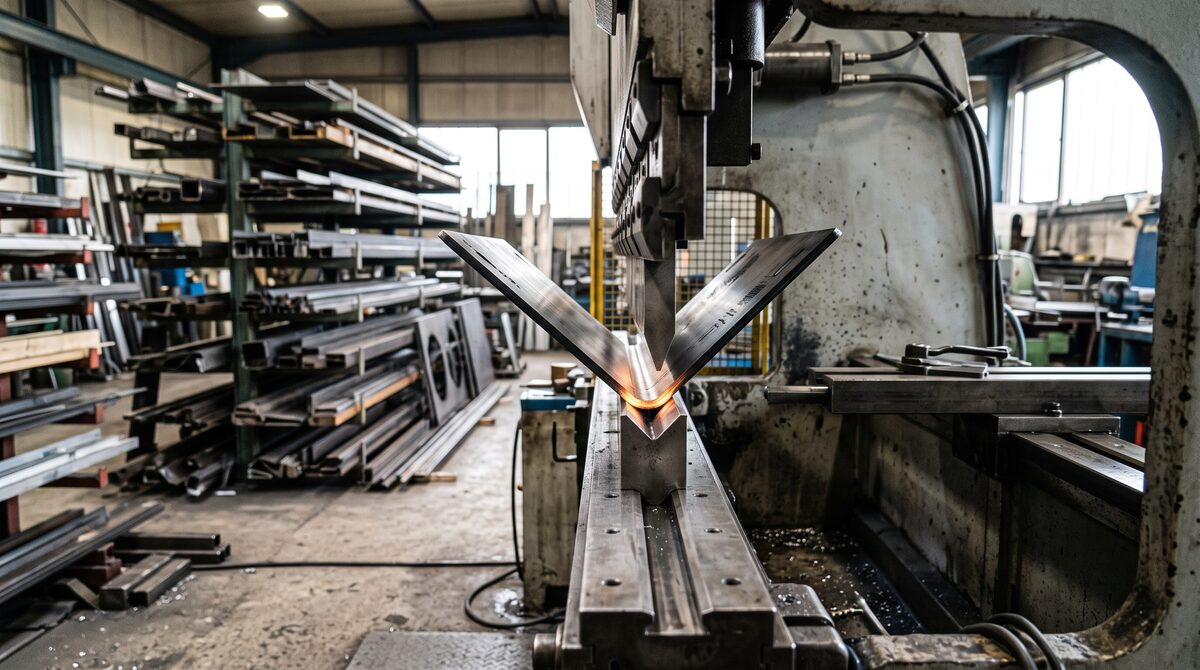
Open post Press brake forming a laser-cut steel blank, the part mid-bend between punch and die, fabrication shop with racked...

Secondary Operations After Laser Cutting: Where Cheap Cuts Get Expensive

The cutting quote is the smallest number in the job. Buyers who compare vendors on that number alone are optimizing the wrong line.

NIST’s Manufacturing Extension Partnership makes the underlying point plainly: on average, more than half of a manufacturer’s total spending happens in the supply chain. A cut blank is not a part. It is an input to four or five more operations, and every handoff between those operations is a place where cost and time accumulate quietly.

The path a blank actually takes

A bracket leaves the cutting table and still needs deburring, forming, welding, blasting, and coating before anyone can bolt it to anything. Five operations after the one that got quoted.

At a shop that outsources three of them, that is three purchase orders, three freight legs, three receiving inspections, and three chances for the part to sit on someone else’s floor waiting behind other work. Each stop adds a queue the buyer cannot see and cannot expedite, because the shop that holds the part has its own priorities and its own customers.

None of that appears on the cutting quote.

What each handoff actually costs

MEP recommends total cost of ownership as the frame for procurement decisions, and defines it to include the expenses beyond purchase price — freight, tariffs, longer lead times, higher inventory costs, and the overhead of managing distant suppliers. The same body notes that total cost of ownership also weighs the risk of lost sales and poor customer experience.

Apply that frame inside a single part’s routing and the arithmetic changes. Every vendor in the chain adds coordination overhead, a margin, and a queue position. On a prototype run of twenty pieces, coordination frequently costs more than the machining does, because the engineering time spent chasing three vendors is worth more per hour than the spindle time being chased.

MEP also works with manufacturers to reduce manufacturing critical path lead time by attacking bottlenecks. A part crossing four company boundaries has bottlenecks nobody owns.

The technical handoffs that go wrong

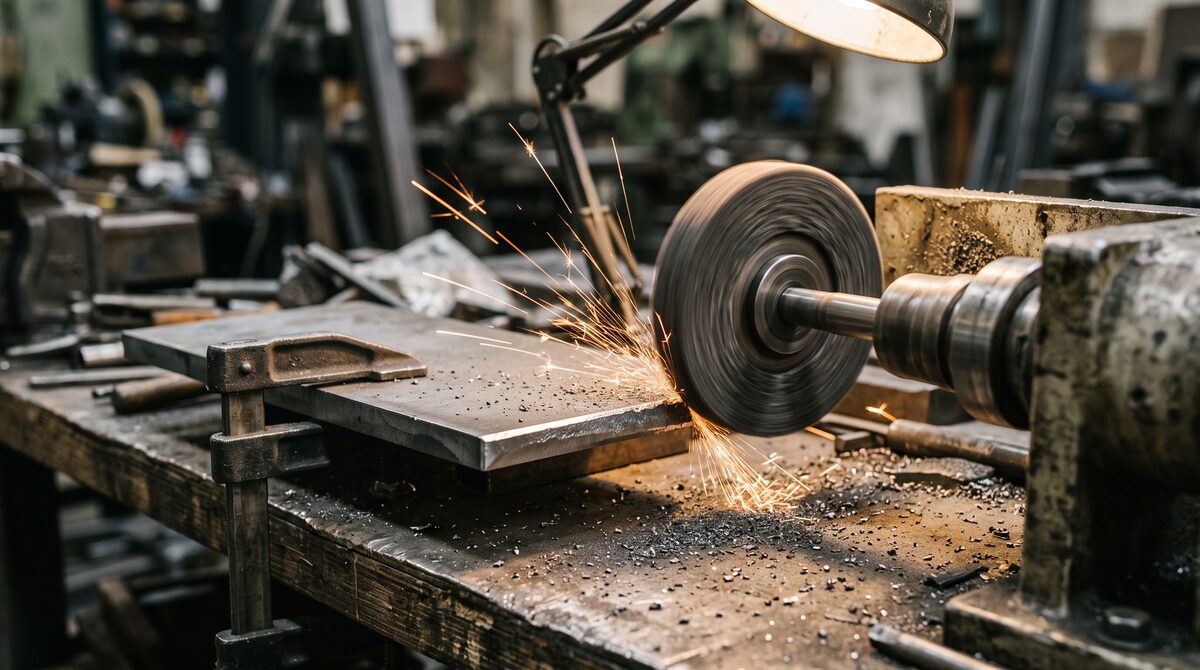
Close detail of a deburring wheel finishing the edge of a flat steel part, fine sparks and swarf, focused work light

Cut edge into weld prep. Welding is regulated work with its own body of requirements under OSHA’s Subpart Q, which covers oxygen-fuel gas welding and cutting, arc welding and cutting, and resistance welding as separate disciplines. It is also unforgiving of a poorly prepared joint. A cut edge carrying dross, an oxide film, or a rim hardened by the heat-affected zone brings all of that into the weld.

Weld into machining. Welding distorts. A part machined before it is welded may not hold its tolerance afterward, so operation sequence has to be set by someone who can see the whole routing rather than one station of it.

Fabrication into coating. Powder coating needs a clean surface with a proper blast profile. Weld spatter, mill scale, and oil left behind by an upstream vendor turn into adhesion failures downstream, and the part comes back stripped and rerun at somebody’s expense.

Forming into fit. A bend developed against nominal material thickness lands differently on stock that arrived at the other end of its tolerance band. The shop that formed it rarely learns this until assembly.

Everything into assembly. Parts that measure correctly on their own do not automatically fit together. Tolerance stack surfaces at assembly, long after the shop that cut the blanks has invoiced and moved on.

Prototype runs punish handoffs hardest

Volume forgives coordination cost. A production order of ten thousand pieces spreads vendor overhead across enough parts that nobody notices it, and the relationships settle into a rhythm where each shop knows what the last one sends.

Short runs work the other way. On twenty or fifty pieces there is no rhythm to settle into, every job is a first article, and the fixed cost of moving material between four companies lands on a handful of parts. A revision mid-run makes it worse, because the change has to propagate through every vendor in the chain before anyone can restart, and the ones downstream have already scheduled around the old drawing.

This is the work growing fastest in the metro Detroit supply base. Prototype programs, validation builds, and short production runs come with more revisions, more material changes, and more process decisions per part than long production ever required.

Why buyers are consolidating vendors

MEP frames domestic sourcing as a way to shorten the supply chain and reduce uncertainty, and notes that proximity makes it easier to assess the quality of what you are receiving directly rather than through paperwork.

The same logic applies one level down, at the shop rather than the country. A part that stays in one building has no freight legs between operations and no ambiguity about who owns a defect. When the weld distorts the frame, the people who cut it, formed it, and will coat it are in the same room, looking at the same part, that day. Nobody is filing a claim against a vendor two counties over or waiting on a return authorization.

That is not a scheduling promise. It is a structural difference in how many separate places a job can stall.

What to ask a cutting vendor

Ask what happens to the part after the table, and listen for whether the answer names operations or names other companies. Both are valid business models, and only one of them puts the coordination burden on you.

Ask who owns the part if a downstream operation reveals an upstream problem. A shop that performs both operations answers that question in one sentence. A shop that subcontracts will describe a process.

Ask whether anyone reviewed the print for what comes next, or only for what it takes to cut the profile. Kerf compensation, bridge placement, pierce points, and grain direction all look different depending on whether the blank is going to a press brake or a weld fixture.

Process selection sits underneath all of it. The trade-offs in laser cutting vs waterjet cutting look different once downstream operations are on the table. Motor City Metal Fab runs the cut and the operations after it under one roof, which is the whole reason the sequence gets planned as one job.

Motor City Metal Fab: One Shop, Every Operation

Motor City Metal Fab is a family-owned shop in Taylor, Michigan serving metro Detroit. Cutting, machining, forming, welding, coating, and assembly all happen in one building, so a part never waits on an outside vendor.

Our Services Include:

  • Full Service List — Cutting, machining, forming, bending, welding, coating, assembly, and shipping
  • Assembly and Shipping — Finished assemblies packed and sent from the same building that built them

Have a print to quote?

Contact Motor City Metal Fab with your drawing, material, and quantity.

Works Cited

  1. United States, National Institute of Standards and Technology. “Supply Chain Management.” Manufacturing Extension Partnership, 14 July 2025, www.nist.gov/mep/supply-chain.
  2. United States, Occupational Safety and Health Administration. “1910 Subpart Q — Welding, Cutting and Brazing.” U.S. Department of Labor, www.osha.gov/laws-regs/regulations/standardnumber/1910/1910SubpartQ.
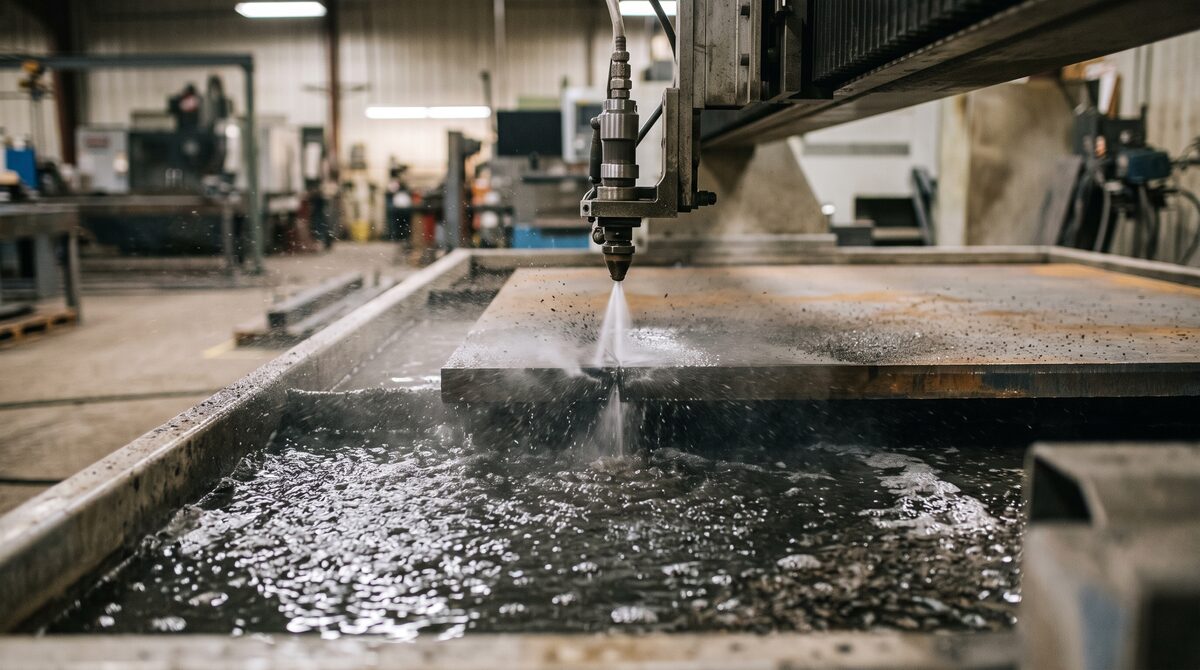
Open post Waterjet cutting head mid-cut through thick plate, high pressure stream and abrasive spray, water surface churning in the...

Laser Cutting vs Waterjet Cutting: How Michigan Buyers Decide in 2026

Michigan’s factory payrolls are not all moving the same direction, and the exception is worth a look.

Michigan State University’s Center for Economic Analysis puts state manufacturing employment at 593,740 for 2026, a decline of 0.3 percent. Durable goods drop 0.5 percent. Primary metal manufacturing falls 0.8 percent, machinery manufacturing 0.6 percent, motor vehicle manufacturing 1.4 percent, and other transportation equipment 1.7 percent. Fabricated metal product manufacturing runs the other way at 72,000 jobs, up 1.3 percent — the only metal subsector in the durable-goods forecast gaining ground this year.

That split says something about the work itself. Vehicle assembly volume is soft while the shops that cut, form, and weld metal are busier, because the parts reaching them are smaller in quantity and more varied in material. Prototype programs, validation builds, and short production runs take up a growing share of the mix, and those jobs come with more material changes and more process decisions per part than a long production run ever did.

For a buyer sending out a print, an old question now carries higher stakes: laser cutting vs waterjet cutting. Choosing wrong costs money in ways the cutting quote never shows.

What each process actually does

A fiber laser melts or burns material along the cut path, and an assist gas blows the molten metal out of the kerf. Assist gas choice changes the mechanism. Nitrogen cuts by melting alone. Oxygen adds an exothermic reaction that pushes cutting speed on structural steel well past what melting mode reaches at the same power.

An abrasive waterjet erodes material with high-pressure water carrying garnet grit. Nothing melts. The cycle runs slower and the kerf is wider, yet the process will cut almost anything put under it — heavy plate, stone, glass, ceramics, composites, and materials that would burn under a beam.

The two are less competitors than a pair. A shop running both picks the process to suit the part rather than fitting the part to whichever machine is on the floor.

Four questions that settle most jobs

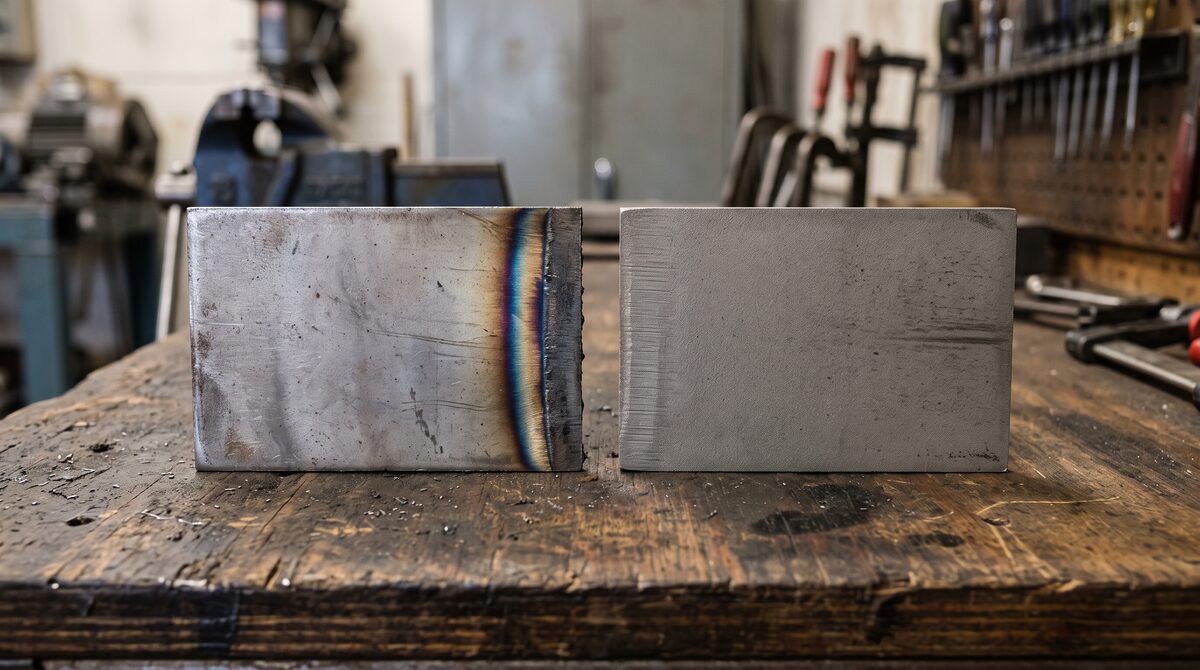
Two cut steel coupons laid side by side on a bench, one edge showing a laser's heat discolouration and the other a...

Material. Copper and aluminum reflect light and pull heat away quickly, so they behave differently under a laser than mild steel does. Aluminum needs nitrogen at real pressure to clear the molten metal out of the kerf cleanly. Non-metals go to waterjet by default, since there is no version of a thermal process that leaves a composite intact.

Thickness. Laser speed and edge quality both fall away as sections get heavier. Past a point, waterjet becomes the shorter path even though it runs slower, because the laser cut that succeeds still needs cleanup the waterjet cut does not.

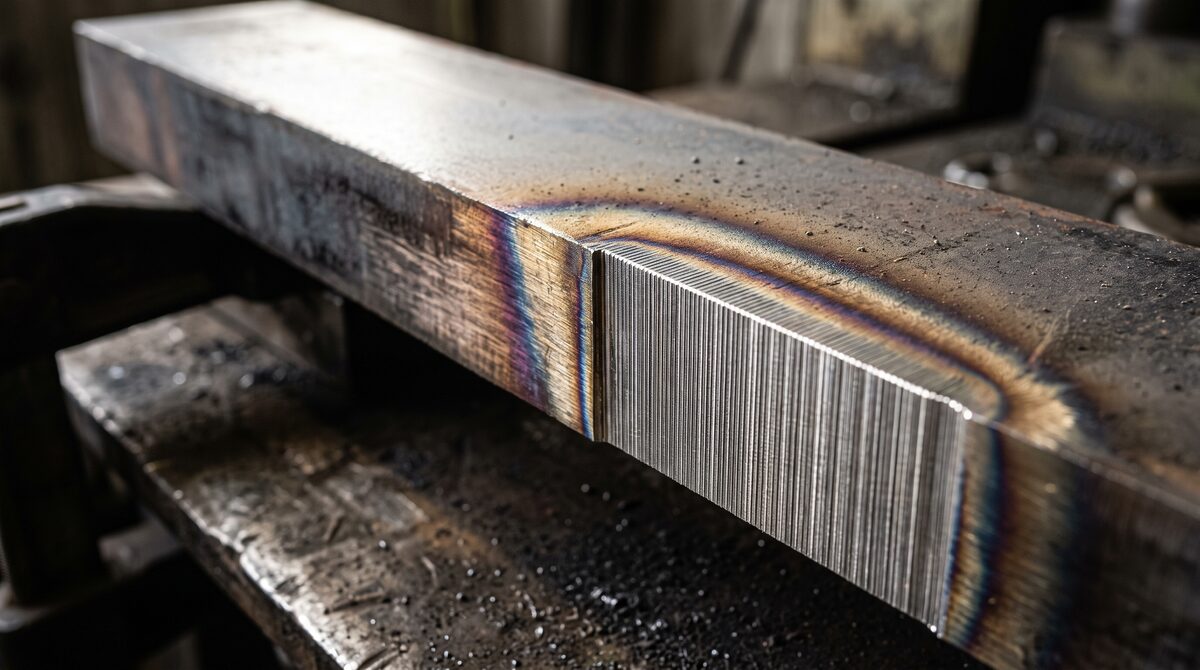
Heat tolerance. Laser cutting changes the metal beside the cut. Hardened tool steels, heat-treated alloys, and parts carrying tight flatness callouts often cannot accept that change, which is why the heat-affected zone deserves its own conversation before anyone picks a process.

What happens next. A blank headed for bending, machining, welding, or coating carries requirements the cut has to respect. Those secondary operations after laser cutting are where a cheap cut turns expensive.

The material math changed

Material is a larger share of part cost than it used to be, so nesting efficiency, kerf width, and scrap rate all move the final number in ways they did not when stock was cheap.

A laser’s narrow kerf matters here. Tight nesting on a sheet, with common-line cutting where the geometry allows it, pulls real cost out of a job before a single part comes off the table. On a short run, the sheet yield often swings the price more than the cycle time does. Waterjet’s wider kerf gives some of that back, and on thin sheet the difference is easy to measure.

Thick plate flips the comparison. A long waterjet cycle can still win by removing a secondary operation from the routing, and the hour saved at a mill is worth more than the hour spent at the table.

The part mix keeps shifting

Lightweighting has pushed aluminum and composite into places that used to be plain steel, and every one of those substitutions changes the cutting answer. A shop that only cuts steel well will quote those parts anyway.

What this looks like by industry

Automotive prototype work brings brackets and structural pieces that have to survive validation testing, so edge condition matters as much as profile. EV and hydrogen fuel cell builders need enclosures in aluminum and stainless where thermal input is a design constraint. Food service equipment runs sanitary stainless sheet. Gas and oil work leans on corrosion-resistant alloys headed for harsh service.

Different requirements, one common thread: the right cut depends on the part, not on the vendor’s equipment list.

Cost pressure on both sides of the quote

Nobody is quoting in a soft market. The Bureau of Labor Statistics put average weekly wages across all Detroit-area industries at $1,545 in the fourth quarter of 2025, just under the $1,569 national figure. Labor, material, and machine time all come out of the same part price, and a process chosen badly eats the margin twice — once on the table, once in rework.

The question behind the question

Buyers usually ask which process is better. The more useful question is which shop can run both and will say plainly which one a given part wants. A shop with one machine finds a way to quote every job on that machine, and the buyer discovers the mismatch three operations later.

Ask what the cut edge will look like when it comes off the table. Ask what the part needs after cutting, and whether the shop can do those operations. Ask whether the answer changes if the material changes, because on a prototype program it usually does.

A cutting vendor that engages with those questions is reading the print rather than the purchase order. At Motor City Metal Fab, both processes sit in the same building as the machining, welding, and coating that follow them, so the process conversation and the routing conversation happen at the same time.

Motor City Metal Fab: One Shop, Every Operation

Motor City Metal Fab is a family-owned shop in Taylor, Michigan serving metro Detroit. Cutting, machining, forming, welding, coating, and assembly all happen in one building, so a part never waits on an outside vendor.

Our Services Include:

Have a print to quote?

Contact Motor City Metal Fab with your drawing, material, and quantity.

Works Cited

  1. Center for Economic Analysis. “Michigan Employment.” Michigan State University, 29 Oct. 2025, www.canr.msu.edu/cea/economic-forecast/michigan/michigan-employment.
  2. United States, Bureau of Labor Statistics. “Detroit Area Economic Summary.” U.S. Department of Labor, 5 Aug. 2026, www.bls.gov/regions/midwest/summary/blssummary_detroit.pdf.
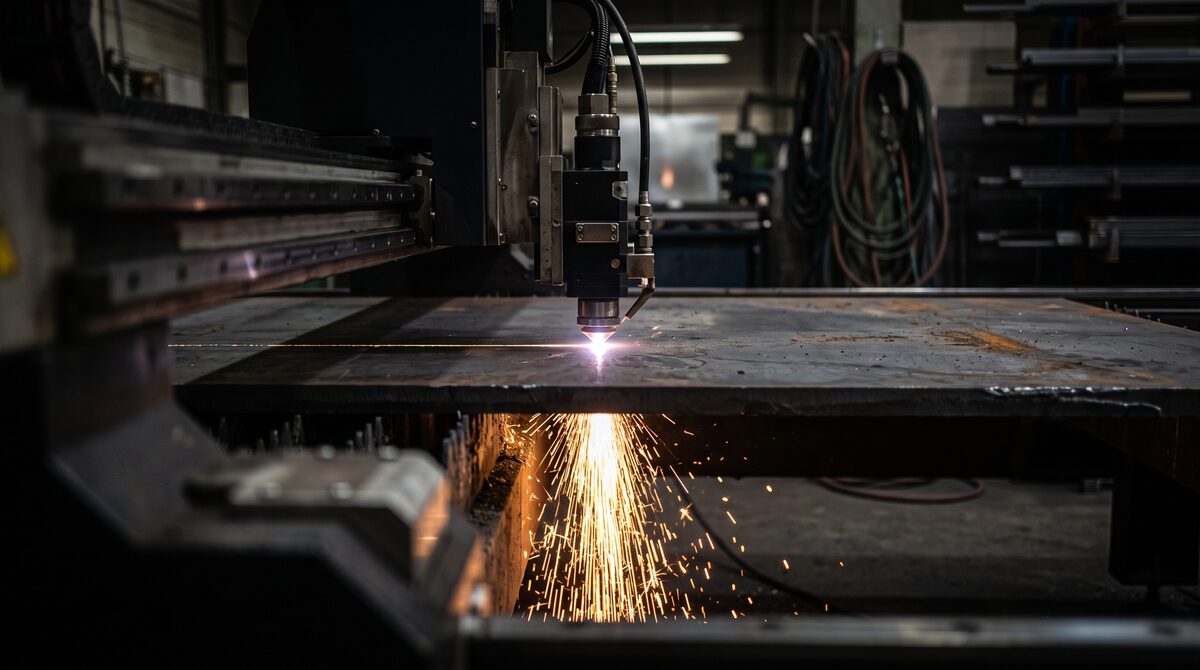
Open post Fiber laser cutting head tracking across steel plate, bright cut front and sparks streaming below, dark fabrication shop...

The Heat-Affected Zone: When Laser Cutting Is the Wrong Call

A laser cut looks clean. The metal under the edge tells a different story.

Research published in January 2026 in the journal Materials put numbers on it. Working across three common engineering alloys — S355J2 structural steel, AISI 304 stainless, and AlMg3 aluminum — the team measured microhardness at set distances back from the cut edge on twelve parameter sets. Every material showed edge hardening reaching roughly 0.4 mm into the part. S355J2 spiked hardest, with edge readings near 700 HV 0.1 against a core that settled around 150 HV 0.1. AISI 304 showed the steepest relative jump, climbing about 155 percent above a core hardness of roughly 145 HV 0.1.

That is the heat-affected zone, and it is invisible on a first-article inspection that only checks dimensions.

Why hardening at the edge matters

Harder is not automatically better. The same study notes that raised microhardness improves wear resistance while it may reduce ductility at the cut edge.

Ductility is what a part spends when it gets bent. A blank with a hardened rim that has to take a tight bend radius is a blank looking for a crack along the bend line, and it is one of the clearest cases where the choice between laser cutting vs waterjet cutting should be made before the sheet is loaded. Springback shifts too, because the material near the edge no longer behaves like the material in the middle of the sheet, and a bend deduction developed on virgin stock stops predicting the result.

Structure changes as well as hardness. On S355J2, the researchers tracked microstructural change extending 143 microns in from the treated edge on one sample set and 121 microns on another, with the core shifting away from its baseline ferritic-pearlitic condition. The AlMg3 aluminum developed a visible remelted layer with a refined, fine-grained structure, and structural changes carried roughly 130 to 150 microns in.

Thermal properties explain the pattern

The differences track the metallurgy rather than the machine. S355J2 melts somewhere around 1460 to 1520 degrees Celsius with moderate thermal conductivity, so heat leaves the cut zone slowly and the result is a narrow, sharply bounded affected region. AlMg3 melts far lower, near 600 to 650 degrees, and conducts heat several times faster, which spreads the energy and produces a more diffuse zone even when the remelted layer measures about the same depth.

Practical translation: a steel part hides its damage in a thin band you can machine away. An aluminum part spreads it over a wider region that is harder to remove without changing the geometry.

Where the zone becomes a real problem

Extreme macro of a laser-cut steel edge in cross section, the discoloured heat affected band visible along the cut face,...

Parts that get machined afterward. A hardened rim wears tooling faster and can push a cutter off line, so the tolerance you were chasing gets harder to hold and the tool cost climbs.

Parts that get welded. The cut edge becomes the weld prep. Feeding a pre-hardened edge into a weld joint stacks one thermal cycle directly on top of another.

Heat-treated stock. If the metallurgy was bought and paid for in a furnace, a thermal cutting process gives some of it back at every edge.

Composites and layered materials. The polymer matrix evaporates well before the reinforcing fiber does, leaving damage that no visual inspection catches and no rework recovers.

Thin parts with tight flatness. Localized heating puts stress into a sheet that had none, and the part can move after it leaves the table.

What the assist gas is doing

Gas selection is not a footnote. The 2026 study found that assist gas pressure drove surface quality on structural steel more than any other single variable. Oxygen-cut S355J2 reached its best finish at the lowest pressure tested, and the worst result in the series came from the highest pressure, which the researchers attributed to uncontrolled ejection of molten material out of the kerf.

Aluminum behaved almost inversely. Nitrogen pressure had to stay high to clear molten metal effectively, and the poorest surface came from the lowest pressure tested. Raising beam power beyond the manufacturer’s recommended setting made the finish worse rather than better, pointing to excess energy going into the part rather than the cut.

One finding cuts against expectation. AISI 304 showed high heat resistance in that testing, with no melt zone and no visible microstructural change at the treated edge, credited to the alloying elements that resist oxidation at temperature. Stainless is often a better laser candidate than its reputation suggests.

When waterjet is the answer

Abrasive waterjet cuts cold. Water and garnet erode material rather than melting it, so grain structure, hardness, and heat treatment at the edge come through unchanged. There is no remelted layer to machine off and no hardened band to fight during forming.

That matters more as the part mix shifts. The U.S. Department of Energy points out that lightweight materials such as high-strength steel, aluminum, and glass fiber-reinforced composites are especially important for electric vehicles, since reduced structure weight offsets battery and motor mass. Composite and heat-treated aluminum parts are exactly the population where thermal cutting causes trouble, and exactly the population growing fastest in the metro Detroit supply base.

How to specify it

Say what the edge has to do, not just where it has to be. A drawing that calls out a bend radius, a weld prep, a post-cut heat treatment, or a surface finish requirement gives the shop enough information to route the part correctly the first time. A drawing carrying only a profile and a dimensional tolerance leaves the process choice to whoever is loading the table that shift.

Flag the material condition too. Annealed and hardened stock of the same alloy want different answers, and a shop that does not know which one showed up will treat both the same.

Edge condition is rarely the last word on its own. The secondary operations after laser cutting frequently decide whether a hardened rim is acceptable at all. Motor City Metal Fab runs both processes in the same building as the machining and forming that follow, so the edge condition gets decided against the whole routing.

Motor City Metal Fab: Reading the Print Before the Table

Motor City Metal Fab is a family-owned shop in Taylor, Michigan serving metro Detroit. Cutting, machining, forming, welding, coating, and assembly all happen in one building, so a part never waits on an outside vendor.

Our Services Include:

Have a print to quote?

Contact Motor City Metal Fab with your drawing, material, and quantity.

Works Cited

  1. Selech, Jaroslaw, et al. “Influence of Laser Cutting Parameters on the Microhardness, Roughness, and Microstructure of AISI 304, S355J2, and AlMg3 Alloys.” Materials, vol. 19, no. 2, 7 Jan. 2026, p. 240, pmc.ncbi.nlm.nih.gov/articles/PMC12843296/.
  2. United States, Department of Energy. “Lightweight Materials for Cars and Trucks.” Transportation Technologies Office, www.energy.gov/cmei/vehicles/lightweight-materials-cars-and-trucks.
Open post Advanced laser & waterjet cutting services for high-precision industrial metal fabrication

The Future of Laser & Waterjet Cutting Technology

The manufacturing industry continues to evolve with remarkable speed through technological advancements. Laser and waterjet cutting stand at the forefront of this evolution, shaping how metal fabrication businesses operate. At Motor City Metal Fab, WE strive to stay abreast of all trends and innovations in technology and machinery, positioning our business to deliver exceptional results for our clients.

This comprehensive guide explores emerging trends, technologies, and applications that will define the future of laser  & waterjet cutting services in Detroit over the coming decade.

Rising Innovations in Laser Cutting Technology

The laser cutting industry has witnessed significant growth since its inception in the 1960s. What began as a revolutionary concept has matured into an indispensable technology for modern manufacturing. When evaluating Laser &Waterjet Cutting Technology, it is clear that recent advancements in fiber optics and automation have given lasers a distinct advantage in speed and precision for high-volume production.

5G Integration and Smart Manufacturing

Manufacturing facilities now implement 5G technology to create interconnected systems that communicate seamlessly. This connectivity transforms how Tube laser cutting services in Detroit and flat-sheet machines operate in the production environment. Modern systems receive real-time design updates from engineering departments and adjust cutting parameters automatically based on material analysis. They can report maintenance needs before equipment failures occur, preventing costly downtime. Such systems optimize workflow through predictive analytics, creating a more efficient production floor.

Smart factories utilizing these technologies report productivity increases of up to 30%, according to a study by the National Institute of Standards and Technology.

AI-Powered Precision and Automation

Artificial intelligence now plays a critical role in advancing metal laser cutting services in Detroit capabilities. Machine learning algorithms optimize cutting paths for complex geometries, resulting in faster production and reduced wear on equipment. Computer vision systems inspect materials and adjust parameters in real-time, ensuring consistent quality across production runs. Predictive models minimize material waste through nesting optimization, maximizing the use of raw materials. Perhaps most impressively, many systems now feature autonomous operation that reduces human intervention for routine Tube laser cutting services in Detroit.

These AI applications result in higher precision, reduced waste, and faster production times—benefits that Motor City Fab uses to deliver outstanding results for our clients.

Eco-Friendly Laser Systems

Environmental concerns drive innovations toward greener laser cutting technologies. Fiber lasers reduce energy consumption by up to 70% compared to CO2 systems, making them more efficient and environmentally responsible. Modern systems now feature closed-loop cooling systems that minimize water usage, an important consideration for sustainability. Advanced filtration systems capture particulates and fumes, protecting both workers and the environment. Smart energy management reduces electricity usage during idle periods, further decreasing the carbon footprint of operations.

The Sustainable Manufacturing Initiative reports that these improvements significantly reduce the carbon footprint of metal fabrication processes.

Smart dashboard for a CNC machining center tracking energy consumption and material waste to meet 2026 sustainability standards

Waterjet Technology Advancements

Waterjet cutting continues to evolve alongside laser technology, offering unique advantages for specific applications.

Ultra-High Pressure Systems

Next-generation CNC waterjet cutting services in Detroit operate at pressures exceeding 90,000 PSI, offering benefits such as:

Multi-Axis Cutting Capabilities

Modern CNC waterjet cutting services in Detroit now feature 5-axis and even 6-axis cutting heads that:

  • Create complex 3D components in a single setup
  • Produce beveled edges without secondary operations
  • Maintain perpendicular cutting on contoured surfaces
  • Enable taper compensation for improved accuracy

These capabilities widen the applications for accurate waterjet cutting services in Detroit, particularly in aerospace, automotive, and architectural industries.

Hybrid Cutting Systems

The integration of waterjet technology with other cutting methods creates effective hybrid systems:

  • Laser-waterjet combinations that leverage both metal laser cutting services in Detroit and waterjet benefits
  • Plasma-waterjet systems for thick material processing
  • Mechanical-waterjet hybrid machines for specialized applications

At Motor City Metal Fab, we evaluate these emerging technologies to determine which Laser & Waterjet Cutting Services in Detroit best serve our clients’ needs.

Material Processing Innovations

The future of CNC waterjet cutting services in Detroit extends beyond machinery to include advancements in materials processing.

New Material Capabilities

Cutting systems now process a growing range of materials:

  • Advanced composites for aerospace applications
  • Medical-grade titanium alloys
  • Specialized ceramics for electronics
  • Ultra-high-strength steels for automotive safety components

According to Materials Today, these advanced materials require specialized cutting parameters that modern systems can deliver.

Micro-Cutting Applications

Both laser & waterjet service in Detroit technologies now operate at micro scales:

  • Precision components for medical devices
  • Miniaturized electronics parts
  • Microfluidic devices for biotech applications
  • Fine jewelry and watchmaking components

These applications need extraordinary precision, making accurate waterjet cutting services in Detroit indispensable.

Thick Material Processing

Advancements in power and beam quality allow cutting of increasingly thick materials:

  • Structural steel exceeding 50mm thickness
  • Heavy plate applications for shipbuilding
  • Mining and construction equipment components
  • Defense industry armor plating

High-tolerance metal parts produced by our professional laser & waterjet cutting services

Software and Digital Integration

The future of Laser & Waterjet Cutting Services in Detroit depends on advanced software solutions and digital integration.

Cloud-Based Design and Manufacturing

Cloud technologies transform how CNC waterjet cutting services in Detroit function:

  • Centralized design databases accessible from anywhere
  • Remote system monitoring and operation
  • Collaborative engineering across multiple locations
  • Real-time quotation and production scheduling

This connectivity eliminates geographical barriers and enables new business models for fabrication companies.

Digital Twins

Digital twin technology creates virtual replicas of physical cutting systems:

  • Simulation of cutting operations before physical production
  • Virtual testing of process parameters
  • Predictive maintenance based on operational data
  • Training opportunities without machine downtime

The Digital Manufacturing and Design Innovation Institute has documented how digital twins reduce commissioning time by up to 40%.

Augmented Reality Applications

AR technology improves operator capabilities:

  • Visual setup guidance for complex jobs
  • Maintenance procedures with step-by-step visual aids
  • Quality inspection with overlay comparison to design specifications
  • Training simulations for new operators

Industry Trends Shaping Laser & Waterjet Cutting Services

Several broader industry trends influence the direction of cutting technology development.

On-Demand Manufacturing

The rise of on-demand manufacturing affects how CNC waterjet cutting services in Detroit operate:

  • Shorter production runs with faster turnaround times
  • Greater variety of materials processed by a single facility
  • Increased customization requires flexible production systems
  • Integration with e-commerce platforms for direct customer ordering

At Motor City Metal Fab, we adapt to these market changes by investing in versatile equipment that manages diverse client requirements.

Reshoring and Localized Production

Global supply chain vulnerabilities drive production closer to end markets:

  • Increased domestic manufacturing requires expanded cutting capacity
  • Just-in-time production models demand rapid turnaround
  • Higher quality standards are expected from local suppliers
  • Emphasis on workforce development to support advanced manufacturing

This trend creates opportunities for North American fabricators with advanced technological capabilities.

Additive-Subtractive Hybrid Manufacturing

The integration of additive manufacturing with cutting technologies:

  • 3D printing combined with precision cutting for complete solutions
  • Repair and modification of existing components
  • Material-specific processing strategies
  • Reduced waste through near-net-shape production

These hybrid approaches open new possibilities for complex component production that were previously impractical or impossible.

A procurement team discussing how to overcome psychology behind manufacturing procurement delays

Applications Across Industries

The evolution of Laser & Waterjet Cutting Services in Detroit impacts numerous industries:

Automotive Transformation

The automotive industry undergoes substantial changes requiring tube laser cutting services in Detroit.

  • Lightweight materials for improved fuel efficiency
  • Battery compartments for electric vehicles
  • High-strength steel components for crash protection
  • Custom components for low-volume specialty vehicles

Aerospace Advancement

Aerospace manufacturing demands exceptional precision:

  • Complex geometries for optimized performance
  • Exotic materials requiring specialized processing
  • Zero-defect requirements for critical components
  • Weight reduction through innovative design and material use

Medical Innovation

The medical device industry benefits from cutting-edge technology breakthroughs:

  • Implants instruments requiring CNC waterjet cutting services in Detroit.
  • Surgical instruments with complex geometries
  • Custom prosthetics made for individual patients
  • Microfluidic devices for diagnostic applications

Clean Energy Development

Renewable energy technologies need specialized components:

  • Solar panel frames and mounting systems
  • Wind turbine components
  • Fuel cell plates and assemblies
  • Energy storage system enclosures

At Motor City Fab, we serve these diverse industries with specialized metal laser cutting services and CNC waterjet cutting services in Detroit tailored to green energy standards.

Future Challenges and Opportunities

The cutting technology landscape faces both challenges and opportunities in the coming years.

Skills Gap and Workforce Development

Advanced metal laser cutting services in Detroit technology requires skilled operators:

  • Training programs for new technology adoption
  • Knowledge transfer from experienced staff
  • Partnership with educational institutions
  • Retention strategies for skilled employees

Integration with Industry 4.0

The broader digital transformation of manufacturing:

Customization vs. Standardization

Balancing competing market demands:

Advanced laser & waterjet cutting services for high-precision industrial metal fabrication

How Motor City Metal Fab Prepares for the Future

As technology evolves, Motor City Metal Fab positions itself at the forefront of innovation through strategic initiatives:

  • Continuous investment in state-of-the-art equipment
  • Ongoing staff training and development
  • Partnerships with technology providers
  • Research into emerging applications

We believe that staying ahead of technological trends in Laser & Waterjet Cutting Services in Detroit allows us to provide excellent service and solutions to our clients across all industries.

FAQs About the Future of Laser & Waterjet Cutting Services

What advantages do fiber lasers have over traditional CO2 lasers?

Fiber lasers offer lower operating costs and faster speeds for metal laser cutting services in Detroit. They perform well when cutting reflective materials like copper and brass and are ideal for precision tube laser cutting services.

How will AI impact the future of metal cutting services?

AI will transform Laser & Waterjet cutting services in Detroit through optimization of cutting paths, predictive maintenance to prevent downtime, automated quality control systems, and intelligent nesting to maximize material usage. These advancements will increase productivity, reduce waste, improve part quality, and lower operating costs. Companies like Motor City Fab that adopt these technologies early will gain significant business advantages.

What materials can be processed by modern waterjet systems?

Our modern Detroit CNC and waterjet cutting services systems can process an extraordinary range of materials, including metals, composites, stone, glass, ceramics, plastics, rubber, and foams. With proper setup and parameters, waterjet cutting manages materials from soft gasket materials less than 1mm thick to hardened steel exceeding 200mm in thickness. This versatility makes waterjet cutting an ideal solution for facilities processing diverse materials.

How do environmental regulations affect cutting technology development?

Environmental regulations drive innovation in cutting technologies by encouraging more efficient energy usage, improved waste management systems, and reduced emissions. Manufacturers now develop systems with closed-loop water recycling, advanced filtration, and energy recovery features. These eco-friendly designs comply with regulations and often reduce operating costs through improved efficiency.

What factors should I consider when choosing between laser and waterjet cutting?

When selecting between laser and waterjet cutting, consider material type and thickness, required edge quality, tolerance specifications, production volume, and project timeline. Laser cutting typically offers faster processing speeds and tighter tolerances on thin materials, while waterjet cutting works better with thick materials and heat-sensitive applications. For guidance on your project requirements, contact our team for a consultation.

Open post AI dashboard for real-time monitoring of Laser & Waterjet Cutting Services

Artificial Intelligence Revolution in Laser and Waterjet Cutting

Manufacturing is experiencing a transformation through AI integration in cutting technologies. At Motor City Metal Fab, we recognize how AI systems reshape precision cutting operations, creating smarter production environments with improved accuracy, efficiency, and adaptability for our metal laser cutting services in Detroit and waterjet solutions.

This guide examines how AI technologies are changing laser and waterjet cutting processes right now, offering practical insights for fabrication businesses considering these advanced technologies.

AI Integration in Modern Metal Laser Cutting Services

Machine learning algorithms and neural networks now perform tasks that once required extensive human expertise and programming time.

Self-Optimizing CNC Programming

Traditional CNC programming demands significant expertise to create optimal paths for tube laser cutting services in Detroit. AI-based systems now analyze CAD files automatically to determine:

  • Cutting sequence for minimal material movement
  • Ideal cutting speeds based on material properties
  • Appropriate lead-ins and lead-outs for clean edges
  • Nesting arrangements for maximum material utilization in CNC waterjet cutting services in Detroit

These algorithms learn from every job, constantly refining their parameters to create increasingly efficient programs without human intervention.

Real-Time Process Monitoring and Adjustment 

AI-equipped laser and waterjet systems revolutionize accurate waterjet cutting services in Detroit through continuous monitoring via integrated technologies. These systems employ high-speed cameras that track kerf width and quality, acoustic sensors that detect subtle changes in cutting sounds, thermal imaging that visualizes heat distribution patterns, and pressure and flow monitors that maintain waterjet stability. 

The true advantage emerges when these systems identify deviations from optimal parameters and automatically implement micro-adjustments in milliseconds—a reaction time that dramatically outpaces human capabilities. This ensures consistent quality across Laser & Waterjet Cutting Services in Detroit by addressing variables before they impact part integrity, eliminating the traditional delay between problem detection and resolution.

Predictive Maintenance Systems 

Downtime represents a critical cost factor in metal fabrication, prompting the adoption of AI-driven predictive maintenance as a transformative solution. These sophisticated systems leverage multiple data streams simultaneously: vibration analysis identifies early bearing wear long before catastrophic failure, current draw monitoring pinpoints struggling components in tube laser cutting services in Detroit equipment. Oil analysis detects contamination that could damage precision machinery, and historical performance data comparison flags anomalous patterns that signal potential issues. 

This multifaceted approach fundamentally shifts maintenance from reactive to proactive strategies, with the Manufacturing Extension Partnership confirming remarkable results—predictive maintenance implementations typically slash machine downtime by 30-50% while extending overall equipment lifespan by 20-40%, delivering substantial return on investment through both increased production time and reduced capital expenditure needs.

Practical Applications in Fabrication Environments

AI integration reaches beyond the cutting machine itself to improve overall facility operations.

Intelligent Job Scheduling and Resource Allocation

AI scheduling systems coordinate multiple machines, operators, and material handling systems to:

  • Prioritize jobs based on deadlines, material availability, and machine capabilities
  • Group similar jobs to minimize material changeover time
  • Predict completion times with increasing accuracy
  • Allocate resources efficiently during peak production periods

These systems learn from past production runs, continuously improving their scheduling accuracy.

Quality Control Automation

Inspection tasks that once required skilled human eyes can now be performed by AI systems using:

  • Computer vision for dimensional accuracy verification
  • Surface finish analysis for quality grading in metal laser cutting services in Detroit
  • Automatic part identification and sorting
  • Documentation generation for quality assurance records

A study by the American Society for Quality found that AI-based inspection systems typically achieve 99.7% detection rates for defects, exceeding human inspection averages.

Advanced laser & waterjet cutting services for high-precision industrial metal fabrication

Material Optimization and Waste Reduction

AI algorithms excel at complex optimization for CNC waterjet cutting services in Detroit:

  • Multi-part nesting for minimal waste
  • Leftover material tracking and utilization
  • Alternative cutting plan generation for varying material thicknesses
  • Grain direction optimization for structural applications

Manufacturers implementing these systems for tube laser cutting services in Detroit typically report 15-20% reductions in material waste.

Advanced AI Applications in Cutting Technology

Beyond basic automation, AI enables advanced capabilities that were previously unattainable.

Generative Design for Complex Components

AI-powered generative design takes manufacturing possibilities to new levels:

  • Topology optimization based on load requirements
  • Weight reduction maintaining structural integrity
  • Novel geometries beyond traditional design approaches
  • Material-specific design adaptation

The Advanced Manufacturing Office at the Department of Energy reports that generative design typically reduces component weight by 25-50% maintaining or improving performance characteristics.

Digital Twin Integration

Digital twins provide virtual replicas of physical CNC waterjet cutting services in Detroit systems. They allow for:

  • Real-time performance monitoring against optimal parameters
  • “What-if” scenario testing before physical implementation
  • Historical performance analysis for continuous improvement
  • Troubleshooting assistance through simulation

According to the Digital Twin Consortium, manufacturers using digital twin technology report 15-30% improvements in overall equipment effectiveness.

Natural Language Programming Interfaces

Modern AI systems now accept natural language instructions:

  • “Cut these parts from this material at maximum speed”
  • “Optimize this job for minimal material waste”
  • “Schedule this production run to minimize operator overtime”
  • “Generate a report on yesterday’s quality metrics”

These interfaces dramatically reduce the training requirements for new operators, with many systems achieving 80% reductions in programming time.

Computer Vision for Material Identification

Advanced computer vision systems now:

  • Automatically identify material types and grades
  • Detect surface imperfections before cutting begins
  • Apply appropriate cutting parameters for specific materials
  • Document material provenance for quality assurance

The Robotic Industries Association notes that vision-guided manufacturing systems typically reduce material-related errors by 60-85%.

Implementation Strategies for Fabrication Shops

Adopting AI-driven systems requires strategic planning and incremental implementation.

Starting with Small-Scale AI Adoption

Successful AI integration often begins with focused implementations:

  • Single-machine optimization projects
  • Operator assistance systems
  • Quality verification tools
  • Maintenance monitoring solutions

These limited projects provide valuable learning experiences before full-scale deployment.
Industrial waterjet cutting thick aluminum; one of the key benefits of CNC laser and waterjet technology

Integration with Existing Systems

Most fabrication shops already utilize various software solutions. Successful AI integration focuses on:

  • Data sharing between existing ERP/MES systems and new AI tools
  • Standardized data formats for cross-platform compatibility
  • APIs for seamless information exchange
  • Consistent user interfaces to reduce training requirements

The Industrial Internet Consortium provides frameworks for industrial system integration that many manufacturers find valuable during this process.

Building Necessary Data Infrastructure

AI systems require robust data collection and storage capabilities:

  • Edge computing devices for real-time processing
  • Secure data storage systems for historical information
  • High-speed networking for sensor data transmission
  • Backup systems for operational continuity

Many manufacturers begin by upgrading their data infrastructure before implementing AI applications.

Implementation Challenges and Solutions

Even with their benefits, AI systems present certain challenges during implementation.

Data Quality and Consistency Issues

AI systems require high-quality data to function properly:

  • Inconsistent naming conventions hampering machine learning
  • Sensor calibration variations affecting decision quality
  • Missing historical data limiting predictive capabilities
  • Data silos preventing comprehensive analysis

Successful implementations typically begin with data standardization efforts before attempting advanced AI applications.

Integration with Legacy Equipment

Many manufacturers operate equipment of varying ages:

  • Older equipment lacking sensor capabilities
  • Inconsistent control systems across machine types
  • Limited network connectivity in established facilities
  • Proprietary systems resistant to external integration

Retrofit solutions from providers like the Clean Energy Smart Manufacturing Innovation Institute can bridge these gaps without complete equipment replacement.

Cybersecurity Considerations

Connected manufacturing systems introduce security concerns:

  • Protection of proprietary process data
  • Operational technology network segmentation
  • Regular security patching and updates
  • Incident response planning for manufacturing systems

The National Institute of Standards and Technology provides manufacturing-specific cybersecurity frameworks widely adopted across the industry.

Measuring ROI and Performance Metrics

Quantifying AI benefits requires appropriate metrics:

  • Overall equipment effectiveness (OEE) improvements
  • Material utilization rates
  • Quality improvement measurements
  • Labor productivity enhancements

The most successful implementations establish baseline measurements before AI deployment to accurately quantify benefits.

Workforce Considerations in AI Adoption

Successfully implementing AI technologies requires careful attention to workforce planning.

Evolving Job Roles in AI-Enhanced Environments

Rather than replacing workers, AI typically transforms job descriptions:

  • Machine operators become process monitors and exception handlers
  • Programmers shift to AI training and customization
  • Maintenance staff focus on predictive interventions
  • Quality inspectors become calibration specialists for AI systems

The Manufacturing Institute emphasizes that successful AI adoption requires comprehensive workforce development planning.

Precision automotive components being manufactured via professional cnc machining services

Training and Skill Development Requirements

Existing staff often need additional skills to work effectively with AI-enhanced Laser & Waterjet Cutting Services in Detroit:

Forward-thinking manufacturers create structured learning paths for employees as they introduce advanced technologies.

Creating Collaborative Human-AI Work Environments

Optimal results come from human-AI collaboration rather than replacement:

  • AI handles repetitive calculations and monitoring for tube laser cutting services in Detroit
  • Humans manage exceptions and creative problem-solving
  • Systems present information intuitively to support human decision-making
  • Feedback loops allow operators to improve AI performance

Organizations that emphasize collaboration rather than automation often see higher productivity gains across all Laser & Waterjet Cutting Services in Detroit.

Economic Impact and ROI Considerations

Justifying investment in AI technologies requires thorough financial analysis.

Investment Requirements for AI Implementation

AI systems involve various cost components:

Many manufacturers begin with retrofitting existing equipment rather than complete system replacement.

Measurable Benefits and Return Timelines

Typical benefits manifest in several areas:

  • 15-25% productivity improvement through optimized cutting paths
  • 10-15% material savings through improved nesting for accurate waterjet cutting services in Detroit
  • 30-50% reduction in quality-related rejections
  • 20-40% decrease in unplanned downtime

According to the Manufacturing Technology Centre, most fabrication businesses see positive ROI within 12-18 months of implementation.

Financing Options and Industry Resources

Various resources exist to support technology adoption:

  • Manufacturing extension partnerships offering implementation assistance
  • SBA loans for technology upgrades
  • R&D tax credits for technology development
  • State-level economic development programs

These resources can significantly reduce the financial barriers to AI adoption.

Real-World Implementation Insights

Examining successful and unsuccessful implementations provides valuable insights for manufacturers considering AI adoption.

Key Success Factors

The most successful AI implementations in cutting operations share several common characteristics:

  • Clear objective setting with measurable targets
  • Strong IT infrastructure established before deployment
  • Gradual implementation approach with defined phases
  • Comprehensive employee training and communication
  • Dedicated maintenance and support resources

Manufacturers who follow these principles typically report much higher satisfaction with their AI investments.

Common Implementation Pitfalls

Learning from others’ challenges can help avoid common mistakes:

  • Inadequate data infrastructure causing system unreliability
  • Insufficient employee training leading to resistance
  • Attempting too much change simultaneously
  • Failing to establish clear metrics for success
  • Unrealistic expectations for immediate ROI

Most unsuccessful projects share these common characteristics that can be mitigated with proper planning.

Future Developments on the Horizon

AI technologies continue evolving rapidly with several promising developments.

Fully Autonomous Production Systems

Next-generation systems will manage entire production sequences:

  • Automatic material loading and unloading
  • Self-directed quality verification
  • Autonomous production scheduling
  • Unattended overnight operations

These capabilities will further improve production efficiency, particularly for repeat jobs.

Cross-Process Optimization

Future AI systems will coordinate multiple manufacturing processes:

  • Optimized handoffs between cutting, bending, and welding
  • Integrated additive-subtractive hybrid manufacturing
  • Material handling coordination
  • Facility-wide energy optimization

This holistic approach promises substantial efficiency gains beyond current systems.

AI-Driven Design for Manufacturability

Emerging systems are beginning to influence part design:

  • Automatic design modification suggestions for improved manufacturability
  • Cost impact analysis for design decisions
  • Alternative manufacturing method recommendations
  • Material selection optimization

These capabilities will strengthen connections between design and manufacturing departments.

Industry Adoption Trends and Market Analysis

The implementation of AI in Laser & Waterjet Cutting Services follows distinct patterns:

Adoption Rates by Industry Sector

AI adoption varies significantly across manufacturing sectors:

  • Aerospace: Leading adoption with 45-60% of manufacturers using AI
  • Automotive: 30-40% adoption rate focusing on quality and efficiency
  • Medical device: 25-35% adoption emphasizing precision and traceability
  • General fabrication: 10-20% adoption, mainly larger operations

Research from the Society of Manufacturing Engineers shows adoption rates doubling every 18-24 months as technology becomes more accessible.

Custom metal components manufactured using our professional CNC machining services

Investment Priorities and Focus Areas

Manufacturing executives report varied investment priorities:

  • Quality improvement ranks first among 62% of manufacturers
  • Production efficiency is the top priority for 57%
  • Material cost reduction leads for 48% in accurate waterjet cutting services in Detroit
  • Labor productivity improvement is first for 41%

These priorities directly influence which AI technologies receive implementation focus.

Technology Vendor Landscape

The AI manufacturing technology market includes:

  • Traditional equipment manufacturers adding AI capabilities
  • Pure-play AI software vendors partnering with machine builders
  • Shop-developed custom solutions
  • Hybrid approaches with consultant integration

According to Fabricating & Metalworking Magazine, integration capabilities now rank as the top selection criteria for technology vendors.

Regulatory and Standards Considerations

AI implementation must navigate evolving standards and regulations:

  • ISO/TR 24464:2020 providing automation guidelines
  • UL 4600 addressing autonomous system safety
  • NIST AI Risk Management Framework
  • Industry-related quality standards with AI considerations

The International Organization for Standardization continues developing frameworks that manufacturers must monitor for compliance purposes.

Global Competitiveness Implications

AI adoption has significant competitive implications for manufacturers.

Comparative Analysis of Global AI Adoption

Global adoption rates show regional variations:

  • Germany leads with 47% of manufacturers using some form of AI
  • Japan follows at 45% with emphasis on robotics integration
  • United States at 41% primarily in larger manufacturers
  • China at 39% with rapid growth trajectory

The World Economic Forum predicts that by 2027, AI adoption will be a primary differentiator for manufacturing competitiveness.

Small and Medium Manufacturer Considerations

Smaller manufacturers face unique challenges and opportunities:

  • Cloud-based AI solutions reducing capital requirements
  • Technology-as-a-service business models enabling access
  • Collaborative implementation approaches sharing costs
  • Focused implementations targeting specific pain points

The Association for Manufacturing Technology offers resources specifically designed to help smaller manufacturers navigate AI adoption.

Security and Intellectual Property Protection

The increasing digitization of manufacturing processes through AI introduces new security considerations.

Securing Manufacturing Data and Algorithms

Manufacturing intellectual property requires protection:

  • Proprietary cutting parameters developed through years of experience
  • Custom AI models trained on company-particular data
  • Customer part designs and specifications
  • Process innovations that provide competitive advantages

According to the National Association of Manufacturers, intellectual property theft costs US manufacturers over $200 billion annually.

Data Ownership Considerations

Connected manufacturing systems raise important data ownership questions:

  • Who owns data generated during customer part production?
  • Do equipment vendors have rights to operational data?
  • Can manufacturers monetize anonymized process data?
  • How should data rights be addressed in contracts?

The Manufacturing Leadership Council recommends explicit data ownership agreements in all manufacturing contracts.

Balancing Connectivity with Security

Modern manufacturing requires finding balance between competing needs:

  • Production visibility requiring connectivity
  • Security requiring isolation
  • Data collection requiring storage
  • Intellectual property requiring protection

A study by the Industrial Internet Consortium found that 87% of manufacturers have experienced security incidents impacting connected equipment.

Industrial waterjet cutting thick aluminum; one of the key benefits of CNC laser and waterjet technology

How Motor City Fab Implements AI Technologies

At Motor City Metal Fab, our strategic AI integration delivers tangible client advantages through a carefully orchestrated technology ecosystem. 

We’ve implemented AI-optimized cutting path generation that significantly reduces processing time while minimizing tool wear, paired with intelligent nesting algorithms that maximize material utilization across complex job combinations our CNC waterjet cutting services in Detroit. Our production reliability stems from sophisticated predictive maintenance systems that anticipate potential issues before they impact schedules, while real-time quality monitoring systems ensure dimensional accuracy throughout the cutting process by making instantaneous adjustments. 

This comprehensive approach reflects our commitment to purposeful technology deployment; rather than pursuing innovation merely for marketing appeal, our AI implementation strategy targets specific manufacturing challenges that directly impact client success metrics, including lead time reduction in tube laser cutting services and consistently accurate waterjet cutting services in Detroit high-mix production environments.

FAQs About AI in Laser and Waterjet Cutting in Detroit

How does AI improve cutting accuracy compared to traditional CNC programming?

AI systems continuously monitor cutting conditions and make real-time adjustments that would be impossible through traditional programming. These systems detect minute variations in material properties, thermal conditions, and machine performance, applying micro-adjustments to maintain optimal cutting parameters. This adaptive approach typically achieves accuracy improvements of 20-30% for accurate waterjet cutting services compared to static programming methods.

What types of manufacturing operations benefit most from AI integration?

Manufacturing operations with high variability, frequent job changeovers, or complex parts typically see the greatest benefits from AI integration. Custom fabrication shops processing diverse materials, and tube laser cutting services requiring exceptional precision gain the most Operations with very standardized products running consistent materials may see less dramatic improvements, though still benefit from predictive maintenance and quality monitoring systems.

What are the data requirements for implementing AI in cutting operations?

Successful AI implementation requires clean, consistent data from various sources throughout the manufacturing process. Minimum data typically includes machine performance metrics, material specifications, quality measurements, and production schedules. More advanced systems may incorporate sensor data from cameras, acoustic monitors, or thermal imaging. Organizations should plan for data storage requirements of 500GB-5TB depending on implementation scope, with appropriate security and backup systems. For implementation assistance, contact our team to discuss your specific scenario.

How do AI systems affect operator job requirements?

Rather than eliminating jobs, AI systems typically transform operator responsibilities from manual programming and monitoring to exception handling and system optimization. Operators need fewer manual programming skills but require greater knowledge of digital systems, data interpretation, and process optimization. Most manufacturers provide 40-80 hours of training during implementation, with ongoing learning opportunities as systems evolve. Experienced operators typically adapt well to these new responsibilities, often reporting higher job satisfaction when freed from repetitive tasks.

What is the typical implementation timeline for AI-enhanced cutting systems?

Implementation timelines vary based on scope and existing infrastructure. Typical timelines include: 1-3 months for basic nesting and cutting path optimization systems, 3-6 months for comprehensive machine monitoring and predictive maintenance, and 6-12 months for fully integrated facility-wide systems. The most successful implementations follow phased approaches with clearly defined milestones rather than attempting complete transformations simultaneously. Organizations should plan for temporary productivity impacts during transition periods, though these are typically offset quickly by efficiency gains.

Open post Precision-cut aluminum components showcasing the accuracy of our Laser & Waterjet Cutting Services

Top 5 Challenges in Laser and Waterjet Cutting

Laser and waterjet cutting are advanced manufacturing processes that offer precision and versatility. However, they come with their own set of challenges. As a leader in providing professional Laser & Waterjet Cutting Services in Detroit, we understand that navigating these obstacles is key to delivering high-quality results. Here are the top 5 challenges faced in laser and waterjet cutting:

Material Thickness Limitations

Material thickness is a crucial factor in determining the effectiveness of laser and waterjet cutting processes. Both technologies have distinct capabilities and limitations when it comes to handling materials of varying thicknesses.

Laser Cutting Constraints

Laser & Waterjet Cutting Services in Detroit excels at processing thin sheets with high precision. However, it faces significant challenges when dealing with materials thicker than 1 inch. The laser beam’s power diminishes as it penetrates deeper into the material, resulting in reduced cutting efficiency and quality for thicker substrates. This is also a factor in tube laser cutting services, where wall thickness must be carefully managed to ensure clean results.

Waterjet Cutting Capabilities

Waterjet cutting offers a broader range of thickness capabilities. It can effectively cut through thick materials that laser cutting struggles with, handling thicknesses up to 12 inches for most materials like stainless steel and carbon steel. Utilizing accurate waterjet cutting services in Detroit allows for the processing of heavy-duty substrates that other methods cannot touch.

Choosing the Right Process

To address the material thickness challenge, manufacturers must carefully select between laser and waterjet cutting based on their specific requirements:

  • Metal laser cutting services in Detroit is ideal for thin sheets requiring high precision, typically materials less than 0.4 inches thick.
  • Waterjet cutting is generally preferred for thicker materials, especially those exceeding 1 inch in thickness.
  • For materials between 0.4 and 1 inch, the choice may depend on other factors such as material type, required precision, and production speed.

By strategically selecting the appropriate cutting method based on material thickness, manufacturers can ensure optimal results, efficiency, and cost-effectiveness in their cutting processes.

Heat-Affected Zone (HAZ)

The heat-affected zone is a significant challenge in laser cutting processes, impacting material properties and potentially compromising the quality of the final product. Understanding and managing HAZ is crucial for achieving optimal results in laser cutting operations.

Thermal Impact on Materials

Laser cutting generates intense heat, creating a heat-affected zone around the cut area. This thermal effect can alter the material’s properties, leading to several issues:

  • Warping or distortion, especially in heat-sensitive materials
  • Changes in hardness or brittleness of the material near the cut
  • Potential microstructural changes affecting the material’s strength
  • Formation of oxides or other unwanted compounds on the cut edge

For example, in steel cutting, the HAZ can lead to hardening of the material near the cut, potentially causing brittleness or cracking.

Advantages of Cold Cutting

By contrast, accurate waterjet cutting services use a cold process avoids the HAZ issue entirely. This makes it an excellent choice for:

  • Materials that are particularly sensitive to heat
  • Applications where maintaining the original material properties is crucial
  • Cutting composites or layered materials where thermal effects could cause delamination

The absence of thermal effects in waterjet cutting also reduces the risk of warping or distortion in the cut parts, making it ideal for precision components.

Mitigating HAZ in Laser Cutting

To address HAZ issues in laser cutting, operators can employ several strategies:

Adjusting cutting parameters:

  • Reducing laser power to minimize heat input
  • Increasing cutting speed to reduce heat accumulation
  • Optimizing assist gas flow to aid in heat dissipation

Using water-assisted laser cutters:

  • These systems can significantly reduce heat-related problems by providing cooling during the cutting process
  • Water-assisted lasers are particularly effective for cutting thick materials or heat-sensitive alloys

Implementing proper cooling techniques:

  • Using cooling fixtures or heat sinks to dissipate heat more effectively
  • Allowing sufficient cool-down time between cuts on sensitive materials

By carefully managing these factors, manufacturers can leverage the precision of laser cutting while minimizing the negative impacts of the heat-affected zone, ensuring high-quality results across a wide range of materials and applications.

Precision and Edge Quality

Maintaining consistent edge quality while achieving high precision is a significant challenge Metal laser cutting services in Detroit offer high precision for intricate designs but may produce rough edges on thicker materials. Meanwhile, CNC waterjet cutting services maintain good edge quality across varying thicknesses but require careful pressure adjustment to minimize tapering. Whether performing flat sheet work or tube laser cutting services in Detroit, regular calibration of cut

Laser Cutting Edge Quality

Laser cutting offers high precision, especially for intricate designs, but it may produce rough edges on thicker materials due to heat effects. This is particularly noticeable when cutting materials that are more susceptible to thermal distortion. 

To mitigate these issues and improve edge quality in laser cutting, operators can employ several techniques:

  • Adjusting the focus of the laser beam to ensure optimal penetration and minimize the heat-affected zone.
  • Optimizing laser power settings according to material thickness to achieve smoother cuts and reduce rough edges.
  • Varying cutting speed to find a balance between speed and quality, as slower speeds often yield better edge quality.
  • Testing with different assist gases to enhance cutting effectiveness and improve edge smoothness.

Waterjet Cutting Edge Quality

Waterjet cutting generally maintains good edge quality but can lead to slightly tapered edges depending on the material and settings used. While this method excels at cutting thicker materials where edge quality is critical, it requires careful parameter adjustment to achieve optimal results. 

Key practices for enhancing precision and edge quality in waterjet cutting include:

  • Adjusting water pressure to find the optimal flow rate for the material being cut, enhancing precision.
  • Optimizing abrasive flow rate for improved cutting efficiency and better edge quality.
  • Ensuring that the cutting speed is suitable for the thickness and type of material to minimize tapering.
  • Regularly calibrating and maintaining the cutting head to ensure consistent performance.

Importance of Calibration

For both laser and waterjet cutting services in Detroit, proper calibration of cutting parameters is crucial to achieve optimal edge quality. The thickness of the material plays a crucial role in determining the edge quality from both processes. Regular inspection and maintenance of equipment are essential for consistent performance and quality in both methods.

By understanding the strengths and limitations of each cutting method and implementing best practices for parameter optimization, manufacturers can significantly improve precision and edge quality in their cutting processes.

Material Wastage and Efficiency

In the realm of laser and waterjet cutting, optimizing material usage and maximizing cutting efficiency are crucial challenges that directly impact production costs and sustainability. This is especially critical when working with high-value materials where waste can significantly affect profitability.

Nesting Software Optimization

Advanced nesting software plays a pivotal role in reducing material wastage and improving cutting efficiency. These sophisticated tools offer several benefits:

  • Efficient part arrangement: The software automatically calculates the most space-efficient layout for parts to be cut, minimizing unused material.
  • Material utilization analysis: It provides insights into material usage, helping operators identify areas for improvement.
  • Multi-sheet nesting: Some software can optimize part placement across multiple sheets, further reducing waste.

Cutting Method Selection

Choosing the appropriate cutting method based on material properties and thickness is crucial for efficiency:

  • Laser cutting: Ideal for thin sheets and intricate designs, offering fast processing times for certain materials.
  • Waterjet cutting: Better suited for thicker materials and when heat-affected zones must be avoided.

Selecting the right provider for Laser & Waterjet Cutting Services in Detroit can significantly reduce processing time and material waste, especially when dealing with challenging or expensive materials.

Process Optimization Techniques

To further enhance efficiency and reduce waste, manufacturers can implement various strategies:

  • Regular machine maintenance to ensure consistent performance and reduce errors.
  • Operator training to improve decision-making in material and process selection.
  • Implementing lean manufacturing principles to streamline the entire cutting process.
  • Utilizing scrap material for smaller parts or other applications when possible.

By focusing on these areas, manufacturers can significantly improve material utilization, reduce waste, and enhance overall cutting efficiency in both laser and waterjet cutting processes.

Maintenance and Operating Costs

Maintaining laser and waterjet cutting machines is crucial for optimal performance, longevity, and cost-effectiveness. Both technologies require regular upkeep, but the specific maintenance needs differ.

Laser Cutter Maintenance

Laser cutting machines require particular attention to:

  • Optics and mirrors: Regular cleaning and alignment checks are essential to maintain beam quality and cutting precision.
  • Cooling systems: Proper maintenance ensures the laser source operates at optimal temperature, preventing overheating and performance issues.
  • Exhaust systems: Regular cleaning prevents buildup of debris that could affect air flow and cutting quality.

Specialized technicians may be needed for certain laser cutter maintenance tasks, particularly those involving the laser source or complex optical alignments used in tube laser cutting services in Detroit.

Waterjet Cutter Maintenance

CNC waterjet cutting services in Detroit have different maintenance requirements:

  • High-pressure pumps: Regular inspection and servicing of seals, plungers, and valves is crucial.
  • Cutting heads: Checking for wear and proper alignment of the nozzle and mixing tube is essential.
  • Water quality: Monitoring and maintaining water quality is vital to prevent clogging and damage to components.

Operators can often perform many routine maintenance tasks on waterjet cutters after proper training.

Implementing a Maintenance Schedule

To address maintenance challenges effectively:

  • Develop a comprehensive maintenance schedule based on manufacturer recommendations.
  • Train operators to perform routine checks and basic maintenance tasks.
  • Keep detailed maintenance logs to track issues and predict potential problems.
  • Schedule regular professional inspections and servicing, especially for complex components.

Cost Considerations

While maintenance costs are significant for both technologies, they can be managed through:

  • Preventive maintenance to avoid costly breakdowns and extend machine life.
  • Proper operator training to reduce wear and tear from misuse.
  • Investing in high-quality machines that may have lower long-term maintenance costs.
  • Considering service contracts for specialized maintenance tasks, particularly for laser cutters.

By implementing a robust maintenance strategy, companies can optimize the performance of their cutting machines, reduce downtime, and control long-term operating costs.

Motor City Fab: Precision Cutting for Industry Leaders

At Motor City Metal Fab, we provide top-tier laser and waterjet cutting services in Detroit for a wide range of industries. Our family-owned business is committed to delivering exceptional quality and customer service.

Our Cutting-Edge Technologies

  • Laser Cutting: 3-axis 4000-watt fiber laser for precise cuts in various metals
  • Waterjet Cutting: In-house waterjet with Diamond-integrated 5i nozzle for versatile material cutting

Comprehensive Services

Beyond cutting, we offer:

Why Choose Us?

  • Expertise in handling complex projects
  • Commitment to quality and precision
  • Efficient processes for quick turnaround
  • Versatility in materials and applications

At Contact Us, we’re not just service providers – we’re partners in bringing your ideas to life. Let us show you why we’re the preferred choice for industry leaders in metal fabrication and cutting.

Conclusion

In conclusion, laser and waterjet cutting technologies offer powerful solutions for modern manufacturing, but they come with their own set of challenges. 

From material thickness limitations to heat-affected zones, precision concerns, efficiency issues, and maintenance requirements, manufacturers must navigate these hurdles to maximize the benefits of these cutting processes. 

By choosing the right Laser & Waterjet Cutting Services in Detroit, companies can optimize their operations and improve product quality. As the industry continues to evolve, addressing these challenges will be crucial for staying competitive and meeting the ever-increasing demands of precision manufacturing.

FAQs

Which cutting method is better for thick materials?
CNC waterjet cutting services in Detroit are generally preferred for thicker materials, as they can handle materials up to 12 inches thick, while laser cutting struggles with materials thicker than 1 inch.

How can I reduce the heat-affected zone in laser cutting?
To mitigate HAZ issues in metal laser cutting services in Detroit, you can adjust cutting parameters such as power and speed, use water-assisted systems, and implement proper cooling techniques.

What software can help optimize material usage in cutting processes?
Advanced nesting software can significantly improve material utilization by efficiently arranging parts to be cut, providing usage analysis, and offering multi-sheet nesting capabilities.

How often should I maintain my laser or waterjet cutting machine?
Regular maintenance is crucial for both technologies. Develop a comprehensive maintenance schedule based on manufacturer recommendations, which typically includes daily, weekly, and monthly tasks.

Can waterjet cutting handle precision cuts on thin materials?
While accurate waterjet cutting services excel at thick materials, laser cutting is often preferred for high-precision cuts on very thin sheets.

Open post Comparing traditional metal cutting and the benefits of laser cutting for industrial part precision

The Advantages of Laser Cutting in the Automotive Industry: Boosting Efficiency and Precision

How The Benefits of Laser Cutting Are Transforming the Automotive Industry

Laser-cutting technology is revolutionizing the automotive industry by offering unmatched precision, efficiency, and cost-effectiveness. At Motor City Metal Fab, our laser cutting services act as a transformative tool that not only streamlines manufacturing processes but also opens up new avenues for design and innovation. The integration of laser cutting with advanced technologies such as automation and robotics further enhances its impact, making it a pivotal element in modern automotive manufacturing.

Key Takeaways

  • Laser cutting significantly enhances the precision and accuracy of automotive parts, leading to better performance and reliability.
  • The technology offers substantial cost savings through reduced material wastage and lower operational costs.
  • Metal laser cutting services improve production speed and efficiency, shortening the manufacturing cycle.
  • The flexibility of laser cutting technology allows for the processing of a wide range of materials, fostering innovation in automotive design.
  • Laser cutting is environmentally friendly, reducing energy consumption and minimizing the industry’s environmental footprint.

Overview of Laser Cutting Technology

Laser cutting technology utilizes a high-powered laser beam to precisely cut or engrave materials. Controlled by CNC systems, it offers unparalleled accuracy, making it ideal for various applications across industries. Much like accurate waterjet cutting services in Detroit, laser systems can handle diverse materials, providing clean cuts with minimal waste. Its versatility makes it a preferred choice for both industrial manufacturing and creative projects.

Definition and Basic Principles

Laser cutting is one of the most advanced technologies used in manufacturing, utilizing a high-powered laser beam to precisely cut materials. The core component, the cutting head, directs the laser beam onto the material, resulting in a clean and precise cut.

Types of Lasers Used in Cutting

Various types of lasers are employed in laser-cutting machines, including CO2, fiber, and crystal lasers. Each type of laser has specific properties that make it suitable for different materials and applications.

Comparison with Traditional Cutting Methods

Detroit Laser cutting services technology offers significant advantages over traditional cutting methods, such as mechanical blades or water jets. The precision and efficiency of laser systems allow for complex cuts without the physical contact that can damage materials.

Precision and Accuracy in Automotive Parts Fabrication

Modern Metal Laser cutting services in Detroit offers unmatched precision crucial for automotive manufacturing, where even minor discrepancies can lead to significant issues. This technology ensures components fit perfectly, enhancing vehicle performance and safety.

Importance of Precision in Automotive Manufacturing

Precision is paramount in the automotive industry, where even the smallest deviation can lead to significant repercussions in safety and performance. Laser-cutting technology enhances the precision of automotive parts, ensuring that components meet stringent industry standards.

Role of Laser Cutting in Enhancing Accuracy

Utilizing professional Detroit laser cutting services in the automotive industry offers unmatched accuracy compared to traditional methods. This technology allows for complex cuts and intricate designs, crucial for modern automotive components. The precision of laser cutting directly contributes to the overall quality and functionality of vehicles.

Case Studies of Precision Improvements

Several case studies highlight the transformative impact of laser cutting on automotive manufacturing. For instance, a leading automotive manufacturer reported a 30% improvement in production efficiency after integrating laser-cutting technologies. These studies demonstrate the critical role of precision cutting in the automotive sector, driving advancements in automotive production and design.

Industrial waterjet cutting thick aluminum; one of the key benefits of CNC laser and waterjet technology

Cost-Effectiveness of Laser Cutting

While the initial setup for laser cutting can be high, the speed and precision reduce waste and secondary processing needs. In many cases,The Detroit metal laser cutting services provide a faster ROI for large-scale production compared to other methods.

Reduction in Material Wastage

The precision cutting capabilities of laser cutting technology significantly reduce material wastage. This is particularly beneficial in the automotive industry where every bit of resource efficiency counts. The high laser beam quality ensures that cuts are clean and precise, minimizing the need for additional finishing processes.

Lower Operational Costs

Laser cutting machines, especially those utilizing a CO2 laser, are known for their efficiency and lower energy consumption compared to traditional cutting tools. This translates into lower operational costs over time, making the use of laser cutting both economically and environmentally preferable.

Comparison of Investment and ROI

Investing in a laser cutter’s advanced technology may seem substantial initially, but the long-term benefits of laser cutting in the automotive industry are undeniable. Enhanced throughput and reduced downtime lead to quicker ROI, justifying the initial expenditure. The advantages of laser cutting, including reduced labor costs and increased production speed, make it a wise choice for forward-thinking businesses.

Speed and Efficiency Gains

The automotive industry continually seeks methods to enhance production efficiency. Metal laser cutting services in Detroit stand out as a pivotal advancement in this regard. Laser-cutting technology stands out as a pivotal advancement in this regard. Improvements in production time are significant, with laser cutting enabling faster processing speeds compared to traditional methods. This rapid production capability is crucial for meeting market demands and maintaining competitive advantage.

Enhanced Throughput with Laser Technology

Laser cutting not only accelerates production times but also increases throughput. The precision and speed of laser systems allow for continuous operation and minimal downtime, which is essential for high-volume automotive manufacturing. By integrating tube laser cutting services in Detroit, manufacturers can process complex pipe geometries in seconds, whereas traditional drilling and sawing would take minutes, seamlessly boosting overall productivity.

Impact on Overall Manufacturing Cycle

The cumulative effect of faster production times and increased throughput is a substantial reduction in the overall manufacturing cycle. This efficiency gain is one of the 5 benefits of laser cutting, making it a transformative technology in the automotive sector. By shortening the manufacturing cycle, companies can respond more swiftly to industry trends and consumer demands, enhancing their market responsiveness.

Integration with Automation and Robotics

The automotive industry continually seeks to enhance efficiency and precision in manufacturing. The integration of laser cutting with automation and robotics has been pivotal in achieving these goals. Automated laser cutting lines are now commonplace, combining the precision of laser technology with the consistency and speed of robotic systems. This synergy not only boosts production rates but also improves the quality of the output.

The synergy between Laser Cutting and Robotic Systems

The collaboration between laser-cutting technology and robotic systems has led to significant advancements in automotive manufacturing. This integration allows for more complex and precise cuts, which are essential in today’s highly competitive market.

Automated Laser Cutting Lines

Incorporating robotics into laser cutting processes has revolutionized production lines. These automated systems are designed for optimal efficiency, reducing human error and increasing production throughput.

Future Trends in Automation

As technology evolves, the future of automotive manufacturing will likely see even greater integration of laser cutting with advanced robotics. This could include more sophisticated AI-driven systems that further enhance precision and efficiency.

cnc tube bending services

Material Flexibility and Innovation

Laser cutting shines in its ability to handle diverse materials — from metals to plastics and composites — facilitating innovation in design and functionality across various industries.

Adaptability to Various Materials

Laser cutting technology excels in handling a diverse range of materials, from metals to composites, enabling manufacturers to explore new avenues in automotive design and production. While lasers handle most metals,  Detroit accurate waterjet cutting services are often used for thicker composites or rubber gaskets, providing a complete material processing solution for the industry.

Innovations in Material Processing

Innovative techniques in laser cutting have led to significant advancements in material processing. These innovations not only improve the quality of cuts but also extend the capabilities of laser machines to handle complex and delicate materials, pushing the boundaries of what can be achieved in automotive manufacturing.

Examples of Unique Material Applications

The automotive industry has witnessed remarkable applications of laser cutting technology, such as in the production of intricate lightweight structures that contribute to fuel efficiency. These examples underscore the technology’s role in driving innovation and application in the sector, aligning with sustainability goals and performance enhancements.

Environmental Impact and Sustainability

Laser cutting is relatively clean compared to traditional methods, producing less waste and using energy more efficiently. However, it does require significant power and proper handling of emissions.

Reduction in Energy Consumption

Laser cutting technology is highly energy-efficient compared to traditional cutting methods. It requires less power to operate and can significantly reduce energy consumption in the automotive manufacturing process.

Minimizing Environmental Footprint

The precision of laser cutting minimizes material wastage, which in turn reduces the environmental footprint of manufacturing operations. This aspect is crucial for companies aiming to enhance their eco-friendly practices.

Sustainable Practices in Laser Cutting

The adoption of laser cutting services promotes sustainable practices by allowing for cleaner cuts and reducing the need for post-processing. This leads to a decrease in the use of chemicals and other pollutants, mirroring the eco-friendly benefits of  Detroit CNC waterjet cutting services, which use natural abrasives for material removal.

Quality Control and Standardization

Ensuring consistent quality in automotive manufacturing is paramount, and laser-cutting technology plays a crucial role in achieving this. The precision and repeatability of laser cutting ensure that each part meets stringent quality standards, which is essential for safety and performance in the automotive industry.

Standards and Certifications in Laser Cutting

Laser-cutting operations are governed by various standards and certifications that ensure safety and efficiency. Compliance with these standards is not only mandatory but also a testament to the quality and reliability of the manufacturing process. Standards such as ISO and ASTM are commonly applied, ensuring that the automotive components manufactured are of high quality and fit for purpose.

Quality Assurance Techniques

A variety of quality assurance techniques are employed to monitor and enhance the quality of laser-cut parts. These include:

  • First Article Inspection (FAI)
  • Production Part Approval Process (PPAP)
  • Regular audits and feedback loops
    These techniques help in maintaining high standards of quality and in identifying areas for improvement in the laser cutting process.

Safety Enhancements in Manufacturing

Safety enhancements in manufacturing are crucial for protecting workers and ensuring smooth operations. Modern facilities are increasingly adopting automated systems and robotics to minimize human exposure to hazardous tasks. Additionally, rigorous training programs, enhanced protective gear, and strict adherence to safety protocols play pivotal roles in reducing accidents and improving overall workplace safety.

Safety Features of Laser Cutting Machines

Laser-cutting technology has significantly advanced the safety features in the manufacturing process. Incorporating sensors and automatic shutdown mechanisms, these machines can detect irregularities and halt operations to prevent accidents.

Reducing Workplace Hazards

The precision of laser cutting reduces the need for manual handling of sharp materials, thereby minimizing the risk of injuries. Enhanced safety protocols and machine designs have led to a safer working environment.

Protocols and Training for Operators

Proper training and strict safety protocols are essential for operating laser-cutting machinery. Regular updates and drills ensure that operators are well-prepared to handle the equipment safely, maintaining a high standard of safety in the workplace.

Impact on Design and Customization

The precision of laser cutting allows for intricate designs and customization without additional costs, enabling designers to experiment with complex, detailed patterns and structures.

Facilitating Complex Designs

Laser-cutting technology has significantly enhanced the ability of automotive manufacturers to produce complex and intricate designs. The precision of laser cutting allows for the creation of parts with detailed patterns and fine features that were previously impossible or cost-prohibitive with traditional methods.

Customization Capabilities

The flexibility of laser cutting supports extensive customization For extremely thick materials where lasers may struggle, CNC waterjet cutting services in Detroit serve as the ideal alternative to overcome thickness barriers. This adaptability enables manufacturers to meet specific customer demands and adapt quickly to market changes, thereby providing a competitive edge.

Case Examples of Design Innovations

Several automotive companies have leveraged professional  Detroit laser cutting services to introduce groundbreaking design innovations. For instance, the use of laser-cut components in luxury vehicles has allowed for unique aesthetic and functional enhancements that distinguish these cars from their competitors. By utilizing specialized tube laser cutting services in Detroit, manufacturers can now create complex chassis components and exhaust systems that were previously impossible to fabricate with such precision.

High-tolerance metal parts produced by our professional laser & waterjet cutting services

Challenges and Limitations of Laser Cutting

While laser cutting offers numerous advantages in the automotive industry, it also presents several challenges and limitations that can affect its application and efficiency.

Technical Challenges

Laser cutting technology, despite its precision, faces technical challenges such as the need for high power consumption and maintenance of complex machinery. Ensuring the lasers operate at optimal settings requires continuous monitoring and adjustments. For thicker parts or those requiring zero heat impact, many shops supplement their capabilities with accurate waterjet cutting services in Detroit to bypass the thermal limitations of lasers.

Material Limitations

Laser-cutting technology has certain limitations when it comes to processing certain types of materials. For example, transparent materials or those with high reflectivity can pose difficulties, impacting the versatility of laser-cutting applications in automotive manufacturing.

Overcoming Barriers to Adoption

The adoption of laser-cutting technology in the automotive industry is hindered by factors such as high initial investment costs and the need for specialized training for operators. However, ongoing advancements in technology and training methodologies are gradually reducing these barriers, making laser cutting more accessible and appealing to manufacturers.

Future Prospects and Technological Advancements

The future of laser cutting looks promising with ongoing advancements in laser power, efficiency, and the integration of AI for enhanced automation and precision, potentially opening new applications and improvements.

Emerging Technologies in Laser Cutting

The landscape of laser cutting is continuously evolving with emerging technologies that promise to enhance precision and efficiency. Innovations such as laser tube cutting are pivotal in producing components that are not only lightweight but also robust, thereby improving the overall performance of automotive products.

Predictions for the Automotive Industry

The integration of advanced laser-cutting technologies is expected to revolutionize the automotive industry by facilitating the production of more complex and customized components. This evolution is likely to lead to significant shifts in manufacturing strategies and a stronger emphasis on tailored automotive solutions.

Investment in Research and Development

To sustain the momentum of technological advancements, substantial investments in research and development are crucial. These investments will enable the discovery of new applications and the refinement of existing technologies, ensuring that the automotive industry remains at the forefront of innovation and efficiency. When combined with the heavy-duty capabilities of CNC waterjet cutting services in Detroit, manufacturers have a complete toolkit for any automotive challenge.

Conclusion

In conclusion, the integration of laser cutting technology in the automotive industry has brought about transformative benefits, enhancing precision, efficiency, and innovation. At Motor City Metal Fab, we understand that as this technology becomes more accessible, it will further revolutionize design possibilities. Embracing these advancements—alongside complementary tools like accurate waterjet cutting services in Detroit—will be crucial for manufacturers aiming to stay competitive and meet the complex demands of modern vehicles.

Scroll to top