Open post AI-driven toolpath optimization interface for precision cnc machining services showing real-time efficiency data

How AI Will Affect CNC Machining: Intelligent Manufacturing Solutions for Precision Metal Fabrication

AI in CNC Machining in Detroit stands ready to redefine CNC machining operations across the manufacturing industry. This technological shift brings unprecedented capabilities to metal fabrication shops, enabling smarter production decisions, predictive quality control, and autonomous process optimization that surpasses traditional manufacturing methods.

Motor City Metal Fab integrates AI-powered technologies into our CNC machining services in Detroit, positioning our clients at the forefront of intelligent manufacturing. This detailed analysis examines how AI impacts every aspect of modern CNC operations, from initial programming to final quality inspection, and what these changes mean for manufacturers seeking competitive advantages.

AI-Driven Process Optimization in CNC Machining

Machine learning algorithms analyze millions of data points from CNC operations, identifying optimal cutting parameters that human programmers might overlook. These systems consider tool geometry, material properties, machine dynamics, and historical performance data to generate cutting strategies for precision CNC machining services in Detroit that maximize efficiency without compromising quality.

Real-time optimization extends beyond initial programming. AI systems monitor cutting forces, spindle loads, and vibration patterns during machining, adjusting feed rates and speeds dynamically. This adaptive control prevents tool breakage, reduces wear, and maintains consistent surface finishes during complex 5 axis CNC machining services in Detroit, even when encountering material variations or unexpected conditions.

Pattern recognition capabilities identify inefficiencies across production runs. AI algorithms detect recurring issues like excessive air cutting, suboptimal tool paths, or unnecessary tool changes. By analyzing these patterns, the systems suggest programming improvements for cnc turning and milling services that reduce cycle times by 15-30% without additional hardware investments.

Predictive Maintenance Through Artificial Intelligence

AI transforms maintenance from reactive repairs to proactive interventions. Machine learning models analyze sensor data from spindles, ball screws, and servo motors, detecting subtle changes that indicate developing problems. These early warnings allow maintenance teams to schedule repairs or machines providing custom CNC machining services in Detroit during planned downtime rather than suffering unexpected failures.

Vibration analysis powered by AI identifies bearing degradation months before traditional methods would detect issues. Temperature monitoring algorithms distinguish between normal thermal growth and abnormal heating patterns that signal lubrication problems or misalignment. Power consumption analysis reveals motor inefficiencies and electrical issues before they cause breakdowns in the equipment used for precision CNC machining services in Detroit.

Component lifespan prediction becomes remarkably accurate with AI systems. By correlating usage patterns, environmental conditions, and historical failure data, these systems forecast when specific parts will require replacement. Manufacturers using AI-driven maintenance report 40-50% reductions in unplanned downtime and 20-25% lower maintenance costs.

Quality Control Revolution with Machine Learning

Artificial intelligence brings unprecedented precision to quality control processes. Computer vision systems inspect parts during and after machining, detecting defects invisible to human inspectors. These systems learn from thousands of part images, recognizing subtle variations that indicate quality for custom CNC machining services in Detroit.

In-process monitoring goes beyond simple dimensional checks. AI algorithms analyze surface texture, tool marks, and color variations to predict final part quality before machining completes. This early detection allows operators providing CNC turning and milling services in Detroit to make corrections mid-process, reducing scrap rates and improving first-pass yield.

Statistical process control reaches new levels with AI integration. Machine learning models identify complex relationships between process variables and quality outcomes that traditional SPC methods miss. These insights enable tighter process control and more consistent part quality across long production runs of precision CNC machining services in Detroit.
Industrial welder performing MIG welding on custom steel frames in a Michigan fabrication facility

Autonomous Programming and Setup Reduction

AI systems dramatically reduce programming time for new parts. Feature recognition algorithms analyze CAD models, automatically identifying pockets, holes, and surfaces requiring machining. The AI suggests appropriate tools and cutting strategies, significantly speeding up the delivery of custom CNC machining services.

Setup optimization becomes systematic rather than intuitive. AI analyzes part geometry, available fixturing, and machine capabilities to determine optimal work holding strategies. The systems consider factors like part rigidity, cutting forces, and accessibility to minimize setups while maximizing the efficiency of 5 axis CNC machining services.

Knowledge capture from experienced programmers feeds AI learning systems. These platforms document decision-making processes, creating institutional knowledge bases that benefit entire organizations. New programmers access decades of accumulated expertise through AI-assisted programming interfaces for CNC turning and milling services in Detroit.

Real-Time Decision Making and Adaptive Control

Modern CNC machines equipped with AI make thousands of micro-decisions during each cutting operation. These systems balance competing objectives like surface finish, tool life, and cycle time dynamically. Unlike fixed cutting parameters, AI-driven control responds to changing conditions instantaneously providing a level of reliability expected from high-tier precision CNC machining services in Detroit.

Chatter detection and suppression showcase AI’s real-time capabilities. Advanced algorithms identify the onset of harmful vibrations before they affect part quality, automatically adjusting spindle speeds to find stable cutting zones. This capability enables aggressive material removal rates for custom CNC machining services in Detroit while maintaining superior surface finishes.

Tool wear compensation becomes proactive rather than reactive. AI models predict wear progression based on cutting conditions and material properties, gradually adjusting offsets to maintain dimensional accuracy throughout tool life. This approach extends cutting tool usage while ensuring consistent part dimensions.

Integration with Smart Factory Systems

AI-enabled CNC machines form the backbone of smart manufacturing ecosystems. These systems communicate with enterprise resource planning (ERP) software, manufacturing execution systems (MES), and supply chain platforms seamlessly. y integrating CNC machining services in Detroit the digital thread, production scheduling optimizes across entire facilities rather than individual machines.

Digital thread connectivity links design, manufacturing, and quality data throughout product lifecycles. AI systems access this comprehensive information to make informed decisions about production methods, tool selection, and quality requirements. This integration eliminates information silos that traditionally hampered manufacturing efficiency.

Cloud-based AI platforms enable distributed intelligence across multiple facilities. Best practices discovered at one location automatically propagate to other sites, creating continuous improvement cycles. This ensures that even small shops can provide the same high-level CNC turning and milling services in Detroit as large corporations through software-as-a-service models.

Workforce Transformation and Skill Development

AI augments rather than replaces skilled machinists. These technologies handle routine optimization tasks, freeing operators to focus on the innovation required for 5 axis CNC machining services in Detroit. The most successful implementations combine human creativity with AI’s analytical capabilities.

Training programs evolve to include AI literacy alongside traditional machining skills. Operators learn to interpret AI recommendations, validate optimization suggestions, and override automated decisions when necessary. This hybrid skill set creates new career opportunities for professionals providing custom CNC machining services in Detroit.

Collaborative interfaces make AI accessible to users without programming expertise. Natural language processing allows operators to query systems using conversational commands. Visual dashboards present complex analyses in understandable formats, democratizing access to advanced manufacturing intelligence.

Cost Reduction and ROI from AI Implementation

Energy consumption optimization represents significant cost savings through AI implementation. Machine learning algorithms identify optimal cutting parameters that minimize power usage while maintaining productivity. Furthermore, material utilization improves through intelligent nesting, which is a hallmark of efficient precision CNC machining services in Detroit.

Material utilization improves through intelligent nesting and cutting strategies. AI systems analyze part geometries and material stocks to minimize waste, often achieving material savings of 10-15%. For expensive aerospace alloys or specialty steels, these savings translate to substantial cost reductions.

Labor productivity increases as AI handles routine tasks. Programmers generate CNC code faster with AI assistance, operators manage multiple machines more effectively, and quality inspectors focus on critical rather than routine measurements. These efficiency gains typically result in 25-30% productivity improvements across all CNC turning and milling services in Detroit.

Industry-Specific AI Applications in CNC Machining

Aerospace manufacturers leverage AI for complex turbine blade machining. These systems optimize five-axis tool paths for maximum material removal while maintaining strict tolerances. AI-driven inspection ensures compliance with stringent industry specifications without slowing production.

Medical device production benefits from AI’s consistency and traceability. Machine learning algorithms maintain process control for implantable devices, documenting every parameter for regulatory compliance. Automated inspection systems verify critical dimensions with micron-level accuracy.

Automotive suppliers use AI for high-volume production optimization. These systems balance tool life, cycle time, and quality across thousands of parts, making micro-adjustments that yield significant cumulative benefits. Predictive quality control reduces warranty claims and improves customer satisfaction.

To learn more, review our guide on CNC Milling: Motor City Fab’s Expertise Across Sectors
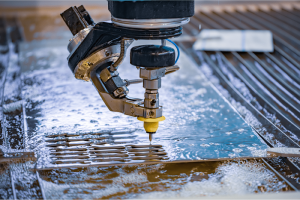
High-tolerance metal parts produced by our professional laser & waterjet cutting services

Future Developments in AI-Powered CNC Technology

Generative design integration will enable AI systems to suggest part modifications that improve manufacturability. These algorithms will analyze designs for cost reduction opportunities while maintaining functional requirements. Designers and manufacturers will collaborate through AI-mediated platforms.

Swarm intelligence will coordinate multiple CNC machines for optimal facility-wide performance. These distributed AI systems will balance workloads, and share strategies across different CNC turning and milling services in Detroit automatically.

Quantum computing integration promises exponential improvements in optimization capabilities. These future systems will solve complex scheduling and routing problems instantaneously, enabling real-time optimization across global manufacturing networks. Early adopters will gain significant competitive advantages.

To learn more about the future of manufacturing, check out our latest blog The Future of Fabrication: How Detroit is Leading with Laser Cutting. 

Partner with Motor City Metal Fab for AI-Enhanced CNC Machining

The integration of AI into CNC machining creates opportunities for manufacturers ready to adopt intelligent production methods. Motor City Metal Fab combines decades of machining expertise with cutting-edge AI-powered systems benefits every client through the most advanced precision CNC machining services available today.

Our investment in AI-powered systems benefits every client through reduced costs, improved quality, and faster deliveries. Whether producing prototype components or high-volume production runs, our intelligent manufacturing capabilities exceed traditional machining limitations.

Ready to experience the advantages of AI-enhanced custom CNC machining services in Detroit? Contact our team to discuss how intelligent manufacturing solutions can transform your production capabilities and reduce costs.

Frequently Asked Questions About AI in CNC Machining

How does AI improve CNC machining accuracy compared to traditional methods?

AI systems analyze thousands of variables simultaneously to maintain tighter tolerances than manual programming, significantly enhancing precision CNC machining services. Machine learning algorithms compensate for thermal growth, tool wear, and material variations in real-time. Advanced pattern recognition identifies quality trends before parts drift out of specification. Most manufacturers report 30-40% improvements in capability indices (Cpk) after implementing AI-driven process control.

What training do CNC operators need to work with AI systems?

CNC operators require basic digital literacy and understanding of AI recommendations rather than programming expertise. Training typically covers interpreting AI dashboards, validating optimization suggestions, and knowing when to override automated decisions. Most operators become proficient with AI interfaces within 2-3 weeks of hands-on experience. Continuous learning programs help staff stay current with evolving AI capabilities.

Can small machine shops afford AI technology for CNC operations?

Cloud-based AI solutions make advanced capabilities accessible to shops of all sizes through subscription models. Entry-level AI software for CNC optimization starts around $500-1,000 monthly per machine. Many small shops report positive ROI within 6-12 months through reduced scrap, improved efficiency, and better tool utilization. Scalable solutions allow gradual implementation as budgets permit.

How does AI handle custom or one-off parts versus production runs?

AI excels at both scenarios through different optimization strategies. For custom parts, AI leverages historical data from similar components to suggest optimal cutting parameters immediately. For production runs, the system continuously learns and refines processes with each part manufactured. Feature recognition algorithms adapt quickly to new geometries, often generating efficient tool paths faster than manual programming.

What cybersecurity measures protect AI-enabled CNC systems?

Modern AI platforms implement multiple security layers including encrypted communications, role-based access controls, and isolated operational networks. Regular security updates protect against emerging threats. Air-gapped systems provide ultimate security for sensitive defense or aerospace applications. Manufacturers should verify that AI vendors comply with industry-specific security standards like NIST or ISO 27001.

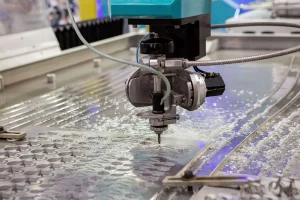
 

Open post Precision automotive components being manufactured via professional cnc machining services

CNC Machining in the Automotive Industry: Precision Manufacturing for Modern Vehicle Production

CNC machining drives innovation and quality in automotive manufacturing, producing precision components that power vehicles from concept to production. The automotive industry relies on advanced CNC technology to meet demanding specifications, tight tolerances, and high-volume production requirements that define modern vehicle manufacturing.

Motor City Metal Fab specializes in Detroit CNC machining services for automotive applications, supporting manufacturers throughout the vehicle development lifecycle. From initial prototypes to aftermarket components, our precision machining capabilities support automotive innovation while maintaining the quality standards this industry demands. Our expertise spans comprehensive support for all automotive CNC machining needs.

Critical Role of CNC Machining in Automotive Manufacturing

Modern vehicles contain thousands of precision-machined components that require exact specifications for proper function and safety. We provide CNC Machining Services in Detroit that produce engine blocks, transmission components, suspension parts, and brake systems with tolerances measured in thousandths of an inch. This precision directly impacts vehicle performance, reliability, and safety.

The automotive industry’s shift toward electric vehicles creates new CNC machining demands. Battery housings, motor components, and thermal management systems require Custom CNC Machining Services in Detroit and specialized materials. Manufacturers adapting to these evolving requirements need partners with advanced capabilities and flexibility to deliver high-quality results.

Quality standards in automotive manufacturing exceed most other industries. Parts must withstand extreme temperatures, constant vibration, and years of continuous use. CNC machining provides the consistency and repeatability necessary to meet these stringent requirements while maintaining cost-effectiveness for high-volume production.

Precision automotive components being manufactured via professional cnc machining services

Engine Component Manufacturing Through Precision CNC

Engine components represent some of the most challenging CNC machining applications in automotive manufacturing. Cylinder heads require complex multi-axis machining to create combustion chambers, valve seats, and cooling passages, often necessitating high-end 5-axis CNC Machining Services in Detroit. Each surface must meet exact specifications to achieve proper compression and reliable operation.

Crankshafts and camshafts demand exceptional precision in journal surfaces and lobe profiles. CNC grinding and turning operations achieve surface finishes measured in micro inches, reducing friction and wear. Advanced measurement systems verify dimensions throughout the machining process, catching deviations before they impact quality.

Fuel system components showcase CNC machining’s capability for microscopic precision. Injector bodies, pump housings, and valve components require tolerances that challenge even advanced equipment. Clean room environments and specialized cutting fluids prevent contamination that could affect fuel system performance.

Transmission and Drivetrain Component Production

Transmission manufacturing relies heavily on CNC machining for gear production, housing fabrication, and shaft manufacturing. Gear teeth profiles must maintain exact involute curves and spacing for smooth power transfer and minimal noise. 5-axis CNC Machines Services in Detroit create complex helical and bevel gears that traditional methods cannot produce efficiently.

Differential components require precise machining to handle enormous torque loads while operating smoothly. By utilizing Detroit CNC Turning and Milling Services, we ensure that CV joints and driveshaft components feature precise splines and bearing surfaces. Automated inspection systems verify every critical dimension before parts leave the machine.

CV joints and driveshaft components benefit from CNC turning and milling operations that create precise splines and bearing surfaces. These parts experience constant rotation and angular movement, making surface finish and dimensional accuracy critical for longevity. Automated inspection systems verify every critical dimension before parts leave the machine.

Chassis and Suspension Components

Suspension system manufacturing showcases CNC machining’s versatility of CNC Machining Services in producing both cast and forged components. Control arms, knuckles, and hub assemblies require multiple machining operations to achieve final specifications. Modern CNC machines complete these operations in single setups, improving accuracy and reducing production time.

Brake system components demand absolute precision for safety-critical applications. Rotor machining must achieve specific surface finishes and thickness variations measured in ten-thousandths of an inch. Caliper bodies require complex internal passages that only Precision CNC Machining Services in Detroit which can produce consistently.

Steering components like rack housings and tie rod ends undergo extensive CNC operations to create smooth bearing surfaces and accurate threads. These parts directly affect vehicle handling and safety, making quality control paramount. In-process measurement ensures every component meets specifications before proceeding to assembly.

Precision automotive components being manufactured via professional cnc machining services

High-Volume Production Strategies for Automotive CNC

Automotive manufacturing requires production strategies that balance speed, quality, and cost-effectiveness. CNC Machine Services cell automation enables lights-out manufacturing for many components, reducing labor costs while maintaining consistency. Robotic part handling systems transfer components between operations without human intervention.

Quick-change tooling systems minimize downtime between different part runs. Modular fixturing supports rapid changeovers for various component families, supporting lean manufacturing principles. Tool life management systems track cutting tool usage across multiple machines, optimizing replacement schedules and reducing unexpected failures.

Statistical process control (SPC) integration monitors production quality continuously. Real-time data collection identifies trends before they result in non-conforming parts. This proactive approach reduces scrap rates and improves overall equipment effectiveness (OEE) in high-volume automotive applications.

Electric Vehicle Components and New Materials

Electric vehicle (EV) manufacturing introduces unique CNC machining challenges through new materials and designs. Battery enclosures require lightweight aluminum alloys machined to precise specifications often handled through Custom CNC Machining Services in Detroit. Large-format CNC machines accommodate these sizeable components while maintaining accuracy.

Motor housings demand exceptional precision for bearing fits and magnetic component alignment. CNC machining achieves the roundness and concentricity specifications necessary for efficient motor operation. Cooling channels integrated into housings require specialized tooling and programming techniques.

Power electronics components, like inverter housings, combine thermal management requirements with electromagnetic shielding needs. CNC machining creates complex fin patterns for heat dissipation while maintaining smooth surfaces for gasket sealing. These multi-functional designs showcase modern CNC capabilities.

Quality Assurance in Automotive CNC Machining

Automotive quality standards require comprehensive inspection processes throughout production. Coordinate measuring machines (CMMs) verify critical dimensions on first articles and production samples. As a dedicated CNC Machining Center, we use in-process probing systems to check key features without removing parts from machines, improving efficiency.

Surface finish requirements vary dramatically across automotive components. Some bearing surfaces require mirror finishes achieved through precision grinding, while others need specific textures for oil retention. Advanced CNC systems adjust cutting parameters automatically to achieve specified surface characteristics.

Traceability systems track every component through the manufacturing process. Serial numbers link parts to specific machines, operators, and material lots. This documentation proves invaluable for quality investigations and continuous improvement efforts. Digital quality records integrate with customer systems for seamless information sharing.Precision automotive components being manufactured via professional cnc machining services


Prototype Development and Rapid Iteration

Automotive prototype development relies on CNC machining for rapid part production and design validation. Engineers need physical components quickly to test fit, function, and performance. CNC machining produces functional prototypes from production materials, providing accurate test results.

Design iterations happen frequently during vehicle development. CNC programming flexibility supports rapid modifications without expensive tooling changes. Engineers receive updated parts within days rather than weeks, accelerating development timelines and reducing costs.

Bridge tooling through CNC machining supports low-volume production before permanent tooling becomes available. This approach lets manufacturers begin testing and validation while finalizing production processes. Many successful vehicle launches depend on CNC-machined components during critical development phases.

Aftermarket and Replacement Part Manufacturing

The automotive aftermarket industry represents a significant opportunity for CNC machining services in Detroit. Replacement parts must match or exceed original equipment specifications while offering competitive pricing. CNC technology enables the efficient production of aftermarket components without massive tooling investments.

Performance parts showcase CNC machining’s ability to improve upon factory designs. Upgraded brake rotors, suspension components, and engine parts push performance boundaries through optimized geometries and premium materials. Small-batch CNC production makes custom performance parts economically viable.

Restoration parts for classic vehicles benefit from CNC machining’s precision and flexibility. Discontinued components can be reverse-engineered and produced in small quantities. This capability keeps vintage vehicles operational and supports the thriving automotive restoration market.

Cost Optimization Strategies for Automotive CNC

Material optimization reduces costs without compromising quality in automotive applications. Intelligent nesting software maximizes material utilization, particularly important for expensive alloys. Near-net-shape blanks reduce machining time and material waste for appropriate components.

Standardized tooling across part families reduces inventory costs and setup times. Common cutting tools, holders, and inserts simplify procurement and maintenance. This standardization particularly benefits contract manufacturers serving multiple automotive customers.

Design for manufacturing (DFM) collaboration between engineers and CNC programmers identifies cost reduction opportunities early. Simple modifications often yield significant savings without affecting part’s function. This proactive approach benefits both prototype and production phases.

Future Trends in Automotive CNC Machining

Additive manufacturing integration with CNC machining creates hybrid production capabilities. 3D-printed near-net shapes undergo finish machining for critical surfaces, reducing material waste and enabling complex internal geometries. This combination particularly suits low-volume, high-complexity automotive components.

Smart factory integration connects CNC machines with broader manufacturing systems. Production scheduling optimizes across entire facilities, balancing workloads and maximizing efficiency. Predictive analytics anticipate maintenance needs and adjust schedules accordingly.

Sustainable manufacturing practices gain importance in automotive production. CNC processes that minimize coolant usage, reduce energy consumption, and maximize material utilization align with industry environmental goals. Manufacturers selecting suppliers increasingly consider environmental performance alongside traditional metrics.

The automotive industry continues advancing through collaboration between government agencies and manufacturers. NIST supports the automotive industry through a variety of programs and activities. For example, measurement science and standards are needed to support the safe and predictable operation of future automated vehicles (AVs). These partnerships drive innovation in manufacturing processes and quality standards.

Industry standards organizations play a critical role in automotive manufacturing evolution. SAE standards promote and facilitate safety, productivity, reliability, efficiency, and certification in mobility industries. These standards guide CNC machining practices and quality requirements across the global automotive supply chain.

Partner with Motor City Metal Fab for Automotive CNC Excellence

Motor City Metal Fab combines decades of automotive industry experience with advanced CNC capabilities to serve manufacturers throughout the vehicle lifecycle. Our understanding of automotive requirements positions us as the ideal CNC Machining Center for your precision needs.

Quality, reliability, and innovation define our approach to automotive CNC machining. Whether producing critical engine components, complex transmission parts, or specialized EV components, we deliver the precision modern vehicles demand.

Ready to accelerate your automotive manufacturing with superior CNC machining services? Contact our automotive specialists to discuss your specific requirements and discover how our capabilities can drive your success.

Frequently Asked Questions About CNC Machining in Automotive

What tolerances can CNC machining services achieve for automotive components?

Modern CNC machining companies routinely achieve tolerances of ±0.0002 inches for critical automotive features like bearing journals and valve seats. Some applications require even tighter tolerances, reaching ±0.00005 inches with specialized equipment and environmental controls. Surface finishes below 8 micro inches Ra are standard for components like hydraulic valve bodies. Temperature-controlled environments and in-process measurement systems maintain these specifications across production runs.

How does CNC machining support both prototype and production automotive needs?

CNC machining services in Detroit offer unique flexibility by eliminating expensive dedicated tooling. Prototype parts are produced directly from CAD models, while the same equipment transitions seamlessly to high-volume production. Using custom CNC machining services in Detroit during the prototyping phase reduces development costs and accelerates time-to-market.

What automotive materials work best with CNC machining processes?

Aluminum alloys like 6061 and 7075 provide excellent machinability for lightweight components. Steel alloys and titanium also benefit from expert CNC turning and milling services, especially for parts requiring extreme strength. As a versatile CNC machining company, Motor City Metal Fab selects materials based on your specific production volume and cost targets.

How do automotive manufacturers maintain quality in high-volume CNC production?

Automated inspection systems and Statistical Process Control (SPC) software monitor trends in real-time. By utilizing 5 axis CNC machining services, manufacturers can maintain higher quality on complex parts by reducing the number of setups, ensuring that safety-critical features meet 100% inspection standards.

What makes CNC machining cost-effective for automotive aftermarket parts?

Our Custom CNC Machining Services in Detroit eliminate tooling costs associated with casting or forging, making small-batch production economically viable. Programming flexibility allows quick changeovers between different part numbers without dedicated fixtures. Modern CAM software optimizes cutting strategies to minimize cycle times and maximize tool life. These advantages enable competitive pricing for aftermarket components while maintaining or exceeding OEM quality standards.


Open post Advanced laser & waterjet cutting services for high-precision industrial metal fabrication

The Future of Laser & Waterjet Cutting Technology

The manufacturing industry continues to evolve with remarkable speed through technological advancements. Laser and waterjet cutting stand at the forefront of this evolution, shaping how metal fabrication businesses operate. At Motor City Metal Fab, WE strive to stay abreast of all trends and innovations in technology and machinery, positioning our business to deliver exceptional results for our clients.

This comprehensive guide explores emerging trends, technologies, and applications that will define the future of laser  & waterjet cutting services in Detroit over the coming decade.

Rising Innovations in Laser Cutting Technology

The laser cutting industry has witnessed significant growth since its inception in the 1960s. What began as a revolutionary concept has matured into an indispensable technology for modern manufacturing. When evaluating Laser &Waterjet Cutting Technology, it is clear that recent advancements in fiber optics and automation have given lasers a distinct advantage in speed and precision for high-volume production.

5G Integration and Smart Manufacturing

Manufacturing facilities now implement 5G technology to create interconnected systems that communicate seamlessly. This connectivity transforms how Tube laser cutting services in Detroit and flat-sheet machines operate in the production environment. Modern systems receive real-time design updates from engineering departments and adjust cutting parameters automatically based on material analysis. They can report maintenance needs before equipment failures occur, preventing costly downtime. Such systems optimize workflow through predictive analytics, creating a more efficient production floor.

Smart factories utilizing these technologies report productivity increases of up to 30%, according to a study by the National Institute of Standards and Technology.

AI-Powered Precision and Automation

Artificial intelligence now plays a critical role in advancing metal laser cutting services in Detroit capabilities. Machine learning algorithms optimize cutting paths for complex geometries, resulting in faster production and reduced wear on equipment. Computer vision systems inspect materials and adjust parameters in real-time, ensuring consistent quality across production runs. Predictive models minimize material waste through nesting optimization, maximizing the use of raw materials. Perhaps most impressively, many systems now feature autonomous operation that reduces human intervention for routine Tube laser cutting services in Detroit.

These AI applications result in higher precision, reduced waste, and faster production times—benefits that Motor City Fab uses to deliver outstanding results for our clients.

Eco-Friendly Laser Systems

Environmental concerns drive innovations toward greener laser cutting technologies. Fiber lasers reduce energy consumption by up to 70% compared to CO2 systems, making them more efficient and environmentally responsible. Modern systems now feature closed-loop cooling systems that minimize water usage, an important consideration for sustainability. Advanced filtration systems capture particulates and fumes, protecting both workers and the environment. Smart energy management reduces electricity usage during idle periods, further decreasing the carbon footprint of operations.

The Sustainable Manufacturing Initiative reports that these improvements significantly reduce the carbon footprint of metal fabrication processes.

Smart dashboard for a CNC machining center tracking energy consumption and material waste to meet 2026 sustainability standards

Waterjet Technology Advancements

Waterjet cutting continues to evolve alongside laser technology, offering unique advantages for specific applications.

Ultra-High Pressure Systems

Next-generation CNC waterjet cutting services in Detroit operate at pressures exceeding 90,000 PSI, offering benefits such as:

Multi-Axis Cutting Capabilities

Modern CNC waterjet cutting services in Detroit now feature 5-axis and even 6-axis cutting heads that:

  • Create complex 3D components in a single setup
  • Produce beveled edges without secondary operations
  • Maintain perpendicular cutting on contoured surfaces
  • Enable taper compensation for improved accuracy

These capabilities widen the applications for accurate waterjet cutting services in Detroit, particularly in aerospace, automotive, and architectural industries.

Hybrid Cutting Systems

The integration of waterjet technology with other cutting methods creates effective hybrid systems:

  • Laser-waterjet combinations that leverage both metal laser cutting services in Detroit and waterjet benefits
  • Plasma-waterjet systems for thick material processing
  • Mechanical-waterjet hybrid machines for specialized applications

At Motor City Metal Fab, we evaluate these emerging technologies to determine which Laser & Waterjet Cutting Services in Detroit best serve our clients’ needs.

Material Processing Innovations

The future of CNC waterjet cutting services in Detroit extends beyond machinery to include advancements in materials processing.

New Material Capabilities

Cutting systems now process a growing range of materials:

  • Advanced composites for aerospace applications
  • Medical-grade titanium alloys
  • Specialized ceramics for electronics
  • Ultra-high-strength steels for automotive safety components

According to Materials Today, these advanced materials require specialized cutting parameters that modern systems can deliver.

Micro-Cutting Applications

Both laser & waterjet service in Detroit technologies now operate at micro scales:

  • Precision components for medical devices
  • Miniaturized electronics parts
  • Microfluidic devices for biotech applications
  • Fine jewelry and watchmaking components

These applications need extraordinary precision, making accurate waterjet cutting services in Detroit indispensable.

Thick Material Processing

Advancements in power and beam quality allow cutting of increasingly thick materials:

  • Structural steel exceeding 50mm thickness
  • Heavy plate applications for shipbuilding
  • Mining and construction equipment components
  • Defense industry armor plating

High-tolerance metal parts produced by our professional laser & waterjet cutting services

Software and Digital Integration

The future of Laser & Waterjet Cutting Services in Detroit depends on advanced software solutions and digital integration.

Cloud-Based Design and Manufacturing

Cloud technologies transform how CNC waterjet cutting services in Detroit function:

  • Centralized design databases accessible from anywhere
  • Remote system monitoring and operation
  • Collaborative engineering across multiple locations
  • Real-time quotation and production scheduling

This connectivity eliminates geographical barriers and enables new business models for fabrication companies.

Digital Twins

Digital twin technology creates virtual replicas of physical cutting systems:

  • Simulation of cutting operations before physical production
  • Virtual testing of process parameters
  • Predictive maintenance based on operational data
  • Training opportunities without machine downtime

The Digital Manufacturing and Design Innovation Institute has documented how digital twins reduce commissioning time by up to 40%.

Augmented Reality Applications

AR technology improves operator capabilities:

  • Visual setup guidance for complex jobs
  • Maintenance procedures with step-by-step visual aids
  • Quality inspection with overlay comparison to design specifications
  • Training simulations for new operators

Industry Trends Shaping Laser & Waterjet Cutting Services

Several broader industry trends influence the direction of cutting technology development.

On-Demand Manufacturing

The rise of on-demand manufacturing affects how CNC waterjet cutting services in Detroit operate:

  • Shorter production runs with faster turnaround times
  • Greater variety of materials processed by a single facility
  • Increased customization requires flexible production systems
  • Integration with e-commerce platforms for direct customer ordering

At Motor City Metal Fab, we adapt to these market changes by investing in versatile equipment that manages diverse client requirements.

Reshoring and Localized Production

Global supply chain vulnerabilities drive production closer to end markets:

  • Increased domestic manufacturing requires expanded cutting capacity
  • Just-in-time production models demand rapid turnaround
  • Higher quality standards are expected from local suppliers
  • Emphasis on workforce development to support advanced manufacturing

This trend creates opportunities for North American fabricators with advanced technological capabilities.

Additive-Subtractive Hybrid Manufacturing

The integration of additive manufacturing with cutting technologies:

  • 3D printing combined with precision cutting for complete solutions
  • Repair and modification of existing components
  • Material-specific processing strategies
  • Reduced waste through near-net-shape production

These hybrid approaches open new possibilities for complex component production that were previously impractical or impossible.

A procurement team discussing how to overcome psychology behind manufacturing procurement delays

Applications Across Industries

The evolution of Laser & Waterjet Cutting Services in Detroit impacts numerous industries:

Automotive Transformation

The automotive industry undergoes substantial changes requiring tube laser cutting services in Detroit.

  • Lightweight materials for improved fuel efficiency
  • Battery compartments for electric vehicles
  • High-strength steel components for crash protection
  • Custom components for low-volume specialty vehicles

Aerospace Advancement

Aerospace manufacturing demands exceptional precision:

  • Complex geometries for optimized performance
  • Exotic materials requiring specialized processing
  • Zero-defect requirements for critical components
  • Weight reduction through innovative design and material use

Medical Innovation

The medical device industry benefits from cutting-edge technology breakthroughs:

  • Implants instruments requiring CNC waterjet cutting services in Detroit.
  • Surgical instruments with complex geometries
  • Custom prosthetics made for individual patients
  • Microfluidic devices for diagnostic applications

Clean Energy Development

Renewable energy technologies need specialized components:

  • Solar panel frames and mounting systems
  • Wind turbine components
  • Fuel cell plates and assemblies
  • Energy storage system enclosures

At Motor City Fab, we serve these diverse industries with specialized metal laser cutting services and CNC waterjet cutting services in Detroit tailored to green energy standards.

Future Challenges and Opportunities

The cutting technology landscape faces both challenges and opportunities in the coming years.

Skills Gap and Workforce Development

Advanced metal laser cutting services in Detroit technology requires skilled operators:

  • Training programs for new technology adoption
  • Knowledge transfer from experienced staff
  • Partnership with educational institutions
  • Retention strategies for skilled employees

Integration with Industry 4.0

The broader digital transformation of manufacturing:

Customization vs. Standardization

Balancing competing market demands:

Advanced laser & waterjet cutting services for high-precision industrial metal fabrication

How Motor City Metal Fab Prepares for the Future

As technology evolves, Motor City Metal Fab positions itself at the forefront of innovation through strategic initiatives:

  • Continuous investment in state-of-the-art equipment
  • Ongoing staff training and development
  • Partnerships with technology providers
  • Research into emerging applications

We believe that staying ahead of technological trends in Laser & Waterjet Cutting Services in Detroit allows us to provide excellent service and solutions to our clients across all industries.

FAQs About the Future of Laser & Waterjet Cutting Services

What advantages do fiber lasers have over traditional CO2 lasers?

Fiber lasers offer lower operating costs and faster speeds for metal laser cutting services in Detroit. They perform well when cutting reflective materials like copper and brass and are ideal for precision tube laser cutting services.

How will AI impact the future of metal cutting services?

AI will transform Laser & Waterjet cutting services in Detroit through optimization of cutting paths, predictive maintenance to prevent downtime, automated quality control systems, and intelligent nesting to maximize material usage. These advancements will increase productivity, reduce waste, improve part quality, and lower operating costs. Companies like Motor City Fab that adopt these technologies early will gain significant business advantages.

What materials can be processed by modern waterjet systems?

Our modern Detroit CNC and waterjet cutting services systems can process an extraordinary range of materials, including metals, composites, stone, glass, ceramics, plastics, rubber, and foams. With proper setup and parameters, waterjet cutting manages materials from soft gasket materials less than 1mm thick to hardened steel exceeding 200mm in thickness. This versatility makes waterjet cutting an ideal solution for facilities processing diverse materials.

How do environmental regulations affect cutting technology development?

Environmental regulations drive innovation in cutting technologies by encouraging more efficient energy usage, improved waste management systems, and reduced emissions. Manufacturers now develop systems with closed-loop water recycling, advanced filtration, and energy recovery features. These eco-friendly designs comply with regulations and often reduce operating costs through improved efficiency.

What factors should I consider when choosing between laser and waterjet cutting?

When selecting between laser and waterjet cutting, consider material type and thickness, required edge quality, tolerance specifications, production volume, and project timeline. Laser cutting typically offers faster processing speeds and tighter tolerances on thin materials, while waterjet cutting works better with thick materials and heat-sensitive applications. For guidance on your project requirements, contact our team for a consultation.

Open post AI dashboard for real-time monitoring of Laser & Waterjet Cutting Services

Artificial Intelligence Revolution in Laser and Waterjet Cutting

Manufacturing is experiencing a transformation through AI integration in cutting technologies. At Motor City Metal Fab, we recognize how AI systems reshape precision cutting operations, creating smarter production environments with improved accuracy, efficiency, and adaptability for our metal laser cutting services in Detroit and waterjet solutions.

This guide examines how AI technologies are changing laser and waterjet cutting processes right now, offering practical insights for fabrication businesses considering these advanced technologies.

AI Integration in Modern Metal Laser Cutting Services

Machine learning algorithms and neural networks now perform tasks that once required extensive human expertise and programming time.

Self-Optimizing CNC Programming

Traditional CNC programming demands significant expertise to create optimal paths for tube laser cutting services in Detroit. AI-based systems now analyze CAD files automatically to determine:

  • Cutting sequence for minimal material movement
  • Ideal cutting speeds based on material properties
  • Appropriate lead-ins and lead-outs for clean edges
  • Nesting arrangements for maximum material utilization in CNC waterjet cutting services in Detroit

These algorithms learn from every job, constantly refining their parameters to create increasingly efficient programs without human intervention.

Real-Time Process Monitoring and Adjustment 

AI-equipped laser and waterjet systems revolutionize accurate waterjet cutting services in Detroit through continuous monitoring via integrated technologies. These systems employ high-speed cameras that track kerf width and quality, acoustic sensors that detect subtle changes in cutting sounds, thermal imaging that visualizes heat distribution patterns, and pressure and flow monitors that maintain waterjet stability. 

The true advantage emerges when these systems identify deviations from optimal parameters and automatically implement micro-adjustments in milliseconds—a reaction time that dramatically outpaces human capabilities. This ensures consistent quality across Laser & Waterjet Cutting Services in Detroit by addressing variables before they impact part integrity, eliminating the traditional delay between problem detection and resolution.

Predictive Maintenance Systems 

Downtime represents a critical cost factor in metal fabrication, prompting the adoption of AI-driven predictive maintenance as a transformative solution. These sophisticated systems leverage multiple data streams simultaneously: vibration analysis identifies early bearing wear long before catastrophic failure, current draw monitoring pinpoints struggling components in tube laser cutting services in Detroit equipment. Oil analysis detects contamination that could damage precision machinery, and historical performance data comparison flags anomalous patterns that signal potential issues. 

This multifaceted approach fundamentally shifts maintenance from reactive to proactive strategies, with the Manufacturing Extension Partnership confirming remarkable results—predictive maintenance implementations typically slash machine downtime by 30-50% while extending overall equipment lifespan by 20-40%, delivering substantial return on investment through both increased production time and reduced capital expenditure needs.

Practical Applications in Fabrication Environments

AI integration reaches beyond the cutting machine itself to improve overall facility operations.

Intelligent Job Scheduling and Resource Allocation

AI scheduling systems coordinate multiple machines, operators, and material handling systems to:

  • Prioritize jobs based on deadlines, material availability, and machine capabilities
  • Group similar jobs to minimize material changeover time
  • Predict completion times with increasing accuracy
  • Allocate resources efficiently during peak production periods

These systems learn from past production runs, continuously improving their scheduling accuracy.

Quality Control Automation

Inspection tasks that once required skilled human eyes can now be performed by AI systems using:

  • Computer vision for dimensional accuracy verification
  • Surface finish analysis for quality grading in metal laser cutting services in Detroit
  • Automatic part identification and sorting
  • Documentation generation for quality assurance records

A study by the American Society for Quality found that AI-based inspection systems typically achieve 99.7% detection rates for defects, exceeding human inspection averages.

Advanced laser & waterjet cutting services for high-precision industrial metal fabrication

Material Optimization and Waste Reduction

AI algorithms excel at complex optimization for CNC waterjet cutting services in Detroit:

  • Multi-part nesting for minimal waste
  • Leftover material tracking and utilization
  • Alternative cutting plan generation for varying material thicknesses
  • Grain direction optimization for structural applications

Manufacturers implementing these systems for tube laser cutting services in Detroit typically report 15-20% reductions in material waste.

Advanced AI Applications in Cutting Technology

Beyond basic automation, AI enables advanced capabilities that were previously unattainable.

Generative Design for Complex Components

AI-powered generative design takes manufacturing possibilities to new levels:

  • Topology optimization based on load requirements
  • Weight reduction maintaining structural integrity
  • Novel geometries beyond traditional design approaches
  • Material-specific design adaptation

The Advanced Manufacturing Office at the Department of Energy reports that generative design typically reduces component weight by 25-50% maintaining or improving performance characteristics.

Digital Twin Integration

Digital twins provide virtual replicas of physical CNC waterjet cutting services in Detroit systems. They allow for:

  • Real-time performance monitoring against optimal parameters
  • “What-if” scenario testing before physical implementation
  • Historical performance analysis for continuous improvement
  • Troubleshooting assistance through simulation

According to the Digital Twin Consortium, manufacturers using digital twin technology report 15-30% improvements in overall equipment effectiveness.

Natural Language Programming Interfaces

Modern AI systems now accept natural language instructions:

  • “Cut these parts from this material at maximum speed”
  • “Optimize this job for minimal material waste”
  • “Schedule this production run to minimize operator overtime”
  • “Generate a report on yesterday’s quality metrics”

These interfaces dramatically reduce the training requirements for new operators, with many systems achieving 80% reductions in programming time.

Computer Vision for Material Identification

Advanced computer vision systems now:

  • Automatically identify material types and grades
  • Detect surface imperfections before cutting begins
  • Apply appropriate cutting parameters for specific materials
  • Document material provenance for quality assurance

The Robotic Industries Association notes that vision-guided manufacturing systems typically reduce material-related errors by 60-85%.

Implementation Strategies for Fabrication Shops

Adopting AI-driven systems requires strategic planning and incremental implementation.

Starting with Small-Scale AI Adoption

Successful AI integration often begins with focused implementations:

  • Single-machine optimization projects
  • Operator assistance systems
  • Quality verification tools
  • Maintenance monitoring solutions

These limited projects provide valuable learning experiences before full-scale deployment.

Industrial waterjet cutting thick aluminum; one of the key benefits of CNC laser and waterjet technology

Integration with Existing Systems

Most fabrication shops already utilize various software solutions. Successful AI integration focuses on:

  • Data sharing between existing ERP/MES systems and new AI tools
  • Standardized data formats for cross-platform compatibility
  • APIs for seamless information exchange
  • Consistent user interfaces to reduce training requirements

The Industrial Internet Consortium provides frameworks for industrial system integration that many manufacturers find valuable during this process.

Building Necessary Data Infrastructure

AI systems require robust data collection and storage capabilities:

  • Edge computing devices for real-time processing
  • Secure data storage systems for historical information
  • High-speed networking for sensor data transmission
  • Backup systems for operational continuity

Many manufacturers begin by upgrading their data infrastructure before implementing AI applications.

Implementation Challenges and Solutions

Even with their benefits, AI systems present certain challenges during implementation.

Data Quality and Consistency Issues

AI systems require high-quality data to function properly:

  • Inconsistent naming conventions hampering machine learning
  • Sensor calibration variations affecting decision quality
  • Missing historical data limiting predictive capabilities
  • Data silos preventing comprehensive analysis

Successful implementations typically begin with data standardization efforts before attempting advanced AI applications.

Integration with Legacy Equipment

Many manufacturers operate equipment of varying ages:

  • Older equipment lacking sensor capabilities
  • Inconsistent control systems across machine types
  • Limited network connectivity in established facilities
  • Proprietary systems resistant to external integration

Retrofit solutions from providers like the Clean Energy Smart Manufacturing Innovation Institute can bridge these gaps without complete equipment replacement.

Cybersecurity Considerations

Connected manufacturing systems introduce security concerns:

  • Protection of proprietary process data
  • Operational technology network segmentation
  • Regular security patching and updates
  • Incident response planning for manufacturing systems

The National Institute of Standards and Technology provides manufacturing-specific cybersecurity frameworks widely adopted across the industry.

Measuring ROI and Performance Metrics

Quantifying AI benefits requires appropriate metrics:

  • Overall equipment effectiveness (OEE) improvements
  • Material utilization rates
  • Quality improvement measurements
  • Labor productivity enhancements

The most successful implementations establish baseline measurements before AI deployment to accurately quantify benefits.

Workforce Considerations in AI Adoption

Successfully implementing AI technologies requires careful attention to workforce planning.

Evolving Job Roles in AI-Enhanced Environments

Rather than replacing workers, AI typically transforms job descriptions:

  • Machine operators become process monitors and exception handlers
  • Programmers shift to AI training and customization
  • Maintenance staff focus on predictive interventions
  • Quality inspectors become calibration specialists for AI systems

The Manufacturing Institute emphasizes that successful AI adoption requires comprehensive workforce development planning.

Precision automotive components being manufactured via professional cnc machining services

Training and Skill Development Requirements

Existing staff often need additional skills to work effectively with AI-enhanced Laser & Waterjet Cutting Services in Detroit:

Forward-thinking manufacturers create structured learning paths for employees as they introduce advanced technologies.

Creating Collaborative Human-AI Work Environments

Optimal results come from human-AI collaboration rather than replacement:

  • AI handles repetitive calculations and monitoring for tube laser cutting services in Detroit
  • Humans manage exceptions and creative problem-solving
  • Systems present information intuitively to support human decision-making
  • Feedback loops allow operators to improve AI performance

Organizations that emphasize collaboration rather than automation often see higher productivity gains across all Laser & Waterjet Cutting Services in Detroit.

Economic Impact and ROI Considerations

Justifying investment in AI technologies requires thorough financial analysis.

Investment Requirements for AI Implementation

AI systems involve various cost components:

Many manufacturers begin with retrofitting existing equipment rather than complete system replacement.

Measurable Benefits and Return Timelines

Typical benefits manifest in several areas:

  • 15-25% productivity improvement through optimized cutting paths
  • 10-15% material savings through improved nesting for accurate waterjet cutting services in Detroit
  • 30-50% reduction in quality-related rejections
  • 20-40% decrease in unplanned downtime

According to the Manufacturing Technology Centre, most fabrication businesses see positive ROI within 12-18 months of implementation.

Financing Options and Industry Resources

Various resources exist to support technology adoption:

  • Manufacturing extension partnerships offering implementation assistance
  • SBA loans for technology upgrades
  • R&D tax credits for technology development
  • State-level economic development programs

These resources can significantly reduce the financial barriers to AI adoption.

Real-World Implementation Insights

Examining successful and unsuccessful implementations provides valuable insights for manufacturers considering AI adoption.

Key Success Factors

The most successful AI implementations in cutting operations share several common characteristics:

  • Clear objective setting with measurable targets
  • Strong IT infrastructure established before deployment
  • Gradual implementation approach with defined phases
  • Comprehensive employee training and communication
  • Dedicated maintenance and support resources

Manufacturers who follow these principles typically report much higher satisfaction with their AI investments.

Common Implementation Pitfalls

Learning from others’ challenges can help avoid common mistakes:

  • Inadequate data infrastructure causing system unreliability
  • Insufficient employee training leading to resistance
  • Attempting too much change simultaneously
  • Failing to establish clear metrics for success
  • Unrealistic expectations for immediate ROI

Most unsuccessful projects share these common characteristics that can be mitigated with proper planning.

Future Developments on the Horizon

AI technologies continue evolving rapidly with several promising developments.

Fully Autonomous Production Systems

Next-generation systems will manage entire production sequences:

  • Automatic material loading and unloading
  • Self-directed quality verification
  • Autonomous production scheduling
  • Unattended overnight operations

These capabilities will further improve production efficiency, particularly for repeat jobs.

Cross-Process Optimization

Future AI systems will coordinate multiple manufacturing processes:

  • Optimized handoffs between cutting, bending, and welding
  • Integrated additive-subtractive hybrid manufacturing
  • Material handling coordination
  • Facility-wide energy optimization

This holistic approach promises substantial efficiency gains beyond current systems.

AI-Driven Design for Manufacturability

Emerging systems are beginning to influence part design:

  • Automatic design modification suggestions for improved manufacturability
  • Cost impact analysis for design decisions
  • Alternative manufacturing method recommendations
  • Material selection optimization

These capabilities will strengthen connections between design and manufacturing departments.

Industry Adoption Trends and Market Analysis

The implementation of AI in Laser & Waterjet Cutting Services follows distinct patterns:

Adoption Rates by Industry Sector

AI adoption varies significantly across manufacturing sectors:

  • Aerospace: Leading adoption with 45-60% of manufacturers using AI
  • Automotive: 30-40% adoption rate focusing on quality and efficiency
  • Medical device: 25-35% adoption emphasizing precision and traceability
  • General fabrication: 10-20% adoption, mainly larger operations

Research from the Society of Manufacturing Engineers shows adoption rates doubling every 18-24 months as technology becomes more accessible.

Custom metal components manufactured using our professional CNC machining services

Investment Priorities and Focus Areas

Manufacturing executives report varied investment priorities:

  • Quality improvement ranks first among 62% of manufacturers
  • Production efficiency is the top priority for 57%
  • Material cost reduction leads for 48% in accurate waterjet cutting services in Detroit
  • Labor productivity improvement is first for 41%

These priorities directly influence which AI technologies receive implementation focus.

Technology Vendor Landscape

The AI manufacturing technology market includes:

  • Traditional equipment manufacturers adding AI capabilities
  • Pure-play AI software vendors partnering with machine builders
  • Shop-developed custom solutions
  • Hybrid approaches with consultant integration

According to Fabricating & Metalworking Magazine, integration capabilities now rank as the top selection criteria for technology vendors.

Regulatory and Standards Considerations

AI implementation must navigate evolving standards and regulations:

  • ISO/TR 24464:2020 providing automation guidelines
  • UL 4600 addressing autonomous system safety
  • NIST AI Risk Management Framework
  • Industry-related quality standards with AI considerations

The International Organization for Standardization continues developing frameworks that manufacturers must monitor for compliance purposes.

Global Competitiveness Implications

AI adoption has significant competitive implications for manufacturers.

Comparative Analysis of Global AI Adoption

Global adoption rates show regional variations:

  • Germany leads with 47% of manufacturers using some form of AI
  • Japan follows at 45% with emphasis on robotics integration
  • United States at 41% primarily in larger manufacturers
  • China at 39% with rapid growth trajectory

The World Economic Forum predicts that by 2027, AI adoption will be a primary differentiator for manufacturing competitiveness.

Small and Medium Manufacturer Considerations

Smaller manufacturers face unique challenges and opportunities:

  • Cloud-based AI solutions reducing capital requirements
  • Technology-as-a-service business models enabling access
  • Collaborative implementation approaches sharing costs
  • Focused implementations targeting specific pain points

The Association for Manufacturing Technology offers resources specifically designed to help smaller manufacturers navigate AI adoption.

Security and Intellectual Property Protection

The increasing digitization of manufacturing processes through AI introduces new security considerations.

Securing Manufacturing Data and Algorithms

Manufacturing intellectual property requires protection:

  • Proprietary cutting parameters developed through years of experience
  • Custom AI models trained on company-particular data
  • Customer part designs and specifications
  • Process innovations that provide competitive advantages

According to the National Association of Manufacturers, intellectual property theft costs US manufacturers over $200 billion annually.

Data Ownership Considerations

Connected manufacturing systems raise important data ownership questions:

  • Who owns data generated during customer part production?
  • Do equipment vendors have rights to operational data?
  • Can manufacturers monetize anonymized process data?
  • How should data rights be addressed in contracts?

The Manufacturing Leadership Council recommends explicit data ownership agreements in all manufacturing contracts.

Balancing Connectivity with Security

Modern manufacturing requires finding balance between competing needs:

  • Production visibility requiring connectivity
  • Security requiring isolation
  • Data collection requiring storage
  • Intellectual property requiring protection

A study by the Industrial Internet Consortium found that 87% of manufacturers have experienced security incidents impacting connected equipment.

Industrial waterjet cutting thick aluminum; one of the key benefits of CNC laser and waterjet technology

How Motor City Fab Implements AI Technologies

At Motor City Metal Fab, our strategic AI integration delivers tangible client advantages through a carefully orchestrated technology ecosystem. 

We’ve implemented AI-optimized cutting path generation that significantly reduces processing time while minimizing tool wear, paired with intelligent nesting algorithms that maximize material utilization across complex job combinations our CNC waterjet cutting services in Detroit. Our production reliability stems from sophisticated predictive maintenance systems that anticipate potential issues before they impact schedules, while real-time quality monitoring systems ensure dimensional accuracy throughout the cutting process by making instantaneous adjustments. 

This comprehensive approach reflects our commitment to purposeful technology deployment; rather than pursuing innovation merely for marketing appeal, our AI implementation strategy targets specific manufacturing challenges that directly impact client success metrics, including lead time reduction in tube laser cutting services and consistently accurate waterjet cutting services in Detroit high-mix production environments.

FAQs About AI in Laser and Waterjet Cutting in Detroit

How does AI improve cutting accuracy compared to traditional CNC programming?

AI systems continuously monitor cutting conditions and make real-time adjustments that would be impossible through traditional programming. These systems detect minute variations in material properties, thermal conditions, and machine performance, applying micro-adjustments to maintain optimal cutting parameters. This adaptive approach typically achieves accuracy improvements of 20-30% for accurate waterjet cutting services compared to static programming methods.

What types of manufacturing operations benefit most from AI integration?

Manufacturing operations with high variability, frequent job changeovers, or complex parts typically see the greatest benefits from AI integration. Custom fabrication shops processing diverse materials, and tube laser cutting services requiring exceptional precision gain the most Operations with very standardized products running consistent materials may see less dramatic improvements, though still benefit from predictive maintenance and quality monitoring systems.

What are the data requirements for implementing AI in cutting operations?

Successful AI implementation requires clean, consistent data from various sources throughout the manufacturing process. Minimum data typically includes machine performance metrics, material specifications, quality measurements, and production schedules. More advanced systems may incorporate sensor data from cameras, acoustic monitors, or thermal imaging. Organizations should plan for data storage requirements of 500GB-5TB depending on implementation scope, with appropriate security and backup systems. For implementation assistance, contact our team to discuss your specific scenario.

How do AI systems affect operator job requirements?

Rather than eliminating jobs, AI systems typically transform operator responsibilities from manual programming and monitoring to exception handling and system optimization. Operators need fewer manual programming skills but require greater knowledge of digital systems, data interpretation, and process optimization. Most manufacturers provide 40-80 hours of training during implementation, with ongoing learning opportunities as systems evolve. Experienced operators typically adapt well to these new responsibilities, often reporting higher job satisfaction when freed from repetitive tasks.

What is the typical implementation timeline for AI-enhanced cutting systems?

Implementation timelines vary based on scope and existing infrastructure. Typical timelines include: 1-3 months for basic nesting and cutting path optimization systems, 3-6 months for comprehensive machine monitoring and predictive maintenance, and 6-12 months for fully integrated facility-wide systems. The most successful implementations follow phased approaches with clearly defined milestones rather than attempting complete transformations simultaneously. Organizations should plan for temporary productivity impacts during transition periods, though these are typically offset quickly by efficiency gains.

Open post Precision material processing equipment performing CNC machining on an automotive engine component

The Automotive Prototype Industry: A Critical Part of Innovation and Development

At Motor City Metal Fab, we understand the importance of precision and innovation in the automotive prototype industry. As the demand for new vehicle technologies and complex designs continues to grow, our advanced services in CNC machining, laser and waterjet cutting in Detroit, and metal forming offer invaluable support to automotive manufacturers. We provide high-quality custom fabrication solutions that ensure each prototype component meets strict performance and safety standards.

Our team works closely with automotive engineers and designers, supplying them with the necessary parts and prototypes needed for real-world testing and refinement. With our cutting-edge material processing equipment in Detroit and expertise, we specialize in producing high-precision metal components that are integral to the automotive prototyping process. Whether it’s creating lightweight but durable parts for electric vehicles or intricate components through laser material processing, Motor City Fab delivers the quality and accuracy required to bring innovative concepts to life.

In the fast-paced automotive industry, we recognize the need for rapid prototyping. By utilizing material processing in Detroit methods such as CNC machining and laser cutting, we help accelerate the development of prototypes, allowing for quicker testing and iteration. This enables automotive companies to stay ahead of the competition, ensuring their designs are not only functional but also compliant with safety regulations and environmental standards.

Our services also include low-volume production runs for testing purposes, making us an ideal partner for automotive manufacturers looking to evaluate new designs and technologies. As the automotive sector continues to evolve, we are committed to providing the material processing services in Detroit necessary to bring the vehicles of tomorrow to life.

Introduction: The Role of Automotive Prototyping

Automotive prototyping is a vital step in the design and manufacturing of new vehicles. This process involves the creation of an early model or prototype of a vehicle, which serves as a proof of concept for the final product. Automotive prototyping services are essential for evaluating design, performance, and manufacturability before committing to full-scale production.

The automotive industry is constantly evolving, with new technologies, safety features, fuel efficiency standards, and performance improvements being incorporated into vehicles. Utilizing professional automotive prototyping services helps engineers and designers test new concepts and technologies in a real-world setting, ensuring that these innovations meet the requirements for safety, efficiency, and functionality.

The Importance of Prototypes in Automotive Development

Prototypes serve a critical function in the automotive industry by providing a tangible, testable version of a vehicle before it is mass-produced. The benefits of prototyping in automotive development are numerous and include:

  • Testing New Technologies: Prototypes are used to test and validate new technologies, such as autonomous driving systems, electric powertrains, and advanced safety features. By building a prototype, engineers can simulate real-world conditions and gather valuable data that informs further development.
  • Design Verification: Prototypes are also used to verify design elements, ensuring that they meet both functional and aesthetic requirements. This can include everything from the car’s exterior design to the ergonomics of the interior and user interface.
  • Manufacturing Feasibility: Prototyping helps assess the feasibility of manufacturing a vehicle at scale. It allows manufacturers to identify any potential challenges in the production process, such as supply chain issues, assembly difficulties, and material costs.
  • Cost and Time Efficiency: By identifying issues early in the development process, prototypes help save time and money in the long run. Catching problems before full-scale production begins reduces the likelihood of costly recalls or design modifications.

Prototyping Processes in the Automotive Industry

The automotive prototyping process is multifaceted and involves various stages, each crucial for the development of the final product. Here’s a breakdown of the key processes involved in automotive prototyping:

1. Conceptualization and Design

The first stage of automotive prototyping begins with conceptualization. Engineers and designers work together to bring ideas to life through sketches, CAD (Computer-Aided Design) models, and simulations. During this phase, the focus is on creativity, functionality, and feasibility. The goal is to create a design that aligns with consumer needs, industry trends, and regulatory requirements.

2. Material Selection and Sourcing

Once the design is finalized, the next step is material selection. The choice of materials for a prototype depends on several factors, including weight, durability, cost, and performance. Detroit Advanced material processing allows us to work with lightweight materials, such as aluminum and composites, which are often chosen to improve fuel efficiency and reduce emissions.

3. Prototype Fabrication

Fabrication is where the prototype begins to take physical form. In this stage, skilled technicians use material processing equipment in Detroit and techniques like 3D printing, CNC machining, and casting to create individual components of the vehicle.

  • 3D Printing: This is a widely used technique in automotive prototyping. It allows for rapid prototyping and the creation of complex geometries that would be difficult or expensive to produce using traditional manufacturing methods.
  • CNC Machining: CNC (Computer Numerical Control) machining is used to create precise, high-quality parts. It is particularly useful for producing metal parts that need to meet strict tolerances and specifications.
  • Casting: Casting is used to create metal parts by pouring molten metal into molds. It is an effective way to produce parts in large quantities for prototyping.

4. Testing and Evaluation

Once the prototype is assembled, the next step is testing. Prototypes undergo a range of tests, including:

  • Performance Testing: Prototypes are tested for acceleration, handling, braking, fuel efficiency, and other performance metrics.
  • Safety Testing: Crash tests, rollover tests, and other safety evaluations are performed to ensure that the vehicle meets regulatory standards and provides adequate protection for occupants.
  • Environmental Testing: Prototypes are tested in various environmental conditions, such as extreme temperatures, humidity, and road surfaces, to ensure that the vehicle performs reliably under diverse circumstances.

5. Iteration and Refinement

After testing, prototypes are often refined based on the results. Engineers may modify the design, adjust materials, or improve material processing in Detroit methods to address any weaknesses identified during testing. This iterative process continues until the prototype meets all specifications and performs optimally.

Key Services in the Automotive Prototype Industry

The automotive prototype industry offers a range of services that are crucial to the development of new vehicles. These services are in high demand due to the increasing complexity of vehicle design and the need for rapid innovation in the automotive sector. Some of the most critical material processing services in Detroit provided in this industry include:

1. Prototype Design and Engineering

Automotive prototyping begins with the design and engineering phase. Expert designers and engineers are essential for translating concepts into viable, testable models. They use advanced CAD software and simulation tools to create detailed models that can be used to assess functionality, performance, and manufacturability.

2. 3D Printing and Rapid Prototyping

3D printing has revolutionized the automotive prototype industry by enabling rapid prototyping. This technology allows manufacturers to quickly produce prototype parts and models, which can be tested and modified in real-time. 3D printing is particularly useful for creating complex geometries and reducing lead times for prototype production.

3. CNC Machining and Manufacturing

CNC machining is an integral part of automotive prototyping. It allows manufacturers to produce high-precision, custom parts for prototypes. CNC machines can create parts from a variety of materials, including metals, plastics, and composites, ensuring that the final product meets strict specifications.

4. Testing and Validation Services

Once a prototype is created, it undergoes extensive testing to validate its performance, safety, and manufacturability. Automotive prototype companies offer a range of testing services, including:

  • Crash Testing
  • Durability Testing
  • Fuel Efficiency Testing
  • Environmental Testing

5. Prototype Assembly and Integration

After individual components are manufactured, they need to be assembled into a complete prototype. Prototype assembly involves integrating all the components, from the powertrain to the interior features, to ensure that the vehicle functions as intended.

6. Low-Volume Production

Some automotive prototype companies offer low-volume production services. This allows automakers to produce a small number of vehicles for further testing or demonstration purposes. Low-volume production is often used when a design needs to be tested in real-world conditions or showcased to potential investors or stakeholders. Utilizing specialized material processing equipment in Detroit to produce small batches for real-world evaluation.

Demand for Automotive Prototype Services

The automotive prototype industry is in high demand, driven by several factors:

1. Technological Advancements

The continuous evolution of automotive technology—particularly in areas like electric vehicles (EVs), autonomous driving, and advanced driver-assistance systems (ADAS)—has created a greater need for prototyping services. These technologies require new, complex components and systems that must be thoroughly tested and refined before they can be mass-produced.

2. Increased Focus on Safety and Sustainability

With an increasing emphasis on safety and environmental sustainability, automakers must develop vehicles that meet stricter regulatory standards. Prototyping and material processing services in Detroit help manufacturers design vehicles that comply with safety regulations, fuel efficiency standards, and emissions guidelines.

3. Shorter Development Timelines

The automotive industry is under pressure to bring new models to market faster than ever before. Prototyping services help accelerate the development process by allowing manufacturers to quickly test and refine designs, shortening the time from concept to production.

4. Customization and Innovation

As consumer demand for customization and innovation in vehicles grows, automakers are turning to prototyping to create unique, tailored solutions. Whether it’s developing new vehicle designs or testing out new technologies, utilizing the right material processing equipment in Detroit is essential for staying competitive in the market.

The Future of Automotive Prototyping

The automotive prototype industry is a critical component of the broader automotive development process. By providing the services necessary to turn concepts into functional, testable models, prototyping plays a key role in driving innovation, ensuring safety, and meeting consumer demands. As the automotive industry continues to evolve, the demand for prototyping services will only grow, particularly in areas like electric vehicles, autonomous driving, and sustainable manufacturing.

Automotive prototyping is more than just an industry, it’s the bridge between imagination and reality, shaping the future of transportation. By leveraging laser material processing in Detroit and technical expertise, automotive prototype companies help bring groundbreaking vehicles to life, ensuring that the cars of tomorrow are safer, more efficient, and more innovative than ever before.

Motor City Fab’s Services in the Automotive Prototype Industry: Precision and Innovation in Every Step

At Motor City Metal Fab, we understand that the automotive prototype industry is the backbone of innovation and the future of vehicle design. Our team is proud to provide high-quality fabrication, CNC machining, laser cutting, and media blasting services that cater to the rigorous demands of the automotive prototyping sector.

  1. Precision CNC Machining for Automotive Components
    Automotive prototypes require highly detailed and precise components, which is where our CNC machining services in Detroit shine. We work with a range of materials, including metals and composites, to produce custom, high-precision parts. Our advanced CNC machines ensure that every part is crafted to the exact specifications required, making us a trusted partner in the automotive prototype industry.
  2. Laser Cutting for Exacting Prototype Designs
    Laser cutting is crucial in prototyping to create precise, clean cuts in various materials. Whether it’s metal or plastic, our laser cutting services in Detroit ensure that the parts for your automotive prototype fit together seamlessly. Our state-of-the-art laser equipment can handle complex shapes and fine details that are essential for modern vehicle designs.
  3. Media Blasting for Surface Finishing
    Prototypes often require specific surface finishes to achieve both aesthetic and functional goals. Our media blasting services are ideal for preparing surfaces, removing contaminants, and ensuring that your automotive components meet the necessary texture and appearance standards. We use a variety of blasting media to provide the right finish for each unique project.
  4. Custom Fabrication for Prototype Assembly
    Motor City Fab offers comprehensive custom fabrication services to bring all the elements of your automotive prototype together. From creating the frame to fabricating specialized components, we ensure that every part is fabricated to meet the demanding needs of prototype assembly. Our team works closely with engineers to ensure the assembly process is as efficient and effective as possible.
  5. Collaboration with Engineers and Designers
    At Motor City Fab, we believe that collaboration is key in the prototyping process. Our team works alongside automotive engineers and designers to provide the necessary components and services that bring their visions to life. Whether it’s refining existing designs or creating new ones from scratch, we are committed to supporting innovation in every way we can.

Motor City Fab’s services are designed to meet the ever-increasing demands of the automotive prototype industry. With precision, quality, and a dedication to innovation, we continue to play a vital role in bringing the next generation of vehicles to life.

To learn more, Contact Us today! 

FAQs

  1. What is automotive prototyping?
    Automotive prototyping is the process of creating early, functional models of vehicles to test concepts, technologies, and designs through various material processing methods before mass production.
  2. Why is prototyping important in automotive development?
    Prototypes are crucial for testing new technologies, verifying design concepts, assessing safety and performance, and ensuring manufacturability. They help avoid costly mistakes by identifying issues early via advanced material processing stages.
  3. What are the key stages in the automotive prototyping process?
    The process typically involves five stages:
  • Conceptualization and Design: Creating initial designs and CAD models.
  • Material Selection and Sourcing: Choosing materials based on performance, cost, and environmental factors.
  • Prototype Fabrication: Using methods like 3D printing, CNC machining, and casting to create physical parts.
  • Testing and Evaluation: Conducting performance, safety, and environmental tests.
  • Iteration and Refinement: Making necessary adjustments to optimize the prototype.
  1. How does 3D printing benefit automotive prototyping?
    3D printing allows for rapid prototyping, enabling manufacturers to quickly produce complex parts and models. This technique significantly reduces lead times, lowers production costs, and facilitates design modifications in real-time, which is especially valuable in testing new technologies.
  2. What types of testing are performed on automotive prototypes?
    Testing includes:
  • Performance Testing: Evaluating acceleration, handling, braking, and fuel efficiency.
  • Safety Testing: Ensuring compliance with safety standards through crash tests and other evaluations.
  • Environmental Testing: Simulating various environmental conditions (temperature, humidity, road surfaces) to assess the vehicle’s durability and reliability.
  1. What are the most common services provided in the automotive prototype industry?
    Services include:
  • Prototype design and engineering
  • 3D printing and rapid prototyping
  • CNC machining and manufacturing
  • Testing and validation (e.g., crash testing, durability testing)
  • Prototype assembly and integration
  • Low-volume production for further testing or demonstration
  1. How does automotive prototyping impact vehicle safety?
    Prototyping is crucial for testing and improving vehicle safety features. Through rigorous crash tests and other safety evaluations, manufacturers can ensure that their vehicles meet regulatory standards and provide adequate protection to occupants in real-world conditions.
  2. How does prototyping support innovation in the automotive industry?
    Prototyping allows for the testing and validation of innovative technologies, such as autonomous driving systems and electric powertrains, before they are incorporated into mass production. It also enables the exploration of new vehicle designs and customizations, ensuring that automakers remain competitive in an ever-evolving market.
  3. What challenges do automotive manufacturers face when developing prototypes?
    Challenges include material selection, design verification, maintaining cost-effectiveness, meeting stringent safety and environmental regulations, and ensuring that the prototype can be manufactured efficiently at scale. Prototyping helps identify these issues early on, reducing the risk of costly errors during mass production.
  4. How is the demand for automotive prototyping services changing?
    The demand for prototyping services is growing due to advancements in technology, the increasing emphasis on sustainability and safety, and the need for faster development timelines. As electric vehicles and autonomous driving systems become more prevalent, the need for specialized prototyping services to test and refine these innovations is also increasing.

These FAQs help to clarify key aspects of the automotive prototype industry and the essential role it plays in the development of new vehicles and technologies.


Open post

The Automotive Aftermarket Industry: Why Motor City Metal Fab is Essential

The Strength of the Automotive Aftermarket Industry

The automotive aftermarket industry stands as a powerhouse of innovation, customization, and performance enhancement. Enthusiasts, repair shops, and manufacturers depend on precision-engineered parts to upgrade, restore, and optimize vehicles. From high-performance modifications to necessary replacement components, this industry guarantees that vehicles operate at peak efficiency and meet the specific needs of their owners.

Motor City Metal Fab  (MCMF) serves a key function in this industry by providing high-quality metal fabrication, machining, and finishing services. With modern technology and a team of skilled professionals, we produce components that exceed industry standards, supporting aftermarket manufacturers, performance shops, and individuals striving for excellence in their builds.

The Necessary Function of Metal Fabrication in Automotive Aftermarket

Custom fabrication forms the core of the automotive aftermarket. Performance upgrades, chassis modifications, and structural reinforcements all require precision-crafted components that guarantee durability and performance. At MCMF, we focus on a range of advanced fabrication techniques that meet the evolving demands of this dynamic industry.

Metal fabrication forms the foundation of high-performance aftermarket parts, offering the ability to create custom solutions shaped to specific vehicle needs. This includes strengthening a chassis for high-speed racing, designing aerodynamic body kits, or crafting high-precision engine components – fabrication holds a key function in improving vehicle performance and aesthetics. 

With innovations in materials and manufacturing processes, today’s aftermarket industry relies on advanced fabrication techniques to push the boundaries of speed, safety, and efficiency. At MCMF, we combine cutting-edge technology with expert craftsmanship to produce parts that not only meet but exceed the expectations of aftermarket professionals and automotive enthusiasts.

Laser and Waterjet Cutting for Precision and Performance

Every aftermarket modification depends on components that fit perfectly and function flawlessly. Our laser and waterjet cutting services offer superior precision for creating intricate brackets, panels, and other necessary components. By utilizing advanced cutting technology, we produce clean, accurate cuts on materials such as aluminum, stainless steel, and carbon steel, guaranteeing seamless integration into any aftermarket application.

  • Performance Parts: Custom engine mounts, aerodynamic panels, and structural reinforcements benefit from precise cutting methods.
  • Restoration Components: Classic car enthusiasts require exact replicas of original parts, which we manufacture with unparalleled accuracy.
  • Customization Projects: Unique builds demand tailored components, which we deliver with precision and consistency.

Metal Forming and Tube Bending for Custom Builds

The automotive aftermarket industry depends on precision bending and forming for applications such as roll cages, exhaust systems, and frame modifications. Our CNC tube bending technology allows us to create complex bends which maintain the structural integrity of the material.

  • Roll Cages & Safety Structures: These remain necessary for motorsports and off-road applications, our precision-bent tubing improves safety and durability.
  • Exhaust Systems: We manufacture smooth, efficient bends to optimize exhaust flow and vehicle performance.
  • Chassis & Suspension Components: Custom frame and suspension modifications require expert bending and forming to meet performance demands.

CNC Machining: Improving Aftermarket Performance

Performance and durability stand paramount in aftermarket components. Our CNC machining capabilities, including 3, 4, and 5-axis milling as well as lathe turning, allow us to create high-precision parts that add to improved engine efficiency, aerodynamics, and overall vehicle strength.

  • Engine Components: Custom brackets, pulleys, and intake manifolds improve performance and reliability.
  • Aerospace-Grade Precision: Our machining guarantees that every part meets tight tolerances, resulting in consistent and repeatable performance.
  • High-Strength Materials: We work with aluminum, titanium, and hardened steel to manufacture components that withstand extreme conditions.
  • Suspension & Drivetrain Components: Precision-machined control arms, differential mounts, and driveshaft yokes improve vehicle handling and power transfer.
  • Performance Improvements: CNC machining allows us to create custom turbo flanges, throttle bodies, and lightweight structural components for high-performance builds.

Expert Welding and Fabrication for High-Performance Vehicles

High-performance automotive applications require expert welding to guarantee strength and longevity. Our team of highly skilled fabricators focuses on MIG, TIG, and robotic welding, producing roll cages, reinforced frames, and structural reinforcements tailored to the demanding requirements of the aftermarket industry.

  • Motorsports & Racing: Race cars demand lightweight yet durable components, which we manufacture with expert precision.
  • Off-Road & Utility Vehicles: We fabricate custom bumpers, skid plates, and reinforcements to withstand rugged terrain.
  • Performance Improvements: This includes reinforcing suspension components or fabricating custom exhaust headers, our welding services deliver unmatched reliability.

We take pride in our welding expertise, making certain every joint and weld is structurally sound and aesthetically clean. Our services cater to high-performance applications, delivering unparalleled strength and quality in every component. From aluminum intercooler piping to steel subframes, our welding solutions guarantee lasting durability and performance.

Improving Durability and Aesthetics

Once components are cut, formed, and welded, they require superior finishing to guarantee longevity and resistance to environmental factors. The automotive aftermarket demands high-quality coatings that protect against corrosion, wear, and extreme conditions. At MCMF, we offer a range of finishing services that both improve durability and elevate the visual appeal of aftermarket parts.

Our expert finishing techniques make certain that every component receives protection from rust, UV damage, and general wear and tear, making them suitable for both high-performance and aesthetic applications. If you want a sleek, polished finish or a rugged, corrosion-resistant coating, our finishing solutions provide the perfect balance of protection and style.

Powder Coating for Maximum Protection

Powder coating stands as an excellent choice for improving the durability and longevity of aftermarket parts. Its superior resistance to chipping, heat, and harsh chemicals makes it a go-to finish for high-performance applications. It protects parts from the elements, plus adds a sleek, uniform look to any project.

  • Suspension Components: Powder-coated finishes offer superior protection for control arms, coil springs, and stabilizer bars, making certain of smooth performance in tough conditions.
  • Custom Wheels & Accessories: Durable coatings improve the appearance and longevity of custom wheels and performance parts, giving them a polished and lasting finish.
  • Underbody Protection: Powder coating prevents corrosion in exposed chassis and frame components, significantly extending the lifespan of your vehicle’s undercarriage.

From improving the look to adding a protective layer, powder coating provides a robust solution for aftermarket parts, making certain they withstand even the harshest conditions.

Media Blasting for Optimal Surface Preparation

Achieving a flawless finish starts with proper surface preparation. Our media blasting process removes rust, paint, and contaminants, making certain of optimal adhesion for coatings and finishes.

  • Restoration Projects: Classic vehicle restorations require surface preparation to achieve a factory-quality finish.
  • High-Performance Applications: Performance parts benefit from thorough preparation, which helps coatings withstand extreme conditions.
  • Corrosion Prevention: Proper blasting techniques improve durability by eliminating oxidation before coating applications.

Serving the Custom and Performance Markets

Beyond fabrication and finishing, the automotive aftermarket depends on trusted suppliers who grasp the importance of precision and performance. MCMF partners with custom builders, performance shops, and restoration specialists to provide tailored solutions that align with the industry’s highest standards.

  • Custom Car Builds: We produce precision-machined and fabricated components for hot rods, muscle cars, and one-of-a-kind custom projects.
  • Performance Upgrades: Our services help manufacturers push the limits of speed, aerodynamics, and durability.
  • Classic Car Restorations: We recreate original parts using modern techniques, making certain of seamless integration into restoration projects.
  • Off-Road & Utility Vehicle Improvements: Our durable components withstand the toughest conditions and provide reliability in extreme environments.

Why Aftermarket Professionals Choose MCMF

The automotive aftermarket industry demands expertise, precision, and consistency. MCMF stands out as a leader in aftermarket fabrication and machining by providing:

  • Advanced Technology: Our CNC machining, laser cutting, and welding capabilities guarantee precision and repeatability.
  • Unmatched Craftsmanship: Our experienced fabricators and machinists bring years of expertise to every project.
  • Comprehensive Solutions: From prototyping to large-scale production, we handle every step of component manufacturing.
  • Commitment to Quality: We follow stringent quality control measures, making certain every part meets or exceeds industry standards.
  • Dedicated Customer Support: Our team works closely with clients to develop solutions tailored to their needs.

Your Partner in Automotive Aftermarket Manufacturing

From small performance shops to restoration specialists to large-scale aftermarket manufacturers, MCMF provides the components that fuel innovation and performance. Our commitment to precision, reliability, and customer satisfaction makes us a necessary partner in the automotive aftermarket industry. We offer end-to-end solutions, from design and prototyping to final production, making certain that our clients receive the best quality components for their needs. With a focus on efficiency and cutting-edge technology, we always invest in advanced manufacturing methods to stay ahead in the constantly changing aftermarket sector.

Contact MCMF for Your Next Aftermarket Project

Need precision-crafted components to improve your aftermarket automotive projects?

Motor City Metal Fab delivers unmatched expertise, technology, and craftsmanship to bring your vision to life. Contact Motor City Fab today to discuss your project and see how our fabrication and machining services can improve your build.

FAQs

What function does metal fabrication serve in the automotive aftermarket industry? Metal fabrication remains necessary for creating custom parts, structural reinforcements, and performance upgrades. It allows manufacturers, restoration specialists, and performance shops to develop high-quality, durable components for vehicles.

How does CNC machining improve aftermarket automotive parts? CNC machining guarantees high precision, repeatability, and durability in aftermarket components. It allows for tight tolerances and custom designs in engine parts, brackets, suspension components, and more.

Why are laser and waterjet cutting important for automotive modifications? Laser and waterjet cutting deliver precision and clean edges, making them ideal for cutting intricate parts like brackets, panels, and custom vehicle components with minimal material waste.

What types of metal forming and tube bending services does MCMF offer? MCMF provides precision tube bending for roll cages, exhaust systems, and chassis modifications. Our advanced metal forming techniques create durable and high-performance components for custom builds.

What benefits does powder coating bring to the automotive aftermarket? Powder coating improves durability, corrosion resistance, and aesthetics of aftermarket parts. It provides a long-lasting, chip-resistant finish for suspension components, wheels, and underbody parts.

How does media blasting improve the quality of aftermarket automotive parts? Media blasting removes rust, old coatings, and contaminants, making certain of a clean surface for paint or powder coating. It remains important for restoration projects and performance applications where a flawless finish is required.

What types of welding does MCMF focus on for automotive applications? MCMF focuses on MIG, TIG, and robotic welding, guaranteeing strong, durable welds for roll cages, chassis reinforcements, exhaust systems, and other high-performance components.

How does MCMF support classic car restoration projects? We recreate original parts with modern fabrication techniques, making certain of seamless integration which maintains the classic look and feel of vintage vehicles.

Does MCMF provide services for off-road and motorsports applications? Yes, we manufacture custom components for off-road vehicles and race cars, including reinforced bumpers, skid plates, roll cages, and suspension modifications designed for extreme conditions.

How can I work with MCMF on my custom aftermarket project? Contact us with your project details, and our team will work with you to develop precision-crafted components that meet your specifications and performance goals.

Open post Explore high-precision energy sector metal fabrication for gas, oil, and renewables. Learn how we support EV frames, oil rigs, and solar infrastructure with durable solutions

Serving the Gas & Oil and Alternative Energy Industries

At Motor City Metal Fab, we take pride in offering specialized services that cater to a wide array of industries, with a focus on precision, innovation, and quality. Among the most critical sectors we serve are the gas & oil and alternative energy industries in Detroit. These sectors are essential to the global economy and are undergoing rapid transformations as technology and sustainability push for innovation.

In this blog, we’ll explore how we support these industries with our advanced energy sector metal fabrication in Detroit  solutions and high-precision services. By providing specialized fabrication, we ensure that both the gas & oil and alternative energy sectors stay ahead of the curve in safety, performance, and efficiency through every stage of production.

Gas & Oil Industry: Powering Global Infrastructure

The gas and oil industry has long been the backbone of global energy production, with companies relying on highly specialized equipment and processes to extract, refine, and transport oil and natural gas. This sector is essential to powering everything from residential heating to the transportation industry. However, with increasing demand for sustainable and efficient solutions, the industry faces constant pressure to evolve.

Challenges in the Gas & Oil Industry

The gas & oil sector requires extremely reliable and durable components, particularly in the harsh environments of offshore rigs, pipelines, and refineries. Here are some key challenges:

  • Extreme Conditions: Equipment is often exposed to extreme heat, cold, and corrosive elements, requiring high-quality materials and precise engineering.
  • Safety Standards: Rigorous safety standards must be met to ensure worker safety and prevent environmental contamination.
  • Cost Efficiency: With fluctuating oil prices and a competitive global market, companies must keep costs under control while maintaining high levels of performance and reliability.

How Motor City Fab Supports the Gas & Oil Industry

At Motor City Fab, we provide high-precision, custom fabrication solutions tailored to meet the unique demands of the gas and oil industry. Our services are designed to enhance efficiency, safety, and sustainability. Here’s how we support the industry:

  1. Custom Fabrication Solutions We specialize in creating custom parts and components for the gas & oil industry, from structural supports to specialized tanks and pressure vessels. Using advanced CNC machining, laser material processing in Detroit and metal forming technologies, we ensure that every part meets stringent industry specifications.
  2. Durability and Material Selection We understand that the gas & oil industry demands materials that can withstand extreme conditions. We provide fabrication services using high-performance materials like stainless steel, aluminum, and composites. To prepare these surfaces for long-term use, we utilize professional media blasting services in Detroit to ensure optimal adhesion and cleanliness.
  3. Precision Machining Precision is key in the gas & oil sector. Our CNC machining services in Detroit allow us to create parts with exact specifications, ensuring that each component integrates seamlessly into complex systems. Whether it’s for pressure vessels, valves, or piping systems, we guarantee tight tolerances and high-quality finishes.
  4. Welding and Assembly We offer a range of welding services, including MIG, TIG, and stick welding, to ensure that all components are assembled with the highest level of integrity. Our skilled welders work with a variety of metals, including high-strength alloys, to create robust structures capable of withstanding the most demanding environments.
  5. Repairs and Maintenance The oil and gas industry requires continuous maintenance. From routine inspections to complex repairs, we are equipped to handle it all, often finishing components with durable powder coating services in Detroit to protect against future corrosion.

Alternative Energy: The Shift Toward Sustainable Solutions

As the world moves toward cleaner, more sustainable energy sources, the alternative energy sector is booming. This includes renewable energy sources like solar, wind, and hydropower, as well as cutting-edge technologies such as electric vehicles (EVs) and hydrogen fuel cells.

The shift to alternative energy is driven by environmental concerns, technological advancements, and government regulations focused on reducing carbon emissions. As demand for cleaner energy solutions increases, industries must adapt and innovate to stay competitive.

AI dashboard for real-time monitoring of Laser & Waterjet Cutting Services

Key Challenges in the Alternative Energy Industry

The alternative energy industry, while offering significant promise, is also challenged by:

  • Complex Systems: Renewable energy systems, such as wind turbines and solar panels, require specialized, high-quality components for optimal performance.
  • Energy Storage: Efficient storage of energy, particularly in the case of solar and wind power, is a critical challenge that requires advanced technology and precision fabrication.
  • Cost and Efficiency: While the demand for alternative energy is growing, there is an ongoing pressure to reduce costs and improve efficiency, particularly in the production and storage of energy.

Motor City Fab’s Role in the Alternative Energy Industry

Motor City Fab is well-positioned to support the growth of the alternative energy industry with our expertise in advanced manufacturing and precision fabrication. Here’s how we support the sector:

  1. Fabrication for Electric Vehicles (EVs) The EV industry has seen rapid growth as consumers increasingly demand cleaner and more efficient vehicles. Motor City Fab offers custom fabrication solutions for EV manufacturers, including components for battery packs, chassis, and structural frames. Our CNC machining and laser material processing in Detroit technologies ensure that each part meets the stringent performance standards required for electric vehicles.
  2. Hydrogen Fuel Cell Manufacturing Hydrogen fuel cells represent a promising alternative to traditional combustion engines. These fuel cells require precision parts for optimal performance, including custom brackets, supports, and enclosures. Motor City Fab’s advanced fabrication and assembly and shipping services in Detroit ensure that these critical components meet the high standards required by hydrogen fuel cell systems.
  3. Renewable Energy Systems For companies involved in solar, wind, and other renewable energy technologies, we provide custom metal fabrication for supporting structures, mounts, and housings. Whether it’s building turbine frames, solar panel mounts, or enclosures for energy storage systems, we ensure every component is built to last and perform at peak efficiency.
  4. Energy Storage Solutions Energy storage is essential for balancing supply and demand in renewable energy systems. We utilize professional media blasting services in Detroit to prepare these surfaces for specialized coatings, ensuring they operate reliably under extreme conditions.
  5. Sustainability in Manufacturing At Motor City Fab, we are committed to sustainable manufacturing practices. We work with eco-friendly materials, employ energy-efficient manufacturing processes, and minimize waste. Our focus on sustainability aligns with the core goals of the alternative energy sector, and we strive to help our clients reduce their environmental footprint.

Precision and Innovation at the Core of Our Services

Both the gas & oil and alternative energy industries demand the highest levels of precision and innovation, and at Motor City Fab, we are proud to deliver both. Our advanced technologies, skilled workforce, and commitment to quality ensure that we meet the exacting standards of these critical industries.

Why Choose Motor City Fab?

  1. Expertise and Experience With years of experience in the industry, we understand the unique challenges and requirements of the gas & oil and alternative energy sectors. Our team is highly trained and equipped to deliver top-quality solutions, regardless of the complexity of the project.
  2. Cutting-Edge Technology We invest in the latest manufacturing technologies, including CNC machining, Detroit laser material processing, and advanced welding techniques. This allows us to produce high-precision components that meet the toughest specifications.
  3. Commitment to Sustainability We are passionate about supporting industries that focus on sustainability. Whether it’s for renewable energy systems or minimizing the environmental impact of traditional energy sources, we are committed to helping our clients achieve their environmental goals.
  4. Custom Solutions Every project is unique, and at Motor City Fab, we provide custom solutions tailored to the specific needs of our clients. From prototype development to full-scale production, we ensure that every component is fabricated to meet exact specifications.
  5. Customer-Centric Approach We prioritize our customers and work closely with them to ensure that their needs are met. From the initial consultation to Detroit assembly and shipping services, we provide ongoing support and deliver results that exceed expectations.

Industrial waterjet cutting thick aluminum; one of the key benefits of CNC laser and waterjet technology

The Future of Gas & Oil and Alternative Energy Industries

The future of both the gas & oil and alternative energy industries is intertwined with technology, innovation, and sustainability. As the world moves toward more sustainable energy solutions, companies in these sectors must continue to innovate and adapt. At Motor City Fab, we are ready to meet the evolving needs of these industries, providing the fabrication services and support necessary to drive progress.

By leveraging our expertise and cutting-edge technologies, we help our clients stay at the forefront of their industries, ensuring they remain competitive and capable of meeting the challenges of tomorrow.

Driving Innovation and Sustainability in the Gas & Oil and Alternative Energy Sectors

Motor City Metal Fab is proud to serve the gas & oil and alternative energy sectors with high-precision fabrication solutions that support innovation, sustainability, and efficiency. Whether we’re providing custom components for electric vehicles or manufacturing durable parts for oil rigs, we are committed to delivering the quality, precision, and performance that these industries demand.

With our experienced team, advanced technologies, and customer-focused approach, we’re ready to support the future of energy production—both traditional and renewable—and help power the world forward.

To learn more, Contact Us today! 

FAQs

  1. What industries does Motor City Fab serve?
    We serve a variety of industries, with a key focus on the gas & oil and alternative energy sectors. Our precision fabrication and assembly and shipping services in Detroit help help these industries meet their specific needs, ranging from custom components for electric vehicles (EVs) to durable parts for oil rigs and renewable energy systems.
  2. How does Motor City Fab support the gas & oil industry?
    We provide high-precision custom fabrication services for the gas & oil industry, offering solutions such as CNC machining, welding, metal forming, and laser material processing for harsh environments. We ensure our components meet the highest safety and durability standards required for offshore rigs, pipelines, and refineries.
  3. What materials does Motor City Fab use for gas & oil fabrication?
    We use high-performance materials like stainless steel, aluminum, and specialized alloys that are resistant to extreme heat, corrosion, and wear. Our materials are chosen to withstand the tough conditions often encountered in the gas & oil industry.
  4. What challenges does the alternative energy sector face, and how does Motor City Fab help?
    The alternative energy industry faces challenges such as the need for efficient energy storage, cost-effective solutions, and the integration of complex renewable energy systems. Motor City Fab supports the sector by providing custom fabrication for energy storage solutions, EV components, renewable energy systems, and hydrogen fuel cell manufacturing.
  5. How does Motor City Fab contribute to electric vehicle (EV) production?
    We specialize in the fabrication of critical components for EVs, including battery packs, chassis, and structural frames. Using CNC machining and laser cutting, we ensure that every part meets the stringent performance standards required for electric vehicles.
  6. Can Motor City Fab help with hydrogen fuel cell manufacturing?
    Yes, we provide precision fabrication services for hydrogen fuel cell systems. Our custom components include supports, enclosures, and other essential parts designed to ensure optimal performance in hydrogen fuel cell technology.
  7. What renewable energy systems does Motor City Fab support?
    We provide custom fabrication for various renewable energy systems, including wind turbines, solar panel mounts, and energy storage enclosures. Our solutions ensure these systems are durable and perform efficiently in diverse environmental conditions.
  8. What sets Motor City Fab apart from other fabrication service providers?
    Our commitment to precision, sustainability, and innovation sets us apart. We use the latest technologies, including CNC machining and 3D laser cutting, and work closely with our clients to provide custom solutions tailored to their specific needs.
  9. How does Motor City Fab support sustainability in the alternative energy industry?
    We are committed to sustainable manufacturing practices. We use eco-friendly materials, minimize waste, and invest in energy-efficient processes to support the environmental goals of the alternative energy industry.
  10. What is Motor City Fab’s approach to customer service?
    We prioritize our customers by offering a customer-centric approach. From the initial consultation to project completion, we collaborate closely with our clients, ensuring their needs are met and delivering results that exceed expectations.


Open post Precision industrial fabrication applications for automotive prototype chassis and body panels

Welding & Fabrication Across Industries

At Motor City Metal Fab, we pride ourselves on our exceptional welding and fabrication services in Detroit that serve a diverse range of industries. Our expertise in various welding techniques and fabrication processes allows us to deliver high-quality, custom solutions tailored to each sector’s unique needs. Let’s explore how our industrial fabrication applications in Detroit and services are making a significant impact across different industries

Automotive Prototype

In the fast-paced world of automotive prototyping, our welding and fabrication skills play a crucial role in bringing innovative designs to life. We understand that in this sector, speed, precision, and flexibility are paramount.

Our advanced industrial welding services in Detroit, including tig welding services, mig welding services, and spot welding, allow us to work with a variety of materials commonly used in automotive prototyping, such as aluminum, steel, and advanced alloys. This versatility enables us to create everything from chassis components to custom body panels with exacting precision.

We excel in:

  1. Rapid prototyping of structural components
  2. Custom fabrication of unique design elements
  3. Welding of lightweight materials for improved fuel efficiency
  4. Creation of complex assemblies for testing and validation
  5. Fabrication of specialized jigs and fixtures for prototype assembly

Our Detroit industrial fabrication services complement our welding expertise, allowing us to offer comprehensive solutions for automotive prototypes. We utilize advanced CNC machining, bending, and forming processes to create components that seamlessly integrate with welded structures.

By combining cutting-edge welding techniques with precision fabrication, we help automotive designers and engineers quickly iterate on their concepts, accelerating the development process and bringing innovative vehicles to market faster.

Automotive Aftermarket

The automotive aftermarket thrives on customization and performance enhancement, areas where our welding and fabrication skills truly shine. We cater to enthusiasts and professionals alike, creating high-quality aftermarket parts that not only look great but also deliver superior performance.

Our tig welding services in Detroit are crucial in producing:

  1. Custom exhaust systems for improved performance and sound
  2. Roll cages and safety structures for racing applications
  3. Reinforced suspension components for enhanced handling
  4. Intercooler piping for turbo and supercharged engines
  5. Customized fuel cells for racing and off-road applications

In fabrication, we excel at:

  1. Creating custom body kits and aerodynamic components
  2. Manufacturing specialized tools and equipment for automotive customization
  3. Producing bespoke interior components and trim pieces
  4. Fabricating mounting brackets and adapters for aftermarket upgrades
  5. Developing prototype parts for aftermarket manufacturers

Our ability to provide both mig welding services in Detroit and specialized fabrication allows us to create aftermarket parts that are durable, functional, and visually appealing.

Transportation

The transportation industry demands robust, reliable, and efficient solutions. Our welding and fabrication services cater to various sectors within transportation, including trucking, rail, and marine applications.

In the trucking industry, we provide mig welding services in Detroit for:

  1. Trailer fabrication and repair
  2. Custom truck bed and cargo area modifications
  3. Fuel tank manufacturing and repair
  4. Cab structure reinforcement
  5. Specialized equipment mounting solutions

For the rail sector, our expertise includes:

  1. Welding of railcar components and structures
  2. Fabrication of custom interior fittings for passenger cars
  3. Manufacturing of specialized maintenance equipment
  4. Repair and reinforcement of existing rail infrastructure
  5. Creation of bespoke components for unique rail applications

In marine transportation, we offer:

  1. Hull repair and reinforcement
  2. Fabrication of custom marine fixtures and fittings
  3. Welding of propeller shafts and rudder systems
  4. Manufacturing of specialized marine equipment
  5. Creation of custom storage solutions for vessels

Our industrial fabrication services in Detroit complement our welding services, allowing us to provide comprehensive solutions for the transportation industry. We utilize advanced techniques such as CNC plasma cutting, press brake forming, and precision machining to create components that integrate seamlessly with welded structures.

High-tolerance metal parts produced by our professional laser & waterjet cutting services

Food Services

In the food services industry, hygiene, durability, and efficiency are paramount. Our welding and fabrication services expertise plays a crucial role in creating equipment and fixtures that meet these stringent requirements.

Our industrial welding services for the food industry include:

  1. Fabrication of stainless steel food preparation surfaces
  2. Custom manufacturing of food processing equipment
  3. Welding of sanitary piping systems for food and beverage production
  4. Creation of specialized storage solutions for commercial kitchens
  5. Repair and modification of existing food service equipment

In terms of fabrication, we excel at:

  1. Manufacturing custom serving counters and display cases
  2. Producing specialized utensils and cooking implements
  3. Creating modular kitchen layouts for efficient food preparation
  4. Fabricating custom ventilation hoods and exhaust systems
  5. Developing unique food presentation and catering equipment

We understand the importance of using food-grade materials and maintaining the highest standards of cleanliness in our welding and fabrication services in Detroit processes for this industry. Our expertise in working with stainless steel ensures that all components we produce are corrosion-resistant and easy to clean, meeting the strict hygiene standards of the food service sector.

Gas & Oil

The demanding environment of the gas and oil industry requires robust, precision-engineered components. Our welding and fabrication capabilities are well-suited to meet these challenging requirements.

In Detroit welding services for the gas and oil sector, we specialize in:

  1. Pipeline fabrication and repair
  2. Pressure vessel manufacturing
  3. Welding of high-pressure fittings and valves
  4. Creation of custom drilling equipment components
  5. Fabrication of specialized tools for maintenance and repair

Our industrial fabrication services in Detroit for this industry include:

  1. Manufacturing of custom flanges and connectors
  2. Production of specialized storage tanks and containers
  3. Fabrication of structural components for offshore platforms
  4. Creation of safety barriers and protective structures
  5. Development of custom solutions for unique extraction challenges

We are well-versed in working with the high-strength materials often required in the gas and oil industry, including various grades of steel and corrosion-resistant alloys. Our welders are certified in techniques specific to this sector, ensuring that all components meet or exceed industry standards for safety and reliability.

Alternative Energy (including EVs and hydrogen fuel)

As the world shifts towards sustainable energy solutions, we’re at the forefront of providing Welding and Fabrication Services in Detroit for electric vehicles and hydrogen fuel systems.

In the EV sector, our mig welding services and tig welding services are utilized for:

  1. Battery enclosure manufacturing
  2. Fabrication of lightweight structural components
  3. Creation of custom cooling system components
  4. Welding of motor housings and drivetrain components
  5. Manufacturing of charging station structures

For hydrogen fuel technologies, we provide:

  1. Welding of high-pressure hydrogen storage tanks
  2. Fabrication of fuel cell stack components
  3. Manufacturing of specialized fueling station equipment
  4. Creation of safety enclosures for hydrogen systems
  5. Custom fabrication of test and development equipment

Our capabilities extend to other alternative energy sectors as well, including:

  1. Fabrication of solar panel mounting systems
  2. Manufacturing of wind turbine components
  3. Creation of specialized equipment for geothermal energy extraction
  4. Industrial welding services in Detroit of components for energy storage systems
  5. Custom fabrication for emerging energy technologies

Our industrial fabrication services in Detroit extend to solar panel mounting systems and wind turbine components, ensuring we meet the evolving needs of the alternative energy sector.

Automotive Testing

The automotive testing industry demands precision, durability, and versatility in its equipment. Our Welding and Fabrication Services in Detroit are perfectly suited to meet these requirements.

For automotive testing, we provide industrial welding services for the creation of custom test rigs and the fabrication of crash test barriers.

  1. Creation of custom test rigs and fixtures
  2. Fabrication of crash test barriers and impact absorbers
  3. Manufacturing of specialized dynamometer components
  4. Welding of environmental chamber structures
  5. Creation of custom mounting solutions for testing equipment

Our industrial fabrication services in Detroit expertise in this sector includes:

  1. Production of precision calibration tools
  2. Manufacturing of specialized sensor mounts and housings
  3. Creation of custom wind tunnel components
  4. Fabrication of road simulators and test track equipment
  5. Development of unique solutions for emerging testing methodologies

We understand the critical nature of automotive testing and ensure that all components we produce meet the highest standards of accuracy and reliability. Our ability to work with a wide range of materials allows us to create testing equipment that can withstand the rigorous demands of automotive validation processes.

Precision automotive components being manufactured via professional cnc machining services

Autonomous Vehicle Development

The rapidly evolving field of autonomous vehicles presents unique challenges that Welding and Fabrication Services in Detroit are well-equipped to address. In this sector, our industrial welding services are utilized for the fabrication of sensor mounting structures and the production of prototype vehicle structures.

In autonomous vehicle development, our welding expertise is utilized for:

  1. Fabrication of sensor mounting structures
  2. Creation of custom roof racks for equipment housing
  3. Manufacturing of reinforced components for safety systems
  4. Welding of specialized testing and validation equipment
  5. Production of prototype vehicle structures

Our fabrication services for this sector include:

  1. Manufacturing of custom enclosures for computing systems
  2. Creation of specialized calibration targets and testing environments
  3. Fabrication of unique interior components for autonomous vehicle concepts
  4. Production of modular components for rapid prototyping
  5. Development of specialized tools for autonomous vehicle maintenance and repair

We stay abreast of the latest developments in autonomous vehicle technology, ensuring that our industrial welding services in Detroit evolve to meet the changing needs of this innovative field.

Car Washing

Even in the car washing industry, precision welding and fabrication play a crucial role in creating durable, efficient equipment.

Our Detroit Welding and Fabrication Services for the car washing sector include

  1. In terms of fabrication Fabrication of wash bay structures
  2. Welding of water reclamation system components
  3. Creation of custom conveyor systems
  4. Manufacturing of specialized nozzle and brush mounting systems
  5. Fabrication of equipment housings and enclosures

We excel at:

  • Production of custom signage and branding elements
  • Manufacturing of specialized detailing tools and equipment
  • Creation of modular storage solutions for car wash supplies
  • Fabrication of drainage systems and grates
  • Development of unique solutions for automated car wash systems

we utilize tig welding services in Detroit for stainless steel components to ensure they are corrosion-resistant and built to withstand constant exposure to cleaning chemicals.

Conclusion

At Motor City Metal Fab, we take immense pride in our ability to serve such a diverse range of industries with our advanced welding and fabrication capabilities. Our commitment to superior craftsmanship, uncompromising quality, and competitive pricing ensures that we consistently exceed our customers’ expectations. Whether you need a simple welded component or a complex fabricated assembly, we have the expertise and technology to bring your vision to life.

To learn more, contact Contact US today! 

FAQs

What types of welding techniques does Motor City Fab offer?
Motor City Fab offers advanced industrial welding services including tig welding services in Detroit, mig welding services in Detroit, and spot welding, allowing us to work with a variety of materials such as aluminum, steel, and advanced alloys.

Can Motor City Fab handle custom fabrication for automotive prototypes?
Yes, we excel in industrial fabrication services for the rapid prototyping of structural components, custom fabrication of unique design elements, and creation of complex assemblies for testing and validation.

Does Motor City Fab work with aftermarket parts for the automotive industry?
Absolutely. We provide Welding and Fabrication Services in Detroit for high-quality aftermarket parts including custom exhaust systems, roll cages, and intercooler piping for performance enhancement.

What services does Motor City Fab provide for the transportation industry?
We offer a wide range of services including trailer fabrication and repair, custom truck bed modifications, railcar component welding, and hull repair and reinforcement for marine applications.

How does Motor City Fab ensure hygiene standards in food service equipment fabrication?
We offer a wide range of industrial welding services including trailer fabrication and repair, railcar component welding, and hull repair and reinforcement for marine applications.

What specialized services does Motor City Fab offer for the gas and oil industry?
We use food-grade materials and maintain cleanliness in our Welding and Fabrication Services. Our expertise in tig welding services in Detroit for stainless steel ensures all components are corrosion-resistant and easy to clean.

How is Motor City Fab contributing to the alternative energy sector?
We’re at the forefront of manufacturing components for electric vehicles, hydrogen fuel systems, and other alternative energy technologies, including battery enclosures, fuel cell stack components, and solar panel mounting systems.

What capabilities does Motor City Fab have for automotive testing equipment?
We provide welding services for custom test rigs, crash test barriers, and environmental chamber structures. Our fabrication expertise includes precision calibration tools and road simulators.

How is Motor City Fab supporting autonomous vehicle development?
We provide industrial fabrication services for electric vehicles, hydrogen fuel systems, and other technologies, including battery enclosures, fuel cell stack components, and solar panel mounting systems.

What services does Motor City Fab offer for the car washing industry?
We provide mig welding services in Detroit and tig welding services for wash bay structures and water reclamation systems, as well as industrial fabrication services for drainage systems, grates, and automated wash solutions.


Open post Laser and waterjet technology used for industrial cutting applications in automotive prototyping

Laser and Waterjet Cutting Across Industries

At Motor City Metal Fab, we’re at the forefront of precision manufacturing, leveraging advanced laser and waterjet cutting technologies to serve a diverse range of industries. Our expertise in these cutting-edge processes allows us to deliver exceptional results across various sectors. Let’s explore how our laser and waterjet cutting capabilities are transforming the industries we proudly serve.

Automotive Prototype

In the fast-paced world of automotive prototyping, precision and speed are paramount. Our laser and waterjet cutting technologies play a crucial role in bringing automotive prototypes to life with unparalleled accuracy and efficiency.

Detroit Metal laser cutting services excels in creating intricate components for automotive prototypes. With its ability to produce complex geometries and detailed parts, we can rapidly fabricate everything from body panels to interior components. These industrial cutting applications in Detroit ensure that every prototype meets the exacting standards of the automotive industry, allowing for the precision, quick iterations, and refinements required in the design process.

Our laser cutting technology offers several advantages in automotive prototyping:

  1. Rapid production of complex parts
  2. Ability to work with a wide range of materials, including metals and plastics
  3. High precision and repeatability
  4. Minimal material waste
  5. Quick turnaround times for design iterations

Accurate waterjet cutting services in Detroit complement our laser capabilities, especially when dealing with thicker materials or heat-sensitive components. Its versatility allows us to cut a wide range of materials, from metals to composites, without introducing heat-affected zones. CNC waterjet cutting services in Detroit are particularly beneficial for cutting prototype parts that require maintaining their material properties, such as specialized alloys used in advanced automotive designs.

Key benefits of waterjet cutting in automotive prototyping include:

  1. Ability to cut thick materials without heat distortion
  2. Versatility in material selection, including metals, plastics, and composites
  3. Preservation of material properties
  4. Clean, precise cuts with minimal post-processing required
  5. Environmentally friendly process with no harmful emissions

By combining these two cutting technologies, we offer our automotive clients a comprehensive solution for their prototyping needs, ensuring fast turnaround times and high-quality results.

Automotive Aftermarket

The automotive aftermarket demands both creativity and precision, and our cutting technologies deliver on both fronts.

Our metal laser cutting services in Detroit are instrumental in producing high-quality custom parts and accessories for the aftermarket sector. Our 4-axis and 5-axis laser cutting machines allow us to manufacture components with complex contours and undercuts, perfect for creating unique aftermarket solutions that stand out in the market. Whether it’s custom grilles, performance parts, or decorative elements, our tube laser cutting services in Detroit ensure a perfect fit and finish for every component.

Some popular aftermarket applications of our laser cutting technology include:

  1. Custom exhaust systems
  2. Performance brake rotors
  3. Lightweight body panels
  4. Intricate interior trim pieces
  5. Personalized license plate frames

CNC waterjet cutting services in Detroit come into play for thicker materials or when dealing with heat-sensitive components. Its ability to cut without heat makes it ideal for producing aftermarket parts that require maintaining specific material properties, such as high-strength steel components or composite materials used in performance upgrades.

Waterjet cutting is particularly useful for:

  1. Thick aluminum wheels
  2. Heavy-duty suspension components
  3. Composite body kits
  4. Custom floor mats and interior panels
  5. Specialized tools and accessories

Our combination of laser and water cutting services in Detroit technologies allows us to cater to a wide range of aftermarket needs, from cosmetic upgrades to performance-enhancing modifications.

Industrial waterjet cutting thick aluminum; one of the key benefits of CNC laser and waterjet technology

Transportation

Beyond automobiles, our cutting technologies cater to the broader transportation industry, including trucks, buses, and rail.

Laser cutting is extensively used in fabricating components for various transportation vehicles. Its precision and speed make it ideal for producing parts like seat frames, brackets, and interior fittings. The ability to quickly adapt designs and produce parts with minimal tooling changes makes laser cutting particularly valuable in the diverse transportation sector.

In the trucking industry, we use laser cutting for:

  1. Cab components and interior fittings
  2. Lightweight body panels for improved fuel efficiency
  3. Custom storage solutions
  4. Precise cutting of reflective materials for safety features
  5. Intricate designs for branding and personalization

For buses and coaches, our laser cutting capabilities are employed in:

  1. Seat frame manufacturing
  2. Interior paneling and trim
  3. Custom signage and information displays
  4. Lightweight structural components
  5. Precise cutting of safety glass and acrylic windows

In the rail industry, laser cutting plays a crucial role in:

  1. Fabricating train car interiors
  2. Creating custom signage and information panels
  3. Producing intricate decorative elements
  4. Manufacturing precise components for control systems
  5. Cutting specialized materials for noise and vibration reduction

Waterjet cutting shines in applications requiring thick material cutting such as truck and train chassis. Our CNC waterjet cutting services in Detroit allow us to cut everything from thick steel plates to composite panels for lightweight bus bodies. Its versatility allows us to cut everything from thick steel plates for truck frames to composite panels for lightweight bus bodies.

Key applications of waterjet cutting in transportation include:

  1. Cutting thick steel plates for truck and train chassis
  2. Fabricating large-scale components for ships and barges
  3. Producing composite panels for lightweight, fuel-efficient vehicles
  4. Creating custom flooring solutions for various transportation modes
  5. Manufacturing specialized parts for aerospace applications

By leveraging our comprehensive Laser & Waterjet Cutting Services in Detroit, we provide high-quality results for the diverse needs of the transportation industry.

Food Services

In the food service industry, hygiene and precision are critical. Our cutting technologies offer unique advantages in this sector.

Waterjet cutting is particularly valuable in food processing applications. Its ability to cut with pure water makes it ideal for cutting various food products without contamination. We use CNC waterjet cutting services in Detroit to precisely portion meats and cut frozen foods while maintaining the highest standards of hygiene.

Some applications of water-cutting in food services include:

  1. Portioning meat and poultry with minimal waste
  2. Cutting frozen foods without thawing
  3. Creating intricate fruit and vegetable shapes for garnishes
  4. Slicing delicate baked goods without crushing
  5. Precise cutting of cheese and other dairy products

Laser cutting, while not used directly on food products, plays a crucial role in manufacturing food processing equipment. We use laser cutting to create precise components for food handling machinery. We also utilize tube laser cutting services to create precise frames for commercial kitchen appliances and serving tools, ensuring smooth operations and easy cleaning.

Laser cutting is utilized in food services for:

  1. Manufacturing stainless steel components for food processing equipment
  2. Creating custom utensils and serving tools
  3. Fabricating intricate designs for food presentation and display
  4. Producing precise parts for commercial kitchen appliances
  5. Cutting specialized materials for food packaging and labeling

Our expertise in both cutting technologies allows us to serve the food service industry comprehensively, from food processing to equipment manufacturing.

Gas & Oil

The demanding environment of the gas and oil industry requires robust and precise components, which our cutting technologies are well-equipped to deliver.

Waterjet cutting is particularly advantageous in this sector due to its ability to cut thick, tough materials without heat-affected zones. We provide Detroit accurate waterjet cutting services to produce valve bodies, flanges, and custom fittings that can withstand harsh conditions.

Key applications of waterjet cutting in the gas and oil industry include:

  1. Cutting thick steel plates for pressure vessels
  2. Fabricating custom gaskets and seals
  3. Producing intricate parts for pumps and compressors
  4. Manufacturing components for offshore drilling equipment
  5. Creating specialized tools for maintenance and repair operations

Laser cutting complements our capabilities by allowing for rapid production of intricate parts for control panels and sensors. Additionally, our Detroit tube laser cutting services are used to fabricate custom brackets and mounting solutions for offshore and portable equipment.

We utilize laser cutting in the gas and oil industry for:

  1. Manufacturing precise components for control systems
  2. Creating intricate designs for sensor housings
  3. Producing custom brackets and mounting solutions
  4. Fabricating lightweight components for portable equipment
  5. Cutting specialized materials for safety equipment and signage

Our combination of waterjet and laser cutting technologies enables us to meet the diverse and demanding needs of the gas and oil industry, from heavy-duty components to precision instrumentation.

Alternative Energy (including EVs and hydrogen fuel)

As the world shifts towards sustainable energy solutions, we’re at the forefront of manufacturing components for electric vehicles and hydrogen fuel systems.

Our 5-axis laser cutting machines are particularly valuable in creating the intricate parts required for EV battery casings, motor housings. We also employ tube laser cutting services in Detroit for lightweight structural components and solar panel mounting frames. The precision of laser cutting ensures optimal efficiency in these cutting-edge technologies.

In the EV sector, we use laser cutting for:

  1. Fabricating battery cell casings and frames
  2. Creating cooling system components
  3. Producing lightweight body panels and structural elements
  4. Manufacturing precise parts for electric motors
  5. Cutting specialized materials for thermal management

Waterjet cutting plays a crucial role in manufacturing components for hydrogen fuel cells. We use CNC waterjet cutting services in Detroit to cut flow plates and bipolar plates with the utmost precision, ensuring material integrity and efficiency in these high-tech systems.

Applications of waterjet cutting in alternative energy include:

  1. Cutting flow plates for fuel cells
  2. Fabricating components for electrolyzes
  3. Producing custom gaskets and seals for hydrogen storage systems
  4. Manufacturing parts for solar panel mounting systems
  5. Creating specialized components for wind turbine assemblies

Our expertise in both cutting technologies positions us as a valuable partner in the growing alternative energy sector.

cnc tube bending services

Automotive Testing

The automotive testing industry demands precision and versatility, which our Laser & Waterjet Cutting Services in Detroit deliver in spades.

Laser cutting enables us to produce custom fixtures, test rigs, and specialized components with exact specifications. This precision is crucial for accurate and reliable testing procedures in the automotive industry. We use laser cutting in automotive testing for:

  1. Creating precise calibration targets
  2. Manufacturing custom sensor mounts
  3. Producing intricate components for testing equipment
  4. Fabricating lightweight parts for mobile testing units
  5. Cutting specialized materials for crash test dummies

Detroit CNC waterjet cutting services complements our capabilities by allowing us to work with a variety of materials used in testing equipment, from metals to composites, ensuring that each component meets the rigorous standards required for automotive testing.

Applications of waterjet cutting in automotive testing include:

  1. Cutting thick materials for robust test fixtures
  2. Fabricating large-scale components for environmental chambers
  3. Producing custom parts for dynamometer systems
  4. Creating specialized tools for crash testing
  5. Manufacturing components for road simulation equipment

Our comprehensive cutting capabilities enable us to support the full spectrum of automotive testing needs, from small-scale precision components to large, durable test structures.

Autonomous Vehicle Development

The rapidly evolving field of autonomous vehicles requires cutting-edge manufacturing solutions, which we provide through our advanced cutting technologies.

Laser cutting is instrumental in producing the complex sensor housings, mounting brackets, and other critical parts that enable self-driving technology. The precision and flexibility of laser cutting allow us to quickly adapt to the evolving designs in this innovative field.

In autonomous vehicle development, we use laser cutting for:

  1. Manufacturing housings for LIDAR and radar systems
  2. Creating precise mounting solutions for cameras and sensors
  3. With tube laser cutting services, we create precise mounting solutions and lightweight structural frames
  4. Fabricating intricate parts for onboard computing systems
  5. Cutting specialized materials for electromagnetic shielding

Waterjet cutting comes into play when dealing with composite materials or thicker components used in autonomous vehicle structures. Its ability to cut without heat distortion ensures the integrity of sensitive materials used in this high-tech sector.

Applications of waterjet cutting in autonomous vehicle development include:

  1. Cutting thick composite materials for vehicle bodies
  2. Fabricating large-scale components for testing and validation
  3. Producing custom parts for unique prototype designs
  4. Creating specialized tools for assembly and maintenance
  5. Manufacturing components for charging and docking stations

Our expertise in both cutting technologies allows us to support the rapid prototyping and iterative development processes crucial in the autonomous vehicle industry.

Car Washing

Even in the car washing industry, precision and durability are essential, and our cutting technologies deliver on both fronts.

We use metal laser cutting services in Detroit to manufacture precise nozzle housings and custom brackets. From nozzle housings to custom brackets, our precision-cut parts contribute to the longevity and effectiveness of car washing equipment.

Laser cutting applications in the car washing industry include:

  1. Producing precise nozzle housings for optimal water distribution
  2. Creating custom brackets and mounting solutions
  3. Manufacturing intricate parts for automated systems
  4. Fabricating signage and branding elements
  5. Cutting specialized materials for brushes and cleaning elements

CNC Waterjet cutting services in Detroit is employed for thicker materials or when dealing with components that require maintaining specific material properties. This ensures that all parts we produce for car washing systems can withstand the constant exposure to water and cleaning chemicals.

We utilize waterjet cutting in car washing for:

  1. Cutting thick, durable materials for structural components
  2. Fabricating large-scale panels for wash bays
  3. Producing custom floor grates and drainage solutions
  4. Creating specialized tools for maintenance and repair
  5. Manufacturing components for water recycling systems

Our comprehensive approach to cutting technologies enables us to provide complete solutions for car wash equipment manufacturers and operators.

Conclusion

At Motor City Metal Fab, we take immense pride in our ability to serve such a diverse range of industries with our advanced laser and waterjet cutting capabilities. Our commitment to superior craftsmanship, uncompromising quality, and competitive pricing ensures that we consistently exceed our customers’ expectations. Whether you need a simple 2D cut part or a complex 5-axis component, we have the expertise and technology to bring your vision to life.

To learn more, Contact Us today! 

Open post CNC milling machine in operation at Motor City Metal Fab's Detroit precision machine shop

CNC Milling: Motor City Fab’s Expertise Across Sectors

At Motor City Metal Fab, we’re passionate about pushing the boundaries of CNC milling technology to serve our diverse clientele. Our expertise in 3-axis, 4-axis, and 5-axis CNC milling allows us to deliver exceptional results across a wide range of industries. We take pride in our ability to adapt our advanced milling capabilities to meet the unique needs of each sector we serve, ensuring that every project receives the attention to detail and precision it deserves.

Our commitment to excellence is reflected in our state-of-the-art CNC milling machines, which are capable of producing complex parts with unparalleled accuracy. Whether we’re working on automotive prototypes, aerospace components, or custom CNC machining services in Detroit for the food service industry, we bring the same level of dedication and expertise to every project.

Let’s explore how our advanced milling capabilities benefit the various sectors we proudly serve, and how we’re continuously innovating to meet the evolving needs of our clients.

Automotive and Transportation

The automotive and transportation industry is at the heart of what we do at Motor City Fab. Our roots in Detroit, the Motor City, have given us a deep understanding of the unique challenges and opportunities in this sector. We’ve honed our skills to become leaders in providing CNC milling solutions for everything from concept cars to mass-produced vehicles, and from high-speed trains to cutting-edge aircraft.

Our expertise in 3-axis, 4-axis, and 5-axis CNC milling allows us to tackle projects of any complexity. We understand that in the automotive and transportation industry, precision precision CNC machining in Detroit, and even the smallest deviation can have significant consequences. That’s why we’ve invested in the most advanced CNC milling technology available, ensuring that we can meet and exceed the exacting standards of this industry.

Automotive Prototype

In the fast-paced world of automotive design and development, prototypes play a crucial role. Our 3-axis, 4-axis, and 5 axis CNC machining services in Detroit are instrumental in bringing automotive prototypes to life. At Motor City Fab, we understand the importance of this stage in the automotive development process, and we’ve tailored our CNC milling capabilities to meet its unique demands.

Our 3-axis, 4-axis, and 5-axis CNC milling machines are instrumental in bringing automotive prototypes to life. We can create complex geometries and intricate parts with exceptional precision, helping our clients accelerate their product development cycles. From engine components to body panels, our precision CNC machining services in Detroit ensure that every prototype meets the exacting standards of the industry.

When it comes to automotive prototypes, speed is often as important as precision. Our advanced CNC milling machines allow us to quickly produce prototype parts, enabling our clients to iterate on their designs rapidly. Whether it’s a single component or a full assembly, we have the capacity to deliver high-quality prototypes in record time.

We also understand that confidentiality is crucial in the automotive prototype stage. At Motor City Fab, we have strict protocols in place to ensure that your intellectual property is protected. Our team is experienced in working with sensitive designs and we maintain the highest standards of discretion and security.

Smart dashboard for a CNC machining center tracking energy consumption and material waste to meet 2026 sustainability standards

Automotive Aftermarket

The automotive aftermarket is a dynamic and competitive sector, constantly evolving to meet the changing needs and preferences of car enthusiasts. At Motor City Fab, we’ve positioned ourselves at the forefront of this industry, leveraging our CNC milling expertise to produce high-quality custom parts and accessories that stand out in the market.

In the aftermarket sector, we leverage our CNC milling expertise to produce high-quality custom parts and accessories. Our 4-axis and 5-axis machining services in Detroit  allow us to manufacture components with complex contours and undercuts, perfect for creating unique aftermarket solutions that stand out in the market.

Our ability to work with a wide range of materials, from aluminum and steel to high-performance polymers, allows us to create aftermarket parts that not only look great but also perform exceptionally. Whether it’s a custom intake manifold, a bespoke suspension component, or a unique interior trim piece, we have the skills and technology to bring your aftermarket vision to life.

We also understand that in the aftermarket sector, aesthetics are often as important as functionality. Our CNC milling capabilities allow us to create parts with intricate designs and flawless finishes, ensuring that your aftermarket products not only perform well but also look stunning.

Transportation

At Motor City Fab, our expertise extends far beyond automobiles. We cater to the broader transportation industry, including trucks, buses, rail, and even aerospace. Each of these sectors has its own unique challenges and requirements, and we’ve developed the skills and capabilities to meet them all.

Beyond automobiles, we cater to the broader transportation industry, including trucks, buses, and rail. Our CNC milling capabilities enable us to produce durable, precision-engineered parts that meet the rigorous demands of these vehicles.

In the trucking industry, where safety is paramount, our CNC machining services in Detroit allow us to produce parts with the tight tolerances required for smooth operation. Our CNC milling processes allow us to create components with exceptional strength and durability, ensuring that they can stand up to the demands of long-haul transportation.

For the bus and coach sector, we focus on creating parts that contribute to passenger comfort and safety. From interior fittings to critical mechanical components, our CNC milled parts are designed to enhance the overall quality and reliability of these vehicles.

In the rail industry, precision and safety are paramount. Our CNC milling capabilities allow us to produce parts with the tight tolerances required for rail applications, ensuring smooth operation and maximum safety for passengers and cargo alike.

We’re also proud to serve the aerospace industry, where the demands for precision and reliability are at their highest. Our advanced 5-axis CNC machining services in Detroit  milling machines allow us to create complex aerospace components with the accuracy required for this critical industry.

Energy and Technology

At Motor City Fab, we’re not just focused on the present – we’re actively shaping the future. Our involvement in the energy and technology sectors puts us at the forefront of innovation, working on projects that are driving the transition to cleaner, more efficient energy sources and pushing the boundaries of what’s possible in technology.

Our expertise in CNC milling plays a crucial role in these cutting-edge industries. Whether we’re creating components for advanced solar panels, precision parts for wind turbines, or intricate components for the latest battery technologies, our capabilities allow us to meet the exacting standards required in these fields.

We understand that in the energy and technology sectors, innovation is constant. That’s why we continually invest in the latest CNC milling technologies and training for our team. This ensures that we’re always ready to take on the most challenging projects and contribute to the latest advancements in these rapidly evolving fields.

Alternative Energy (including EVs and Hydrogen Fuel)

The shift towards sustainable energy solutions is one of the defining challenges of our time, and at Motor City Fab, we’re proud to be playing our part in this crucial transition. Our CNC milling capabilities are being put to use in a variety of alternative energy applications, helping to drive innovation and improve efficiency in this vital sector.

As the world shifts towards sustainable energy solutions, we’re at the forefront of manufacturing components for electric vehicles and hydrogen fuel systems. Our Detroit 5-axis CNC machining services  are particularly valuable in creating the intricate parts required for these cutting-edge technologies.

In the electric vehicle (EV) industry, our precision CNC milling is used to create a wide range of components. From battery casings to motor housings, and from cooling system components to lightweight structural parts, our milling capabilities help EV manufacturers push the boundaries of what’s possible in electric mobility.

We’re also deeply involved in the emerging hydrogen fuel sector. Hydrogen fuel cells require extremely precise components to function efficiently, and our custom CNC machining services in Detroit are up to the task, producing intricate flow plates and bipolar plates. We produce intricate flow plates, bipolar plates, and other critical components that help make hydrogen fuel cells more efficient and cost-effective.

Beyond vehicles, we’re also contributing to the broader alternative energy sector. Our CNC milling capabilities are used to create components for solar panels, wind turbines, and energy storage systems. In each of these applications, our focus on precision and quality helps to improve efficiency and reliability, contributing to the overall advancement of alternative energy technologies.

Precision CNC machining services for high-accuracy automotive prototypes and engine components

Gas & Oil

While we’re excited about the future of alternative energy, we also recognize the continued importance of the traditional gas and oil industry. This sector demands components that can withstand extreme conditions, and our CNC milling capabilities are perfectly suited to meet these challenging requirements.

In the gas and oil industry, we utilize our CNC milling capabilities to produce robust, high-precision components that can withstand harsh environments. From drill bits to valve bodies, our precision CNC machining services in Detroit ensure that every part meets the industry’s stringent safety standards.

Our CNC milling machines allow us to work with the high-strength materials often required in the gas and oil industry, including various grades of steel, titanium, and exotic alloys. We can produce components with complex geometries and tight tolerances, ensuring optimal performance even under the most demanding conditions.

We produce a wide range of components for the gas and oil industry, including drill bits, valve bodies, pump components, and various fittings and connectors. Each of these parts is manufactured to the highest standards of quality and precision, helping to ensure the safety and efficiency of gas and oil operations.

Our expertise also extends to the creation of custom tools and equipment for the gas and oil industry. Whether it’s a specialized tool for a unique drilling operation or a custom component for a new extraction technique, we have the capabilities to bring innovative ideas to life.

Emerging Technologies

At Motor City Fab, we’re not just keeping pace with technological advancements – we’re helping to drive them. Our involvement in emerging technologies puts us at the cutting edge of innovation, working on projects that are shaping the future of various industries.

Our advanced CNC milling capabilities play a crucial role in these emerging fields. We’re able to produce complex, precision-engineered components that are essential for the development and implementation of new technologies. From autonomous vehicles to advanced robotics, our precision CNC machining services in Detroit are helping to turn innovative ideas into reality.

We understand that in the world of emerging technologies, flexibility and adaptability are key. That’s why we’ve invested in the most versatile CNC milling equipment available, allowing us to quickly adapt to new requirements and tackle even the most challenging projects.

Autonomous Vehicle Development

The field of autonomous vehicles is one of the most exciting and rapidly evolving areas of technology today. At Motor City Fab, we’re proud to be playing a role in this revolution, providing precision-engineered components that are helping to make self-driving cars a reality.

The rapidly evolving field of autonomous vehicles requires precision-engineered components. Our 5 axis CNC machining services in Detroit allow us to produce the complex sensor housings, mounting brackets, and other critical parts that enable self-driving technology.

Our CNC milling machines are capable of producing the intricate parts required for various autonomous vehicle systems. This includes housings for advanced sensors like LIDAR and radar, precision mounting brackets for cameras and other sensing equipment, and custom enclosures for the powerful computers that drive these vehicles.

We understand that in the world of autonomous vehicles, every millimeter counts. Our 5-axis CNC milling machines allow us to create components with complex geometries and tight tolerances, ensuring that each part fits perfectly and performs optimally within the vehicle’s overall system.

Beyond individual components, we also produce test fixtures and prototypes for autonomous vehicle development. These tools are crucial for testing and refining self-driving systems, and our ability to provide custom CNC machining services in Detroit allows us to work with high-strength materials including various grades of steel, titanium, and exotic alloys.

Automotive Testing

The automotive industry relies heavily on rigorous testing to ensure the safety, reliability, and performance of vehicles. At Motor City Fab, we play a crucial role in this process by manufacturing the precision components and equipment used in automotive testing.

We support the automotive testing industry by manufacturing custom fixtures, test rigs, and specialized components. Our 4-axis and 5-axis CNC mills enable us to create parts with the exact specifications required for accurate and reliable testing procedures.

Our CNC milling capabilities allow us to produce a wide range of testing equipment, from simple test fixtures to complex dynamometer components. We can create custom parts that simulate real-world conditions, helping automotive manufacturers to thoroughly test their vehicles before they hit the road.

We also produce components for various types of automotive testing equipment, including crash test dummies, wind tunnel models, and road simulators. Our ability to work with a variety of materials and produce parts with tight tolerances ensures that these testing tools provide accurate and reliable data.

In addition to physical testing equipment, we also contribute to the development of virtual testing tools. Our precision-milled parts are often used to calibrate and validate computer simulations, helping to bridge the gap between virtual and physical testing.

cnc tube bending services

Service Industries

At Motor City Fab, our expertise isn’t limited to heavy industry and high-tech fields. We also proudly serve a variety of service industries, bringing our Detroit precision CNC machining services to sectors that might not traditionally be associated with advanced manufacturing.

We understand that in service industries, reliability and efficiency are key. That’s why we apply the same level of precision and attention to detail to these projects as we do to our work in automotive or aerospace. Whether we’re creating custom equipment for a restaurant kitchen or precision components for a car wash system, we ensure that every part we produce meets our high standards of quality and performance.

Our ability to work with a wide range of materials, including food-grade metals and plastics, allows us to create solutions that meet the specific specific needs of various service industries through our comprehensive CNC machining services in Detroit. We’re always excited to take on new challenges and find innovative ways to apply our CNC milling expertise to improve processes and products in these diverse fields.

Food Services

The food service industry demands equipment that is not only functional and efficient but also meets strict hygiene and safety standards. At Motor City Metal Fab, we bring our CNC milling expertise to this sector, creating custom parts and equipment that help food service businesses operate more effectively.

In the food service industry, we apply our CNC milling expertise to create custom equipment parts, molds for food processing, and specialized utensils. Our custom CNC machining services in Detroit ensure that all components meet strict hygiene standards.

Our CNC milling capabilities allow us to produce a wide range of components for the food service industry. This includes custom parts for commercial kitchen equipment, specialized molds for food processing, and unique utensils designed for specific culinary tasks.

We understand the importance of using food-grade materials, and nd our CNC machining services in Detroit allow us to work with stainless steel and FDA-standard plastics. Our expertise allows us to work with stainless steel, food-grade plastics, and other materials that meet FDA standards. We ensure that every component we produce is not only precisely engineered but also safe for use in food preparation and service.

In addition to producing individual components, we also work with food service equipment manufacturers to improve their products. Our ability to quickly produce prototype parts allows these companies to test and refine their designs, leading to more efficient and effective kitchen equipment.

Car Washing

The car washing industry relies on equipment that can withstand constant use and exposure to water and cleaning chemicals. At Motor City Fab, we use our CNC machining services capabilities to produce durable, efficient components that meet these challenging requirements.

For the car washing industry, we manufacture durable and efficient components using our CNC milling capabilities. From nozzle housings to custom brackets, our precision-milled parts contribute to the longevity and effectiveness of car washing equipment.

Our Detroit CNC machines services allow us to produce a wide range of components for car washing systems. This includes precision nozzle housings that ensure optimal water and soap distribution, durable brackets and mounting systems that can withstand the vibrations and stresses of constant use, and custom parts designed to improve the efficiency of car washing operations.

We work with a variety of materials suitable for the car washing environment, including corrosion-resistant metals and high-performance plastics. Our expertise ensures that each component we produce can stand up to the harsh conditions of a car wash while maintaining its precision and functionality.

Beyond individual components, we also work with car wash equipment manufacturers to improve their overall systems. Our ability to quickly produce prototype parts allows these companies to test and refine their designs, leading to more efficient and effective car washing equipment.

At Motor City Metal Fab, we take immense pride in our ability to serve such a diverse range of industries with our advanced CNC milling capabilities. Our commitment to superior craftsmanship, uncompromising quality, and competitive pricing ensures that we consistently exceed our customers’ expectations. Whether you need a simple 3-axis milled part or a complex 5-axis component, we have the expertise and technology to bring your vision to life.

Our team of skilled engineers and machinists is always ready to take on new challenges. We believe that every project, regardless of its size or complexity, deserves our full attention and expertise. From the initial design consultation to the final quality check, we work closely with our clients to ensure that every part we produce meets their exact specifications and requirements.

We’re constantly investing in new technologies and training to stay at the forefront of CNC milling capabilities. This commitment to innovation allows us to tackle even the most complex projects and find solutions to challenging manufacturing problems.

Conclusion

At Motor City Metal Fab, we’re not just a manufacturer – we’re a partner in your success. We understand that the components we produce play a crucial role in your products and processes, and we take that responsibility seriously. Our goal is always to deliver parts that not only meet your specifications but also contribute to the overall quality and performance of your final product.

Whether you’re in the automotive industry, energy sector, emerging technologies, or service industries, Motor City Fab has the expertise and capabilities to meet your CNC milling needs in Detriot. We invite you to experience the difference that our commitment to quality, precision, and customer satisfaction can make for your project.

To learn more, Contact Us today! 

Scroll to top