

CNC machining drives innovation and quality in automotive manufacturing, producing precision components that power vehicles from concept to production. The automotive industry relies on advanced CNC technology to meet demanding specifications, tight tolerances, and high-volume production requirements that define modern vehicle manufacturing.
Motor City Metal Fab specializes in Detroit CNC machining services for automotive applications, supporting manufacturers throughout the vehicle development lifecycle. From initial prototypes to aftermarket components, our precision machining capabilities support automotive innovation while maintaining the quality standards this industry demands. Our expertise spans comprehensive support for all automotive CNC machining needs.
Critical Role of CNC Machining in Automotive Manufacturing
Modern vehicles contain thousands of precision-machined components that require exact specifications for proper function and safety. We provide CNC Machining Services in Detroit that produce engine blocks, transmission components, suspension parts, and brake systems with tolerances measured in thousandths of an inch. This precision directly impacts vehicle performance, reliability, and safety.
The automotive industry’s shift toward electric vehicles creates new CNC machining demands. Battery housings, motor components, and thermal management systems require Custom CNC Machining Services in Detroit and specialized materials. Manufacturers adapting to these evolving requirements need partners with advanced capabilities and flexibility to deliver high-quality results.
Quality standards in automotive manufacturing exceed most other industries. Parts must withstand extreme temperatures, constant vibration, and years of continuous use. CNC machining provides the consistency and repeatability necessary to meet these stringent requirements while maintaining cost-effectiveness for high-volume production.
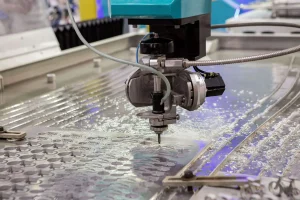
Engine Component Manufacturing Through Precision CNC
Engine components represent some of the most challenging CNC machining applications in automotive manufacturing. Cylinder heads require complex multi-axis machining to create combustion chambers, valve seats, and cooling passages, often necessitating high-end 5-axis CNC Machining Services in Detroit. Each surface must meet exact specifications to achieve proper compression and reliable operation.
Crankshafts and camshafts demand exceptional precision in journal surfaces and lobe profiles. CNC grinding and turning operations achieve surface finishes measured in micro inches, reducing friction and wear. Advanced measurement systems verify dimensions throughout the machining process, catching deviations before they impact quality.
Fuel system components showcase CNC machining’s capability for microscopic precision. Injector bodies, pump housings, and valve components require tolerances that challenge even advanced equipment. Clean room environments and specialized cutting fluids prevent contamination that could affect fuel system performance.
Transmission and Drivetrain Component Production
Transmission manufacturing relies heavily on CNC machining for gear production, housing fabrication, and shaft manufacturing. Gear teeth profiles must maintain exact involute curves and spacing for smooth power transfer and minimal noise. 5-axis CNC Machines Services in Detroit create complex helical and bevel gears that traditional methods cannot produce efficiently.
Differential components require precise machining to handle enormous torque loads while operating smoothly. By utilizing Detroit CNC Turning and Milling Services, we ensure that CV joints and driveshaft components feature precise splines and bearing surfaces. Automated inspection systems verify every critical dimension before parts leave the machine.
CV joints and driveshaft components benefit from CNC turning and milling operations that create precise splines and bearing surfaces. These parts experience constant rotation and angular movement, making surface finish and dimensional accuracy critical for longevity. Automated inspection systems verify every critical dimension before parts leave the machine.
Chassis and Suspension Components
Suspension system manufacturing showcases CNC machining’s versatility of CNC Machining Services in producing both cast and forged components. Control arms, knuckles, and hub assemblies require multiple machining operations to achieve final specifications. Modern CNC machines complete these operations in single setups, improving accuracy and reducing production time.
Brake system components demand absolute precision for safety-critical applications. Rotor machining must achieve specific surface finishes and thickness variations measured in ten-thousandths of an inch. Caliper bodies require complex internal passages that only Precision CNC Machining Services in Detroit which can produce consistently.
Steering components like rack housings and tie rod ends undergo extensive CNC operations to create smooth bearing surfaces and accurate threads. These parts directly affect vehicle handling and safety, making quality control paramount. In-process measurement ensures every component meets specifications before proceeding to assembly.

High-Volume Production Strategies for Automotive CNC
Automotive manufacturing requires production strategies that balance speed, quality, and cost-effectiveness. CNC Machine Services cell automation enables lights-out manufacturing for many components, reducing labor costs while maintaining consistency. Robotic part handling systems transfer components between operations without human intervention.
Quick-change tooling systems minimize downtime between different part runs. Modular fixturing supports rapid changeovers for various component families, supporting lean manufacturing principles. Tool life management systems track cutting tool usage across multiple machines, optimizing replacement schedules and reducing unexpected failures.
Statistical process control (SPC) integration monitors production quality continuously. Real-time data collection identifies trends before they result in non-conforming parts. This proactive approach reduces scrap rates and improves overall equipment effectiveness (OEE) in high-volume automotive applications.
Electric Vehicle Components and New Materials
Electric vehicle (EV) manufacturing introduces unique CNC machining challenges through new materials and designs. Battery enclosures require lightweight aluminum alloys machined to precise specifications often handled through Custom CNC Machining Services in Detroit. Large-format CNC machines accommodate these sizeable components while maintaining accuracy.
Motor housings demand exceptional precision for bearing fits and magnetic component alignment. CNC machining achieves the roundness and concentricity specifications necessary for efficient motor operation. Cooling channels integrated into housings require specialized tooling and programming techniques.
Power electronics components, like inverter housings, combine thermal management requirements with electromagnetic shielding needs. CNC machining creates complex fin patterns for heat dissipation while maintaining smooth surfaces for gasket sealing. These multi-functional designs showcase modern CNC capabilities.
Quality Assurance in Automotive CNC Machining
Automotive quality standards require comprehensive inspection processes throughout production. Coordinate measuring machines (CMMs) verify critical dimensions on first articles and production samples. As a dedicated CNC Machining Center, we use in-process probing systems to check key features without removing parts from machines, improving efficiency.
Surface finish requirements vary dramatically across automotive components. Some bearing surfaces require mirror finishes achieved through precision grinding, while others need specific textures for oil retention. Advanced CNC systems adjust cutting parameters automatically to achieve specified surface characteristics.
Traceability systems track every component through the manufacturing process. Serial numbers link parts to specific machines, operators, and material lots. This documentation proves invaluable for quality investigations and continuous improvement efforts. Digital quality records integrate with customer systems for seamless information sharing.
Prototype Development and Rapid Iteration
Automotive prototype development relies on CNC machining for rapid part production and design validation. Engineers need physical components quickly to test fit, function, and performance. CNC machining produces functional prototypes from production materials, providing accurate test results.
Design iterations happen frequently during vehicle development. CNC programming flexibility supports rapid modifications without expensive tooling changes. Engineers receive updated parts within days rather than weeks, accelerating development timelines and reducing costs.
Bridge tooling through CNC machining supports low-volume production before permanent tooling becomes available. This approach lets manufacturers begin testing and validation while finalizing production processes. Many successful vehicle launches depend on CNC-machined components during critical development phases.
Aftermarket and Replacement Part Manufacturing
The automotive aftermarket industry represents a significant opportunity for CNC machining services in Detroit. Replacement parts must match or exceed original equipment specifications while offering competitive pricing. CNC technology enables the efficient production of aftermarket components without massive tooling investments.
Performance parts showcase CNC machining’s ability to improve upon factory designs. Upgraded brake rotors, suspension components, and engine parts push performance boundaries through optimized geometries and premium materials. Small-batch CNC production makes custom performance parts economically viable.
Restoration parts for classic vehicles benefit from CNC machining’s precision and flexibility. Discontinued components can be reverse-engineered and produced in small quantities. This capability keeps vintage vehicles operational and supports the thriving automotive restoration market.
Cost Optimization Strategies for Automotive CNC
Material optimization reduces costs without compromising quality in automotive applications. Intelligent nesting software maximizes material utilization, particularly important for expensive alloys. Near-net-shape blanks reduce machining time and material waste for appropriate components.
Standardized tooling across part families reduces inventory costs and setup times. Common cutting tools, holders, and inserts simplify procurement and maintenance. This standardization particularly benefits contract manufacturers serving multiple automotive customers.
Design for manufacturing (DFM) collaboration between engineers and CNC programmers identifies cost reduction opportunities early. Simple modifications often yield significant savings without affecting part’s function. This proactive approach benefits both prototype and production phases.
Future Trends in Automotive CNC Machining
Additive manufacturing integration with CNC machining creates hybrid production capabilities. 3D-printed near-net shapes undergo finish machining for critical surfaces, reducing material waste and enabling complex internal geometries. This combination particularly suits low-volume, high-complexity automotive components.
Smart factory integration connects CNC machines with broader manufacturing systems. Production scheduling optimizes across entire facilities, balancing workloads and maximizing efficiency. Predictive analytics anticipate maintenance needs and adjust schedules accordingly.
Sustainable manufacturing practices gain importance in automotive production. CNC processes that minimize coolant usage, reduce energy consumption, and maximize material utilization align with industry environmental goals. Manufacturers selecting suppliers increasingly consider environmental performance alongside traditional metrics.
The automotive industry continues advancing through collaboration between government agencies and manufacturers. NIST supports the automotive industry through a variety of programs and activities. For example, measurement science and standards are needed to support the safe and predictable operation of future automated vehicles (AVs). These partnerships drive innovation in manufacturing processes and quality standards.
Industry standards organizations play a critical role in automotive manufacturing evolution. SAE standards promote and facilitate safety, productivity, reliability, efficiency, and certification in mobility industries. These standards guide CNC machining practices and quality requirements across the global automotive supply chain.
Partner with Motor City Metal Fab for Automotive CNC Excellence
Motor City Metal Fab combines decades of automotive industry experience with advanced CNC capabilities to serve manufacturers throughout the vehicle lifecycle. Our understanding of automotive requirements positions us as the ideal CNC Machining Center for your precision needs.
Quality, reliability, and innovation define our approach to automotive CNC machining. Whether producing critical engine components, complex transmission parts, or specialized EV components, we deliver the precision modern vehicles demand.
Ready to accelerate your automotive manufacturing with superior CNC machining services? Contact our automotive specialists to discuss your specific requirements and discover how our capabilities can drive your success.
Frequently Asked Questions About CNC Machining in Automotive
What tolerances can CNC machining services achieve for automotive components?
Modern CNC machining companies routinely achieve tolerances of ±0.0002 inches for critical automotive features like bearing journals and valve seats. Some applications require even tighter tolerances, reaching ±0.00005 inches with specialized equipment and environmental controls. Surface finishes below 8 micro inches Ra are standard for components like hydraulic valve bodies. Temperature-controlled environments and in-process measurement systems maintain these specifications across production runs.
How does CNC machining support both prototype and production automotive needs?
CNC machining services in Detroit offer unique flexibility by eliminating expensive dedicated tooling. Prototype parts are produced directly from CAD models, while the same equipment transitions seamlessly to high-volume production. Using custom CNC machining services in Detroit during the prototyping phase reduces development costs and accelerates time-to-market.
What automotive materials work best with CNC machining processes?
Aluminum alloys like 6061 and 7075 provide excellent machinability for lightweight components. Steel alloys and titanium also benefit from expert CNC turning and milling services, especially for parts requiring extreme strength. As a versatile CNC machining company, Motor City Metal Fab selects materials based on your specific production volume and cost targets.
How do automotive manufacturers maintain quality in high-volume CNC production?
Automated inspection systems and Statistical Process Control (SPC) software monitor trends in real-time. By utilizing 5 axis CNC machining services, manufacturers can maintain higher quality on complex parts by reducing the number of setups, ensuring that safety-critical features meet 100% inspection standards.
What makes CNC machining cost-effective for automotive aftermarket parts?
Our Custom CNC Machining Services in Detroit eliminate tooling costs associated with casting or forging, making small-batch production economically viable. Programming flexibility allows quick changeovers between different part numbers without dedicated fixtures. Modern CAM software optimizes cutting strategies to minimize cycle times and maximize tool life. These advantages enable competitive pricing for aftermarket components while maintaining or exceeding OEM quality standards.
