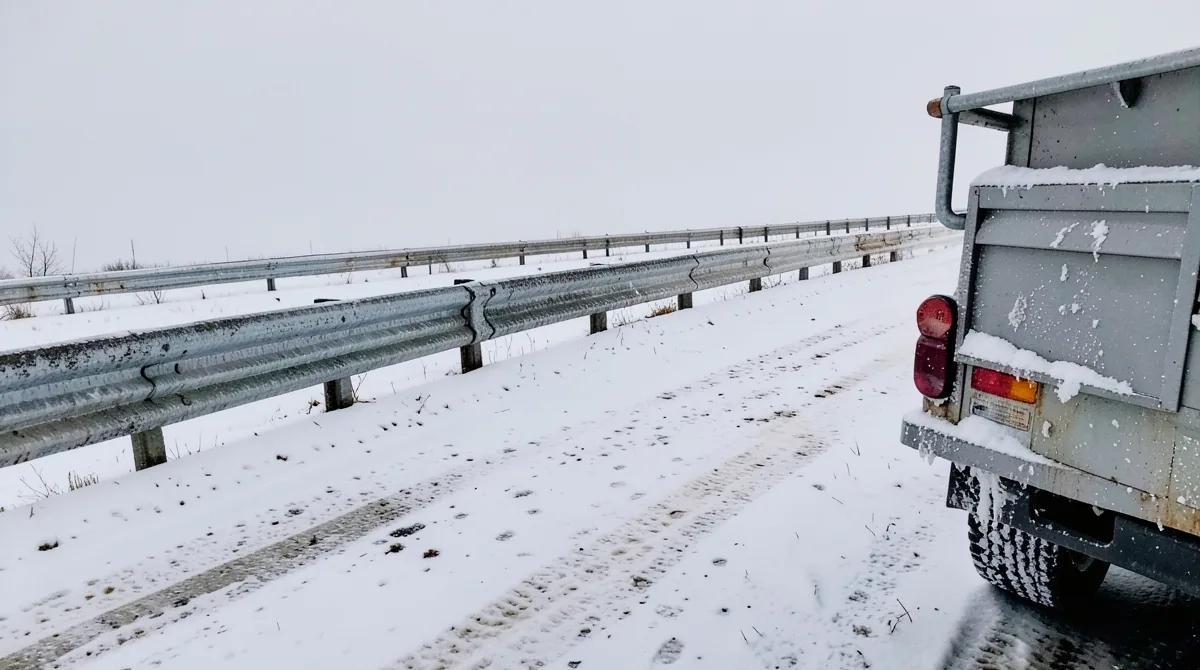
Open post Salted snowy road shoulder with slush spray on a steel guardrail and a truck bumper in winter

Road Salt Corrosion in Metro Detroit: What a Hard Winter Means for Metal Parts

Last winter was a heavy one for road salt corrosion in metro Detroit. MDOT crews in the Metro region spread more than 111,000 tons of salt last winter, about 35 percent above average, according to WDIV reporting from March 2026. Department officials called it one of the most expensive winters in recent years. Heavy salting and frequent freeze-thaw cycles also fed a surge in potholes.

That salt does not stay on the pavement. It rides on tires, trucks, trailers, and equipment, and it settles on brackets, frames, and enclosures that work outdoors. For manufacturers and fleets in southeast Michigan, road salt corrosion is a design input, and it feeds directly into the cost of corrosion for metal parts.

What One County Spreads

The Road Commission for Oakland County’s 2025–2026 winter fact sheet puts numbers to the routine. RCOC uses an average of 64,000 tons of salt per winter. Its standard calls for about 400 pounds per two-lane mile, and a single salt run typically uses about six tons over roughly two hours.

That coverage is wide. RCOC handles more than 2,700 miles of county roads plus 230 miles of mostly multi-lane state highways, including I-75, I-696, I-96, M-59, Telegraph Road, and Woodward Avenue. Its spreaders pre-wet salt with brine as it goes down, which keeps more salt on the road and starts melting sooner. For metal parts, that means wet, salty spray from the first pass.

The trucks show what the job costs. RCOC prices a new snowplow and salt truck at about $425,000, nearly a 200 percent increase over ten years. The commission is paying $57.78 per ton for salt in the 2025–2026 season, up from $55.29 the year before. Salt loses effectiveness below 20°F and does almost nothing at 10°F, yet RCOC still calls it the most cost-effective option for clearing snow and ice. Road salt is here to stay.

How Road Salt Corrosion Attacks Coated Metal
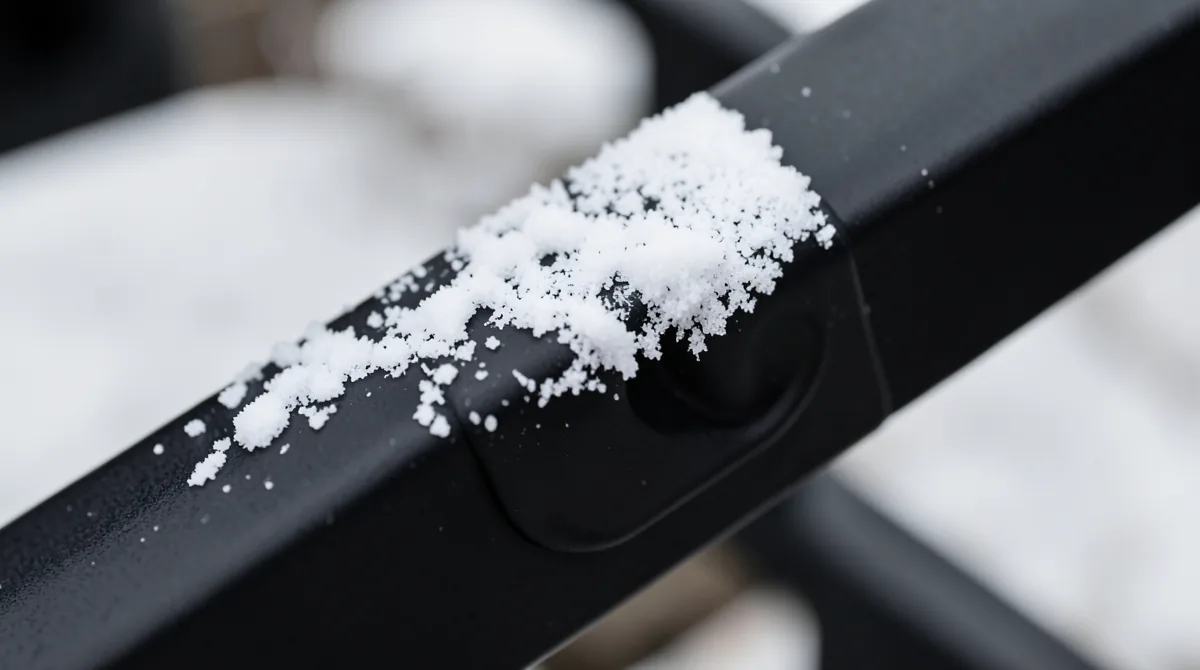
Road salt crust on a black powder coated steel frame rail in winter

Chloride and moisture speed up corrosion of bare steel, and a Michigan winter supplies both for months at a stretch. Brine clings to surfaces, wicks into seams, and dries into a salty film that reactivates with the next thaw.

A coating slows that process by keeping brine off the metal. Road salt corrosion tends to start at the same weak points: sharp edges, weld seams, inside corners, bolt holes, and anywhere road debris chips the film. Once steel is exposed, corrosion can creep under the surrounding coating.

Think about the parts that ride through that spray every day. Hitches, plow mounts, trailer frames, underbody brackets, and equipment guards all ride low, where road spray hits hardest. Each one has seams, fasteners, and edges that collect brine long after the roads dry.

Finishing Parts to Resist Road Salt Corrosion

Start with clean metal. Mill scale, rust, weld spatter, and old coatings need to come off before powder goes on, and media blasting is the usual way to get there. Parts that have already seen a winter also carry salt residue, which can cause blistering under a new finish if it stays on the surface.

Match the powder to the exposure. Polyester powders are generally chosen for outdoor UV and weather, while epoxy powders suit indoor parts that need chemical resistance. For harsh outdoor duty, ask whether a primer plus a weather-resistant outer coat makes sense for the part. Ask how film thickness gets checked on edges and corners, and keep a record of the powder type and color code for later touch-up.

Design for drainage. A pocket that holds brine tends to corrode first, so drain holes and open profiles help coated parts shed water. Capped tube ends keep brine out of hollow sections. Stainless and aluminum parts need attention too, since chlorides can pit both.

Plan the masking. Threads, bores, and grounding points that must stay bare are also places where corrosion can start, so they need a protection plan after assembly.

Our overview of powder coating vs liquid paint covers where each finish fits for parts in this kind of service.

Check After the Thaw

Spring is a practical time to check exposed equipment for road salt corrosion. Chips, blisters, and rust bleeding from seams point to where the finish or the design needs attention on the next build.

Rinse salt residue off before inspection, since a dry white film can hide early damage. Touch up small chips before the next winter, and log where failures show up. A pattern of rust at the same weld or bolt hole across a fleet is design feedback worth sending to whoever builds the next batch.

Motor City Metal Fab: One Shop, Every Operation

Motor City Metal Fab is a family-owned shop in Taylor, Michigan serving metro Detroit. Cutting, machining, forming, welding, coating, and assembly all happen in one building, so a part does not wait on an outside vendor between operations.

Our Services Include:

  • Powder Coating — In-house finishing, so fabricated parts ship ready to install
  • Media Blasting — Surface prep that strips rust, scale, and old coatings before powder goes on

Have a print to quote? Contact Motor City Metal Fab with your drawing, material, and quantity.

Road Salt Corrosion: Frequently Asked Questions

01How much road salt does metro Detroit use?

MDOT crews in the Metro region used more than 111,000 tons last winter, about 35 percent above average, according to WDIV. Oakland County’s road commission alone averages 64,000 tons per winter and applies about 400 pounds per two-lane mile. Totals vary with snowfall from one year to the next.

02What causes road salt corrosion on metal parts?

Salt dissolves into brine that holds moisture against the metal and carries chloride, which speeds up corrosion of steel. Freeze-thaw cycles keep reactivating dried salt through the season. Seams, edges, bolt holes, and chipped spots on coated parts are where corrosion usually begins on equipment that works outdoors.

03Can powder coating protect parts from road salt?

A properly applied powder coat acts as a barrier between brine and metal, which can extend service life on outdoor parts. Results depend on surface prep, film thickness, powder type, and part design. Chips or bare edges can still let corrosion start, so a spring inspection is worthwhile.

04What should happen before recoating a salt-exposed part?

The part needs to come back to clean metal. That usually means removing salt residue, rust, and old coating, often through media blasting. Salt left on the surface can cause blistering under the new finish, so thorough cleaning comes before any powder goes on the part.

05Which powder type suits outdoor parts in Michigan?

Polyester powders are generally chosen for outdoor parts because they hold color and gloss under UV exposure. Epoxy powders offer strong chemical resistance but are typically used indoors. For heavy outdoor duty, a coater may suggest a two-coat system. The right choice depends on the part and its service conditions.

Works Cited

  1. Kostiuk, Lauren. “Michigan Winter Costs Surge: MDOT Uses 111K Tons of Salt, Summer Maintenance in Question.” ClickOnDetroit, WDIV, 25 Mar. 2026, www.clickondetroit.com/news/local/2026/03/25/michigan-winter-costs-surge-mdot-uses-111k-tons-of-salt-summer-maintenance-in-question/. Accessed 19 Sept. 2026.
  2. Road Commission for Oakland County. RCOC Winter Maintenance Fact Sheet 2025–2026. Road Commission for Oakland County, www.rcocweb.org/DocumentCenter/View/10065/Winter-maintenance-preparations-fact-sheet. Accessed 19 Sept. 2026.
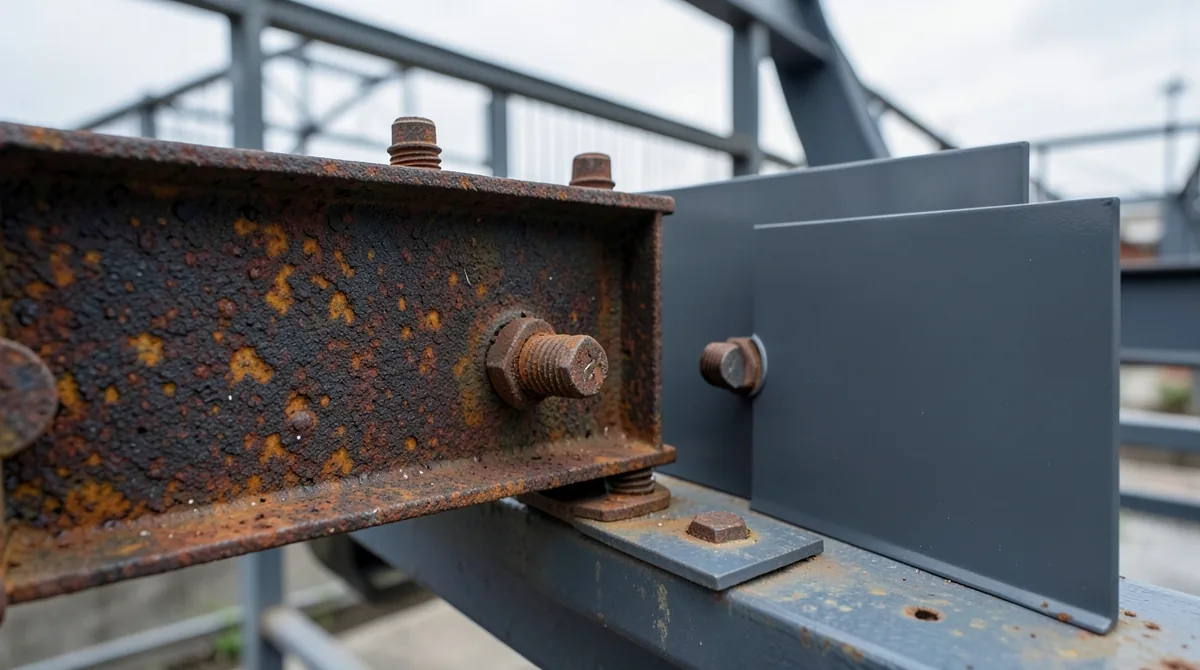
Open post Rusted steel bracket and corroded bolts beside a new powder coated replacement bracket

The Cost of Corrosion: Why the Finish Is a Budget Line for Michigan Manufacturers

A congressionally mandated study put the direct cost of corrosion to metals in the United States at $276 billion a year, roughly 3.1 percent of GDP. CC Technologies Laboratories carried out the work from 1999 to 2001 in a cooperative agreement with the Federal Highway Administration and NACE International. Its FHWA summary report remains a widely cited U.S. baseline.

The dollar figures reflect 1998 data, so the totals are dated. What still holds up is the structure of the numbers, and that structure earns the cost of corrosion a place in any finishing decision.

Where the Cost of Corrosion Landed

The study split the economy into 26 sectors. Motor vehicles carried an estimated $23.4 billion a year in direct corrosion cost, the largest share of the transportation category. That total broke into three parts:

  • $2.56 billion in added manufacturing cost for corrosion engineering and corrosion-resistant materials
  • $6.45 billion in corrosion-driven repairs and maintenance
  • $14.46 billion in corrosion-related vehicle depreciation

The study credited car makers with raising corrosion resistance since the 1980s through better materials, manufacturing processes, and design. It also found room for further improvement in the corrosion resistance of individual components, which is where brackets, frames, and aftermarket parts come in.

Production and manufacturing sectors added another $17.6 billion. Agriculture offers a useful example for equipment builders: industry experts estimated corrosion costs at 5 to 10 percent of the value of all new farm equipment, about $1.1 billion a year. The authors estimated that indirect costs, such as lost productivity from outages, delays, failures, and litigation, at least matched the direct cost. That put the combined figure at about $552 billion, or 6 percent of GDP. Data from the military services went further, suggesting corrosion could be the single largest driver of life-cycle cost for their systems.

Highway bridges show how fast indirect costs stack up. About 15 percent of U.S. bridges were rated structurally deficient at the time, mainly because of corroded steel and reinforcement. The study’s life-cycle analysis put the cost to drivers from traffic delays and lost productivity at more than 10 times the direct cost of repair work.

Coatings Carry Most of the Load

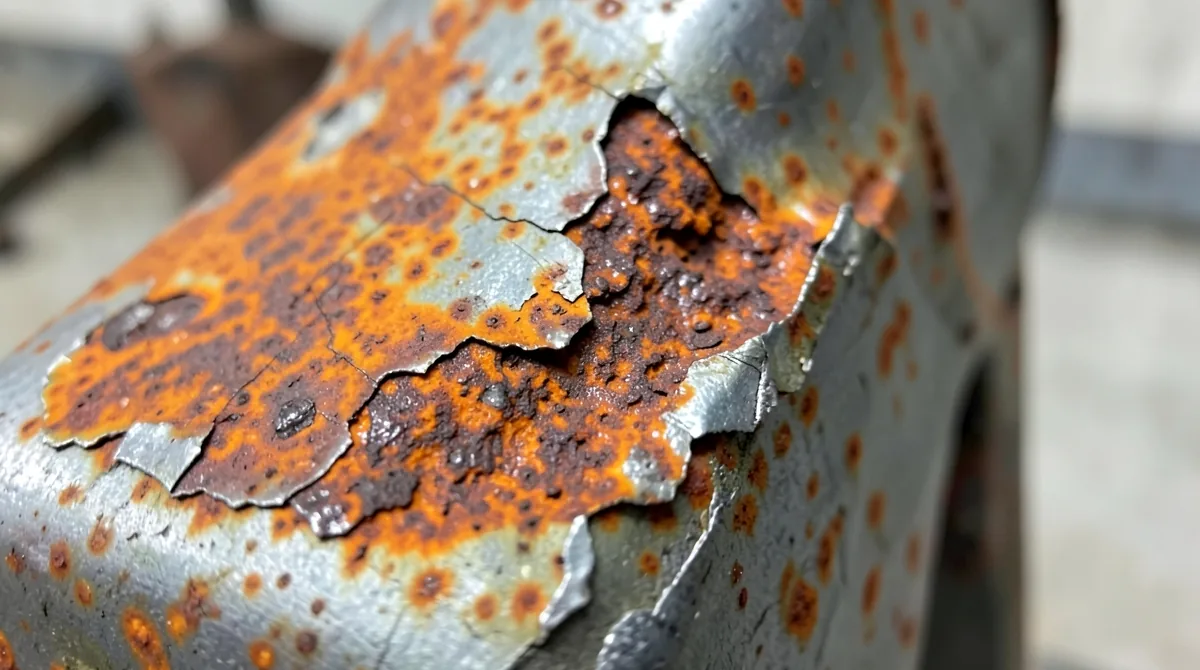
Close view of rust spreading under chipped paint on a steel part

The study also tallied spending on corrosion control. Of roughly $121 billion a year, organic coatings accounted for $107.2 billion, or 88.3 percent. Spending on protective coatings outweighed every other control method in the study combined, so paint and powder carry most of the fight against the cost of corrosion.

One detail stands out for buyers. Raw coating material ran only 4 to 20 percent of the total cost of a coating application project. The rest sat in the application work itself, which is why the price of the powder or paint says little about the full cost of a finish.

That is also why powder coating vs liquid paint is a question about process, waste, and service life as much as material.

What Powder Brings to the Ledger

The University of Minnesota’s Minnesota Technical Assistance Program describes powder coatings as 100 percent resin in dry form that cure in an oven into a durable, corrosion-resistant layer. Powder that misses the part can be collected and reused, which lets coaters reach high overall transfer efficiency.

MnTAP puts traditional solvent-based paint at about 40 percent solids, so more material has to be sprayed to reach the required dry film thickness. Powder comes with its own condition. The substrate must tolerate an oven cure, typically 300 to 450°F.

Lower-VOC liquid paints carry trade-offs too. MnTAP notes that waterbased paint may need a cleaner surface, longer drying times, and higher oven temperatures, while high-solids paint makes film thickness harder to control.

The Cost of Corrosion in Michigan

National averages hide regional stress that raises the cost of corrosion for exposed parts. Parts that spend winters on metro Detroit roads, loading docks, or job sites face brine and freeze-thaw cycles that buyers in warmer states rarely see. Our look at road salt corrosion in metro Detroit covers what last winter meant for exposed metal.

Three Questions for Your Next Finish Spec

What does it cost to replace or refinish this part in the field? How long does it need to last before that happens? Where will the first chip or bare edge likely appear? Which surfaces will see standing water, road spray, or chemicals?

Answering those before approving a finish moves the cost of corrosion conversation to the design and purchasing stage, when changes cost the least. The FHWA authors made a similar point. Their recommended strategies included raising awareness of corrosion costs, dropping the idea that nothing can be done about corrosion, and adopting design practices that manage it from the start.

Motor City Metal Fab: One Shop, Every Operation

Motor City Metal Fab is a family-owned shop in Taylor, Michigan serving metro Detroit. Cutting, machining, forming, welding, coating, and assembly all happen in one building, so a part does not wait on an outside vendor between operations.

Our Services Include:

  • Powder Coating — In-house finishing, so fabricated parts ship ready to install
  • Media Blasting — Surface prep that strips rust, scale, and old coatings before powder goes on

Have a print to quote? Contact Motor City Metal Fab with your drawing, material, and quantity.

Cost of Corrosion: Frequently Asked Questions

01How much does corrosion cost the U.S. economy?

A widely cited federal estimate, from a study completed in 2001 for the Federal Highway Administration, put direct corrosion costs at $276 billion a year, about 3.1 percent of GDP. Researchers also estimated indirect costs at least equal to that, for a combined total near $552 billion, using 1998 economic data.

02How much of corrosion control spending goes to coatings?

In the FHWA study, organic coatings accounted for $107.2 billion of the roughly $121 billion spent each year on corrosion control methods and services. That works out to 88.3 percent. Coatings were by far the largest category of corrosion-control spending the study found.

03Is a corrosion study from 2002 still useful?

Its dollar totals are dated, since they reflect 1998 data. The proportions still carry value: which sectors bear the most cost, how much goes to coatings, and how small a share raw coating material represents. Those ratios help buyers weigh finish choices, even though current-dollar totals would differ.

04Why does coating material cost matter less than application cost?

The FHWA study found raw coating material made up only 4 to 20 percent of the total cost of a coating application project. Everything else sits in the application work itself. A cheaper paint or powder rarely changes the total much, especially if the finish fails early and the part needs rework.

05What temperature does powder coating cure at?

Cure temperature depends on the powder formulation. The University of Minnesota’s MnTAP program cites a typical oven range of 300 to 450°F. Any part going in, along with anything attached to it, has to tolerate that heat, which is why seals, plastics, and electronics usually go on after coating.

Works Cited

  1. CC Technologies, Inc. Corrosion Cost and Preventive Strategies in the United States: Summary. Report no. FHWA-RD-01-156, United States, Federal Highway Administration, 2002. ROSA P, rosap.ntl.bts.gov/view/dot/39217. Accessed 19 Sept. 2026.
  2. “Coatings.” Minnesota Technical Assistance Program, University of Minnesota, www.mntap.umn.edu/industries/facility/paint/coatings/. Accessed 19 Sept. 2026.
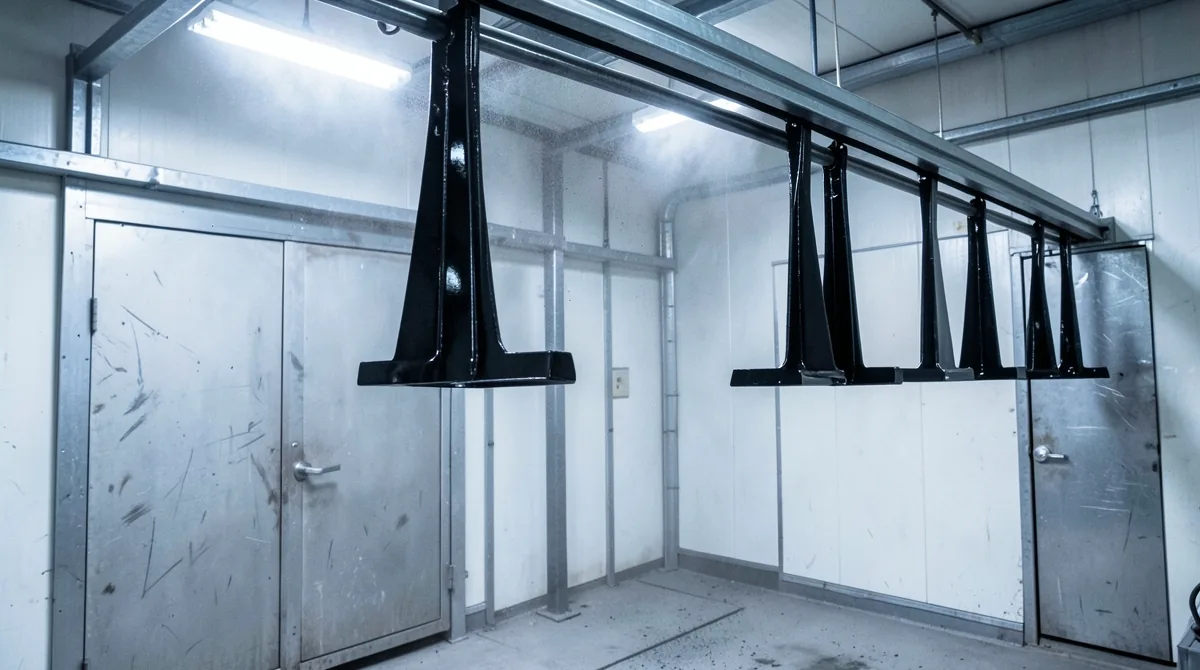
Open post Fabricated steel brackets freshly powder coated black hanging on a conveyor line in a coating booth

Powder Coating vs Liquid Paint: What EPA Coating Data Tells Metal Parts Buyers

The powder coating vs liquid paint decision has a regulatory backstory. Until the 1970s, most metal parts coated in American plants carried solvent-heavy liquid paint. Stricter state and federal rules changed that. According to the EPA’s Control Techniques Guidelines for Miscellaneous Metal and Plastic Parts Coatings, the industry has moved steadily toward lower-VOC options, including powder, waterborne, higher-solids, and UV-cured coatings.

For a buyer at an automotive supplier or equipment builder, powder coating vs liquid paint is no longer a question about color alone. It touches air regulation, material waste, cure time, and service life. Service life carries a real price, as our breakdown of the cost of corrosion for metal parts shows.

Powder Coating vs Liquid Paint: Where the Paint Lands

Transfer efficiency is the share of coating solids that actually reaches the part. The EPA puts conventional air-atomized spray at 25 to 40 percent. Electrostatic spray of liquid coating typically runs 60 to 90 percent. HVLP spray guns can reach up to 65 percent under good conditions and with skilled operators.

Powder is applied almost exclusively by electrostatic spray. The part is grounded, the powder carries a charge, and the particles are pulled onto the surface. With a recovery system in place, oversprayed powder is collected and reused rather than ending up in a booth filter.

That gap shows up on a quote. Liquid paint that misses the part still has to be bought, cleaned up, and disposed of.

Where the Solvent Goes

Liquid coatings carry solvent, and most of it leaves during spraying. The EPA estimates that 65 to 80 percent of the volatiles from liquid spray coating are emitted during application and flash-off, with the rest released in the oven. Liquid-coated parts usually pass through a flash-off zone first, so solvent escapes slowly and the film does not bubble during cure.

Powder skips that step. No VOC is released while powder is applied, and coated parts move straight into the oven with no flash-off area. In its recommendations to states, the EPA left powder coatings out of its recommended VOC content limits and described powder as an inherently low-VOC alternative.

Larger plants face a second layer of rules. The EPA’s hazardous air pollutant standard for miscellaneous metal parts covers major sources and lists automobile parts, heavy equipment, and large trucks and buses among the products in scope. Agency projections put the expected cut in organic HAP emissions from major sources in the category at about 48 percent nationwide.

Michigan has regulated coating emissions for decades. The 2008 guidelines recommended Michigan’s own VOC limits for automotive and business machine plastic parts as a national benchmark, noting that those limits had been in effect since 1993.

Prep Looks Different on Each Line

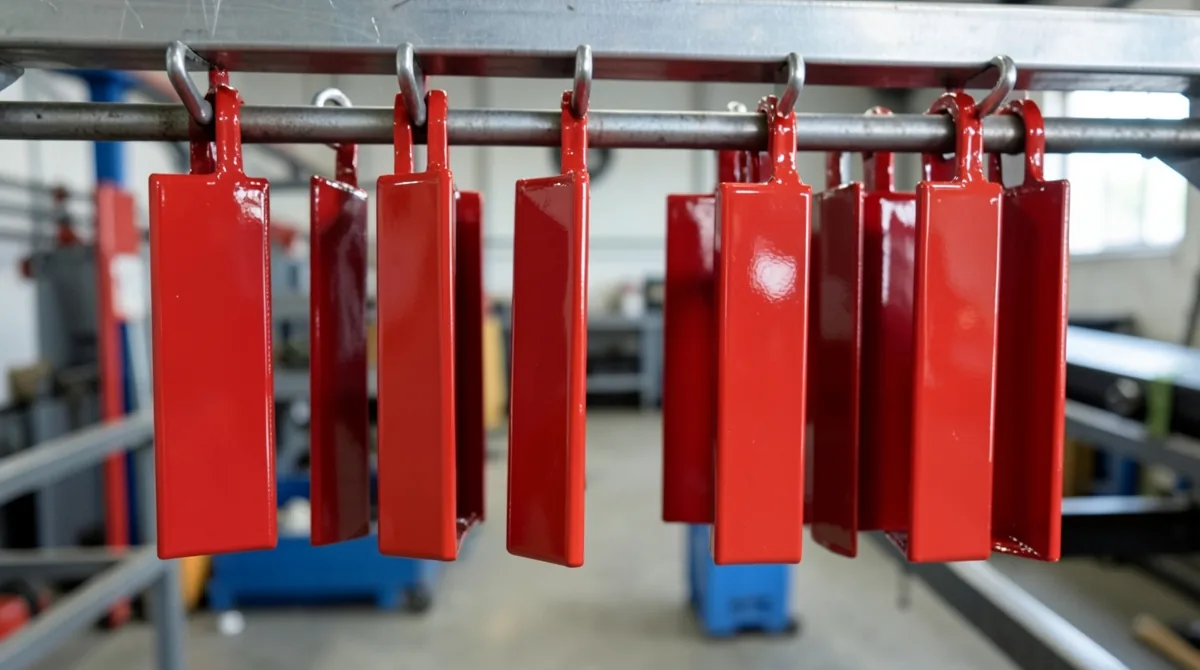
Steel brackets powder coated glossy red hanging on rack hooks after the cure oven

Coating choice also shapes the prep that comes before it. The EPA describes a typical metal pretreatment line as alkaline or acid cleaning, a rinse, a phosphate treatment, another rinse, and a final pretreatment step. Each stage handles liquid chemistry and rinse water.

Enclosed shot blasting is the dry alternative. Steel shot removes dirt and grease and smooths rough edges and welds. The same process can strip cured coatings when a part needs rework, and it runs without liquid chemicals or wastewater.

Where Liquid Paint Still Makes Sense

In the powder coating vs liquid paint comparison, powder does not fit every part. The EPA acknowledges that currently available low-VOC coatings do not meet the performance needs of some metal applications. It also describes powder as most at home on long runs of consistently sized parts without frequent color changes.

Heat is the other limit. A powder-coated part has to survive a cure oven, so assemblies with rubber seals, plastic inserts, or electronics are usually coated before those components go on. Field repairs and small touch-ups tend to stay liquid, since powder needs a booth and an oven.

The Cost That Shows Up Later

Powder coating vs liquid paint gets its real test years after delivery, once the part meets road spray, washdown, or weather. Parts that work outdoors in southeast Michigan carry an extra load, covered in our look at road salt corrosion in metro Detroit.

Powder Coating vs Liquid Paint: Four Questions to Ask

Can the part, and everything attached to it, survive a cure oven? Will it live outdoors, in a washdown area, or inside a cabinet? How many pieces are in the run, and how many colors? Which surfaces need to stay bare for threads, bores, or electrical grounding? Does the part need a specific color match or texture?

The answers usually point one way. When they do not, a sample part and a short conversation with the coater settle the question faster than a data sheet.

Motor City Metal Fab: One Shop, Every Operation

Motor City Metal Fab is a family-owned shop in Taylor, Michigan serving metro Detroit. Cutting, machining, forming, welding, coating, and assembly all happen in one building, so a part does not wait on an outside vendor between operations.

Our Services Include:

  • Powder Coating — In-house finishing, so fabricated parts ship ready to install
  • Media Blasting — Surface prep that strips rust, scale, and old coatings before powder goes on

Have a print to quote? Contact Motor City Metal Fab with your drawing, material, and quantity.

Powder Coating vs Liquid Paint: Frequently Asked Questions

01Is powder coating better than liquid paint?

It depends on the part. Powder builds a durable film, releases little VOC, and lets oversprayed material be recovered. Liquid paint suits heat-sensitive assemblies, field repairs, and some cosmetic work. The service environment, run size, color count, and oven tolerance decide which finish fits a given part.

02Why does powder coating release less VOC than liquid paint?

Powder goes on as dry particles, so no solvent evaporates during application. Coated parts move straight to the oven without a flash-off stage. The EPA notes that some volatile emissions can occur during curing, depending on the formulation, but they are generally much lower than emissions from liquid systems.

03What is transfer efficiency in coating?

Transfer efficiency is the percentage of coating solids that ends up on the part rather than in the booth. The EPA lists conventional air spray at 25 to 40 percent and electrostatic liquid spray at 60 to 90 percent. Higher transfer efficiency means less material bought, wasted, and cleaned up.

04Can parts with rubber or plastic components be powder coated?

Usually not as a finished assembly, because the part has to pass through a cure oven. The common approach is to coat the metal before seals, inserts, wiring, or electronics are installed. When that is not practical, liquid paint or a lower-temperature coating may be worth discussing with the coater.

05Does powder coating make sense for short runs and prototypes?

It can. The EPA describes powder as a natural fit for long runs of consistent parts, and color changes add setup on any job. On short runs, cost per part depends on batch size, color, and prep. Coating in the same building as fabrication removes a shipping step between vendors.

Works Cited

  1. United States, Environmental Protection Agency. Control Techniques Guidelines for Miscellaneous Metal and Plastic Parts Coatings. EPA-453/R-08-003, Sept. 2008, nepis.epa.gov/Exe/ZyPURL.cgi?Dockey=P1001JAL.txt. Accessed 19 Sept. 2026.
  2. United States, Environmental Protection Agency. “Surface Coating of Miscellaneous Metal Parts and Products: National Emission Standards for Hazardous Air Pollutants (NESHAP).” U.S. Environmental Protection Agency, 4 Mar. 2026, www.epa.gov/stationary-sources-air-pollution/surface-coating-miscellaneous-metal-parts-and-products-national. Accessed 19 Sept. 2026.
  3. This article is general industry information and is not a substitute for OSHA guidance, your employer’s safety program, or the manufacturer’s documentation for your specific equipment and materials.
Open post

Powder Coating Services Are Reshaping Michigan’s Metal Fabrication Industry

Motor City Metal Fab: Precision Metal Fabrication in Michigan

Michigan’s metal fabrication industry stands at a pivotal crossroads as environmental regulations tighten, manufacturers demand higher-performance finishes, and quality standards become increasingly rigorous. The powder coatings market continues its steady expansion driven by demand from automotive, appliance, and construction sectors, with fabricators across the Great Lakes region discovering that powder coating has become far more than a finishing option—it has become a strategic necessity for competitive manufacturing operations.

The transformation reflects broader shifts in American manufacturing priorities. Federal regulators continue strengthening volatile organic compound emission standards under the Clean Air Act, pushing manufacturers toward finishing processes that emit virtually no harmful solvents into the atmosphere. Traditional liquid coatings can contain significant percentages of VOCs by volume, facing increasing restrictions that make powder coating’s essentially solvent-free process an operational advantage rather than a premium choice for forward-thinking fabricators.

Environmental Regulations Drive Market Transformation

The regulatory landscape surrounding industrial coatings has intensified significantly in recent years. According to the U.S. Environmental Protection Agency’s guidelines for solvent use and surface coating industries, surface coating operations fall under strict National Emission Standards for Hazardous Air Pollutants that require manufacturers to comply through either compliant coatings or add-on emission controls. The EPA’s comprehensive framework establishes clear requirements across numerous industry categories including metal parts surface coating, appliance surface coating, and miscellaneous metal and plastic parts coatings.

The regulatory structure encompasses multiple compliance pathways including New Source Performance Standards, Control Techniques Guidelines, and National Volatile Organic Compound Emission Standards under Section 183(e) of the Clean Air Act. Metal fabricators must navigate these overlapping requirements while maintaining production efficiency and cost competitiveness. Powder coatings emit virtually no VOCs and do not require organic solvents in the coating formulations while retaining the protective benefits of traditional coatings, simplifying compliance pathways significantly.

This environmental advantage translates directly into reduced permitting complexity for metal fabricators. Facilities using powder coating often avoid the expensive air pollution control equipment and monitoring requirements that liquid coating operations must implement to meet federal and state standards. The shift represents more than regulatory compliance—it signals a fundamental change in how manufacturers approach finishing operations as customers increasingly specify environmentally preferable processes.

Employment and Economic Impact Across the Fabrication Sector

Metal fabrication remains a cornerstone of manufacturing employment, with the Bureau of Labor Statistics reporting that fabricated metal product manufacturing employed approximately 1.445 million workers as of November 2025. The sector includes coating, engraving, heat treating, and allied activities as a distinct industry group under NAICS 3328, highlighting the integral role that finishing operations play in the broader fabrication value chain.

Average hourly earnings in fabricated metal product manufacturing reached $33.34 as of November 2025, with production and nonsupervisory employees earning approximately $27.77 hourly. Average weekly hours exceeded 40 hours, indicating sustained demand for fabrication services across industrial markets. These employment figures underscore the economic significance of maintaining competitive finishing capabilities that allow fabricators to serve demanding customer requirements.

The fabricated metal product manufacturing subsector transforms metal into intermediate or end products through processes including forging, stamping, bending, forming, and machining. Important to this value chain are coating operations that protect fabricated components from corrosion, wear, and environmental degradation. Investment in advanced finishing capabilities attracts additional manufacturing work that might otherwise flow to facilities in competing regions, strengthening overall economic competitiveness.

Technical Advantages Drive Customer Specifications

Beyond regulatory and economic factors, powder coating delivers measurable performance advantages that increasingly drive customer specifications. Properly applied powder coatings create uniform films that resist chipping, scratching, fading, and corrosion more effectively than many liquid alternatives. The electrostatic application process attracts coating particles to metal surfaces, creating even coverage on complex geometries that would challenge conventional spray methods.

The absence of solvents eliminates the orange peel textures, runs, and sags that can occur with liquid coatings while enabling thicker single-coat applications that reduce processing time. Overspray powder can be collected and reused, minimizing material waste and reducing overall coating costs despite potentially higher per-pound powder prices compared to liquid materials. This efficiency advantage compounds across high-volume production runs where material utilization directly impacts profitability.

Understanding how coating performance is verified helps fabrication customers make informed decisions about finishing specifications. The relationship between Powder Coating Durability Standards and What They Mean for Your Metal Products illuminates the testing protocols that confirm coating performance and the certifications that demonstrate supplier capabilities across various application requirements.

Automotive and Industrial Applications Expand

The automotive industry’s continued evolution creates specialized coating requirements that powder technology addresses effectively. Components ranging from wheels and chassis parts to interior trim and under-hood applications require finishes that withstand mechanical stress, thermal cycling, and chemical exposure throughout extended service lives. Powder coatings formulated for automotive applications meet stringent performance specifications that ensure reliable protection across diverse operating conditions.

Beyond automotive, industrial equipment manufacturers increasingly specify powder coating for machinery housings, enclosures, and structural components. Agricultural equipment, construction machinery, and material handling systems all benefit from powder coating’s durability in demanding operating environments. The consistency achievable through powder coating processes supports the quality requirements of manufacturers serving regulated industries where finish defects can compromise product acceptance.

The expanding applications for powder coating in electric vehicle production represent a particularly significant growth area. Battery enclosures, motor housings, and thermal management components require coatings combining electrical insulation properties with thermal protection—characteristics where specialized powder formulations excel. Exploring How Michigan Metal Fabricators Are Meeting Electric Vehicle Coating Standards provides insight into the technical requirements driving investment in advanced powder coating capabilities.

Investment Trends and Capacity Considerations

Metal fabricators are responding to market conditions by investing in powder coating infrastructure that positions them for continued growth. The investment extends beyond basic coating equipment to include pretreatment systems, curing ovens, and quality control instrumentation that together create integrated finishing capabilities. Facilities with in-house powder coating can offer faster turnaround, tighter quality control, and more flexible scheduling compared to those relying on outside finishing services.

Regional fabricators report that customers increasingly prefer working with suppliers offering integrated services rather than coordinating between separate fabrication and finishing providers. This preference drives vertical integration strategies where coating capabilities become essential components of comprehensive manufacturing offerings rather than optional add-on services. The ability to control quality throughout the entire fabrication and finishing process reduces coordination complexity and accelerates delivery timelines.

Pretreatment processes represent a critical but often underappreciated component of successful powder coating operations. Proper surface preparation through cleaning, phosphating, or other chemical treatments ensures optimal coating adhesion and long-term durability. Fabricators investing in powder coating capabilities must consider the complete process chain from raw material handling through final finish to deliver consistent quality that meets customer specifications.

Motor City Metal Fab: Your Partner in Precision Metal Finishing

At Motor City Metal Fab, we understand the critical role that quality finishing plays in delivering superior metal fabrication products. Our powder coating services combine advanced equipment with experienced technicians who understand the technical requirements of demanding industrial applications.

Our Services Include:

  • Powder Coating Services – Complete finishing capabilities with consistent quality and quick turnaround for your metal fabrication projects

Ready to Discuss Your Project? Contact Motor City Metal Fab to learn how our integrated fabrication and finishing services can meet your manufacturing requirements with the quality and reliability your applications demand.

Works Cited

“Clean Air Act Guidelines and Standards for Solvent Use and Surface Coating Industry.” U.S. Environmental Protection Agency, www.epa.gov/stationary-sources-air-pollution/clean-air-act-guidelines-and-standards-solvent-use-and-surface. Accessed 1 Feb. 2026.

“Fabricated Metal Product Manufacturing: NAICS 332.” U.S. Bureau of Labor Statistics, www.bls.gov/iag/tgs/iag332.htm. Accessed 1 Feb. 2026.

Related Articles


Open post

Powder Coating Durability Standards and What They Mean for Your Metal Products

Motor City Metal Fab: Precision Metal Fabrication in Michigan

When specifying powder coating for fabricated metal products, understanding the testing standards that verify coating performance helps ensure your components receive finishes appropriate for their intended applications. Industry standards established by organizations including ASTM International provide frameworks for evaluating coating adhesion, corrosion resistance, flexibility, hardness, and appearance—characteristics that collectively determine how well coatings protect substrates throughout product service lives.

The standardization of coating testing brings consistency and reliability to supplier-customer relationships. Rather than relying on subjective assessments or proprietary test methods that complicate comparisons between coating providers, standardized testing enables objective performance verification. Fabricators and their customers can specify coating requirements using common language and evaluate suppliers against consistent benchmarks that predict real-world performance.

ASTM D3451: The Comprehensive Testing Framework

The foundational document guiding powder coating testing is ASTM D3451, Standard Guide for Testing Coating Powders and Powder Coatings. This guide covers the selection and use of procedures for testing coating powders and powder coatings, providing a comprehensive framework that links various ASTM test methods into unified quality assurance approaches. The guide applies to both thermoplastic and thermoset coatings, encompassing the range of powder coating technologies used across industrial applications.

ASTM D3451 organizes test methods by the coating characteristics they evaluate, making it straightforward for fabricators and customers to identify appropriate testing protocols for specific applications. The guide covers methods developed by ASTM, the Powder Coating Institute (PCI), and the International Organization for Standardization (ISO), providing multiple pathways to verify coating performance depending on customer requirements and industry conventions.

The guide addresses testing throughout the coating process lifecycle—from incoming powder material verification through cured film performance evaluation. Powder properties including particle size distribution, gel time, and specific gravity affect application characteristics and final coating quality. Cured film testing verifies that finished coatings achieve the adhesion, flexibility, hardness, and corrosion resistance required for specific applications.

Adhesion Testing: Foundation of Coating Performance

Coating adhesion determines whether finishes remain bonded to substrates throughout service conditions that may include mechanical stress, thermal cycling, and chemical exposure. Without proper adhesion, even coatings with excellent intrinsic properties will fail prematurely as they separate from underlying metal surfaces. Adhesion testing protocols provide objective verification that coating application processes achieve the substrate bonding necessary for long-term performance.

ASTM D3359 outlines methods for measuring the adhesion of coatings, ensuring that powder coating remains firmly bonded to the substrate under test conditions designed to reveal adhesion weaknesses. The crosshatch adhesion test creates a grid pattern of cuts through the coating to the substrate, then applies adhesive tape to assess how well the coating resists removal. Results are rated on a standardized scale that enables consistent communication between coating providers and customers.

Understanding how adhesion testing relates to real-world performance helps fabrication customers specify appropriate requirements for their applications. Components subject to flexing, impact, or thermal shock may require more stringent adhesion specifications than parts operating in static, controlled environments. Exploring Powder Coating Services Are Reshaping Michigan’s Metal Fabrication Industry provides context for how these technical requirements fit within broader industry developments driving powder coating adoption.

Corrosion Resistance: Protecting Metal Substrates

For many applications, corrosion protection represents the primary purpose of powder coating. Metal components exposed to moisture, salt, chemicals, or other corrosive agents depend on coating integrity to prevent oxidation and deterioration that would compromise structural integrity or appearance. Standardized corrosion testing provides accelerated evaluation methods that predict long-term coating performance without requiring years of field exposure.

ASTM B117 establishes procedures for operating salt spray testing apparatus, creating controlled environments where coated specimens are exposed to fine mist of saltwater solution simulating harsh marine or coastal conditions. This exposure accelerates the corrosion process, allowing assessment of how well coatings protect underlying materials over time. Results indicate coating system effectiveness for applications where corrosion resistance is critical.

According to Mordor Intelligence industry analysis, regulatory agencies now view powder coatings as the lowest-polluting industrial finish because the process emits negligible VOCs and eliminates costly solvent recovery steps. This environmental advantage combines with performance characteristics including corrosion resistance that make powder coating increasingly specified for demanding applications across automotive, construction, and industrial markets. The powder coatings market is expected to reach $12.86 billion in 2025 and grow at a CAGR of 5.66 percent to reach $17.89 billion by 2030.

Industry organizations including the American Architectural Manufacturers Association (AAMA) establish tiered performance specifications that reference salt spray testing requirements. AAMA 2603 specifications require coatings to withstand 1,500 hours of salt spray exposure for basic protection suitable for indoor applications. AAMA 2604 increases requirements to 3,000 hours for higher-traffic applications. AAMA 2605, the most stringent tier, requires 4,000 hours of salt spray exposure for coatings intended for demanding exterior applications with extended performance requirements.

Mechanical Property Testing

Beyond adhesion and corrosion resistance, powder coatings must withstand mechanical stresses encountered during product handling, installation, and service. Flexibility testing verifies that coatings can deform with substrates without cracking or delaminating. Impact resistance testing confirms that coatings survive sudden mechanical shock without damage. Hardness testing measures coating resistance to scratching and wear.

Flexibility tests typically involve bending coated panels around mandrels of specified diameters and examining for cracking or loss of adhesion. Different applications require different flexibility levels—coatings for components that will be formed after coating require greater flexibility than those for pre-formed parts that will experience only minor deflection during service. Specifying appropriate flexibility requirements prevents field failures from coating damage during installation or use.

Impact resistance testing subjects coated panels to controlled impacts from falling weights or similar mechanisms, then evaluates coating integrity around impact sites. This testing is particularly relevant for components that may experience handling damage during shipping and installation or mechanical impact during service. Results guide coating selection for applications where impact resistance is critical to maintaining protective performance.

Pencil hardness testing provides a simple, standardized method for evaluating coating surface hardness. Progressively harder pencils are drawn across coating surfaces until one produces visible scratching or cutting. The hardness rating corresponds to the hardest pencil that fails to damage the coating. While simple, this test provides useful comparative information for evaluating coating suitability for applications where surface durability is important.

Application Process Controls

Achieving consistent coating performance requires controlling application process parameters that affect final film properties. Film thickness measurement verifies that coatings achieve specified build without excessive material consumption. Cure verification confirms that heating processes achieve complete powder coalescence and crosslinking. Process documentation maintains traceability that supports quality assurance objectives.

Film thickness measurement using magnetic or eddy-current gauges for metal substrates provides non-destructive verification that coating build meets specifications. Insufficient thickness compromises protection, while excessive thickness wastes material and may cause cosmetic defects or cure problems. Regular thickness verification during production identifies process drift before it produces out-of-specification parts.

Cure verification focuses on part temperature rather than oven settings, recognizing that actual metal temperatures may differ from oven air temperatures depending on part mass, geometry, and loading patterns. Thermocouples or wireless data loggers recording time-at-temperature confirm that parts achieve the cure schedules specified by powder manufacturers. Incomplete cure compromises coating properties including adhesion, chemical resistance, and mechanical performance.

Understanding how electric vehicle applications are driving specialized coating requirements provides additional context for quality standards. How Michigan Metal Fabricators Are Meeting Electric Vehicle Coating Standards explores the demanding specifications that automotive applications require, illustrating how standardized testing frameworks apply to emerging technology sectors.

Specifying Coating Requirements Effectively

Effective coating specifications communicate performance requirements clearly while avoiding unnecessary constraints that limit supplier flexibility or increase costs without corresponding benefits. Specifications should identify the tests applicable to intended applications, the acceptance criteria for each test, and any process controls required to ensure consistent performance. Over-specification increases costs without improving outcomes, while under-specification risks receiving coatings inadequate for application demands.

Working with experienced coating providers helps fabrication customers develop appropriate specifications balancing performance requirements with practical constraints. Coating suppliers understand how different powder formulations, pretreatment processes, and application parameters affect test results. This expertise helps customers identify specifications that achieve required performance without unnecessary complexity or cost.

Documentation requirements should address traceability needs appropriate for each application. Safety-critical applications may require complete process documentation linking individual parts to specific powder lots, pretreatment batches, and curing records. Less demanding applications may require only statistical process control data demonstrating that coating processes remain within control limits. Matching documentation requirements to actual needs avoids unnecessary administrative burden.

Motor City Metal Fab: Your Partner in Precision Metal Finishing

At Motor City Metal Fab, we understand that coating quality directly impacts the performance and longevity of fabricated metal products. Our powder coating services incorporate process controls and quality verification procedures that ensure consistent results meeting your application requirements.

Our Services Include:

  • Powder Coating Services – Complete finishing capabilities with quality assurance procedures that verify coating performance meets your specifications

Ready to Discuss Your Project? Contact Motor City Metal Fab to explore how our powder coating services can deliver the durability and protection your fabricated metal products require.

Works Cited

“D3451 Standard Guide for Testing Coating Powders and Powder Coatings.” ASTM International, store.astm.org/d3451-06r17.html. Accessed 1 Feb. 2026.

“Powder Coatings Market Size, Growth Trends & Industry Share, 2030.” Mordor Intelligence, www.mordorintelligence.com/industry-reports/powder-coatings-market. Accessed 1 Feb. 2026.

Related Articles


Scroll to top