Motor City Metal Fab: Precision Metal Fabrication in Michigan
Michigan’s metal fabrication industry stands at a pivotal crossroads as environmental regulations tighten, manufacturers demand higher-performance finishes, and quality standards become increasingly rigorous. The powder coatings market continues its steady expansion driven by demand from automotive, appliance, and construction sectors, with fabricators across the Great Lakes region discovering that powder coating has become far more than a finishing option—it has become a strategic necessity for competitive manufacturing operations.
The transformation reflects broader shifts in American manufacturing priorities. Federal regulators continue strengthening volatile organic compound emission standards under the Clean Air Act, pushing manufacturers toward finishing processes that emit virtually no harmful solvents into the atmosphere. Traditional liquid coatings can contain significant percentages of VOCs by volume, facing increasing restrictions that make powder coating’s essentially solvent-free process an operational advantage rather than a premium choice for forward-thinking fabricators.
Environmental Regulations Drive Market Transformation
The regulatory landscape surrounding industrial coatings has intensified significantly in recent years. According to the U.S. Environmental Protection Agency’s guidelines for solvent use and surface coating industries, surface coating operations fall under strict National Emission Standards for Hazardous Air Pollutants that require manufacturers to comply through either compliant coatings or add-on emission controls. The EPA’s comprehensive framework establishes clear requirements across numerous industry categories including metal parts surface coating, appliance surface coating, and miscellaneous metal and plastic parts coatings.
The regulatory structure encompasses multiple compliance pathways including New Source Performance Standards, Control Techniques Guidelines, and National Volatile Organic Compound Emission Standards under Section 183(e) of the Clean Air Act. Metal fabricators must navigate these overlapping requirements while maintaining production efficiency and cost competitiveness. Powder coatings emit virtually no VOCs and do not require organic solvents in the coating formulations while retaining the protective benefits of traditional coatings, simplifying compliance pathways significantly.
This environmental advantage translates directly into reduced permitting complexity for metal fabricators. Facilities using powder coating often avoid the expensive air pollution control equipment and monitoring requirements that liquid coating operations must implement to meet federal and state standards. The shift represents more than regulatory compliance—it signals a fundamental change in how manufacturers approach finishing operations as customers increasingly specify environmentally preferable processes.
Employment and Economic Impact Across the Fabrication Sector
Metal fabrication remains a cornerstone of manufacturing employment, with the Bureau of Labor Statistics reporting that fabricated metal product manufacturing employed approximately 1.445 million workers as of November 2025. The sector includes coating, engraving, heat treating, and allied activities as a distinct industry group under NAICS 3328, highlighting the integral role that finishing operations play in the broader fabrication value chain.
Average hourly earnings in fabricated metal product manufacturing reached $33.34 as of November 2025, with production and nonsupervisory employees earning approximately $27.77 hourly. Average weekly hours exceeded 40 hours, indicating sustained demand for fabrication services across industrial markets. These employment figures underscore the economic significance of maintaining competitive finishing capabilities that allow fabricators to serve demanding customer requirements.
The fabricated metal product manufacturing subsector transforms metal into intermediate or end products through processes including forging, stamping, bending, forming, and machining. Important to this value chain are coating operations that protect fabricated components from corrosion, wear, and environmental degradation. Investment in advanced finishing capabilities attracts additional manufacturing work that might otherwise flow to facilities in competing regions, strengthening overall economic competitiveness.
Technical Advantages Drive Customer Specifications
Beyond regulatory and economic factors, powder coating delivers measurable performance advantages that increasingly drive customer specifications. Properly applied powder coatings create uniform films that resist chipping, scratching, fading, and corrosion more effectively than many liquid alternatives. The electrostatic application process attracts coating particles to metal surfaces, creating even coverage on complex geometries that would challenge conventional spray methods.
The absence of solvents eliminates the orange peel textures, runs, and sags that can occur with liquid coatings while enabling thicker single-coat applications that reduce processing time. Overspray powder can be collected and reused, minimizing material waste and reducing overall coating costs despite potentially higher per-pound powder prices compared to liquid materials. This efficiency advantage compounds across high-volume production runs where material utilization directly impacts profitability.
Understanding how coating performance is verified helps fabrication customers make informed decisions about finishing specifications. The relationship between Powder Coating Durability Standards and What They Mean for Your Metal Products illuminates the testing protocols that confirm coating performance and the certifications that demonstrate supplier capabilities across various application requirements.
Automotive and Industrial Applications Expand
The automotive industry’s continued evolution creates specialized coating requirements that powder technology addresses effectively. Components ranging from wheels and chassis parts to interior trim and under-hood applications require finishes that withstand mechanical stress, thermal cycling, and chemical exposure throughout extended service lives. Powder coatings formulated for automotive applications meet stringent performance specifications that ensure reliable protection across diverse operating conditions.
Beyond automotive, industrial equipment manufacturers increasingly specify powder coating for machinery housings, enclosures, and structural components. Agricultural equipment, construction machinery, and material handling systems all benefit from powder coating’s durability in demanding operating environments. The consistency achievable through powder coating processes supports the quality requirements of manufacturers serving regulated industries where finish defects can compromise product acceptance.
The expanding applications for powder coating in electric vehicle production represent a particularly significant growth area. Battery enclosures, motor housings, and thermal management components require coatings combining electrical insulation properties with thermal protection—characteristics where specialized powder formulations excel. Exploring How Michigan Metal Fabricators Are Meeting Electric Vehicle Coating Standards provides insight into the technical requirements driving investment in advanced powder coating capabilities.
Investment Trends and Capacity Considerations
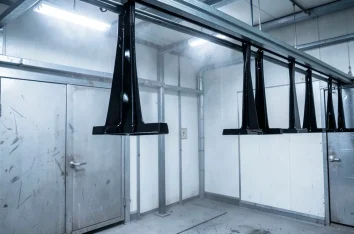
Metal fabricators are responding to market conditions by investing in powder coating infrastructure that positions them for continued growth. The investment extends beyond basic coating equipment to include pretreatment systems, curing ovens, and quality control instrumentation that together create integrated finishing capabilities. Facilities with in-house powder coating can offer faster turnaround, tighter quality control, and more flexible scheduling compared to those relying on outside finishing services.
Regional fabricators report that customers increasingly prefer working with suppliers offering integrated services rather than coordinating between separate fabrication and finishing providers. This preference drives vertical integration strategies where coating capabilities become essential components of comprehensive manufacturing offerings rather than optional add-on services. The ability to control quality throughout the entire fabrication and finishing process reduces coordination complexity and accelerates delivery timelines.
Pretreatment processes represent a critical but often underappreciated component of successful powder coating operations. Proper surface preparation through cleaning, phosphating, or other chemical treatments ensures optimal coating adhesion and long-term durability. Fabricators investing in powder coating capabilities must consider the complete process chain from raw material handling through final finish to deliver consistent quality that meets customer specifications.
Motor City Metal Fab: Your Partner in Precision Metal Finishing
At Motor City Metal Fab, we understand the critical role that quality finishing plays in delivering superior metal fabrication products. Our powder coating services combine advanced equipment with experienced technicians who understand the technical requirements of demanding industrial applications.
Our Services Include:
- Powder Coating Services – Complete finishing capabilities with consistent quality and quick turnaround for your metal fabrication projects
Ready to Discuss Your Project? Contact Motor City Metal Fab to learn how our integrated fabrication and finishing services can meet your manufacturing requirements with the quality and reliability your applications demand.
Works Cited
“Clean Air Act Guidelines and Standards for Solvent Use and Surface Coating Industry.” U.S. Environmental Protection Agency, www.epa.gov/stationary-sources-air-pollution/clean-air-act-guidelines-and-standards-solvent-use-and-surface. Accessed 1 Feb. 2026.
“Fabricated Metal Product Manufacturing: NAICS 332.” U.S. Bureau of Labor Statistics, www.bls.gov/iag/tgs/iag332.htm. Accessed 1 Feb. 2026.
Related Articles