Motor City Metal Fab: Precision Metal Fabrication in Michigan
When specifying powder coating for fabricated metal products, understanding the testing standards that verify coating performance helps ensure your components receive finishes appropriate for their intended applications. Industry standards established by organizations including ASTM International provide frameworks for evaluating coating adhesion, corrosion resistance, flexibility, hardness, and appearance—characteristics that collectively determine how well coatings protect substrates throughout product service lives.
The standardization of coating testing brings consistency and reliability to supplier-customer relationships. Rather than relying on subjective assessments or proprietary test methods that complicate comparisons between coating providers, standardized testing enables objective performance verification. Fabricators and their customers can specify coating requirements using common language and evaluate suppliers against consistent benchmarks that predict real-world performance.
ASTM D3451: The Comprehensive Testing Framework
The foundational document guiding powder coating testing is ASTM D3451, Standard Guide for Testing Coating Powders and Powder Coatings. This guide covers the selection and use of procedures for testing coating powders and powder coatings, providing a comprehensive framework that links various ASTM test methods into unified quality assurance approaches. The guide applies to both thermoplastic and thermoset coatings, encompassing the range of powder coating technologies used across industrial applications.
ASTM D3451 organizes test methods by the coating characteristics they evaluate, making it straightforward for fabricators and customers to identify appropriate testing protocols for specific applications. The guide covers methods developed by ASTM, the Powder Coating Institute (PCI), and the International Organization for Standardization (ISO), providing multiple pathways to verify coating performance depending on customer requirements and industry conventions.
The guide addresses testing throughout the coating process lifecycle—from incoming powder material verification through cured film performance evaluation. Powder properties including particle size distribution, gel time, and specific gravity affect application characteristics and final coating quality. Cured film testing verifies that finished coatings achieve the adhesion, flexibility, hardness, and corrosion resistance required for specific applications.
Adhesion Testing: Foundation of Coating Performance
Coating adhesion determines whether finishes remain bonded to substrates throughout service conditions that may include mechanical stress, thermal cycling, and chemical exposure. Without proper adhesion, even coatings with excellent intrinsic properties will fail prematurely as they separate from underlying metal surfaces. Adhesion testing protocols provide objective verification that coating application processes achieve the substrate bonding necessary for long-term performance.
ASTM D3359 outlines methods for measuring the adhesion of coatings, ensuring that powder coating remains firmly bonded to the substrate under test conditions designed to reveal adhesion weaknesses. The crosshatch adhesion test creates a grid pattern of cuts through the coating to the substrate, then applies adhesive tape to assess how well the coating resists removal. Results are rated on a standardized scale that enables consistent communication between coating providers and customers.
Understanding how adhesion testing relates to real-world performance helps fabrication customers specify appropriate requirements for their applications. Components subject to flexing, impact, or thermal shock may require more stringent adhesion specifications than parts operating in static, controlled environments. Exploring Powder Coating Services Are Reshaping Michigan’s Metal Fabrication Industry provides context for how these technical requirements fit within broader industry developments driving powder coating adoption.
Corrosion Resistance: Protecting Metal Substrates
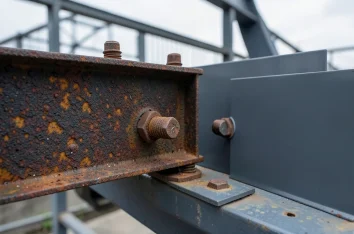
For many applications, corrosion protection represents the primary purpose of powder coating. Metal components exposed to moisture, salt, chemicals, or other corrosive agents depend on coating integrity to prevent oxidation and deterioration that would compromise structural integrity or appearance. Standardized corrosion testing provides accelerated evaluation methods that predict long-term coating performance without requiring years of field exposure.
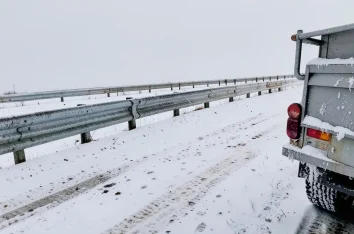
ASTM B117 establishes procedures for operating salt spray testing apparatus, creating controlled environments where coated specimens are exposed to fine mist of saltwater solution simulating harsh marine or coastal conditions. This exposure accelerates the corrosion process, allowing assessment of how well coatings protect underlying materials over time. Results indicate coating system effectiveness for applications where corrosion resistance is critical.
According to Mordor Intelligence industry analysis, regulatory agencies now view powder coatings as the lowest-polluting industrial finish because the process emits negligible VOCs and eliminates costly solvent recovery steps. This environmental advantage combines with performance characteristics including corrosion resistance that make powder coating increasingly specified for demanding applications across automotive, construction, and industrial markets. The powder coatings market is expected to reach $12.86 billion in 2025 and grow at a CAGR of 5.66 percent to reach $17.89 billion by 2030.
Industry organizations including the American Architectural Manufacturers Association (AAMA) establish tiered performance specifications that reference salt spray testing requirements. AAMA 2603 specifications require coatings to withstand 1,500 hours of salt spray exposure for basic protection suitable for indoor applications. AAMA 2604 increases requirements to 3,000 hours for higher-traffic applications. AAMA 2605, the most stringent tier, requires 4,000 hours of salt spray exposure for coatings intended for demanding exterior applications with extended performance requirements.
Mechanical Property Testing
Beyond adhesion and corrosion resistance, powder coatings must withstand mechanical stresses encountered during product handling, installation, and service. Flexibility testing verifies that coatings can deform with substrates without cracking or delaminating. Impact resistance testing confirms that coatings survive sudden mechanical shock without damage. Hardness testing measures coating resistance to scratching and wear.
Flexibility tests typically involve bending coated panels around mandrels of specified diameters and examining for cracking or loss of adhesion. Different applications require different flexibility levels—coatings for components that will be formed after coating require greater flexibility than those for pre-formed parts that will experience only minor deflection during service. Specifying appropriate flexibility requirements prevents field failures from coating damage during installation or use.
Impact resistance testing subjects coated panels to controlled impacts from falling weights or similar mechanisms, then evaluates coating integrity around impact sites. This testing is particularly relevant for components that may experience handling damage during shipping and installation or mechanical impact during service. Results guide coating selection for applications where impact resistance is critical to maintaining protective performance.
Pencil hardness testing provides a simple, standardized method for evaluating coating surface hardness. Progressively harder pencils are drawn across coating surfaces until one produces visible scratching or cutting. The hardness rating corresponds to the hardest pencil that fails to damage the coating. While simple, this test provides useful comparative information for evaluating coating suitability for applications where surface durability is important.
Application Process Controls
Achieving consistent coating performance requires controlling application process parameters that affect final film properties. Film thickness measurement verifies that coatings achieve specified build without excessive material consumption. Cure verification confirms that heating processes achieve complete powder coalescence and crosslinking. Process documentation maintains traceability that supports quality assurance objectives.
Film thickness measurement using magnetic or eddy-current gauges for metal substrates provides non-destructive verification that coating build meets specifications. Insufficient thickness compromises protection, while excessive thickness wastes material and may cause cosmetic defects or cure problems. Regular thickness verification during production identifies process drift before it produces out-of-specification parts.
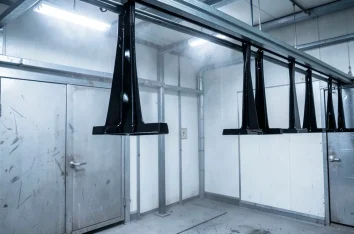
Cure verification focuses on part temperature rather than oven settings, recognizing that actual metal temperatures may differ from oven air temperatures depending on part mass, geometry, and loading patterns. Thermocouples or wireless data loggers recording time-at-temperature confirm that parts achieve the cure schedules specified by powder manufacturers. Incomplete cure compromises coating properties including adhesion, chemical resistance, and mechanical performance.
Understanding how electric vehicle applications are driving specialized coating requirements provides additional context for quality standards. How Michigan Metal Fabricators Are Meeting Electric Vehicle Coating Standards explores the demanding specifications that automotive applications require, illustrating how standardized testing frameworks apply to emerging technology sectors.
Specifying Coating Requirements Effectively
Effective coating specifications communicate performance requirements clearly while avoiding unnecessary constraints that limit supplier flexibility or increase costs without corresponding benefits. Specifications should identify the tests applicable to intended applications, the acceptance criteria for each test, and any process controls required to ensure consistent performance. Over-specification increases costs without improving outcomes, while under-specification risks receiving coatings inadequate for application demands.
Working with experienced coating providers helps fabrication customers develop appropriate specifications balancing performance requirements with practical constraints. Coating suppliers understand how different powder formulations, pretreatment processes, and application parameters affect test results. This expertise helps customers identify specifications that achieve required performance without unnecessary complexity or cost.
Documentation requirements should address traceability needs appropriate for each application. Safety-critical applications may require complete process documentation linking individual parts to specific powder lots, pretreatment batches, and curing records. Less demanding applications may require only statistical process control data demonstrating that coating processes remain within control limits. Matching documentation requirements to actual needs avoids unnecessary administrative burden.
Motor City Metal Fab: Your Partner in Precision Metal Finishing
At Motor City Metal Fab, we understand that coating quality directly impacts the performance and longevity of fabricated metal products. Our powder coating services incorporate process controls and quality verification procedures that ensure consistent results meeting your application requirements.
Our Services Include:
- Powder Coating Services – Complete finishing capabilities with quality assurance procedures that verify coating performance meets your specifications
Ready to Discuss Your Project? Contact Motor City Metal Fab to explore how our powder coating services can deliver the durability and protection your fabricated metal products require.
Works Cited
“D3451 Standard Guide for Testing Coating Powders and Powder Coatings.” ASTM International, store.astm.org/d3451-06r17.html. Accessed 1 Feb. 2026.
“Powder Coatings Market Size, Growth Trends & Industry Share, 2030.” Mordor Intelligence, www.mordorintelligence.com/industry-reports/powder-coatings-market. Accessed 1 Feb. 2026.
Related Articles
- Powder Coating Services Are Reshaping Michigan’s Metal Fabrication Industry
- How Michigan Metal Fabricators Are Meeting Electric Vehicle Coating Standards