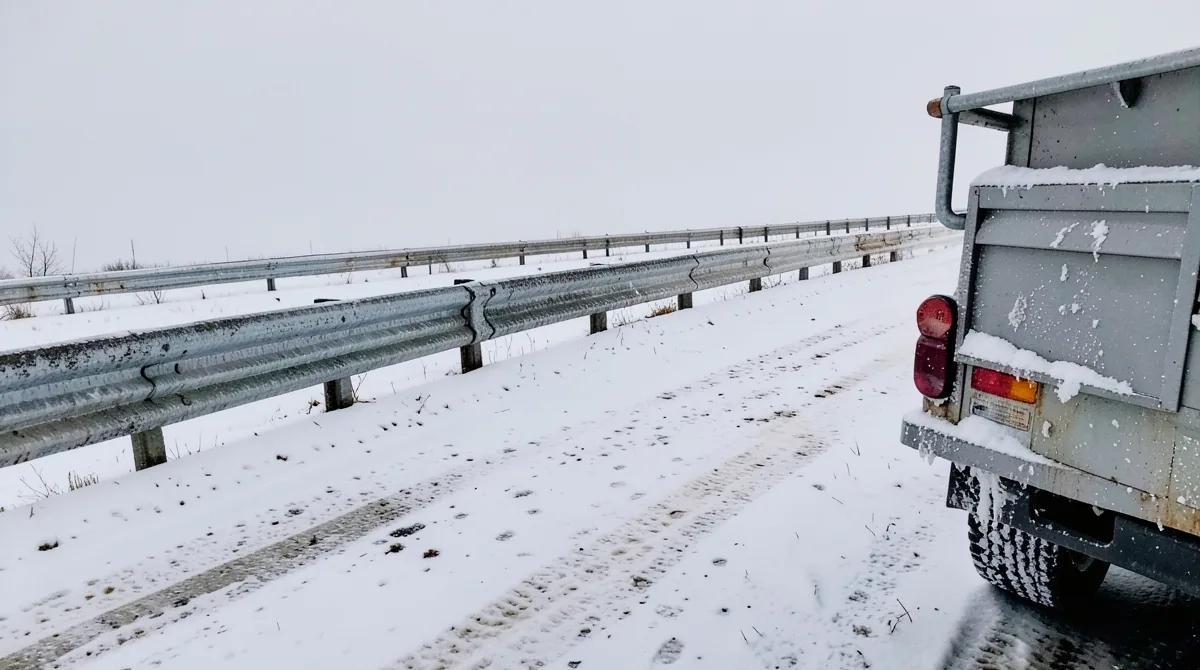
Last winter was a heavy one for road salt corrosion in metro Detroit. MDOT crews in the Metro region spread more than 111,000 tons of salt last winter, about 35 percent above average, according to WDIV reporting from March 2026. Department officials called it one of the most expensive winters in recent years. Heavy salting and frequent freeze-thaw cycles also fed a surge in potholes.
That salt does not stay on the pavement. It rides on tires, trucks, trailers, and equipment, and it settles on brackets, frames, and enclosures that work outdoors. For manufacturers and fleets in southeast Michigan, road salt corrosion is a design input, and it feeds directly into the cost of corrosion for metal parts.
What One County Spreads
The Road Commission for Oakland County’s 2025–2026 winter fact sheet puts numbers to the routine. RCOC uses an average of 64,000 tons of salt per winter. Its standard calls for about 400 pounds per two-lane mile, and a single salt run typically uses about six tons over roughly two hours.
That coverage is wide. RCOC handles more than 2,700 miles of county roads plus 230 miles of mostly multi-lane state highways, including I-75, I-696, I-96, M-59, Telegraph Road, and Woodward Avenue. Its spreaders pre-wet salt with brine as it goes down, which keeps more salt on the road and starts melting sooner. For metal parts, that means wet, salty spray from the first pass.
The trucks show what the job costs. RCOC prices a new snowplow and salt truck at about $425,000, nearly a 200 percent increase over ten years. The commission is paying $57.78 per ton for salt in the 2025–2026 season, up from $55.29 the year before. Salt loses effectiveness below 20°F and does almost nothing at 10°F, yet RCOC still calls it the most cost-effective option for clearing snow and ice. Road salt is here to stay.
How Road Salt Corrosion Attacks Coated Metal
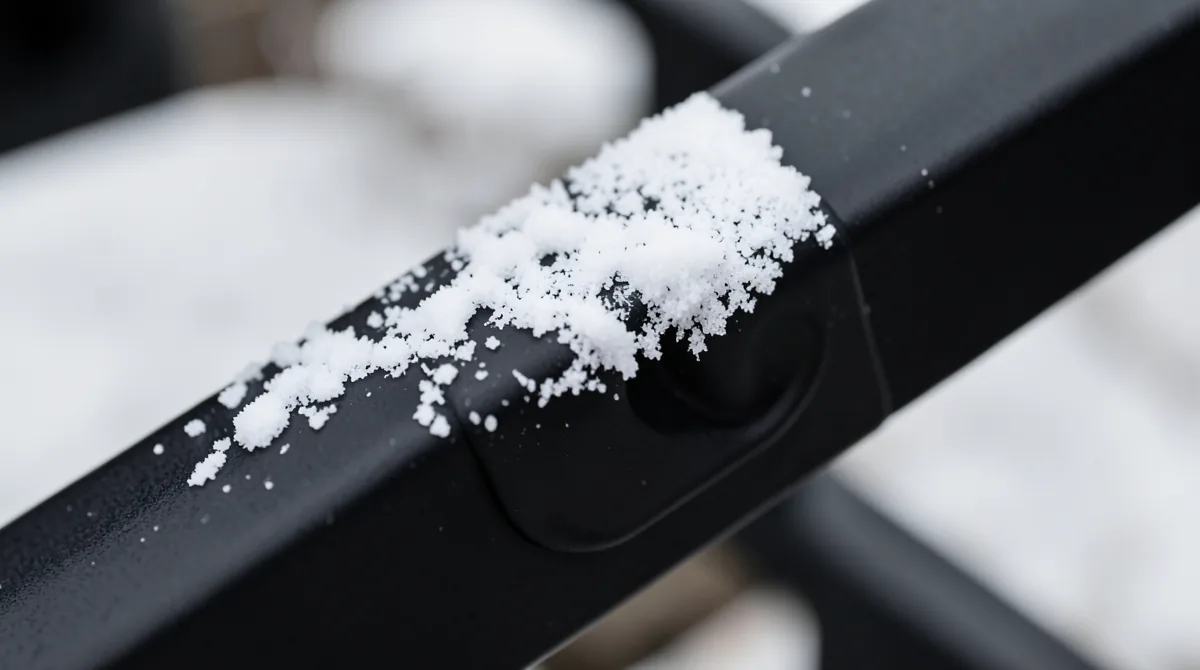
Chloride and moisture speed up corrosion of bare steel, and a Michigan winter supplies both for months at a stretch. Brine clings to surfaces, wicks into seams, and dries into a salty film that reactivates with the next thaw.
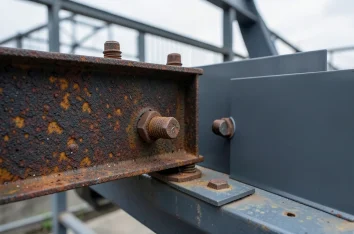
A coating slows that process by keeping brine off the metal. Road salt corrosion tends to start at the same weak points: sharp edges, weld seams, inside corners, bolt holes, and anywhere road debris chips the film. Once steel is exposed, corrosion can creep under the surrounding coating.
Think about the parts that ride through that spray every day. Hitches, plow mounts, trailer frames, underbody brackets, and equipment guards all ride low, where road spray hits hardest. Each one has seams, fasteners, and edges that collect brine long after the roads dry.
Finishing Parts to Resist Road Salt Corrosion
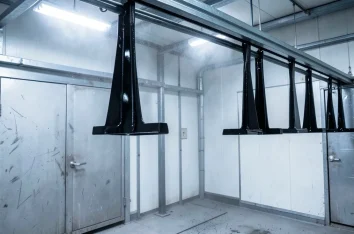
Start with clean metal. Mill scale, rust, weld spatter, and old coatings need to come off before powder goes on, and media blasting is the usual way to get there. Parts that have already seen a winter also carry salt residue, which can cause blistering under a new finish if it stays on the surface.
Match the powder to the exposure. Polyester powders are generally chosen for outdoor UV and weather, while epoxy powders suit indoor parts that need chemical resistance. For harsh outdoor duty, ask whether a primer plus a weather-resistant outer coat makes sense for the part. Ask how film thickness gets checked on edges and corners, and keep a record of the powder type and color code for later touch-up.
Design for drainage. A pocket that holds brine tends to corrode first, so drain holes and open profiles help coated parts shed water. Capped tube ends keep brine out of hollow sections. Stainless and aluminum parts need attention too, since chlorides can pit both.
Plan the masking. Threads, bores, and grounding points that must stay bare are also places where corrosion can start, so they need a protection plan after assembly.
Our overview of powder coating vs liquid paint covers where each finish fits for parts in this kind of service.
Check After the Thaw
Spring is a practical time to check exposed equipment for road salt corrosion. Chips, blisters, and rust bleeding from seams point to where the finish or the design needs attention on the next build.
Rinse salt residue off before inspection, since a dry white film can hide early damage. Touch up small chips before the next winter, and log where failures show up. A pattern of rust at the same weld or bolt hole across a fleet is design feedback worth sending to whoever builds the next batch.
Motor City Metal Fab: One Shop, Every Operation
Motor City Metal Fab is a family-owned shop in Taylor, Michigan serving metro Detroit. Cutting, machining, forming, welding, coating, and assembly all happen in one building, so a part does not wait on an outside vendor between operations.
Our Services Include:
- Powder Coating — In-house finishing, so fabricated parts ship ready to install
- Media Blasting — Surface prep that strips rust, scale, and old coatings before powder goes on
Have a print to quote? Contact Motor City Metal Fab with your drawing, material, and quantity.
Road Salt Corrosion: Frequently Asked Questions
01How much road salt does metro Detroit use?
MDOT crews in the Metro region used more than 111,000 tons last winter, about 35 percent above average, according to WDIV. Oakland County’s road commission alone averages 64,000 tons per winter and applies about 400 pounds per two-lane mile. Totals vary with snowfall from one year to the next.
02What causes road salt corrosion on metal parts?
Salt dissolves into brine that holds moisture against the metal and carries chloride, which speeds up corrosion of steel. Freeze-thaw cycles keep reactivating dried salt through the season. Seams, edges, bolt holes, and chipped spots on coated parts are where corrosion usually begins on equipment that works outdoors.
03Can powder coating protect parts from road salt?
A properly applied powder coat acts as a barrier between brine and metal, which can extend service life on outdoor parts. Results depend on surface prep, film thickness, powder type, and part design. Chips or bare edges can still let corrosion start, so a spring inspection is worthwhile.
04What should happen before recoating a salt-exposed part?
The part needs to come back to clean metal. That usually means removing salt residue, rust, and old coating, often through media blasting. Salt left on the surface can cause blistering under the new finish, so thorough cleaning comes before any powder goes on the part.
05Which powder type suits outdoor parts in Michigan?
Polyester powders are generally chosen for outdoor parts because they hold color and gloss under UV exposure. Epoxy powders offer strong chemical resistance but are typically used indoors. For heavy outdoor duty, a coater may suggest a two-coat system. The right choice depends on the part and its service conditions.
Works Cited
- Kostiuk, Lauren. “Michigan Winter Costs Surge: MDOT Uses 111K Tons of Salt, Summer Maintenance in Question.” ClickOnDetroit, WDIV, 25 Mar. 2026, www.clickondetroit.com/news/local/2026/03/25/michigan-winter-costs-surge-mdot-uses-111k-tons-of-salt-summer-maintenance-in-question/. Accessed 19 Sept. 2026.
- Road Commission for Oakland County. RCOC Winter Maintenance Fact Sheet 2025–2026. Road Commission for Oakland County, www.rcocweb.org/DocumentCenter/View/10065/Winter-maintenance-preparations-fact-sheet. Accessed 19 Sept. 2026.