The powder coating vs liquid paint decision has a regulatory backstory. Until the 1970s, most metal parts coated in American plants carried solvent-heavy liquid paint. Stricter state and federal rules changed that. According to the EPA’s Control Techniques Guidelines for Miscellaneous Metal and Plastic Parts Coatings, the industry has moved steadily toward lower-VOC options, including powder, waterborne, higher-solids, and UV-cured coatings.
For a buyer at an automotive supplier or equipment builder, powder coating vs liquid paint is no longer a question about color alone. It touches air regulation, material waste, cure time, and service life. Service life carries a real price, as our breakdown of the cost of corrosion for metal parts shows.
Powder Coating vs Liquid Paint: Where the Paint Lands
Transfer efficiency is the share of coating solids that actually reaches the part. The EPA puts conventional air-atomized spray at 25 to 40 percent. Electrostatic spray of liquid coating typically runs 60 to 90 percent. HVLP spray guns can reach up to 65 percent under good conditions and with skilled operators.
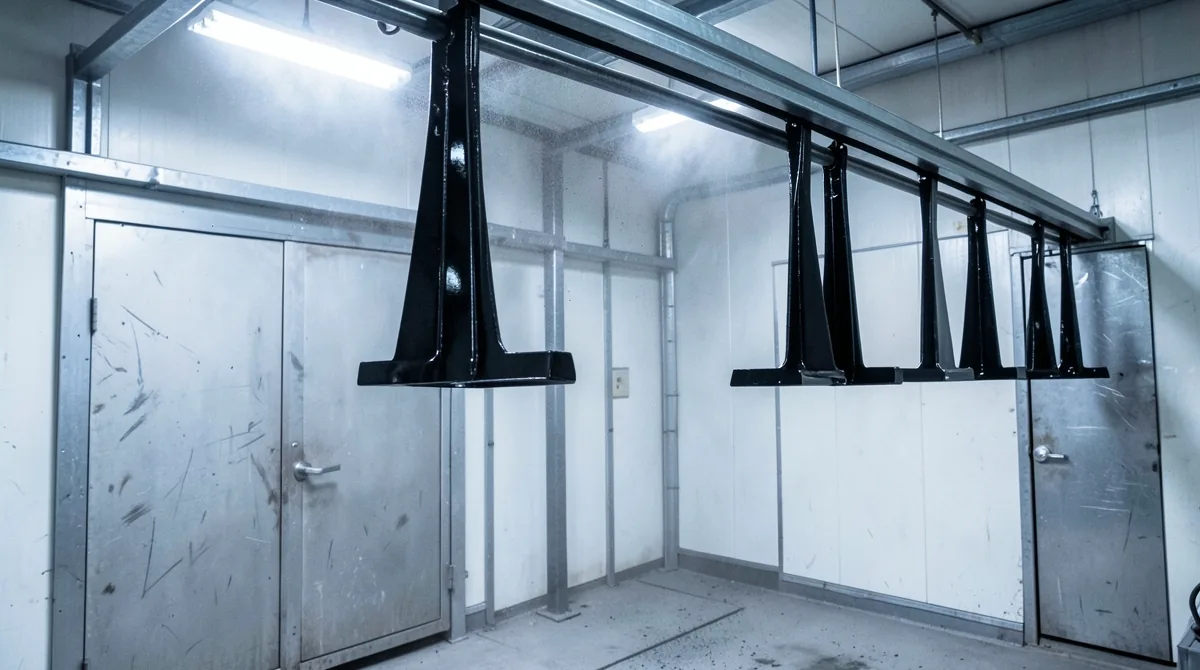
Powder is applied almost exclusively by electrostatic spray. The part is grounded, the powder carries a charge, and the particles are pulled onto the surface. With a recovery system in place, oversprayed powder is collected and reused rather than ending up in a booth filter.
That gap shows up on a quote. Liquid paint that misses the part still has to be bought, cleaned up, and disposed of.
Where the Solvent Goes
Liquid coatings carry solvent, and most of it leaves during spraying. The EPA estimates that 65 to 80 percent of the volatiles from liquid spray coating are emitted during application and flash-off, with the rest released in the oven. Liquid-coated parts usually pass through a flash-off zone first, so solvent escapes slowly and the film does not bubble during cure.
Powder skips that step. No VOC is released while powder is applied, and coated parts move straight into the oven with no flash-off area. In its recommendations to states, the EPA left powder coatings out of its recommended VOC content limits and described powder as an inherently low-VOC alternative.
Larger plants face a second layer of rules. The EPA’s hazardous air pollutant standard for miscellaneous metal parts covers major sources and lists automobile parts, heavy equipment, and large trucks and buses among the products in scope. Agency projections put the expected cut in organic HAP emissions from major sources in the category at about 48 percent nationwide.
Michigan has regulated coating emissions for decades. The 2008 guidelines recommended Michigan’s own VOC limits for automotive and business machine plastic parts as a national benchmark, noting that those limits had been in effect since 1993.
Prep Looks Different on Each Line
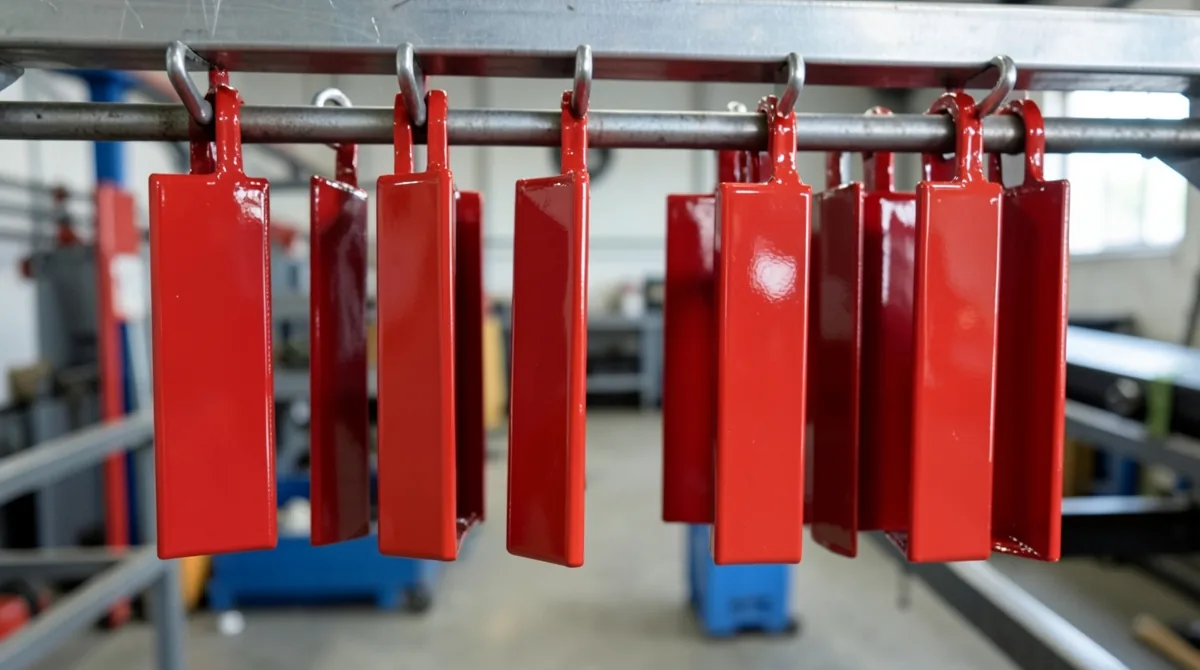
Coating choice also shapes the prep that comes before it. The EPA describes a typical metal pretreatment line as alkaline or acid cleaning, a rinse, a phosphate treatment, another rinse, and a final pretreatment step. Each stage handles liquid chemistry and rinse water.
Enclosed shot blasting is the dry alternative. Steel shot removes dirt and grease and smooths rough edges and welds. The same process can strip cured coatings when a part needs rework, and it runs without liquid chemicals or wastewater.
Where Liquid Paint Still Makes Sense
In the powder coating vs liquid paint comparison, powder does not fit every part. The EPA acknowledges that currently available low-VOC coatings do not meet the performance needs of some metal applications. It also describes powder as most at home on long runs of consistently sized parts without frequent color changes.
Heat is the other limit. A powder-coated part has to survive a cure oven, so assemblies with rubber seals, plastic inserts, or electronics are usually coated before those components go on. Field repairs and small touch-ups tend to stay liquid, since powder needs a booth and an oven.
The Cost That Shows Up Later
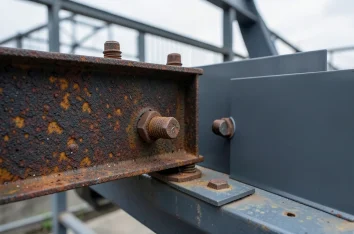
Powder coating vs liquid paint gets its real test years after delivery, once the part meets road spray, washdown, or weather. Parts that work outdoors in southeast Michigan carry an extra load, covered in our look at road salt corrosion in metro Detroit.
Powder Coating vs Liquid Paint: Four Questions to Ask
Can the part, and everything attached to it, survive a cure oven? Will it live outdoors, in a washdown area, or inside a cabinet? How many pieces are in the run, and how many colors? Which surfaces need to stay bare for threads, bores, or electrical grounding? Does the part need a specific color match or texture?
The answers usually point one way. When they do not, a sample part and a short conversation with the coater settle the question faster than a data sheet.
Motor City Metal Fab: One Shop, Every Operation
Motor City Metal Fab is a family-owned shop in Taylor, Michigan serving metro Detroit. Cutting, machining, forming, welding, coating, and assembly all happen in one building, so a part does not wait on an outside vendor between operations.
Our Services Include:
- Powder Coating — In-house finishing, so fabricated parts ship ready to install
- Media Blasting — Surface prep that strips rust, scale, and old coatings before powder goes on
Have a print to quote? Contact Motor City Metal Fab with your drawing, material, and quantity.
Powder Coating vs Liquid Paint: Frequently Asked Questions
01Is powder coating better than liquid paint?
It depends on the part. Powder builds a durable film, releases little VOC, and lets oversprayed material be recovered. Liquid paint suits heat-sensitive assemblies, field repairs, and some cosmetic work. The service environment, run size, color count, and oven tolerance decide which finish fits a given part.
02Why does powder coating release less VOC than liquid paint?
Powder goes on as dry particles, so no solvent evaporates during application. Coated parts move straight to the oven without a flash-off stage. The EPA notes that some volatile emissions can occur during curing, depending on the formulation, but they are generally much lower than emissions from liquid systems.
03What is transfer efficiency in coating?
Transfer efficiency is the percentage of coating solids that ends up on the part rather than in the booth. The EPA lists conventional air spray at 25 to 40 percent and electrostatic liquid spray at 60 to 90 percent. Higher transfer efficiency means less material bought, wasted, and cleaned up.
04Can parts with rubber or plastic components be powder coated?
Usually not as a finished assembly, because the part has to pass through a cure oven. The common approach is to coat the metal before seals, inserts, wiring, or electronics are installed. When that is not practical, liquid paint or a lower-temperature coating may be worth discussing with the coater.
05Does powder coating make sense for short runs and prototypes?
It can. The EPA describes powder as a natural fit for long runs of consistent parts, and color changes add setup on any job. On short runs, cost per part depends on batch size, color, and prep. Coating in the same building as fabrication removes a shipping step between vendors.
Works Cited
- United States, Environmental Protection Agency. Control Techniques Guidelines for Miscellaneous Metal and Plastic Parts Coatings. EPA-453/R-08-003, Sept. 2008, nepis.epa.gov/Exe/ZyPURL.cgi?Dockey=P1001JAL.txt. Accessed 19 Sept. 2026.
- United States, Environmental Protection Agency. “Surface Coating of Miscellaneous Metal Parts and Products: National Emission Standards for Hazardous Air Pollutants (NESHAP).” U.S. Environmental Protection Agency, 4 Mar. 2026, www.epa.gov/stationary-sources-air-pollution/surface-coating-miscellaneous-metal-parts-and-products-national. Accessed 19 Sept. 2026.
- This article is general industry information and is not a substitute for OSHA guidance, your employer’s safety program, or the manufacturer’s documentation for your specific equipment and materials.