Open post Advanced laser & waterjet cutting services for high-precision industrial metal fabrication

The Future of Laser & Waterjet Cutting Technology

The manufacturing industry continues to evolve with remarkable speed through technological advancements. Laser and waterjet cutting stand at the forefront of this evolution, shaping how metal fabrication businesses operate. At Motor City Metal Fab, WE strive to stay abreast of all trends and innovations in technology and machinery, positioning our business to deliver exceptional results for our clients.

This comprehensive guide explores emerging trends, technologies, and applications that will define the future of laser  & waterjet cutting services in Detroit over the coming decade.

Rising Innovations in Laser Cutting Technology

The laser cutting industry has witnessed significant growth since its inception in the 1960s. What began as a revolutionary concept has matured into an indispensable technology for modern manufacturing. When evaluating Laser &Waterjet Cutting Technology, it is clear that recent advancements in fiber optics and automation have given lasers a distinct advantage in speed and precision for high-volume production.

5G Integration and Smart Manufacturing

Manufacturing facilities now implement 5G technology to create interconnected systems that communicate seamlessly. This connectivity transforms how Tube laser cutting services in Detroit and flat-sheet machines operate in the production environment. Modern systems receive real-time design updates from engineering departments and adjust cutting parameters automatically based on material analysis. They can report maintenance needs before equipment failures occur, preventing costly downtime. Such systems optimize workflow through predictive analytics, creating a more efficient production floor.

Smart factories utilizing these technologies report productivity increases of up to 30%, according to a study by the National Institute of Standards and Technology.

AI-Powered Precision and Automation

Artificial intelligence now plays a critical role in advancing metal laser cutting services in Detroit capabilities. Machine learning algorithms optimize cutting paths for complex geometries, resulting in faster production and reduced wear on equipment. Computer vision systems inspect materials and adjust parameters in real-time, ensuring consistent quality across production runs. Predictive models minimize material waste through nesting optimization, maximizing the use of raw materials. Perhaps most impressively, many systems now feature autonomous operation that reduces human intervention for routine Tube laser cutting services in Detroit.

These AI applications result in higher precision, reduced waste, and faster production times—benefits that Motor City Fab uses to deliver outstanding results for our clients.

Eco-Friendly Laser Systems

Environmental concerns drive innovations toward greener laser cutting technologies. Fiber lasers reduce energy consumption by up to 70% compared to CO2 systems, making them more efficient and environmentally responsible. Modern systems now feature closed-loop cooling systems that minimize water usage, an important consideration for sustainability. Advanced filtration systems capture particulates and fumes, protecting both workers and the environment. Smart energy management reduces electricity usage during idle periods, further decreasing the carbon footprint of operations.

The Sustainable Manufacturing Initiative reports that these improvements significantly reduce the carbon footprint of metal fabrication processes.

Smart dashboard for a CNC machining center tracking energy consumption and material waste to meet 2026 sustainability standards

Waterjet Technology Advancements

Waterjet cutting continues to evolve alongside laser technology, offering unique advantages for specific applications.

Ultra-High Pressure Systems

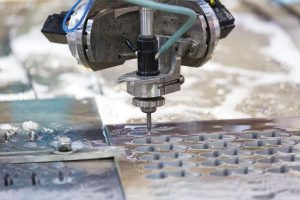
Next-generation CNC waterjet cutting services in Detroit operate at pressures exceeding 90,000 PSI, offering benefits such as:

Multi-Axis Cutting Capabilities

Modern CNC waterjet cutting services in Detroit now feature 5-axis and even 6-axis cutting heads that:

  • Create complex 3D components in a single setup
  • Produce beveled edges without secondary operations
  • Maintain perpendicular cutting on contoured surfaces
  • Enable taper compensation for improved accuracy

These capabilities widen the applications for accurate waterjet cutting services in Detroit, particularly in aerospace, automotive, and architectural industries.

Hybrid Cutting Systems

The integration of waterjet technology with other cutting methods creates effective hybrid systems:

  • Laser-waterjet combinations that leverage both metal laser cutting services in Detroit and waterjet benefits
  • Plasma-waterjet systems for thick material processing
  • Mechanical-waterjet hybrid machines for specialized applications

At Motor City Metal Fab, we evaluate these emerging technologies to determine which Laser & Waterjet Cutting Services in Detroit best serve our clients’ needs.

Material Processing Innovations

The future of CNC waterjet cutting services in Detroit extends beyond machinery to include advancements in materials processing.

New Material Capabilities

Cutting systems now process a growing range of materials:

  • Advanced composites for aerospace applications
  • Medical-grade titanium alloys
  • Specialized ceramics for electronics
  • Ultra-high-strength steels for automotive safety components

According to Materials Today, these advanced materials require specialized cutting parameters that modern systems can deliver.

Micro-Cutting Applications

Both laser & waterjet service in Detroit technologies now operate at micro scales:

  • Precision components for medical devices
  • Miniaturized electronics parts
  • Microfluidic devices for biotech applications
  • Fine jewelry and watchmaking components

These applications need extraordinary precision, making accurate waterjet cutting services in Detroit indispensable.

Thick Material Processing

Advancements in power and beam quality allow cutting of increasingly thick materials:

  • Structural steel exceeding 50mm thickness
  • Heavy plate applications for shipbuilding
  • Mining and construction equipment components
  • Defense industry armor plating

High-tolerance metal parts produced by our professional laser & waterjet cutting services

Software and Digital Integration

The future of Laser & Waterjet Cutting Services in Detroit depends on advanced software solutions and digital integration.

Cloud-Based Design and Manufacturing

Cloud technologies transform how CNC waterjet cutting services in Detroit function:

  • Centralized design databases accessible from anywhere
  • Remote system monitoring and operation
  • Collaborative engineering across multiple locations
  • Real-time quotation and production scheduling

This connectivity eliminates geographical barriers and enables new business models for fabrication companies.

Digital Twins

Digital twin technology creates virtual replicas of physical cutting systems:

  • Simulation of cutting operations before physical production
  • Virtual testing of process parameters
  • Predictive maintenance based on operational data
  • Training opportunities without machine downtime

The Digital Manufacturing and Design Innovation Institute has documented how digital twins reduce commissioning time by up to 40%.

Augmented Reality Applications

AR technology improves operator capabilities:

  • Visual setup guidance for complex jobs
  • Maintenance procedures with step-by-step visual aids
  • Quality inspection with overlay comparison to design specifications
  • Training simulations for new operators

Industry Trends Shaping Laser & Waterjet Cutting Services

Several broader industry trends influence the direction of cutting technology development.

On-Demand Manufacturing

The rise of on-demand manufacturing affects how CNC waterjet cutting services in Detroit operate:

  • Shorter production runs with faster turnaround times
  • Greater variety of materials processed by a single facility
  • Increased customization requires flexible production systems
  • Integration with e-commerce platforms for direct customer ordering

At Motor City Metal Fab, we adapt to these market changes by investing in versatile equipment that manages diverse client requirements.

Reshoring and Localized Production

Global supply chain vulnerabilities drive production closer to end markets:

  • Increased domestic manufacturing requires expanded cutting capacity
  • Just-in-time production models demand rapid turnaround
  • Higher quality standards are expected from local suppliers
  • Emphasis on workforce development to support advanced manufacturing

This trend creates opportunities for North American fabricators with advanced technological capabilities.

Additive-Subtractive Hybrid Manufacturing

The integration of additive manufacturing with cutting technologies:

  • 3D printing combined with precision cutting for complete solutions
  • Repair and modification of existing components
  • Material-specific processing strategies
  • Reduced waste through near-net-shape production

These hybrid approaches open new possibilities for complex component production that were previously impractical or impossible.
A procurement team discussing how to overcome psychology behind manufacturing procurement delays

Applications Across Industries

The evolution of Laser & Waterjet Cutting Services in Detroit impacts numerous industries:

Automotive Transformation

The automotive industry undergoes substantial changes requiring tube laser cutting services in Detroit.

  • Lightweight materials for improved fuel efficiency
  • Battery compartments for electric vehicles
  • High-strength steel components for crash protection
  • Custom components for low-volume specialty vehicles

Aerospace Advancement

Aerospace manufacturing demands exceptional precision:

  • Complex geometries for optimized performance
  • Exotic materials requiring specialized processing
  • Zero-defect requirements for critical components
  • Weight reduction through innovative design and material use

Medical Innovation

The medical device industry benefits from cutting-edge technology breakthroughs:

  • Implants instruments requiring CNC waterjet cutting services in Detroit.
  • Surgical instruments with complex geometries
  • Custom prosthetics made for individual patients
  • Microfluidic devices for diagnostic applications

Clean Energy Development

Renewable energy technologies need specialized components:

  • Solar panel frames and mounting systems
  • Wind turbine components
  • Fuel cell plates and assemblies
  • Energy storage system enclosures

At Motor City Fab, we serve these diverse industries with specialized metal laser cutting services and CNC waterjet cutting services in Detroit tailored to green energy standards.

Future Challenges and Opportunities

The cutting technology landscape faces both challenges and opportunities in the coming years.

Skills Gap and Workforce Development

Advanced metal laser cutting services in Detroit technology requires skilled operators:

  • Training programs for new technology adoption
  • Knowledge transfer from experienced staff
  • Partnership with educational institutions
  • Retention strategies for skilled employees

Integration with Industry 4.0

The broader digital transformation of manufacturing:

Customization vs. Standardization

Balancing competing market demands:

Advanced laser & waterjet cutting services for high-precision industrial metal fabrication

How Motor City Metal Fab Prepares for the Future

As technology evolves, Motor City Metal Fab positions itself at the forefront of innovation through strategic initiatives:

  • Continuous investment in state-of-the-art equipment
  • Ongoing staff training and development
  • Partnerships with technology providers
  • Research into emerging applications

We believe that staying ahead of technological trends in Laser & Waterjet Cutting Services in Detroit allows us to provide excellent service and solutions to our clients across all industries.

FAQs About the Future of Laser & Waterjet Cutting Services

What advantages do fiber lasers have over traditional CO2 lasers?

Fiber lasers offer lower operating costs and faster speeds for metal laser cutting services in Detroit. They perform well when cutting reflective materials like copper and brass and are ideal for precision tube laser cutting services.

How will AI impact the future of metal cutting services?

AI will transform Laser & Waterjet cutting services in Detroit through optimization of cutting paths, predictive maintenance to prevent downtime, automated quality control systems, and intelligent nesting to maximize material usage. These advancements will increase productivity, reduce waste, improve part quality, and lower operating costs. Companies like Motor City Fab that adopt these technologies early will gain significant business advantages.

What materials can be processed by modern waterjet systems?

Our modern Detroit CNC and waterjet cutting services systems can process an extraordinary range of materials, including metals, composites, stone, glass, ceramics, plastics, rubber, and foams. With proper setup and parameters, waterjet cutting manages materials from soft gasket materials less than 1mm thick to hardened steel exceeding 200mm in thickness. This versatility makes waterjet cutting an ideal solution for facilities processing diverse materials.

How do environmental regulations affect cutting technology development?

Environmental regulations drive innovation in cutting technologies by encouraging more efficient energy usage, improved waste management systems, and reduced emissions. Manufacturers now develop systems with closed-loop water recycling, advanced filtration, and energy recovery features. These eco-friendly designs comply with regulations and often reduce operating costs through improved efficiency.

What factors should I consider when choosing between laser and waterjet cutting?

When selecting between laser and waterjet cutting, consider material type and thickness, required edge quality, tolerance specifications, production volume, and project timeline. Laser cutting typically offers faster processing speeds and tighter tolerances on thin materials, while waterjet cutting works better with thick materials and heat-sensitive applications. For guidance on your project requirements, contact our team for a consultation.

Open post Precision-cut aluminum components showcasing the accuracy of our Laser & Waterjet Cutting Services

Top 5 Challenges in Laser and Waterjet Cutting

Laser and waterjet cutting are advanced manufacturing processes that offer precision and versatility. However, they come with their own set of challenges. As a leader in providing professional Laser & Waterjet Cutting Services in Detroit, we understand that navigating these obstacles is key to delivering high-quality results. Here are the top 5 challenges faced in laser and waterjet cutting:

Material Thickness Limitations

Material thickness is a crucial factor in determining the effectiveness of laser and waterjet cutting processes. Both technologies have distinct capabilities and limitations when it comes to handling materials of varying thicknesses.

Laser Cutting Constraints

Laser & Waterjet Cutting Services in Detroit excels at processing thin sheets with high precision. However, it faces significant challenges when dealing with materials thicker than 1 inch. The laser beam’s power diminishes as it penetrates deeper into the material, resulting in reduced cutting efficiency and quality for thicker substrates. This is also a factor in tube laser cutting services, where wall thickness must be carefully managed to ensure clean results.

Waterjet Cutting Capabilities

Waterjet cutting offers a broader range of thickness capabilities. It can effectively cut through thick materials that laser cutting struggles with, handling thicknesses up to 12 inches for most materials like stainless steel and carbon steel. Utilizing accurate waterjet cutting services in Detroit allows for the processing of heavy-duty substrates that other methods cannot touch.

Choosing the Right Process

To address the material thickness challenge, manufacturers must carefully select between laser and waterjet cutting based on their specific requirements:

  • Metal laser cutting services in Detroit is ideal for thin sheets requiring high precision, typically materials less than 0.4 inches thick.
  • Waterjet cutting is generally preferred for thicker materials, especially those exceeding 1 inch in thickness.
  • For materials between 0.4 and 1 inch, the choice may depend on other factors such as material type, required precision, and production speed.

By strategically selecting the appropriate cutting method based on material thickness, manufacturers can ensure optimal results, efficiency, and cost-effectiveness in their cutting processes.

Heat-Affected Zone (HAZ)

The heat-affected zone is a significant challenge in laser cutting processes, impacting material properties and potentially compromising the quality of the final product. Understanding and managing HAZ is crucial for achieving optimal results in laser cutting operations.

Thermal Impact on Materials

Laser cutting generates intense heat, creating a heat-affected zone around the cut area. This thermal effect can alter the material’s properties, leading to several issues:

  • Warping or distortion, especially in heat-sensitive materials
  • Changes in hardness or brittleness of the material near the cut
  • Potential microstructural changes affecting the material’s strength
  • Formation of oxides or other unwanted compounds on the cut edge

For example, in steel cutting, the HAZ can lead to hardening of the material near the cut, potentially causing brittleness or cracking.

Advantages of Cold Cutting

By contrast, accurate waterjet cutting services use a cold process avoids the HAZ issue entirely. This makes it an excellent choice for:

  • Materials that are particularly sensitive to heat
  • Applications where maintaining the original material properties is crucial
  • Cutting composites or layered materials where thermal effects could cause delamination

The absence of thermal effects in waterjet cutting also reduces the risk of warping or distortion in the cut parts, making it ideal for precision components.

Mitigating HAZ in Laser Cutting

To address HAZ issues in laser cutting, operators can employ several strategies:

Adjusting cutting parameters:

  • Reducing laser power to minimize heat input
  • Increasing cutting speed to reduce heat accumulation
  • Optimizing assist gas flow to aid in heat dissipation

Using water-assisted laser cutters:

  • These systems can significantly reduce heat-related problems by providing cooling during the cutting process
  • Water-assisted lasers are particularly effective for cutting thick materials or heat-sensitive alloys

Implementing proper cooling techniques:

  • Using cooling fixtures or heat sinks to dissipate heat more effectively
  • Allowing sufficient cool-down time between cuts on sensitive materials

By carefully managing these factors, manufacturers can leverage the precision of laser cutting while minimizing the negative impacts of the heat-affected zone, ensuring high-quality results across a wide range of materials and applications.

Precision and Edge Quality

Maintaining consistent edge quality while achieving high precision is a significant challenge Metal laser cutting services in Detroit offer high precision for intricate designs but may produce rough edges on thicker materials. Meanwhile, CNC waterjet cutting services maintain good edge quality across varying thicknesses but require careful pressure adjustment to minimize tapering. Whether performing flat sheet work or tube laser cutting services in Detroit, regular calibration of cut

Laser Cutting Edge Quality

Laser cutting offers high precision, especially for intricate designs, but it may produce rough edges on thicker materials due to heat effects. This is particularly noticeable when cutting materials that are more susceptible to thermal distortion. 

To mitigate these issues and improve edge quality in laser cutting, operators can employ several techniques:

  • Adjusting the focus of the laser beam to ensure optimal penetration and minimize the heat-affected zone.
  • Optimizing laser power settings according to material thickness to achieve smoother cuts and reduce rough edges.
  • Varying cutting speed to find a balance between speed and quality, as slower speeds often yield better edge quality.
  • Testing with different assist gases to enhance cutting effectiveness and improve edge smoothness.

Waterjet Cutting Edge Quality

Waterjet cutting generally maintains good edge quality but can lead to slightly tapered edges depending on the material and settings used. While this method excels at cutting thicker materials where edge quality is critical, it requires careful parameter adjustment to achieve optimal results. 

Key practices for enhancing precision and edge quality in waterjet cutting include:

  • Adjusting water pressure to find the optimal flow rate for the material being cut, enhancing precision.
  • Optimizing abrasive flow rate for improved cutting efficiency and better edge quality.
  • Ensuring that the cutting speed is suitable for the thickness and type of material to minimize tapering.
  • Regularly calibrating and maintaining the cutting head to ensure consistent performance.

Importance of Calibration

For both laser and waterjet cutting services in Detroit, proper calibration of cutting parameters is crucial to achieve optimal edge quality. The thickness of the material plays a crucial role in determining the edge quality from both processes. Regular inspection and maintenance of equipment are essential for consistent performance and quality in both methods.

By understanding the strengths and limitations of each cutting method and implementing best practices for parameter optimization, manufacturers can significantly improve precision and edge quality in their cutting processes.

Material Wastage and Efficiency

In the realm of laser and waterjet cutting, optimizing material usage and maximizing cutting efficiency are crucial challenges that directly impact production costs and sustainability. This is especially critical when working with high-value materials where waste can significantly affect profitability.

Nesting Software Optimization

Advanced nesting software plays a pivotal role in reducing material wastage and improving cutting efficiency. These sophisticated tools offer several benefits:

  • Efficient part arrangement: The software automatically calculates the most space-efficient layout for parts to be cut, minimizing unused material.
  • Material utilization analysis: It provides insights into material usage, helping operators identify areas for improvement.
  • Multi-sheet nesting: Some software can optimize part placement across multiple sheets, further reducing waste.

Cutting Method Selection

Choosing the appropriate cutting method based on material properties and thickness is crucial for efficiency:

  • Laser cutting: Ideal for thin sheets and intricate designs, offering fast processing times for certain materials.
  • Waterjet cutting: Better suited for thicker materials and when heat-affected zones must be avoided.

Selecting the right provider for Laser & Waterjet Cutting Services in Detroit can significantly reduce processing time and material waste, especially when dealing with challenging or expensive materials.

Process Optimization Techniques

To further enhance efficiency and reduce waste, manufacturers can implement various strategies:

  • Regular machine maintenance to ensure consistent performance and reduce errors.
  • Operator training to improve decision-making in material and process selection.
  • Implementing lean manufacturing principles to streamline the entire cutting process.
  • Utilizing scrap material for smaller parts or other applications when possible.

By focusing on these areas, manufacturers can significantly improve material utilization, reduce waste, and enhance overall cutting efficiency in both laser and waterjet cutting processes.

Maintenance and Operating Costs

Maintaining laser and waterjet cutting machines is crucial for optimal performance, longevity, and cost-effectiveness. Both technologies require regular upkeep, but the specific maintenance needs differ.

Laser Cutter Maintenance

Laser cutting machines require particular attention to:

  • Optics and mirrors: Regular cleaning and alignment checks are essential to maintain beam quality and cutting precision.
  • Cooling systems: Proper maintenance ensures the laser source operates at optimal temperature, preventing overheating and performance issues.
  • Exhaust systems: Regular cleaning prevents buildup of debris that could affect air flow and cutting quality.

Specialized technicians may be needed for certain laser cutter maintenance tasks, particularly those involving the laser source or complex optical alignments used in tube laser cutting services in Detroit.

Waterjet Cutter Maintenance

CNC waterjet cutting services in Detroit have different maintenance requirements:

  • High-pressure pumps: Regular inspection and servicing of seals, plungers, and valves is crucial.
  • Cutting heads: Checking for wear and proper alignment of the nozzle and mixing tube is essential.
  • Water quality: Monitoring and maintaining water quality is vital to prevent clogging and damage to components.

Operators can often perform many routine maintenance tasks on waterjet cutters after proper training.

Implementing a Maintenance Schedule

To address maintenance challenges effectively:

  • Develop a comprehensive maintenance schedule based on manufacturer recommendations.
  • Train operators to perform routine checks and basic maintenance tasks.
  • Keep detailed maintenance logs to track issues and predict potential problems.
  • Schedule regular professional inspections and servicing, especially for complex components.

Cost Considerations

While maintenance costs are significant for both technologies, they can be managed through:

  • Preventive maintenance to avoid costly breakdowns and extend machine life.
  • Proper operator training to reduce wear and tear from misuse.
  • Investing in high-quality machines that may have lower long-term maintenance costs.
  • Considering service contracts for specialized maintenance tasks, particularly for laser cutters.

By implementing a robust maintenance strategy, companies can optimize the performance of their cutting machines, reduce downtime, and control long-term operating costs.

Motor City Fab: Precision Cutting for Industry Leaders

At Motor City Metal Fab, we provide top-tier laser and waterjet cutting services in Detroit for a wide range of industries. Our family-owned business is committed to delivering exceptional quality and customer service.

Our Cutting-Edge Technologies

  • Laser Cutting: 3-axis 4000-watt fiber laser for precise cuts in various metals
  • Waterjet Cutting: In-house waterjet with Diamond-integrated 5i nozzle for versatile material cutting

Comprehensive Services

Beyond cutting, we offer:

Why Choose Us?

  • Expertise in handling complex projects
  • Commitment to quality and precision
  • Efficient processes for quick turnaround
  • Versatility in materials and applications

At Contact Us, we’re not just service providers – we’re partners in bringing your ideas to life. Let us show you why we’re the preferred choice for industry leaders in metal fabrication and cutting.

Conclusion

In conclusion, laser and waterjet cutting technologies offer powerful solutions for modern manufacturing, but they come with their own set of challenges. 

From material thickness limitations to heat-affected zones, precision concerns, efficiency issues, and maintenance requirements, manufacturers must navigate these hurdles to maximize the benefits of these cutting processes. 

By choosing the right Laser & Waterjet Cutting Services in Detroit, companies can optimize their operations and improve product quality. As the industry continues to evolve, addressing these challenges will be crucial for staying competitive and meeting the ever-increasing demands of precision manufacturing.

FAQs

Which cutting method is better for thick materials?
CNC waterjet cutting services in Detroit are generally preferred for thicker materials, as they can handle materials up to 12 inches thick, while laser cutting struggles with materials thicker than 1 inch.

How can I reduce the heat-affected zone in laser cutting?
To mitigate HAZ issues in metal laser cutting services in Detroit, you can adjust cutting parameters such as power and speed, use water-assisted systems, and implement proper cooling techniques.

What software can help optimize material usage in cutting processes?
Advanced nesting software can significantly improve material utilization by efficiently arranging parts to be cut, providing usage analysis, and offering multi-sheet nesting capabilities.

How often should I maintain my laser or waterjet cutting machine?
Regular maintenance is crucial for both technologies. Develop a comprehensive maintenance schedule based on manufacturer recommendations, which typically includes daily, weekly, and monthly tasks.

Can waterjet cutting handle precision cuts on thin materials?
While accurate waterjet cutting services excel at thick materials, laser cutting is often preferred for high-precision cuts on very thin sheets.

Scroll to top