
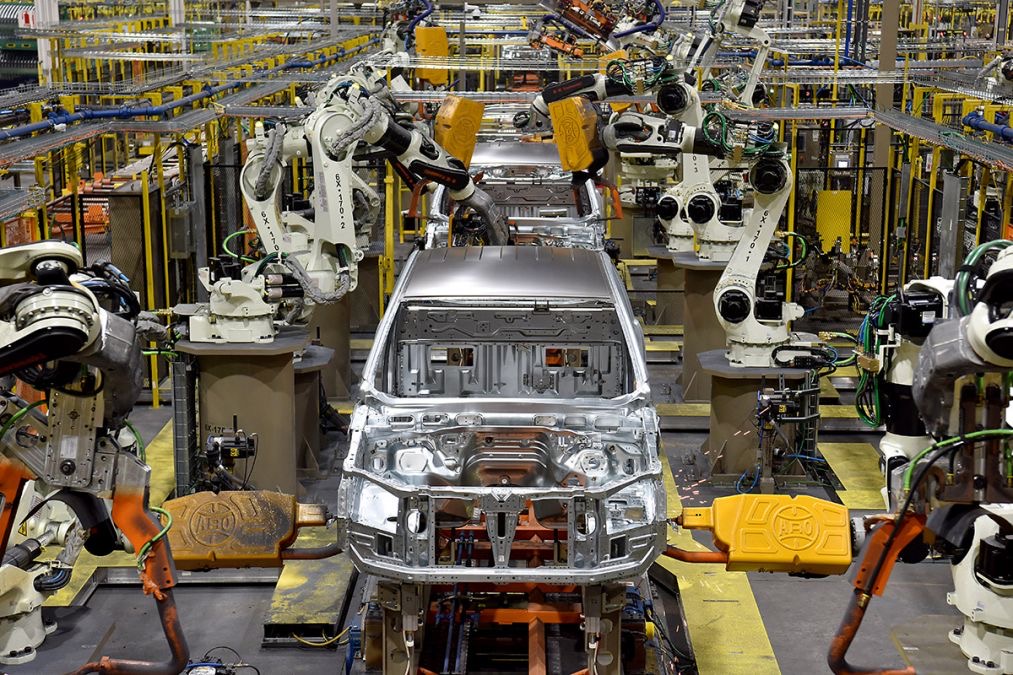
Michigan has emerged as the undisputed leader in domestic electric vehicle manufacturing investment, securing more than $27 billion across approximately 60 EV and battery projects. This commanding position places the state ahead of Georgia’s $26.6 billion and establishes the birthplace of the modern automobile industry as central to its electrified future. For precision manufacturers throughout Southeast Michigan, this transformation signals both unprecedented opportunity and urgent adaptation requirements.
The scale of investment flowing into Michigan reflects deliberate strategic positioning by automakers who recognize the state’s unique combination of engineering talent, supplier networks, and manufacturing infrastructure. According to comprehensive tracking by Atlas Public Policy, total announced U.S. EV manufacturing investment reached $208.8 billion from 2000 through September 2024, with $157.3 billion and 163,700 jobs announced after passage of the Infrastructure Investment and Jobs Act in November 2021. Michigan’s share of this investment demonstrates the state’s continued relevance in an industry undergoing its most significant transformation in a century.
Supply Chain Demands Reshape Regional Manufacturing
The EV transition fundamentally alters component requirements throughout automotive supply chains. Electric motors replace internal combustion engines, battery packs substitute for fuel systems, and power electronics supplant traditional drivetrain components. These changes create demand for precision-cut aluminum battery enclosures, copper motor components, and specialized housings that require tolerances traditional stamping operations cannot consistently achieve. Understanding Laser Cutting vs. Waterjet: Choosing the Right Process for Automotive and EV Components becomes essential for manufacturers positioning themselves within these evolving supply networks.
Battery enclosure manufacturing represents one of the most significant growth areas within Michigan’s EV ecosystem. These structures must protect battery cells from road debris and collision impacts while managing thermal loads during charging and operation. Aluminum dominates current designs due to its favorable strength-to-weight ratio and thermal conductivity, requiring precision cutting capabilities that preserve material properties without introducing heat-affected zones that could compromise structural integrity.
Global electric vehicle momentum continues accelerating despite periodic market uncertainty. The International Energy Agency’s Global EV Outlook 2025 reports that global EV sales exceeded 17 million in 2024, representing more than 20 percent of total car sales worldwide. The additional 3.5 million electric cars sold in 2024 compared with 2023 exceeds total global EV sales from 2020, demonstrating the exponential growth trajectory manufacturers must accommodate.
Workforce and Regional Manufacturing Advantages
Michigan’s manufacturing workforce brings generations of automotive knowledge that translates directly to EV production requirements. Precision machining skills, quality control disciplines, and supplier management capabilities developed through a century of automotive manufacturing provide foundations that newer manufacturing regions cannot quickly replicate. The concentration of engineering talent within commuting distance of major production facilities enables rapid problem-solving and continuous improvement cycles that distributed supply chains struggle to match.
Regional suppliers benefit from proximity to design engineering teams who specify components and validate production processes. Prototype development and low-volume production capabilities become increasingly valuable as automakers accelerate vehicle development timelines while expanding platform variants. The ability to produce sample components quickly for testing and validation creates competitive advantages that transcend simple cost comparisons. For fabricators evaluating their position within this shifting landscape, exploring Why Michigan’s EV Boom Creates Opportunities for Precision Metal Fabricators provides strategic perspective on capability development priorities.
Federal policy support continues reinforcing domestic manufacturing investment. The Atlas Public Policy analysis documents more than $28 billion in federal grants, tax credits, and loans awarded through September 2024 specifically supporting EV and battery manufacturing facilities. Eighty percent of announced investments concentrate in just ten states, with Michigan, Georgia, North Carolina, Tennessee, Indiana, South Carolina, Nevada, Ohio, Kentucky, and California capturing the overwhelming majority of project commitments. Seventy-six percent of announced facilities are either operational or under construction as of October 2024, indicating these investments represent concrete manufacturing capacity rather than speculative announcements.
Market Dynamics and Component Opportunities
China continues dominating global EV production, accounting for approximately 70 percent of worldwide manufacturing capacity. This concentration creates supply chain vulnerabilities that policy initiatives seek to address through domestic production incentives. The IEA projects that EV sales will exceed 20 million units globally in 2025, with China potentially reaching 60 percent domestic EV sales share by year end. These growth trajectories ensure sustained demand for precision components regardless of near-term market fluctuations in any single region.
For precision fabricators in Southeast Michigan, the EV transition presents clear imperatives. Capabilities in cutting aluminum, copper, and specialized alloys position shops to serve battery enclosure, motor component, and power electronics applications. Tolerance requirements exceeding traditional automotive stamping create openings for fabricators whose equipment and processes can consistently achieve these specifications. Quality certifications and traceability systems meeting automotive industry requirements become table stakes for supplier qualification.
The transformation underway in Michigan manufacturing represents both challenge and opportunity. Suppliers who develop capabilities aligned with EV component requirements position themselves for growth alongside the industry’s electrification. Those who wait for market signals before investing in capability development may find themselves displaced by competitors who acted earlier.
Motor City Metal Fab: Your Precision Cutting Partner
Motor City Metal Fab delivers precision laser and waterjet cutting services from our Taylor, Michigan facility, serving automotive prototype shops, aftermarket suppliers, and manufacturers throughout Southeast Michigan. Our capabilities in aluminum, stainless steel, and specialty materials position us to support EV component development and production requirements.
Our Services Include:
- Laser and Waterjet Cutting Services – Precision cutting for metals up to 1 inch thick with tolerances to ±0.005 inches, plus stone, glass, ceramics, and composites
Ready to Discuss Your Project? Contact Motor City Metal Fab to explore how our precision cutting capabilities can support your manufacturing requirements.
Works Cited
“Global EV Outlook 2025.” International Energy Agency, IEA, 2025, www.iea.org/reports/global-ev-outlook-2025. Accessed 24 Nov. 2025.
Taylor, Tom, et al. “Tracking the State of U.S. EV Manufacturing.” Atlas Public Policy and BlueGreen Alliance Foundation, Jan. 2025, atlaspolicy.com/wp-content/uploads/2025/01/Tracking-the-State-of-U.S.-EV-Manufacturing.pdf. Accessed 24 Nov. 2025.
Related Articles
- Laser Cutting vs. Waterjet: Choosing the Right Process for Automotive and EV Components
- Why Michigan’s EV Boom Creates Opportunities for Precision Metal Fabricators


