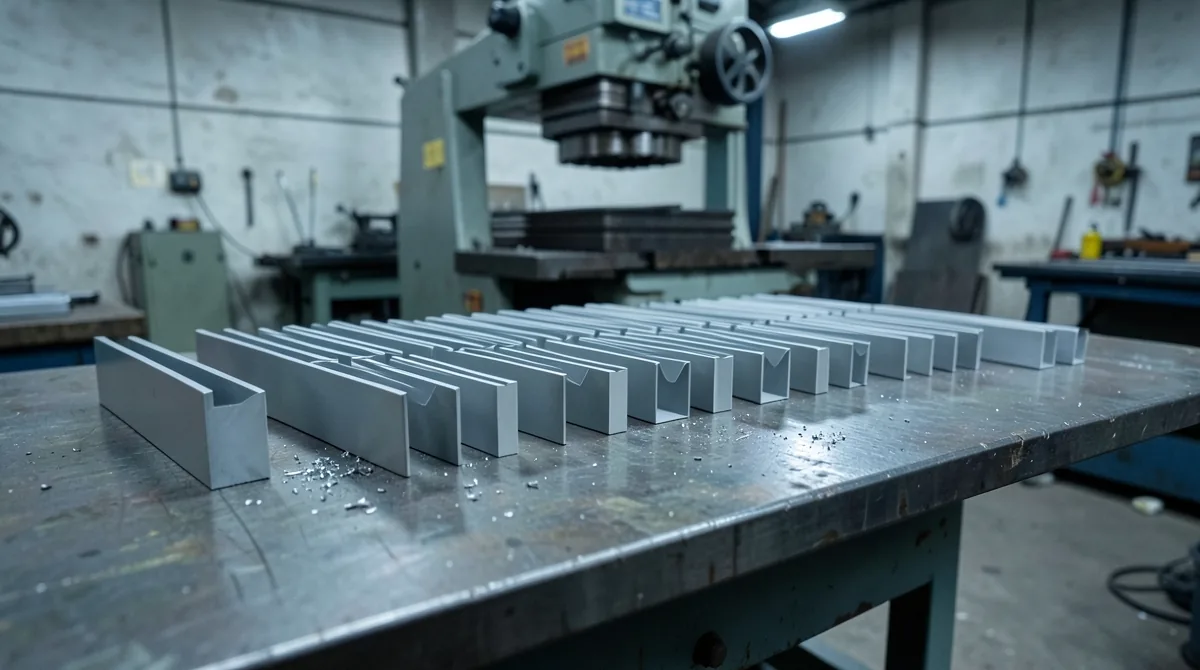
Open post A row of identical bent steel channel parts on a workbench in front of a press in a fabrication shop

Minimum Order for Custom Metal Fabrication: What Downriver Michigan Shops Accept

There is no industry-standard minimum order for custom metal fabrication. Many job shops quote single prototypes, while production-focused plants often set floors in the hundreds or thousands. The practical minimum is set by setup cost spread across the run, so ask each shop for its position rather than assuming a number.

The minimum order for custom metal fabrication is the question that narrows the field fastest, and it is the one buyers ask last. A prototype buyer who calls six shops will hear six different answers, because the floor is a business-model decision rather than a technical limit.

Why Is There No Standard Minimum Order for Custom Metal Fabrication?

Setup is the reason a minimum order for custom metal fabrication exists at all. Programming a cut file, loading material, building a fixture, and masking for coating all take setup time. That time is the same whether you order one piece or two hundred. The cost then gets divided across the run.

At quantity one, the buyer absorbs the entire setup. Spread across two hundred pieces, it disappears into the piece price. Shops built around long runs set minimums so their setup time stays productive. Prototype-focused shops price setup openly and take the job.

Which Shops Take Short Runs?

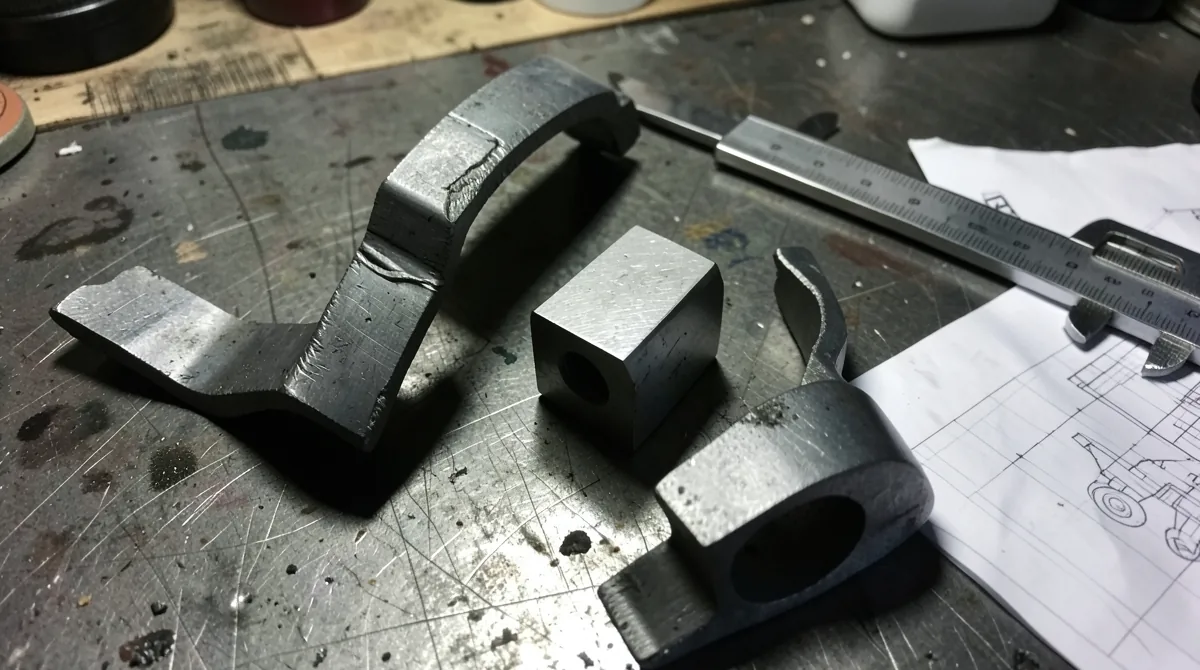
A bent steel bracket, a machined block and a caliper on a workbench beside a printed drawing

Smaller establishments, generally. Michigan’s labor data make the structure visible. Of roughly 3,100 machinery manufacturing establishments in the state, about 2,800 employ fewer than 50 people. Together they held 34.3 percent of the subsector’s employment as of June 2025.

Small shops live on variety. A fifteen-person shop filling its week with twelve different jobs has a quoting process built for exactly that. Prototype and short-run work lands there rather than at a plant tooled for volume.

The Capacity Question Behind the Floor

Short-run work depends on people who can set up a job from a print, and that pool is shrinking. The Bureau of Labor Statistics projects a 1 percent decline for machinists and tool and die makers from 2025 to 2035. Tool and die makers alone are down 9 percent. About 30,400 openings a year are expected, all of them from workers retiring or moving into other occupations.

Setup skill is what short runs consume most. A shrinking pool of it is a reason to build a relationship with a shop that takes small jobs before you are under pressure.

What Moves Your Price More Than Quantity

Buyers fixate on the piece count. These factors usually move the number more:

  • Operation count. Each added process carries its own setup.
  • Material. Stock on the floor quotes differently than something ordered in.
  • Tolerance. Features needing a secondary machining step change the routing.
  • Finish. Color changes and masking add handling that scales with complexity, not quantity.
  • File quality. A clean CAD file skips the design work a sketch requires.

Raising a quantity from 10 to 25 sometimes lowers the piece price enough to pay for the extra parts. Ask for price breaks at several quantities.

Prototype, Short Run, and Production Are Different Asks

Saying “small order” tells a shop little. Three different jobs hide inside that phrase, and naming yours gets you a faster answer:

A prototype is one to five pieces, often with the print still moving. The buyer wants feedback on whether the design can be built, and setup dominates the price.

A short run is roughly 25 to 500 pieces. Fixtures start paying for themselves, repeatability between pieces becomes the thing to watch, and the price per piece drops sharply from prototype levels.

A production order repeats on a schedule. Here the conversation shifts to blanket orders, held material, and dedicated fixtures.

Tell the shop which one you have. A prototype quoted as a production job comes back expensive; a production part quoted as a one-off comes back slow.

Finding a Short-Run Shop in Downriver Michigan

Buyers searching only for Detroit miss a dense pocket of fabricators. The Downriver communities include Taylor, Wyandotte, Southgate, Lincoln Park, and Riverview. All of them sit inside the automotive supply base, with shorter drives and shorter queues than downtown addresses.

A Downriver shop is close enough to drive to for a fixture check, which matters more on a short run than a production order. Buyers comparing shops should pair this with a checklist for choosing a fabrication shop and the question of whether one shop should handle every operation.

How to Ask About the Minimum Order for Custom Metal Fabrication

Skip the phrase “minimum order.” Ask this: will you quote this part at quantity five? What does the price look like at 25 and 100? That gets you a usable answer and the shape of the price curve in one reply.

Send the print, the material, the quantity, and your date. A shop that takes short runs answers quickly.

Motor City Metal Fab: One Shop, Every Operation

Motor City Metal Fab is a family-owned CNC machining, fabrication, welding, and powder coating shop in Taylor, Michigan, serving metro Detroit and the Downriver communities with every operation performed in-house. The shop works on prototypes and short-run production.

Our Services Include:

Have a print to quote? Contact Motor City Metal Fab with your drawing, material, and quantity.

Minimum Order for Custom Metal Fabrication: Frequently Asked Questions

01What is the minimum order for custom metal fabrication?

There is no industry standard. Many job shops quote a single prototype piece, while production-focused plants may set floors in the hundreds or thousands. The practical minimum reflects how a shop spreads setup cost across a run, so the answer varies shop to shop rather than by part.

02Will a fabrication shop make just one part?

Many will, particularly smaller shops built around prototype and short-run work. Expect setup to dominate the price at quantity one. Asking for pricing at several quantities in the same request shows where the piece price drops and whether ordering a few spares makes sense.

03Why is my small order so expensive per piece?

Setup cost drives it. Programming, material loading, fixturing, weld sequencing, and masking take similar time whether the run is one piece or two hundred. At low quantities that fixed cost lands on only a few parts, which is why the per-piece number falls sharply as quantity rises.

04What is the difference between a prototype and a short run?

A prototype is roughly one to five pieces, often with the design still changing, and setup dominates the cost. Short runs of roughly 25 to 500 pieces let fixtures begin paying for themselves, and repeatability between pieces becomes the main concern.

05Where can I find a short-run machine shop in Downriver Michigan?

The Downriver communities south of Detroit, including Taylor, Wyandotte, Southgate, Lincoln Park, and Riverview, hold a cluster of fabrication and machine shops inside the automotive supply base. Searching these community names rather than Detroit alone surfaces shops that city-wide directories tend to bury.

Works Cited

  1. Michigan Center for Data and Analytics. “Industry Focus: Machinery Manufacturing in Michigan.” State of Michigan, 12 Mar. 2026, www.michigan.gov/mcda/labor-market-information/michigans-labor-market-news/2026/03/12/industry-focus-machinery-mfg. Accessed 27 Oct. 2026.
  2. United States, Bureau of Labor Statistics. “Machinists and Tool and Die Makers.” Occupational Outlook Handbook, U.S. Department of Labor, 27 Aug. 2026, www.bls.gov/ooh/production/machinists-and-tool-and-die-makers.htm. Accessed 27 Oct. 2026.
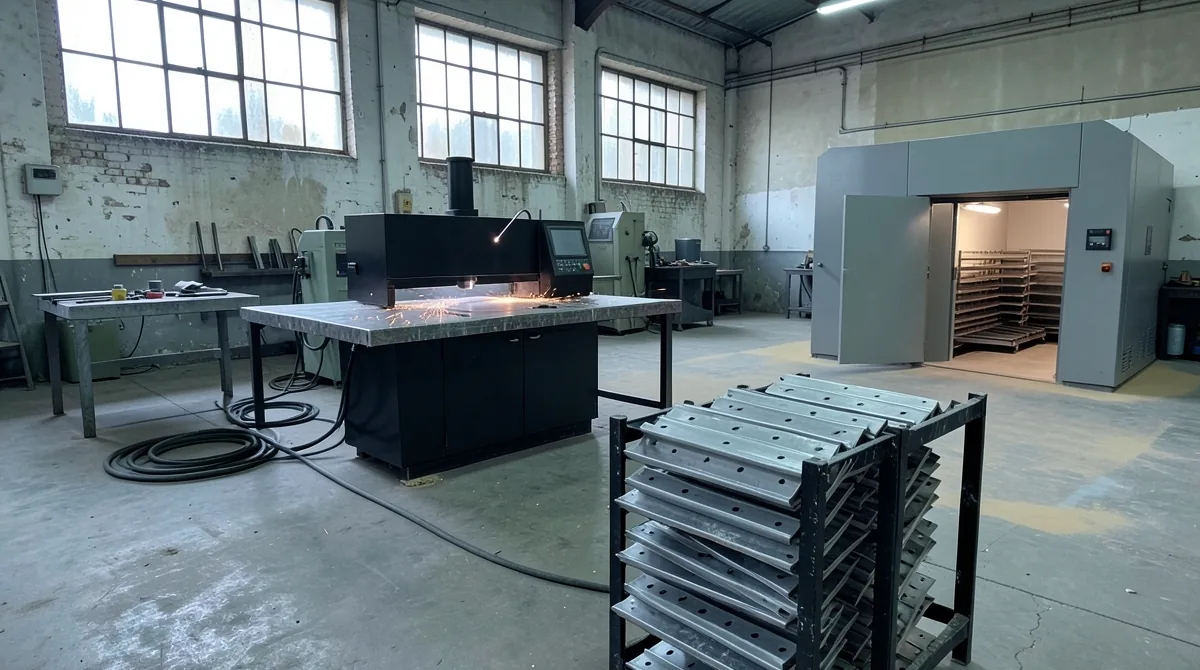
Open post A fabrication shop with a cutting table and a powder coating oven in one building and finished steel brackets on a rack

Single Source Metal Fabrication: Should One Shop Cut, Weld, and Coat Your Parts?

Single source metal fabrication means one shop performs cutting, welding, coating, and assembly on the same part rather than routing it between vendors. It removes freight time and handoff risk and puts one party in charge of the finished part. The approach fits most naturally when a part needs three or more operations.

Every handoff in a fabrication job costs two things: days on the calendar and clarity about who owns a defect. Single source metal fabrication removes both costs, and the case for it gets stronger as the part gets more complicated.

The Arithmetic of a Handoff

Picture a welded steel bracket. Laser cutting at one vendor, press brake forming at a second, welding at a third. Blasting and powder coating at a fourth, then back to you for assembly. Four shops, three truck runs between them, four quoting cycles, four queues.

None of those shops is slow. The calendar still stretches, because the part spends most of its life waiting for the next shop to have room for it. Shipping between operations also adds handling damage to a coated or machined surface, which is a quiet source of rework.

Demand conditions make queues longer. Census Bureau data put new orders for manufactured goods at $663.5 billion in August 2026, a slight rise over July. A shop with a full book is a shop with a queue, and a part crossing four queues inherits all four.

Who Owns the Defect?

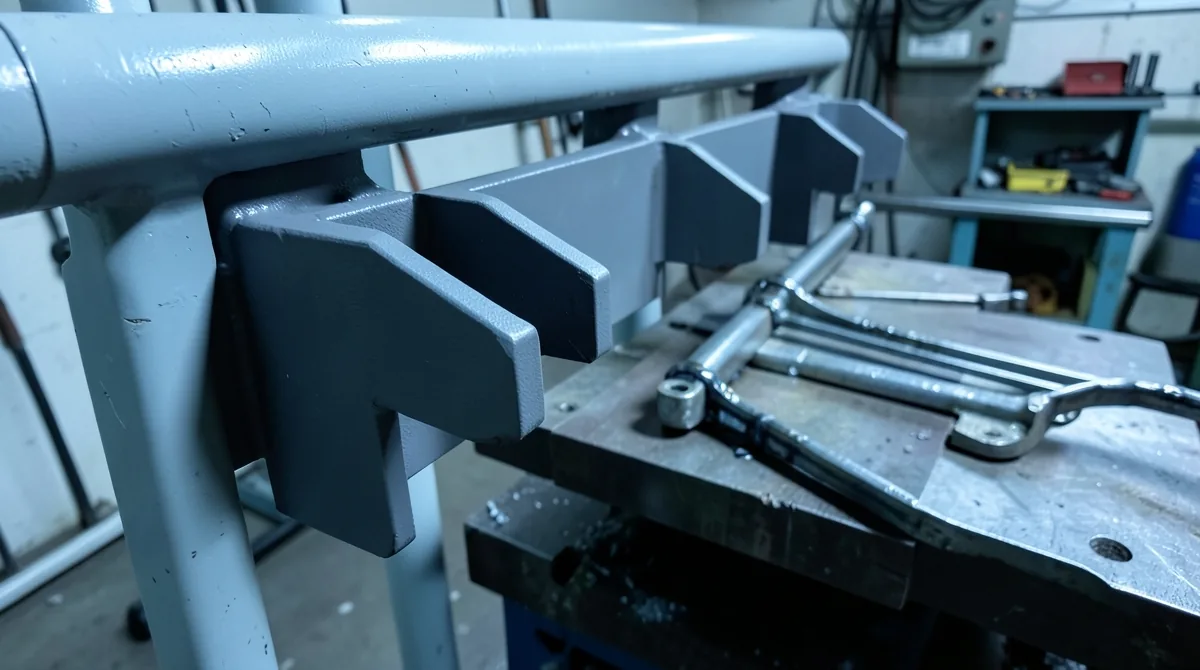
Welded steel brackets powder coated gray beside a welding table with a clamped weldment

This is the part buyers underestimate. A bracket arrives with a coating that blistered over a weld seam. The coater says the weldment came in with contamination. Blasting was inadequate, says the welder. Both may be right, and you are now the project manager for an argument between two vendors who have not spoken to each other.

Under one roof, the blast and the weld belong to the same shop. The answer takes an afternoon, and the fix does not require a shipping label.

When Single Source Metal Fabrication Is the Wrong Call

Single source metal fabrication is not automatically correct. Splitting the job makes sense when:

  • One operation needs a capability or capacity no local shop has, such as an oversized press or an unusual process
  • Volume is high enough that a dedicated production vendor beats a general shop on price per piece
  • The part is simple, needing one or two operations, where a specialist’s efficiency wins
  • You need a second supplier for continuity on a part you cannot afford to have stop

A part needing one cut and no finishing has little to gain from consolidation. Five operations on one print changes that math entirely.

The Supply Base Is Thinning

The option to consolidate is becoming more valuable because the alternative is getting harder to assemble. Michigan’s own labor projections show manufacturing shedding 31,120 jobs, or 5.2 percent, between 2024 and 2034. That is the largest numeric loss of any industry supersector in the state. Production occupations are projected to fall 6.1 percent, the fastest decline among the 22 major occupational groups.

A thinner supply base means fewer vendors bidding each operation and longer queues at the ones left. Chains with four links are harder to keep intact than they were five years ago.

What Single Source Metal Fabrication Does Not Fix

Single source metal fabrication removes freight and finger-pointing. It does not make a bad print good, and it does not create capacity that a shop lacks. A single shop with one press brake is still a single press brake. Ask about capacity for your operation, not only about the service list.

Pricing deserves the same scrutiny. A consolidated quote is one number covering several operations, which makes it harder to compare against four separate quotes. Ask for the quote broken out by operation so you can see where the money sits.

Questions That Settle It

Count the operations on your print. One or two, and vendor choice is mostly about price and queue. Three or more, and ask each candidate shop:

  • Which of these operations do you perform yourself?
  • Where does the part physically go between operations?
  • If the finish fails over a weld, who investigates?
  • Do I get one quote and one purchase order, or several?

The answers sort the field quickly. Buyers weighing a full shortlist will find more structure in this checklist for choosing a fabrication shop. Short-run buyers should pair it with what minimum order quantities shops actually accept.

The Honest Summary

Consolidation buys calendar time and clear accountability. It costs you the ability to shop each operation to its cheapest specialist. For prototypes, short runs, and multi-process parts on a schedule, that trade usually favors one roof. Long production runs of simple parts often point the other way.

Motor City Metal Fab: One Shop, Every Operation

Motor City Metal Fab is a family-owned CNC machining, fabrication, welding, and powder coating shop in Taylor, Michigan, serving metro Detroit with every operation performed in-house. A part is cut, machined, formed, welded, coated, and assembled in one building rather than shipped between vendors.

Our Services Include:

  • All Services — Cutting, machining, forming, bending, welding, blasting, coating, and assembly under one roof
  • Assembly & Shipping — Finished parts assembled and shipped from the same building that built them

Have a print to quote? Contact Motor City Metal Fab with your drawing, material, and quantity.

Single Source Metal Fabrication: Frequently Asked Questions

01What is single source metal fabrication?

Single source metal fabrication means one shop performs every operation a part needs, from cutting and forming through welding, finishing, and assembly, rather than routing the part between separate vendors. The buyer gets one quote, one purchase order, and one party accountable for the finished part.

02Is it cheaper to use one shop for everything?

Not automatically. A consolidated quote often beats multi-vendor sourcing on total cost once freight, handling, and calendar days are counted, but a specialist can win on price per operation for simple high-volume parts. Ask for the quote broken out by operation so the comparison is real.

03How many operations justify using a single shop?

Three or more is the usual threshold. A part needing one cut and no finishing gains little from consolidation. Something that gets cut, formed, welded, blasted, coated, and assembled crosses five vendor boundaries without it, and each one adds queue time and a place for accountability to blur.

04Who is responsible when a coating fails over a weld?

With separate vendors, that answer is contested. The coater points at weld contamination, the welder points at surface prep, and the buyer mediates. When blasting, welding, and coating happen in one building, the investigation and the fix belong to the same shop.

05When should I split the job between vendors?

Split vendors when one operation needs capability or capacity no single shop has, when volume is high enough that a dedicated production vendor wins on piece price, when the part is simple, or when you need a second supplier for continuity on a part that cannot stop.

Works Cited

  1. United States, Census Bureau. “Monthly Full Report on Manufacturers’ Shipments, Inventories, and Orders: August 2026.” U.S. Census Bureau, 2 Oct. 2026, www.census.gov/manufacturing/m3/current/index.html. Accessed 27 Oct. 2026.
  2. Michigan Center for Data and Analytics. “Michigan’s Statewide 10-Year Employment Projection: Modest Growth Projected Through 2034.” State of Michigan, 8 Oct. 2026, www.michigan.gov/mcda/labor-market-information/michigans-labor-market-news/2026/10/08/michigan-statewide-projections-2034. Accessed 27 Oct. 2026.
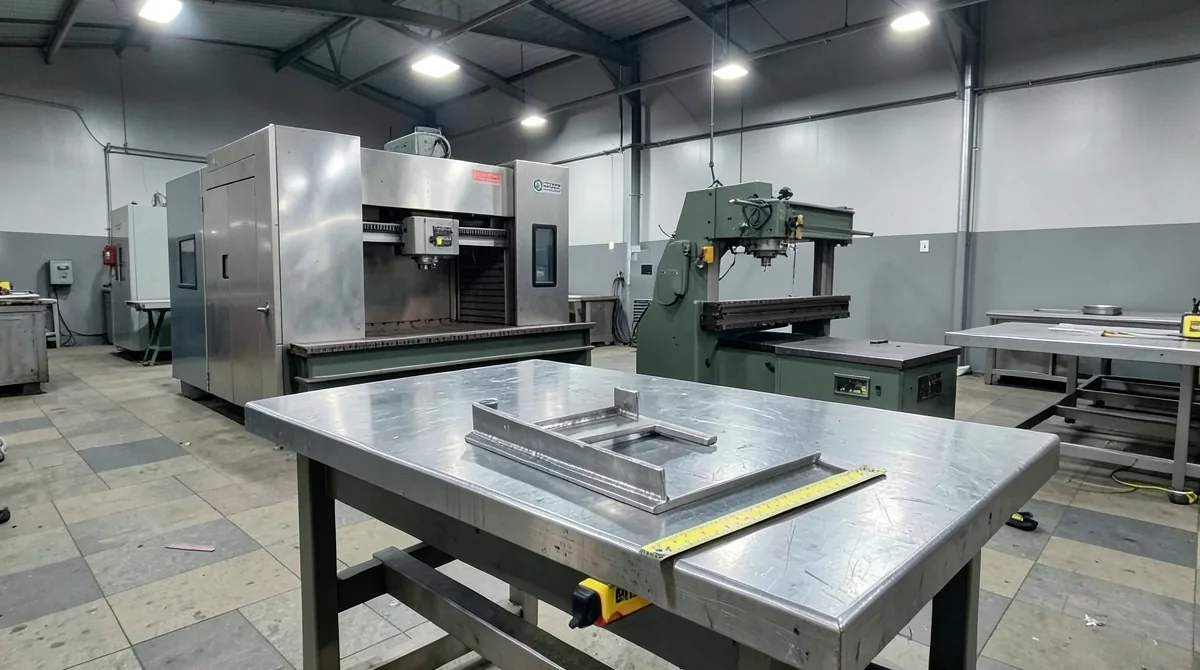
Open post A clean metal fabrication shop floor with a CNC machine, a press and a steel workbench holding a welded bracket

How to Choose a Metal Fabrication Shop: A Buyer’s Checklist

To choose a metal fabrication shop, run four checks. Which operations run under one roof? Who runs the machines? How do parts get inspected? And what does the shop do when a print cannot be built as drawn? Match process coverage to your part first, then judge each shop on its quote conversation.

Knowing how to choose a metal fabrication shop matters more than it used to, because the field is enormous. The Bureau of Labor Statistics counts 61,379 fabricated metal product manufacturing establishments nationwide. That figure covers the first quarter of 2026, and employment in the sector ran near 1.46 million by September. A search for a shop near you returns a list, not a shortlist.

Which Operations Run In-House?

Start with the part, not the company. List every operation your drawing calls for: cutting, machining, forming, welding, blasting, coating, assembly. Then ask each shop which of those it performs itself and which it sends out.

A shop that subcontracts three of eight operations is a coordinator for those three. That is workable, as long as you know it going in and price the freight and calendar days into your decision. The question of whether one shop should cut, weld, and coat the same part deserves its own look.

Who Is Running the Machines?

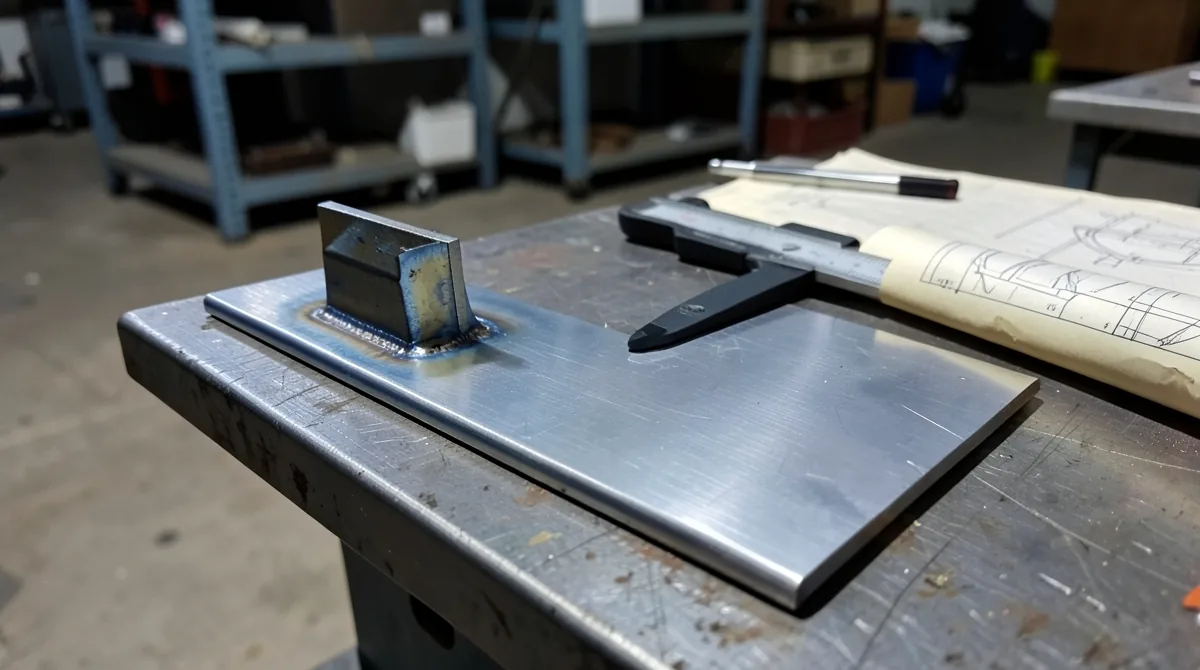
A welded steel bracket and flat steel plate beside a caliper and a rolled print on an inspection table

Skilled trades are the real constraint in this industry. BLS projects employment of welders, cutters, solderers, and brazers to grow 2 percent from 2025 to 2035, slower than average across all occupations. The same projection shows about 40,300 openings a year, many of them replacing people who retire or move into other work.

Read that as churn, not growth. Capability lives in a shop’s people, so ask how long the welders and machinists have been there and who programs the machines. A shop that answers plainly is telling you something a capability list cannot.

How Does the Shop Inspect?

Ask what gets measured, at what stage, and what the shop does with the record. First-article inspection before a production run catches a misread print while it is still cheap to fix. In-process checks catch drift partway through a batch.

A shop that describes its inspection method in concrete terms is easier to work with. One that answers with adjectives about quality is not.

What Happens When the Print Is Wrong?

This is the question that separates vendors. Prints arrive with bend radii the material cannot hold. Others carry weld callouts the joint cannot fit, or bores tighter than the cutting process can produce. A shop that catches those at quote and calls you is saving you a scrap run. The one that builds exactly what you drew and ships it is technically correct and practically useless.

Ask directly: what did you find in my print? The answer tells you how carefully anyone looked.

What to Send When You Choose a Metal Fabrication Shop

Give each shop the same package so the quotes compare:

  • CAD files in STEP or IGES for 3D parts, DXF or DWG for flat profiles
  • Material and condition, including any hardness or finish requirement
  • Quantity, and whether this is a prototype, a short run, or a repeating order
  • Which dimensions on the print actually matter, and which have room
  • Where the part lives in service, which drives the finish decision

That last point is worth stating plainly. A bracket headed for a Michigan loading dock faces different exposure than one living inside a cabinet. Short-run buyers should also ask about minimum order quantities before shortlisting, because that answer narrows the field faster than any other question.

Does Location Still Matter?

For a one-off part shipped flat, less than people assume. Proximity starts paying off on anything that needs a fixture check, a sample approval, or a change midway through a run. Driving twenty minutes to stand at the machine with a first article resolves questions email cannot.

Metro Detroit buyers have a wide field inside an hour’s drive. The Downriver communities south of the city hold a cluster of shops that rarely surface in a Detroit-only search. Widening the search to Taylor, Wyandotte, Southgate, and Lincoln Park puts shops on your list that larger directories bury.

Red Flags to Watch Before You Choose a Metal Fabrication Shop

A quote that arrives with no questions attached, on a print with real ambiguity, means nobody reviewed it. Certification claims deserve the same scrutiny: any shop naming one should be able to identify the certifying body and the scope it covers. Any shop committing to a delivery date before seeing the material situation is committing to something outside its control.

None of these disqualifies a shop on its own when you choose a metal fabrication shop. Together they tell you how the relationship will run once something goes sideways.

Motor City Metal Fab: One Shop, Every Operation

Motor City Metal Fab is a family-owned CNC machining, fabrication, welding, and powder coating shop in Taylor, Michigan, serving metro Detroit with every operation performed in-house. Cutting, machining, forming, welding, coating, and assembly all happen in one building, so a part does not wait on an outside vendor between operations.

Our Services Include:

Have a print to quote? Contact Motor City Metal Fab with your drawing, material, and quantity.

How to Choose a Metal Fabrication Shop: Frequently Asked Questions

01How do I choose a metal fabrication shop for a prototype?

Look for a shop that quotes single pieces and reviews prints before quoting. Prototype work rewards shops built around variety rather than volume. Ask what the shop found in your drawing, because a quote returned with questions attached shows someone actually read it.

02What questions should I ask a metal fabrication shop?

Ask which operations run in-house and which get subcontracted, who programs and runs the machines, how parts get inspected and at what stage, what the shop found in your print, and how it handles a drawing that cannot be built as specified.

03Does a fabrication shop need to be certified?

It depends on your market. Automotive production buyers often require specific quality system certifications, while prototype and short-run work frequently does not. Ask any shop claiming a certification to name the certifying body and the scope, then verify it rather than taking the claim at face value.

04How many fabrication shops should I get quotes from?

Three gives you a usable range without stalling the project. Send all three an identical package: CAD files, material, quantity, the dimensions that matter, and the service environment. Quotes built from different information cannot be compared against each other, and a missing detail is where surprise charges start.

05Is a local fabrication shop better than a distant one?

Proximity helps most when a job needs fixture checks, sample approvals, or mid-run changes. For a simple part shipped flat, distance matters less. Metro Detroit buyers who widen a search beyond Detroit itself into the Downriver communities usually surface shops a city-only search misses.

Works Cited

  1. United States, Bureau of Labor Statistics. “Fabricated Metal Product Manufacturing: NAICS 332.” Industries at a Glance, U.S. Department of Labor, www.bls.gov/iag/tgs/iag332.htm. Accessed 27 Oct. 2026.
  2. United States, Bureau of Labor Statistics. “Welders, Cutters, Solderers, and Brazers.” Occupational Outlook Handbook, U.S. Department of Labor, 27 Aug. 2026, www.bls.gov/ooh/production/welders-cutters-solderers-and-brazers.htm. Accessed 27 Oct. 2026.
Open post Robotic welding arm performing precision welds on automotive components at Michigan fabrication facility

The Psychology Behind Manufacturing Procurement Decision Delays

Manufacturing procurement delays in projects often stem from psychological factors that drive decision-makers to postpone critical sourcing decisions until project pressures force suboptimal choices. When managers delay commitments for essential material processing or specialized CNC tube bending services in Detroit, it creates cascading problems that affect quality, costs, and delivery schedules throughout the entire manufacturing process.

Knowledge of these psychological patterns helps project managers develop procurement strategies that avoid common decision-making traps and protect project success. Our CNC machining capabilities support efficient project execution through streamlined procurement processes and predictable delivery schedules.

Analysis Paralysis in Vendor Selection

Project managers often delay vendor selection decisions when faced with multiple fabrication options that appear similar on surface evaluation. This analysis paralysis is common when evaluating specialized requirements like CNC tube bending services in Detroit, where the technical differences between suppliers may not be immediately apparent.

Information overload contributes to procurement delays when managers attempt to evaluate every possible fabrication option and supplier capability. The abundance of technical specifications for material processing, pricing variables, and quality claims creates cognitive burden that promotes decision avoidance rather than systematic evaluation.

Perfectionism in vendor selection leads to extended evaluation periods that consume valuable project time. Managers may continue searching for ideal suppliers rather than selecting qualified vendors who meet project requirements. This perfectionist approach often results in rushed decisions when project deadlines create time pressure.

Fear of making wrong supplier choices creates psychological resistance to committing to fabrication partners. Previous negative experiences with vendors amplify this fear and promote excessive caution in selection processes. This risk aversion leads to prolonged evaluation periods that delay project initiation.

Decision committee dynamics complicate vendor selection when multiple stakeholders require consensus approval. Different evaluation criteria among committee members create disagreements that extend decision timelines. These group decision challenges often result in compromise selections that satisfy no one completely.

Budget Approval Procrastination

Procurement managers often delay budget approval requests when fabrication costs, eincluding specialized media blasting services in Detroit, exceed initial estimates or internal expectations. This delay stems from reluctance to communicate cost increases to management and fear of budget rejection or project cancellation.

Sticker shock from precision fabrication and assembly services in Detroit quotes creates psychological resistance to approving expenditures that seem disproportionate to material costs. Managers unfamiliar with fabrication processes may not appreciate the labor and equipment costs required for quality work. This cost surprise leads to extended internal discussions and approval delays.

Capital budget cycles create artificial delays when procurement requests coincide with budget review periods or fiscal year transitions. These timing issues force project delays even when funding is available and fabrication requirements are clearly defined.

Risk tolerance variations between management levels create approval bottlenecks when senior executives require additional justification for fabrication expenditures. Conservative financial management approaches may demand multiple cost estimates and extended evaluation periods before approving purchases.

Previous budget overruns create institutional caution that extends approval processes for subsequent projects. Organizations that have experienced cost surprises implement additional review layers that slow procurement decisions and extend project timelines unnecessarily.

Learn more about efficient procurement strategies in our comprehensive guide to how AI will affect CNC machining and intelligent manufacturing solutions.
A procurement team discussing how to overcome psychology behind manufacturing procurement delays

Specification Perfectionism Syndrome

Engineering teams often delay fabrication procurement while attempting to perfect technical specifications for CNC tube bending services in Detroit may have minimal impact on final component performance. This perfectionism creates extended design review cycles that consume project schedule time without proportional value creation.

Over-specification tendencies lead to unnecessary precision requirements that increase fabrication costs and extend delivery timelines. Engineers may specify tighter tolerances or superior materials than functional requirements actually demand. These excessive specifications create procurement delays and budget overruns.

Continuous specification refinement prevents procurement initiation when engineering teams make incremental improvements without considering cumulative delay impacts. Each design modification requires vendor re-quotation and approval cycles that extend project timelines significantly.

Cross-functional coordination delays occur when specifications require input from multiple engineering disciplines or departments. These coordination requirements create interdependencies that slow specification finalization and prevent procurement advancement.

Change order fear drives specification perfectionism when teams attempt to anticipate all possible design variations before procurement initiation. This anticipatory approach often creates delays that exceed the cost and schedule impact of potential change orders.

Competitive Bidding Overdependence

Procurement policies that mandate multiple competitive bids create systematic manufacturing procurement delays that may not provide proportional value for straightforward fabrication projects. These policies assume that competition always produces better outcomes, ignoring time value and relationship benefits.

Bid evaluation complexity increases with the number of competing proposals for CNC tube bending services in Detroit, creating extended analysis periods that delay supplier selection. Comparing diverse fabrication approaches and pricing structures requires significant technical expertise and evaluation time.

Lowest bid selection pressures create quality risks that lead to extended evaluation processes to verify supplier capabilities in material processing in Detroit. These verification activities delay decisions and may not eliminate quality risks effectively.

Vendor qualification procedures required for competitive bidding add administrative time and complexity to procurement processes. New supplier evaluation requires facility audits, capability verification, and reference checking that extends selection timelines.

Bid protest potential creates conservative procurement approaches that emphasize defensive decision-making over project efficiency. Procurement managers may choose slower processes that minimize challenge risk rather than optimizing project success.

Relationship Dependency Hesitation

Procurement managers may delay supplier selection decisions when considering departure from established vendor relationships. This hesitation stems from uncertainty about new supplier capabilities in assembly services in Detroit and concern about disrupting functional business relationships.

Single-source dependency fears create reluctance to commit fully to new fabrication partners, even when current suppliers lack required CNC tube bending services in Detroit. This dependency concern leads to dual sourcing attempts that complicate procurement and increase coordination overhead.

Vendor relationship management complexity increases when projects require capabilities beyond current supplier portfolios. Developing new supplier relationships requires time investment and relationship building that many managers prefer to avoid.

Geographic considerations affect supplier selection when local vendors lack required capabilities compared to distant suppliers with superior technical qualifications. These location trade-offs create decision complexity that promotes procrastination.

Contract negotiation complexity with new suppliers creates additional decision delays when terms differ significantly from established agreements. Legal review requirements and relationship establishment procedures extend procurement timelines substantially.

For detailed information on supplier relationship management, explore our insights on CNC milling expertise across sectors.
Industrial welder performing MIG welding on custom steel frames in a Michigan fabrication facility

Timeline Pressure Paradox

Project managers often delay procurement decisions early in project schedules when time pressure feels minimal, not recognizing that these early manufacturing procurement delays create severe time pressure later in project execution. This timeline mismanagement creates a paradox where early delays cause later crisis management.

Optimism bias leads managers to underestimate fabrication lead times and assume that procurement can be accelerated when schedule pressure emerges. This optimistic planning creates unrealistic expectations and forces suboptimal supplier selections under time pressure.

Priority shifting occurs when other project activities seem more urgent than procurement planning for assembly services in Detroit, leading to delayed supplier engagement. This priority misalignment ignores the critical path impact of fabrication lead times on overall project schedules.

Crisis management becomes necessary when procurement delays compress fabrication schedules to unrealistic timelines. These crisis situations force expedited processing that increases costs and reduces quality control time.

Schedule compression attempts through expedited fabrication create quality risks and cost increases that often exceed the value of accelerated delivery. These forced acceleration efforts rarely achieve desired schedule recovery without significant trade-offs.

Quality Versus Cost Decision Paralysis

Procurement decisions become complex when quality requirements conflict with budget constraints, creating decision paralysis. This conflict prevents clear decision-making for necessary media blasting services in Detroit and extends evaluation periods unnecessarily.

Value engineering opportunities may exist but require technical expertise and time investment that procurement teams lack. These optimization possibilities create indecision when managers recognize potential but cannot quantify benefits accurately.

Quality specification uncertainty leads to procurement delays when functional requirements are not clearly defined or documented. Cost justification requirements for premium assembly services in Detroit create bureaucratic delays when options require extensive documentation and approval processes.

Cost justification requirements for quality improvements create bureaucratic delays when premium fabrication options require extensive documentation and approval processes. These justification procedures often consume more time than the quality improvements provide value.

Life cycle cost analysis complexity overwhelms procurement teams when immediate costs differ significantly from long-term value propositions. These analytical challenges promote decision avoidance rather than systematic evaluation.
Industrial waterjet cutting thick aluminum; one of the key benefits of CNC laser and waterjet technology

Breaking Procurement Procrastination Patterns

Systematic procurement planning addresses psychological barriers through structured decision-making processes and clear evaluation criteria. Professional assembly services in Detroit support provides expertise and objectivity that overcome individual bias and knowledge limitations.

Decision frameworks that prioritize critical requirements help focus evaluation efforts on factors that actually impact project success. These frameworks prevent analysis paralysis by establishing clear decision criteria and elimination standards.

Supplier partnership development for media blasting services in Detroit and other finishes creates ongoing relationships that eliminate repetitive qualification procedures and reduce decision complexity.. Established partnerships provide predictable capabilities and performance that simplify procurement decisions.

Procurement timing optimization aligns supplier selection with project critical path requirements rather than arbitrary budget cycles or approval procedures. This timing approach ensures that procurement activities support rather than constrain project execution.

Professional fabrication partners provide consultation services that help optimize specifications and reduce procurement complexity. Expert guidance prevents over-specification and identifies cost reduction opportunities during design phases.

Early supplier engagement during design phases eliminates procurement delays and enables design optimization for manufacturing efficiency. This collaborative approach reduces project risk and improves overall execution efficiency.

Risk management strategies that accept appropriate uncertainty levels prevent perfectionist paralysis and enable timely decision-making. These approaches balance risk mitigation with schedule efficiency to optimize project outcomes.

Schedule your fabrication consultation today to develop procurement strategies that eliminate delays and optimize project execution efficiency.

Industry Standards and Professional Resources

Learning about procurement psychology helps project teams develop more effective supplier selection and management strategies. The Project Management Institute provides guidance on procurement planning and decision-making processes that help organizations optimize vendor selection and contract management.

The Institute for Supply Management offers resources on strategic sourcing and supplier relationship management that help companies develop effective procurement strategies and avoid common decision-making pitfalls.

Frequently Asked Questions

What percentage of fabrication projects experience procurement-related delays?

Industry studies indicate that 65-80% of custom fabrication projects experience procurement-related delays averaging 2-6 weeks beyond planned schedules. These delays typically stem from extended vendor selection processes for CNC tube bending services, specification changes, and budget approval bottlenecks rather than supplier capability limitations. Projects with complex technical requirements or tight tolerance specifications in material processing show higher delay rates due to increased evaluation complexity. Early supplier engagement and streamlined approval processes can reduce procurement delays by 50-75% compared to traditional sequential approaches. Organizations with established supplier partnerships and clear procurement procedures experience significantly fewer delays and more predictable project schedules.

How much do procurement delays typically add to total project costs?

Procurement delays typically increase total project costs by 15-35% through expedited processing fees, premium delivery charges, and compressed fabrication schedules that reduce efficiency. Late procurement decisions force suppliers to use overtime labor and expedited material sourcing that carry premium pricing. Schedule compression often requires process shortcuts that increase quality risk in assembly services and potential rework costs. Rush delivery requirements can increase shipping costs by 200-400% compared to standard lead times. These delay-related cost increases often exceed potential savings from extended vendor evaluation and competitive bidding processes. Strategic procurement planning that aligns with project critical paths provides better cost control than reactive decision-making.

What are the most effective strategies for overcoming analysis paralysis in vendor selection?

The most effective strategies include establishing clear evaluation criteria, setting decision deadlines, and using structured supplier qualification processes. Decision frameworks that weight critical requirements, such as specialized CNC tube bending services, help focus evaluation on factors that impact project success rather than minor technical differences. Time-boxed evaluation periods for material processing options prevent endless analysis and force timely decisions based on available information. Pre-qualified supplier lists for assembly services eliminate repetitive evaluation procedures and accelerate selection processes.

How do budget approval processes contribute to procurement delays?

Budget approval processes contribute to procurement delays through multiple review layers, fiscal year timing restrictions, and conservative risk management. Organizations with complex approval hierarchies may require 4-8 weeks for fabrication expenditure approval, even for necessary media blasting services, when funding is available. Quarterly budget cycles create artificial delays when procurement requests for CNC tube bending services coincide with budget review periods. Risk-averse approval processes may require multiple quotes and extensive justification documentation that extends decision timelines.

What role does specification perfectionism play in procurement delays?

Specification perfectionism creates significant procurement delays by extending design review cycles and preventing timely supplier engagement. Engineering teams may spend weeks refining specifications for material processing that have minimal impact on component performance. Over-specification tendencies lead to unnecessary precision requirements that increase costs and extend delivery timelines without proportional functional benefits. Continuous specification changes require repeated vendor quotation cycles that multiply evaluation time. Cross-functional coordination requirements for specification approval create interdependencies that slow finalization processes. Effective specification management balances functional requirements with fabrication practicality to enable timely procurement while meeting performance objectives. Early supplier consultation during design phases helps optimize specifications for manufacturing efficiency and cost control.

 

Scroll to top