
Motor City Metal Fab: Precision Welding and Fabrication in Taylor, Michigan
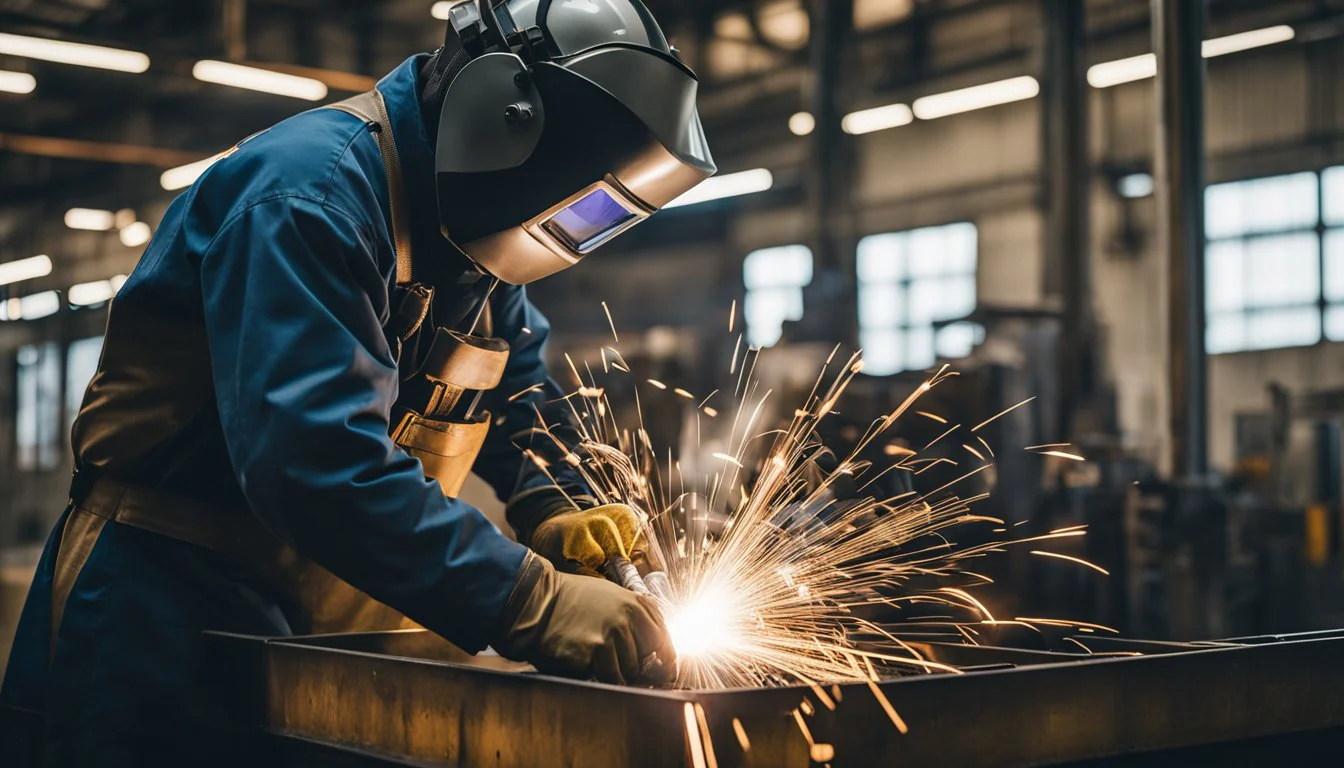
When fabricated assemblies fail in service, the consequences extend far beyond warranty costs and repair expenses. Automotive components that crack under load, EV battery enclosures that leak, or structural members that fracture in crashes create safety hazards and expose manufacturers to liability. These risks highlight the critical welding certification benefits in Detroit that ensure structural integrity, protect brand reputations, and prevent defects that lead to costly failures. As a leading provider of precision solutions, Motor City Metal Fab understands that these failures often trace back to welding defects that proper procedures and skilled execution would have prevented. In an industry where weld quality directly impacts human safety, the credentials verifying welder competency matter enormously.
The American Welding Society established welder certification programs decades ago to address exactly this concern. AWS certifications provide standardized testing that verifies welders can execute specified processes to documented quality standards. Manufacturers sourcing welded assemblies can reference these certifications as objective evidence of fabricator capability rather than relying on verbal assurances or sample parts. These standards are especially critical when a project moves beyond welding into assembly services in Detroit, where every component must fit perfectly to ensure final product integrity. In the current environment where skilled welders remain scarce and quality pressures intensify, understanding what certifications mean and how they protect customers helps manufacturers make informed sourcing decisions.
Michigan’s automotive and emerging EV manufacturing sectors impose quality requirements that make welder certification particularly relevant. According to the American Welding Society’s Certified Welder Program, the program tests welders on procedures used in structural steel, petroleum pipelines, sheet metal, and chemical refinery welding industries, with provisions for testing to company-supplied specifications. This performance-based program provides transferable credentials that professional welders can carry from employer to employer, creating standardized quality benchmarks across the industry.
What AWS Certification Actually Means
AWS welder certifications verify that individuals have demonstrated the ability to produce sound welds using specified processes, materials, and positions through standardized testing. Before parts ever reach the welding station, many undergo Automated Sawing & Material Processing Services to ensure precise dimensions and clean edges, which are vital for achieving a certified-quality weld. Certification testing requires welders to produce specimens under controlled conditions, which are then subjected to inspection by AWS Certified Welding Inspectors. Welders who produce specimens meeting acceptance criteria receive certifications documenting their demonstrated capabilities.
The specificity of AWS certifications addresses the reality that welding competency is not universal across processes and applications. A welder certified for MIG welding on carbon steel in flat position has demonstrated capability for that specific combination but has not proven ability to TIG weld aluminum in overhead position. Certifications specify the process, base material type, filler material, thickness range, and welding positions the welder has demonstrated. Furthermore, the preparation of these materials often involves media blasting services in Detroit to remove contaminants and provide the ideal surface profile for both welding and subsequent finishing.
Certification periods establish currency requirements ensuring welders maintain demonstrated skills over time. AWS certifications remain valid as long as welders submit certification maintenance forms every six months as required by the applicable code of acceptance. Welders who stop practicing their trade or cannot verify ongoing use of certified processes may need recertification before resuming work on critical applications. This currency requirement addresses the reality that welding skill requires ongoing practice to maintain, protecting customers from relying on outdated credentials.
The AWS Certified Welder program encompasses certifications addressing different industry requirements. The program allows welders to obtain multiple certifications to expand their credentials, with each certification increasing the range of welding jobs they can perform. Shops serving diverse industries maintain personnel with certifications appropriate to their application mix, ensuring capability across the process-material combinations their customers require.

Why Certification Matters for Automotive and EV Applications
Automotive welding applications impose quality requirements that make certification particularly valuable. Vehicle structures must withstand crash loads that protect occupants during collisions. Suspension components experience millions of fatigue cycles over vehicle life. Exhaust systems operate at elevated temperatures in corrosive environments. Each application creates specific demands on weld quality that certified welders are prepared to meet through demonstrated competency.
The electric vehicle transition introduces additional welding requirements that amplify certification importance. Battery enclosures must maintain structural integrity during crashes while containing thermal events that could endanger occupants. Motor housings require dimensional precision that proper welding technique preserves. Thermal management systems demand leak-free joints that prevent coolant loss in service. These critical applications require a seamless workflow, often concluding with professional powder coating services in Detroit to protect the integrity of the certified welds from corrosion and environmental wear.
The workforce constraints affecting Southeast Michigan manufacturing, explored in [The Welder Shortage Crisis Hits Southeast Michigan Manufacturing: What It Means for 2026], create quality risks that certification helps mitigate. As experienced welders retire and shops train replacements, the personnel executing critical welds may have less accumulated experience than their predecessors. Certification testing verifies that these welders have demonstrated competency regardless of experience level. Additionally, for complex projects requiring full assembly services in Detroit, having certified welders ensures that the foundational structure is sound before secondary components are integrated.
Liability considerations increasingly drive certification requirements through automotive supply chains. When welded assemblies fail and cause injuries, investigations trace responsibility through the companies involved in design, fabrication, and assembly. Fabricators who can document that certified welders executed work following qualified procedures demonstrate due diligence that influences liability allocation. Those lacking such documentation face exposure that certification costs would have avoided.
Beyond Individual Certification: Shop Quality Systems
Individual welder certification represents one element of quality assurance. Comprehensive shops also utilize Automated Sawing & Material Processing Services to maintain tight tolerances from the very first cut. Quality management systems document procedures ensuring consistent execution across personnel, projects, and time periods. These systems address material control, process documentation, inspection requirements, and corrective action procedures that collectively determine whether fabricated assemblies meet specifications reliably.
The NQA automotive industry standards overview explains that most organizations manufacturing for the automotive industry require certification to IATF 16949, developed by the International Automotive Task Force comprising major automakers including BMW, Ford, General Motors, and Volkswagen. This standard works in conjunction with ISO 9001 quality management systems to ensure suppliers demonstrate improvement in customer satisfaction, operating costs, and risk management. Fabricators serving automotive supply chains increasingly face these certification requirements as baseline expectations.
Qualified welding procedures specify the process parameters, techniques, and materials that produce acceptable welds for specific applications. Procedure qualification requires testing that verifies proposed parameters produce sound welds in representative conditions. Once qualified, procedures provide documented guidance ensuring welders execute work consistently rather than improvising approaches based on individual preference. Shops maintaining libraries of qualified procedures can address diverse application requirements with documented methods.
Inspection and testing capabilities verify that completed assemblies meet specification requirements before shipment. Visual inspection identifies surface discontinuities that might indicate deeper problems. Dimensional inspection confirms geometric characteristics match drawing requirements. Non-destructive testing including dye penetrant, magnetic particle, or ultrasonic examination can reveal subsurface defects in critical applications. Shops serving demanding industries maintain inspection capabilities matching their customer requirements, often following specialized media blasting services in Detroit that ensure the surface is clean for accurate testing.
Evaluating Fabricator Certifications and Capabilities
Manufacturers sourcing welded assemblies should request certification documentation from prospective fabrication partners and verify its relevance to their specific requirements. Certifications should match the processes, materials, and positions that actual work will require. A shop certified only for MIG welding carbon steel cannot demonstrate capability for TIG welding aluminum that many EV applications demand. Mismatches between certification scope and application requirements create risks that paperwork alone cannot address.
Certification currency matters because welding skill degrades without practice. Welders holding certifications issued years ago who have not performed that type of welding recently may need recertification before reliably executing critical work. Asking when welders last performed certified processes and whether ongoing activity maintains their proficiency provides insight beyond certification date alone.
Shop-level certifications and registrations complement individual welder credentials. Quality management system certifications like ISO 9001 indicate an organizational commitment to systematic quality approaches. Furthermore, a fabricator’s ability to provide integrated assembly services in Detroit ensures that certified welds are properly incorporated into the final structure with precision. Industry-specific certifications for automotive, aerospace, or pressure vessel fabrication demonstrate capability for particular application categories. Shops investing in these credentials signal seriousness about quality that casual competitors avoid.
Reference checking with current customers provides perspective that credentials alone cannot capture. How do customers rate on-time delivery, quality consistency, and responsiveness when problems arise? Does the shop communicate proactively about challenges or deliver surprises at inopportune moments? These behavioral factors often matter as much as technical credentials for successful ongoing relationships.
The Connection Between Certification and EV Opportunity
The expanding EV manufacturing ecosystem in Michigan, discussed in [Michigan’s EV Transition Creates Unprecedented Demand for Custom Metal Fabrication], places premium value on documented welding capabilities. OEMs and Tier 1 suppliers establishing new supply chains require objective evidence that fabrication partners can meet their quality requirements. This process often begins with Automated Sawing & Material Processing Services in Detroit to ensure raw materials are cut to exact tolerances before welding even begins.
Fabricators seeking to participate in EV supply chains should evaluate their certification status against the requirements these applications impose. Personnel may need additional certifications for aluminum processes that traditional automotive work did not require. Procedures may need qualification for materials and joint configurations unique to EV components. Inspection capabilities may need expansion to address quality characteristics that customers specify. Addressing these gaps proactively positions shops favorably as EV programs select suppliers.
The investment in certification pays returns beyond individual program qualification. Certified shops attract better talent because skilled welders prefer employers who value credentials demonstrating their abilities. Customer relationships deepen as quality track records accumulate. Operational discipline improves. This discipline extends to finishing, where high-quality powder coating services in Detroit provide the final layer of protection and professional appearance required by EV manufacturers.
Motor City Metal Fab: Certified Quality for Demanding Applications
At Motor City Metal Fab, we maintain AWS-certified welders capable of executing TIG, MIG, and spot welding processes across steel, stainless steel, and aluminum materials. Our commitment to certification reflects our understanding that automotive, EV, and industrial applications demand documented capability rather than verbal assurances.
Our Services Include:
- Welding & Fabrication Services in Detroit – AWS-certified welders executing precision assemblies for automotive prototype, EV, and industrial applications
- Complete fabrication capabilities including CNC machining, laser cutting, tube bending, powder coating, and assembly for integrated manufacturing solutions
Ready to Discuss Your Quality Requirements? Contact Motor City Metal Fab to learn how our certified welding capabilities can support your manufacturing programs.
Works Cited
“Certified Welder Program.” American Welding Society, www.aws.org/certification-and-education/professional-certification/certified-welder-program/. Accessed 20 Dec. 2025.
“Automotive Industry Standards.” NQA, www.nqa.com/en-us/certification/sectors/automotive. Accessed 20 Dec. 2025.
Related Articles
- [The Welder Shortage Crisis Hits Southeast Michigan Manufacturing: What It Means for 2026]
- [Michigan’s EV Transition Creates Unprecedented Demand for Custom Metal Fabrication]
