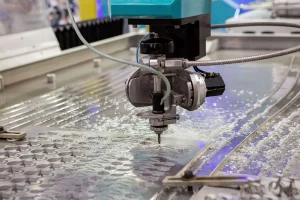
Open post Precision material processing equipment performing CNC machining on an automotive engine component

The Automotive Prototype Industry: A Critical Part of Innovation and Development

At Motor City Metal Fab, we understand the importance of precision and innovation in the automotive prototype industry. As the demand for new vehicle technologies and complex designs continues to grow, our advanced services in CNC machining, laser and waterjet cutting in Detroit, and metal forming offer invaluable support to automotive manufacturers. We provide high-quality custom fabrication solutions that ensure each prototype component meets strict performance and safety standards.

Our team works closely with automotive engineers and designers, supplying them with the necessary parts and prototypes needed for real-world testing and refinement. With our cutting-edge material processing equipment in Detroit and expertise, we specialize in producing high-precision metal components that are integral to the automotive prototyping process. Whether it’s creating lightweight but durable parts for electric vehicles or intricate components through laser material processing, Motor City Fab delivers the quality and accuracy required to bring innovative concepts to life.

In the fast-paced automotive industry, we recognize the need for rapid prototyping. By utilizing material processing in Detroit methods such as CNC machining and laser cutting, we help accelerate the development of prototypes, allowing for quicker testing and iteration. This enables automotive companies to stay ahead of the competition, ensuring their designs are not only functional but also compliant with safety regulations and environmental standards.

Our services also include low-volume production runs for testing purposes, making us an ideal partner for automotive manufacturers looking to evaluate new designs and technologies. As the automotive sector continues to evolve, we are committed to providing the material processing services in Detroit necessary to bring the vehicles of tomorrow to life.

Introduction: The Role of Automotive Prototyping

Automotive prototyping is a vital step in the design and manufacturing of new vehicles. This process involves the creation of an early model or prototype of a vehicle, which serves as a proof of concept for the final product. Automotive prototyping services are essential for evaluating design, performance, and manufacturability before committing to full-scale production.

The automotive industry is constantly evolving, with new technologies, safety features, fuel efficiency standards, and performance improvements being incorporated into vehicles. Utilizing professional automotive prototyping services helps engineers and designers test new concepts and technologies in a real-world setting, ensuring that these innovations meet the requirements for safety, efficiency, and functionality.

The Importance of Prototypes in Automotive Development

Prototypes serve a critical function in the automotive industry by providing a tangible, testable version of a vehicle before it is mass-produced. The benefits of prototyping in automotive development are numerous and include:

  • Testing New Technologies: Prototypes are used to test and validate new technologies, such as autonomous driving systems, electric powertrains, and advanced safety features. By building a prototype, engineers can simulate real-world conditions and gather valuable data that informs further development.
  • Design Verification: Prototypes are also used to verify design elements, ensuring that they meet both functional and aesthetic requirements. This can include everything from the car’s exterior design to the ergonomics of the interior and user interface.
  • Manufacturing Feasibility: Prototyping helps assess the feasibility of manufacturing a vehicle at scale. It allows manufacturers to identify any potential challenges in the production process, such as supply chain issues, assembly difficulties, and material costs.
  • Cost and Time Efficiency: By identifying issues early in the development process, prototypes help save time and money in the long run. Catching problems before full-scale production begins reduces the likelihood of costly recalls or design modifications.

Prototyping Processes in the Automotive Industry

The automotive prototyping process is multifaceted and involves various stages, each crucial for the development of the final product. Here’s a breakdown of the key processes involved in automotive prototyping:

1. Conceptualization and Design

The first stage of automotive prototyping begins with conceptualization. Engineers and designers work together to bring ideas to life through sketches, CAD (Computer-Aided Design) models, and simulations. During this phase, the focus is on creativity, functionality, and feasibility. The goal is to create a design that aligns with consumer needs, industry trends, and regulatory requirements.

2. Material Selection and Sourcing

Once the design is finalized, the next step is material selection. The choice of materials for a prototype depends on several factors, including weight, durability, cost, and performance. Detroit Advanced material processing allows us to work with lightweight materials, such as aluminum and composites, which are often chosen to improve fuel efficiency and reduce emissions.

3. Prototype Fabrication

Fabrication is where the prototype begins to take physical form. In this stage, skilled technicians use material processing equipment in Detroit and techniques like 3D printing, CNC machining, and casting to create individual components of the vehicle.

  • 3D Printing: This is a widely used technique in automotive prototyping. It allows for rapid prototyping and the creation of complex geometries that would be difficult or expensive to produce using traditional manufacturing methods.
  • CNC Machining: CNC (Computer Numerical Control) machining is used to create precise, high-quality parts. It is particularly useful for producing metal parts that need to meet strict tolerances and specifications.
  • Casting: Casting is used to create metal parts by pouring molten metal into molds. It is an effective way to produce parts in large quantities for prototyping.

4. Testing and Evaluation

Once the prototype is assembled, the next step is testing. Prototypes undergo a range of tests, including:

  • Performance Testing: Prototypes are tested for acceleration, handling, braking, fuel efficiency, and other performance metrics.
  • Safety Testing: Crash tests, rollover tests, and other safety evaluations are performed to ensure that the vehicle meets regulatory standards and provides adequate protection for occupants.
  • Environmental Testing: Prototypes are tested in various environmental conditions, such as extreme temperatures, humidity, and road surfaces, to ensure that the vehicle performs reliably under diverse circumstances.

5. Iteration and Refinement

After testing, prototypes are often refined based on the results. Engineers may modify the design, adjust materials, or improve material processing in Detroit methods to address any weaknesses identified during testing. This iterative process continues until the prototype meets all specifications and performs optimally.

Key Services in the Automotive Prototype Industry

The automotive prototype industry offers a range of services that are crucial to the development of new vehicles. These services are in high demand due to the increasing complexity of vehicle design and the need for rapid innovation in the automotive sector. Some of the most critical material processing services in Detroit provided in this industry include:

1. Prototype Design and Engineering

Automotive prototyping begins with the design and engineering phase. Expert designers and engineers are essential for translating concepts into viable, testable models. They use advanced CAD software and simulation tools to create detailed models that can be used to assess functionality, performance, and manufacturability.

2. 3D Printing and Rapid Prototyping

3D printing has revolutionized the automotive prototype industry by enabling rapid prototyping. This technology allows manufacturers to quickly produce prototype parts and models, which can be tested and modified in real-time. 3D printing is particularly useful for creating complex geometries and reducing lead times for prototype production.

3. CNC Machining and Manufacturing

CNC machining is an integral part of automotive prototyping. It allows manufacturers to produce high-precision, custom parts for prototypes. CNC machines can create parts from a variety of materials, including metals, plastics, and composites, ensuring that the final product meets strict specifications.

4. Testing and Validation Services

Once a prototype is created, it undergoes extensive testing to validate its performance, safety, and manufacturability. Automotive prototype companies offer a range of testing services, including:

  • Crash Testing
  • Durability Testing
  • Fuel Efficiency Testing
  • Environmental Testing

5. Prototype Assembly and Integration

After individual components are manufactured, they need to be assembled into a complete prototype. Prototype assembly involves integrating all the components, from the powertrain to the interior features, to ensure that the vehicle functions as intended.

6. Low-Volume Production

Some automotive prototype companies offer low-volume production services. This allows automakers to produce a small number of vehicles for further testing or demonstration purposes. Low-volume production is often used when a design needs to be tested in real-world conditions or showcased to potential investors or stakeholders. Utilizing specialized material processing equipment in Detroit to produce small batches for real-world evaluation.

Demand for Automotive Prototype Services

The automotive prototype industry is in high demand, driven by several factors:

1. Technological Advancements

The continuous evolution of automotive technology—particularly in areas like electric vehicles (EVs), autonomous driving, and advanced driver-assistance systems (ADAS)—has created a greater need for prototyping services. These technologies require new, complex components and systems that must be thoroughly tested and refined before they can be mass-produced.

2. Increased Focus on Safety and Sustainability

With an increasing emphasis on safety and environmental sustainability, automakers must develop vehicles that meet stricter regulatory standards. Prototyping and material processing services in Detroit help manufacturers design vehicles that comply with safety regulations, fuel efficiency standards, and emissions guidelines.

3. Shorter Development Timelines

The automotive industry is under pressure to bring new models to market faster than ever before. Prototyping services help accelerate the development process by allowing manufacturers to quickly test and refine designs, shortening the time from concept to production.

4. Customization and Innovation

As consumer demand for customization and innovation in vehicles grows, automakers are turning to prototyping to create unique, tailored solutions. Whether it’s developing new vehicle designs or testing out new technologies, utilizing the right material processing equipment in Detroit is essential for staying competitive in the market.

The Future of Automotive Prototyping

The automotive prototype industry is a critical component of the broader automotive development process. By providing the services necessary to turn concepts into functional, testable models, prototyping plays a key role in driving innovation, ensuring safety, and meeting consumer demands. As the automotive industry continues to evolve, the demand for prototyping services will only grow, particularly in areas like electric vehicles, autonomous driving, and sustainable manufacturing.

Automotive prototyping is more than just an industry, it’s the bridge between imagination and reality, shaping the future of transportation. By leveraging laser material processing in Detroit and technical expertise, automotive prototype companies help bring groundbreaking vehicles to life, ensuring that the cars of tomorrow are safer, more efficient, and more innovative than ever before.

Motor City Fab’s Services in the Automotive Prototype Industry: Precision and Innovation in Every Step

At Motor City Metal Fab, we understand that the automotive prototype industry is the backbone of innovation and the future of vehicle design. Our team is proud to provide high-quality fabrication, CNC machining, laser cutting, and media blasting services that cater to the rigorous demands of the automotive prototyping sector.

  1. Precision CNC Machining for Automotive Components
    Automotive prototypes require highly detailed and precise components, which is where our CNC machining services in Detroit shine. We work with a range of materials, including metals and composites, to produce custom, high-precision parts. Our advanced CNC machines ensure that every part is crafted to the exact specifications required, making us a trusted partner in the automotive prototype industry.
  2. Laser Cutting for Exacting Prototype Designs
    Laser cutting is crucial in prototyping to create precise, clean cuts in various materials. Whether it’s metal or plastic, our laser cutting services in Detroit ensure that the parts for your automotive prototype fit together seamlessly. Our state-of-the-art laser equipment can handle complex shapes and fine details that are essential for modern vehicle designs.
  3. Media Blasting for Surface Finishing
    Prototypes often require specific surface finishes to achieve both aesthetic and functional goals. Our media blasting services are ideal for preparing surfaces, removing contaminants, and ensuring that your automotive components meet the necessary texture and appearance standards. We use a variety of blasting media to provide the right finish for each unique project.
  4. Custom Fabrication for Prototype Assembly
    Motor City Fab offers comprehensive custom fabrication services to bring all the elements of your automotive prototype together. From creating the frame to fabricating specialized components, we ensure that every part is fabricated to meet the demanding needs of prototype assembly. Our team works closely with engineers to ensure the assembly process is as efficient and effective as possible.
  5. Collaboration with Engineers and Designers
    At Motor City Fab, we believe that collaboration is key in the prototyping process. Our team works alongside automotive engineers and designers to provide the necessary components and services that bring their visions to life. Whether it’s refining existing designs or creating new ones from scratch, we are committed to supporting innovation in every way we can.

Motor City Fab’s services are designed to meet the ever-increasing demands of the automotive prototype industry. With precision, quality, and a dedication to innovation, we continue to play a vital role in bringing the next generation of vehicles to life.

To learn more, Contact Us today! 

FAQs

  1. What is automotive prototyping?
    Automotive prototyping is the process of creating early, functional models of vehicles to test concepts, technologies, and designs through various material processing methods before mass production.
  2. Why is prototyping important in automotive development?
    Prototypes are crucial for testing new technologies, verifying design concepts, assessing safety and performance, and ensuring manufacturability. They help avoid costly mistakes by identifying issues early via advanced material processing stages.
  3. What are the key stages in the automotive prototyping process?
    The process typically involves five stages:
  • Conceptualization and Design: Creating initial designs and CAD models.
  • Material Selection and Sourcing: Choosing materials based on performance, cost, and environmental factors.
  • Prototype Fabrication: Using methods like 3D printing, CNC machining, and casting to create physical parts.
  • Testing and Evaluation: Conducting performance, safety, and environmental tests.
  • Iteration and Refinement: Making necessary adjustments to optimize the prototype.
  1. How does 3D printing benefit automotive prototyping?
    3D printing allows for rapid prototyping, enabling manufacturers to quickly produce complex parts and models. This technique significantly reduces lead times, lowers production costs, and facilitates design modifications in real-time, which is especially valuable in testing new technologies.
  2. What types of testing are performed on automotive prototypes?
    Testing includes:
  • Performance Testing: Evaluating acceleration, handling, braking, and fuel efficiency.
  • Safety Testing: Ensuring compliance with safety standards through crash tests and other evaluations.
  • Environmental Testing: Simulating various environmental conditions (temperature, humidity, road surfaces) to assess the vehicle’s durability and reliability.
  1. What are the most common services provided in the automotive prototype industry?
    Services include:
  • Prototype design and engineering
  • 3D printing and rapid prototyping
  • CNC machining and manufacturing
  • Testing and validation (e.g., crash testing, durability testing)
  • Prototype assembly and integration
  • Low-volume production for further testing or demonstration
  1. How does automotive prototyping impact vehicle safety?
    Prototyping is crucial for testing and improving vehicle safety features. Through rigorous crash tests and other safety evaluations, manufacturers can ensure that their vehicles meet regulatory standards and provide adequate protection to occupants in real-world conditions.
  2. How does prototyping support innovation in the automotive industry?
    Prototyping allows for the testing and validation of innovative technologies, such as autonomous driving systems and electric powertrains, before they are incorporated into mass production. It also enables the exploration of new vehicle designs and customizations, ensuring that automakers remain competitive in an ever-evolving market.
  3. What challenges do automotive manufacturers face when developing prototypes?
    Challenges include material selection, design verification, maintaining cost-effectiveness, meeting stringent safety and environmental regulations, and ensuring that the prototype can be manufactured efficiently at scale. Prototyping helps identify these issues early on, reducing the risk of costly errors during mass production.
  4. How is the demand for automotive prototyping services changing?
    The demand for prototyping services is growing due to advancements in technology, the increasing emphasis on sustainability and safety, and the need for faster development timelines. As electric vehicles and autonomous driving systems become more prevalent, the need for specialized prototyping services to test and refine these innovations is also increasing.

These FAQs help to clarify key aspects of the automotive prototype industry and the essential role it plays in the development of new vehicles and technologies.


Open post CNC milling machine in operation at Motor City Metal Fab's Detroit precision machine shop

CNC Milling: Motor City Fab’s Expertise Across Sectors

At Motor City Metal Fab, we’re passionate about pushing the boundaries of CNC milling technology to serve our diverse clientele. Our expertise in 3-axis, 4-axis, and 5-axis CNC milling allows us to deliver exceptional results across a wide range of industries. We take pride in our ability to adapt our advanced milling capabilities to meet the unique needs of each sector we serve, ensuring that every project receives the attention to detail and precision it deserves.

Our commitment to excellence is reflected in our state-of-the-art CNC milling machines, which are capable of producing complex parts with unparalleled accuracy. Whether we’re working on automotive prototypes, aerospace components, or custom CNC machining services in Detroit for the food service industry, we bring the same level of dedication and expertise to every project.

Let’s explore how our advanced milling capabilities benefit the various sectors we proudly serve, and how we’re continuously innovating to meet the evolving needs of our clients.

Automotive and Transportation

The automotive and transportation industry is at the heart of what we do at Motor City Fab. Our roots in Detroit, the Motor City, have given us a deep understanding of the unique challenges and opportunities in this sector. We’ve honed our skills to become leaders in providing CNC milling solutions for everything from concept cars to mass-produced vehicles, and from high-speed trains to cutting-edge aircraft.

Our expertise in 3-axis, 4-axis, and 5-axis CNC milling allows us to tackle projects of any complexity. We understand that in the automotive and transportation industry, precision precision CNC machining in Detroit, and even the smallest deviation can have significant consequences. That’s why we’ve invested in the most advanced CNC milling technology available, ensuring that we can meet and exceed the exacting standards of this industry.

Automotive Prototype

In the fast-paced world of automotive design and development, prototypes play a crucial role. Our 3-axis, 4-axis, and 5 axis CNC machining services in Detroit are instrumental in bringing automotive prototypes to life. At Motor City Fab, we understand the importance of this stage in the automotive development process, and we’ve tailored our CNC milling capabilities to meet its unique demands.

Our 3-axis, 4-axis, and 5-axis CNC milling machines are instrumental in bringing automotive prototypes to life. We can create complex geometries and intricate parts with exceptional precision, helping our clients accelerate their product development cycles. From engine components to body panels, our precision CNC machining services in Detroit ensure that every prototype meets the exacting standards of the industry.

When it comes to automotive prototypes, speed is often as important as precision. Our advanced CNC milling machines allow us to quickly produce prototype parts, enabling our clients to iterate on their designs rapidly. Whether it’s a single component or a full assembly, we have the capacity to deliver high-quality prototypes in record time.

We also understand that confidentiality is crucial in the automotive prototype stage. At Motor City Fab, we have strict protocols in place to ensure that your intellectual property is protected. Our team is experienced in working with sensitive designs and we maintain the highest standards of discretion and security.

Smart dashboard for a CNC machining center tracking energy consumption and material waste to meet 2026 sustainability standards

Automotive Aftermarket

The automotive aftermarket is a dynamic and competitive sector, constantly evolving to meet the changing needs and preferences of car enthusiasts. At Motor City Fab, we’ve positioned ourselves at the forefront of this industry, leveraging our CNC milling expertise to produce high-quality custom parts and accessories that stand out in the market.

In the aftermarket sector, we leverage our CNC milling expertise to produce high-quality custom parts and accessories. Our 4-axis and 5-axis machining services in Detroit  allow us to manufacture components with complex contours and undercuts, perfect for creating unique aftermarket solutions that stand out in the market.

Our ability to work with a wide range of materials, from aluminum and steel to high-performance polymers, allows us to create aftermarket parts that not only look great but also perform exceptionally. Whether it’s a custom intake manifold, a bespoke suspension component, or a unique interior trim piece, we have the skills and technology to bring your aftermarket vision to life.

We also understand that in the aftermarket sector, aesthetics are often as important as functionality. Our CNC milling capabilities allow us to create parts with intricate designs and flawless finishes, ensuring that your aftermarket products not only perform well but also look stunning.

Transportation

At Motor City Fab, our expertise extends far beyond automobiles. We cater to the broader transportation industry, including trucks, buses, rail, and even aerospace. Each of these sectors has its own unique challenges and requirements, and we’ve developed the skills and capabilities to meet them all.

Beyond automobiles, we cater to the broader transportation industry, including trucks, buses, and rail. Our CNC milling capabilities enable us to produce durable, precision-engineered parts that meet the rigorous demands of these vehicles.

In the trucking industry, where safety is paramount, our CNC machining services in Detroit allow us to produce parts with the tight tolerances required for smooth operation. Our CNC milling processes allow us to create components with exceptional strength and durability, ensuring that they can stand up to the demands of long-haul transportation.

For the bus and coach sector, we focus on creating parts that contribute to passenger comfort and safety. From interior fittings to critical mechanical components, our CNC milled parts are designed to enhance the overall quality and reliability of these vehicles.

In the rail industry, precision and safety are paramount. Our CNC milling capabilities allow us to produce parts with the tight tolerances required for rail applications, ensuring smooth operation and maximum safety for passengers and cargo alike.

We’re also proud to serve the aerospace industry, where the demands for precision and reliability are at their highest. Our advanced 5-axis CNC machining services in Detroit  milling machines allow us to create complex aerospace components with the accuracy required for this critical industry.

Energy and Technology

At Motor City Fab, we’re not just focused on the present – we’re actively shaping the future. Our involvement in the energy and technology sectors puts us at the forefront of innovation, working on projects that are driving the transition to cleaner, more efficient energy sources and pushing the boundaries of what’s possible in technology.

Our expertise in CNC milling plays a crucial role in these cutting-edge industries. Whether we’re creating components for advanced solar panels, precision parts for wind turbines, or intricate components for the latest battery technologies, our capabilities allow us to meet the exacting standards required in these fields.

We understand that in the energy and technology sectors, innovation is constant. That’s why we continually invest in the latest CNC milling technologies and training for our team. This ensures that we’re always ready to take on the most challenging projects and contribute to the latest advancements in these rapidly evolving fields.

Alternative Energy (including EVs and Hydrogen Fuel)

The shift towards sustainable energy solutions is one of the defining challenges of our time, and at Motor City Fab, we’re proud to be playing our part in this crucial transition. Our CNC milling capabilities are being put to use in a variety of alternative energy applications, helping to drive innovation and improve efficiency in this vital sector.

As the world shifts towards sustainable energy solutions, we’re at the forefront of manufacturing components for electric vehicles and hydrogen fuel systems. Our Detroit 5-axis CNC machining services  are particularly valuable in creating the intricate parts required for these cutting-edge technologies.

In the electric vehicle (EV) industry, our precision CNC milling is used to create a wide range of components. From battery casings to motor housings, and from cooling system components to lightweight structural parts, our milling capabilities help EV manufacturers push the boundaries of what’s possible in electric mobility.

We’re also deeply involved in the emerging hydrogen fuel sector. Hydrogen fuel cells require extremely precise components to function efficiently, and our custom CNC machining services in Detroit are up to the task, producing intricate flow plates and bipolar plates. We produce intricate flow plates, bipolar plates, and other critical components that help make hydrogen fuel cells more efficient and cost-effective.

Beyond vehicles, we’re also contributing to the broader alternative energy sector. Our CNC milling capabilities are used to create components for solar panels, wind turbines, and energy storage systems. In each of these applications, our focus on precision and quality helps to improve efficiency and reliability, contributing to the overall advancement of alternative energy technologies.

Precision CNC machining services for high-accuracy automotive prototypes and engine components

Gas & Oil

While we’re excited about the future of alternative energy, we also recognize the continued importance of the traditional gas and oil industry. This sector demands components that can withstand extreme conditions, and our CNC milling capabilities are perfectly suited to meet these challenging requirements.

In the gas and oil industry, we utilize our CNC milling capabilities to produce robust, high-precision components that can withstand harsh environments. From drill bits to valve bodies, our precision CNC machining services in Detroit ensure that every part meets the industry’s stringent safety standards.

Our CNC milling machines allow us to work with the high-strength materials often required in the gas and oil industry, including various grades of steel, titanium, and exotic alloys. We can produce components with complex geometries and tight tolerances, ensuring optimal performance even under the most demanding conditions.

We produce a wide range of components for the gas and oil industry, including drill bits, valve bodies, pump components, and various fittings and connectors. Each of these parts is manufactured to the highest standards of quality and precision, helping to ensure the safety and efficiency of gas and oil operations.

Our expertise also extends to the creation of custom tools and equipment for the gas and oil industry. Whether it’s a specialized tool for a unique drilling operation or a custom component for a new extraction technique, we have the capabilities to bring innovative ideas to life.

Emerging Technologies

At Motor City Fab, we’re not just keeping pace with technological advancements – we’re helping to drive them. Our involvement in emerging technologies puts us at the cutting edge of innovation, working on projects that are shaping the future of various industries.

Our advanced CNC milling capabilities play a crucial role in these emerging fields. We’re able to produce complex, precision-engineered components that are essential for the development and implementation of new technologies. From autonomous vehicles to advanced robotics, our precision CNC machining services in Detroit are helping to turn innovative ideas into reality.

We understand that in the world of emerging technologies, flexibility and adaptability are key. That’s why we’ve invested in the most versatile CNC milling equipment available, allowing us to quickly adapt to new requirements and tackle even the most challenging projects.

Autonomous Vehicle Development

The field of autonomous vehicles is one of the most exciting and rapidly evolving areas of technology today. At Motor City Fab, we’re proud to be playing a role in this revolution, providing precision-engineered components that are helping to make self-driving cars a reality.

The rapidly evolving field of autonomous vehicles requires precision-engineered components. Our 5 axis CNC machining services in Detroit allow us to produce the complex sensor housings, mounting brackets, and other critical parts that enable self-driving technology.

Our CNC milling machines are capable of producing the intricate parts required for various autonomous vehicle systems. This includes housings for advanced sensors like LIDAR and radar, precision mounting brackets for cameras and other sensing equipment, and custom enclosures for the powerful computers that drive these vehicles.

We understand that in the world of autonomous vehicles, every millimeter counts. Our 5-axis CNC milling machines allow us to create components with complex geometries and tight tolerances, ensuring that each part fits perfectly and performs optimally within the vehicle’s overall system.

Beyond individual components, we also produce test fixtures and prototypes for autonomous vehicle development. These tools are crucial for testing and refining self-driving systems, and our ability to provide custom CNC machining services in Detroit allows us to work with high-strength materials including various grades of steel, titanium, and exotic alloys.

Automotive Testing

The automotive industry relies heavily on rigorous testing to ensure the safety, reliability, and performance of vehicles. At Motor City Fab, we play a crucial role in this process by manufacturing the precision components and equipment used in automotive testing.

We support the automotive testing industry by manufacturing custom fixtures, test rigs, and specialized components. Our 4-axis and 5-axis CNC mills enable us to create parts with the exact specifications required for accurate and reliable testing procedures.

Our CNC milling capabilities allow us to produce a wide range of testing equipment, from simple test fixtures to complex dynamometer components. We can create custom parts that simulate real-world conditions, helping automotive manufacturers to thoroughly test their vehicles before they hit the road.

We also produce components for various types of automotive testing equipment, including crash test dummies, wind tunnel models, and road simulators. Our ability to work with a variety of materials and produce parts with tight tolerances ensures that these testing tools provide accurate and reliable data.

In addition to physical testing equipment, we also contribute to the development of virtual testing tools. Our precision-milled parts are often used to calibrate and validate computer simulations, helping to bridge the gap between virtual and physical testing.

cnc tube bending services

Service Industries

At Motor City Fab, our expertise isn’t limited to heavy industry and high-tech fields. We also proudly serve a variety of service industries, bringing our Detroit precision CNC machining services to sectors that might not traditionally be associated with advanced manufacturing.

We understand that in service industries, reliability and efficiency are key. That’s why we apply the same level of precision and attention to detail to these projects as we do to our work in automotive or aerospace. Whether we’re creating custom equipment for a restaurant kitchen or precision components for a car wash system, we ensure that every part we produce meets our high standards of quality and performance.

Our ability to work with a wide range of materials, including food-grade metals and plastics, allows us to create solutions that meet the specific specific needs of various service industries through our comprehensive CNC machining services in Detroit. We’re always excited to take on new challenges and find innovative ways to apply our CNC milling expertise to improve processes and products in these diverse fields.

Food Services

The food service industry demands equipment that is not only functional and efficient but also meets strict hygiene and safety standards. At Motor City Metal Fab, we bring our CNC milling expertise to this sector, creating custom parts and equipment that help food service businesses operate more effectively.

In the food service industry, we apply our CNC milling expertise to create custom equipment parts, molds for food processing, and specialized utensils. Our custom CNC machining services in Detroit ensure that all components meet strict hygiene standards.

Our CNC milling capabilities allow us to produce a wide range of components for the food service industry. This includes custom parts for commercial kitchen equipment, specialized molds for food processing, and unique utensils designed for specific culinary tasks.

We understand the importance of using food-grade materials, and nd our CNC machining services in Detroit allow us to work with stainless steel and FDA-standard plastics. Our expertise allows us to work with stainless steel, food-grade plastics, and other materials that meet FDA standards. We ensure that every component we produce is not only precisely engineered but also safe for use in food preparation and service.

In addition to producing individual components, we also work with food service equipment manufacturers to improve their products. Our ability to quickly produce prototype parts allows these companies to test and refine their designs, leading to more efficient and effective kitchen equipment.

Car Washing

The car washing industry relies on equipment that can withstand constant use and exposure to water and cleaning chemicals. At Motor City Fab, we use our CNC machining services capabilities to produce durable, efficient components that meet these challenging requirements.

For the car washing industry, we manufacture durable and efficient components using our CNC milling capabilities. From nozzle housings to custom brackets, our precision-milled parts contribute to the longevity and effectiveness of car washing equipment.

Our Detroit CNC machines services allow us to produce a wide range of components for car washing systems. This includes precision nozzle housings that ensure optimal water and soap distribution, durable brackets and mounting systems that can withstand the vibrations and stresses of constant use, and custom parts designed to improve the efficiency of car washing operations.

We work with a variety of materials suitable for the car washing environment, including corrosion-resistant metals and high-performance plastics. Our expertise ensures that each component we produce can stand up to the harsh conditions of a car wash while maintaining its precision and functionality.

Beyond individual components, we also work with car wash equipment manufacturers to improve their overall systems. Our ability to quickly produce prototype parts allows these companies to test and refine their designs, leading to more efficient and effective car washing equipment.

At Motor City Metal Fab, we take immense pride in our ability to serve such a diverse range of industries with our advanced CNC milling capabilities. Our commitment to superior craftsmanship, uncompromising quality, and competitive pricing ensures that we consistently exceed our customers’ expectations. Whether you need a simple 3-axis milled part or a complex 5-axis component, we have the expertise and technology to bring your vision to life.

Our team of skilled engineers and machinists is always ready to take on new challenges. We believe that every project, regardless of its size or complexity, deserves our full attention and expertise. From the initial design consultation to the final quality check, we work closely with our clients to ensure that every part we produce meets their exact specifications and requirements.

We’re constantly investing in new technologies and training to stay at the forefront of CNC milling capabilities. This commitment to innovation allows us to tackle even the most complex projects and find solutions to challenging manufacturing problems.

Conclusion

At Motor City Metal Fab, we’re not just a manufacturer – we’re a partner in your success. We understand that the components we produce play a crucial role in your products and processes, and we take that responsibility seriously. Our goal is always to deliver parts that not only meet your specifications but also contribute to the overall quality and performance of your final product.

Whether you’re in the automotive industry, energy sector, emerging technologies, or service industries, Motor City Fab has the expertise and capabilities to meet your CNC milling needs in Detriot. We invite you to experience the difference that our commitment to quality, precision, and customer satisfaction can make for your project.

To learn more, Contact Us today! 

Scroll to top