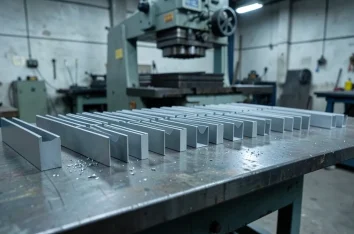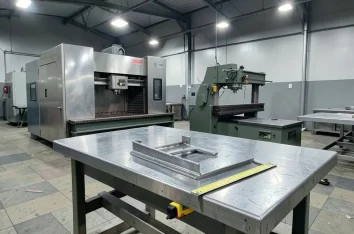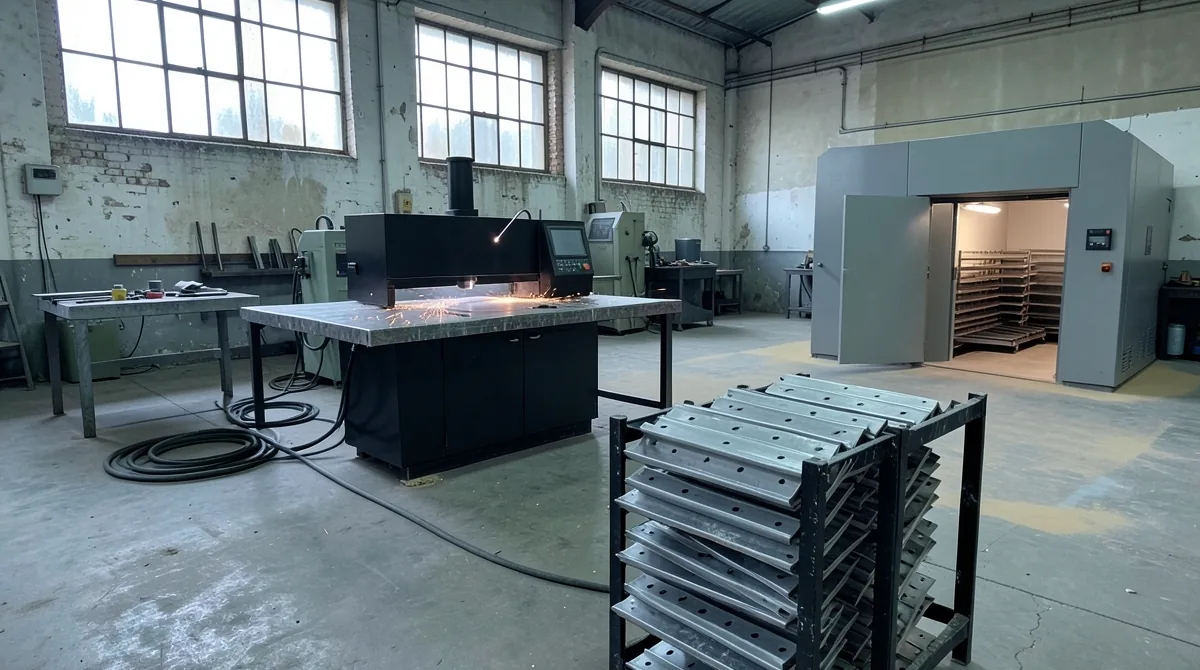
Single source metal fabrication means one shop performs cutting, welding, coating, and assembly on the same part rather than routing it between vendors. It removes freight time and handoff risk and puts one party in charge of the finished part. The approach fits most naturally when a part needs three or more operations.
Every handoff in a fabrication job costs two things: days on the calendar and clarity about who owns a defect. Single source metal fabrication removes both costs, and the case for it gets stronger as the part gets more complicated.
The Arithmetic of a Handoff
Picture a welded steel bracket. Laser cutting at one vendor, press brake forming at a second, welding at a third. Blasting and powder coating at a fourth, then back to you for assembly. Four shops, three truck runs between them, four quoting cycles, four queues.
None of those shops is slow. The calendar still stretches, because the part spends most of its life waiting for the next shop to have room for it. Shipping between operations also adds handling damage to a coated or machined surface, which is a quiet source of rework.
Demand conditions make queues longer. Census Bureau data put new orders for manufactured goods at $663.5 billion in August 2026, a slight rise over July. A shop with a full book is a shop with a queue, and a part crossing four queues inherits all four.
Who Owns the Defect?
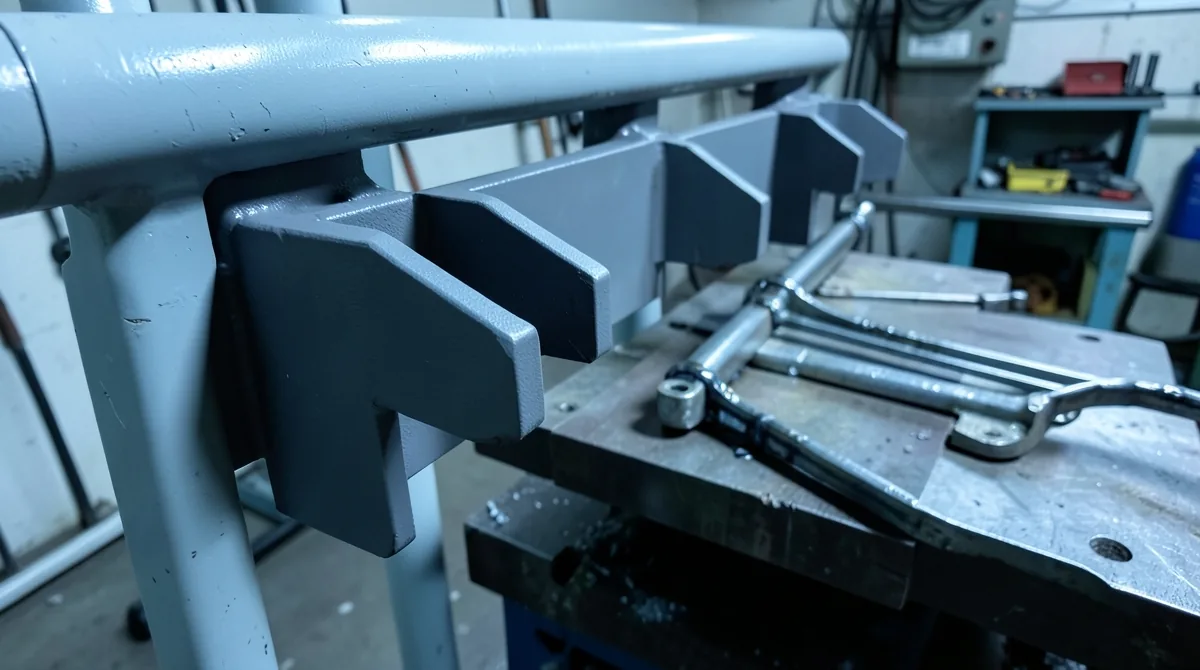
This is the part buyers underestimate. A bracket arrives with a coating that blistered over a weld seam. The coater says the weldment came in with contamination. Blasting was inadequate, says the welder. Both may be right, and you are now the project manager for an argument between two vendors who have not spoken to each other.
Under one roof, the blast and the weld belong to the same shop. The answer takes an afternoon, and the fix does not require a shipping label.
When Single Source Metal Fabrication Is the Wrong Call
Single source metal fabrication is not automatically correct. Splitting the job makes sense when:
- One operation needs a capability or capacity no local shop has, such as an oversized press or an unusual process
- Volume is high enough that a dedicated production vendor beats a general shop on price per piece
- The part is simple, needing one or two operations, where a specialist’s efficiency wins
- You need a second supplier for continuity on a part you cannot afford to have stop
A part needing one cut and no finishing has little to gain from consolidation. Five operations on one print changes that math entirely.
The Supply Base Is Thinning
The option to consolidate is becoming more valuable because the alternative is getting harder to assemble. Michigan’s own labor projections show manufacturing shedding 31,120 jobs, or 5.2 percent, between 2024 and 2034. That is the largest numeric loss of any industry supersector in the state. Production occupations are projected to fall 6.1 percent, the fastest decline among the 22 major occupational groups.
A thinner supply base means fewer vendors bidding each operation and longer queues at the ones left. Chains with four links are harder to keep intact than they were five years ago.
What Single Source Metal Fabrication Does Not Fix
Single source metal fabrication removes freight and finger-pointing. It does not make a bad print good, and it does not create capacity that a shop lacks. A single shop with one press brake is still a single press brake. Ask about capacity for your operation, not only about the service list.
Pricing deserves the same scrutiny. A consolidated quote is one number covering several operations, which makes it harder to compare against four separate quotes. Ask for the quote broken out by operation so you can see where the money sits.
Questions That Settle It
Count the operations on your print. One or two, and vendor choice is mostly about price and queue. Three or more, and ask each candidate shop:
- Which of these operations do you perform yourself?
- Where does the part physically go between operations?
- If the finish fails over a weld, who investigates?
- Do I get one quote and one purchase order, or several?
The answers sort the field quickly. Buyers weighing a full shortlist will find more structure in this checklist for choosing a fabrication shop. Short-run buyers should pair it with what minimum order quantities shops actually accept.
The Honest Summary
Consolidation buys calendar time and clear accountability. It costs you the ability to shop each operation to its cheapest specialist. For prototypes, short runs, and multi-process parts on a schedule, that trade usually favors one roof. Long production runs of simple parts often point the other way.
Motor City Metal Fab: One Shop, Every Operation
Motor City Metal Fab is a family-owned CNC machining, fabrication, welding, and powder coating shop in Taylor, Michigan, serving metro Detroit with every operation performed in-house. A part is cut, machined, formed, welded, coated, and assembled in one building rather than shipped between vendors.
Our Services Include:
- All Services — Cutting, machining, forming, bending, welding, blasting, coating, and assembly under one roof
- Assembly & Shipping — Finished parts assembled and shipped from the same building that built them
Have a print to quote? Contact Motor City Metal Fab with your drawing, material, and quantity.
Single Source Metal Fabrication: Frequently Asked Questions
01What is single source metal fabrication?
Single source metal fabrication means one shop performs every operation a part needs, from cutting and forming through welding, finishing, and assembly, rather than routing the part between separate vendors. The buyer gets one quote, one purchase order, and one party accountable for the finished part.
02Is it cheaper to use one shop for everything?
Not automatically. A consolidated quote often beats multi-vendor sourcing on total cost once freight, handling, and calendar days are counted, but a specialist can win on price per operation for simple high-volume parts. Ask for the quote broken out by operation so the comparison is real.
03How many operations justify using a single shop?
Three or more is the usual threshold. A part needing one cut and no finishing gains little from consolidation. Something that gets cut, formed, welded, blasted, coated, and assembled crosses five vendor boundaries without it, and each one adds queue time and a place for accountability to blur.
04Who is responsible when a coating fails over a weld?
With separate vendors, that answer is contested. The coater points at weld contamination, the welder points at surface prep, and the buyer mediates. When blasting, welding, and coating happen in one building, the investigation and the fix belong to the same shop.
05When should I split the job between vendors?
Split vendors when one operation needs capability or capacity no single shop has, when volume is high enough that a dedicated production vendor wins on piece price, when the part is simple, or when you need a second supplier for continuity on a part that cannot stop.
Works Cited
- United States, Census Bureau. “Monthly Full Report on Manufacturers’ Shipments, Inventories, and Orders: August 2026.” U.S. Census Bureau, 2 Oct. 2026, www.census.gov/manufacturing/m3/current/index.html. Accessed 27 Oct. 2026.
- Michigan Center for Data and Analytics. “Michigan’s Statewide 10-Year Employment Projection: Modest Growth Projected Through 2034.” State of Michigan, 8 Oct. 2026, www.michigan.gov/mcda/labor-market-information/michigans-labor-market-news/2026/10/08/michigan-statewide-projections-2034. Accessed 27 Oct. 2026.